


Misael
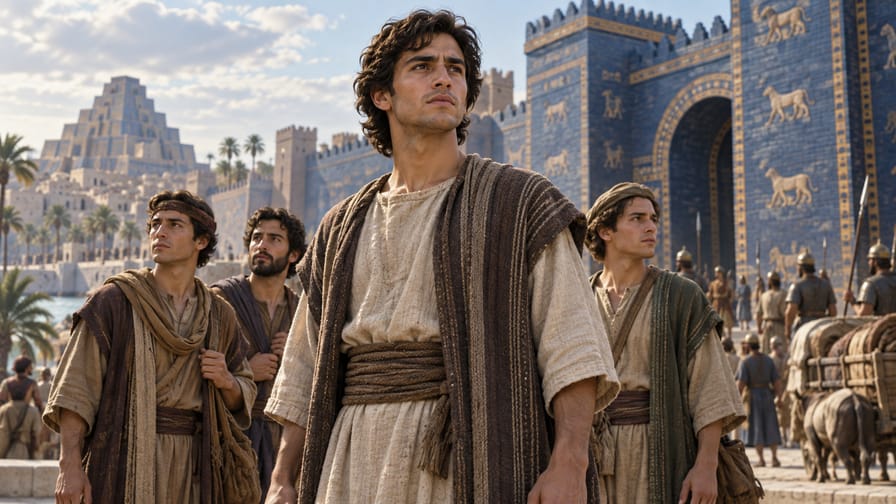
The figure of Misael, though not as prominent as Daniel's in the biblical narrative, emerges as a pillar of faithfulness and courage, especially in the context of the Babylonian exile. His story, intrinsically linked to that of his companions Hananiah and Azariah, and to Daniel, serves as a powerful testimony to divine sovereignty and the integrity of faith amidst persecution. This article will explore the etymology, historical context, character, theological significance, and legacy of Misael from a Protestant evangelical perspective, emphasizing his continuing relevance for Christian faith and life.
1. Etymology and meaning of the name
The name Misael (in Hebrew: מִישָׁאֵל, Mîšā’ēl) possesses deep theological significance, being a rhetorical question that means "Who is like God?". This name structure, common in Hebrew, implies an affirmation that "No one is like God" or "God is incomparable." It is a declaration of monotheism and the uniqueness of Yahweh.
The etymological root is composed of three elements: mî (who), šā (an abbreviated form of ’ašer, meaning "who" or "what," or indicating similarity "as/like") and ’ēl (God). Together, they form an expression of praise and recognition of divine incomparability, a central theme in Old Testament theology.
In the Babylonian context, Misael, along with his companions, received a Chaldean name: Meshach (מֵישַׁךְ, Mêšaḵ). The meaning of Meshach is uncertain, but some theories suggest a connection with Babylonian deities, perhaps meaning "who is like Aku" (the Sumerian moon god) or "who is like Saque" (a lesser-known deity), or even a derogatory alteration of his Hebrew name. This imposition of a pagan name aimed to assimilate the young Hebrews into Babylonian culture and religion, erasing their Hebrew identity and their connection with the God of Israel (Daniel 1:7).
The tension between the Hebrew and Babylonian names is crucial. While Meshach sought to integrate Misael into a polytheistic system, his original name, Misael, reaffirmed the incomparability of the one God of Israel. This tension foreshadows Misael's struggle for faithfulness to Yahweh against Babylonian idolatry.
Although the Misael of the book of Daniel is the most well-known, the Bible mentions other individuals with the same name. One of them is a Levite, son of Uzziel and cousin of Moses and Aaron (Exodus 6:22 Leviticus 10:4). He and his brother Elzaphan were responsible for removing the bodies of Nadab and Abihu after divine judgment. Another Misael is listed among those who were to Ezra's left during the reading of the Law (Nehemiah 8:4). However, the focus of this analysis is Daniel's companion.
The theological significance of the name Misael is profound. It serves as a constant reminder of God's identity and power. For a young exile in a foreign land, surrounded by pagan gods and the pressure to conform, his name was a confession of faith in itself. It declared the supremacy of Yahweh in an empire that glorified its own gods and its king as divinities. The very sound of the name Misael was a form of theological resistance.
2. Historical context and biblical narrative
The story of Misael unfolds in the turbulent period of the Babylonian exile, which began with Nebuchadnezzar II's invasions of Judah. The first significant deportation occurred in 605 BC, when Nebuchadnezzar, still crown prince, took captives from Jerusalem, including young men of the nobility and royal family (Daniel 1:1-3). Among these young men were Daniel, Hananiah, Azariah, and Misael.
The political context was one of Babylonian imperial domination over Judah. Socially, the exiled Jews faced the threat of cultural and religious assimilation. The Babylonian strategy was not merely military, but also cultural: to uproot conquered peoples from their lands, re-educate them in Babylonian language and customs, and integrate them into the imperial administration (Daniel 1:4-5).
Despite his importance in the narrative, the specific genealogy of Misael, Daniel's companion, is not detailed in the Bible, except for the indication that he was of "royal descent and nobility" (Daniel 1:3). This origin was crucial, as Nebuchadnezzar sought the most promising young men for his service.
The main events of Misael's life are recorded in the book of Daniel. The chronology begins with his deportation to Babylon in 605 BC (Daniel 1:1-6). There, he and his friends were chosen for a three-year training program, which included learning the language and literature of the Chaldeans, as well as a specific diet from the king's table (Daniel 1:4-5).
One of the first and most significant acts of Misael and his companions was their refusal to defile themselves with the king's food and wine (Daniel 1:8). This decision was not merely dietary, but theological, as Babylonian food likely included unclean meat or meat offered to idols, which would violate Jewish dietary laws and the principles of consecration to Yahweh. They proposed a diet of vegetables and water, and after ten days, they proved to be healthier than the other young men (Daniel 1:12-15).
God blessed their faithfulness with wisdom and discernment, making them ten times wiser than all the magicians and astrologers in the kingdom (Daniel 1:17-20). This led to their ascent to prominent positions in the service of King Nebuchadnezzar. After Daniel interpreted the king's dream in chapter 2, Misael, Hananiah, and Azariah were appointed administrators over the province of Babylon (Daniel 2:49).
The culmination of Misael's narrative occurs in Daniel 3, with the episode of the fiery furnace. Nebuchadnezzar erected an immense golden statue on the plain of Dura and decreed that all should worship it on pain of being cast into a blazing fiery furnace (Daniel 3:1-7). Misael (Meshach), Hananiah (Shadrach), and Azariah (Abednego) refused to worship the image, maintaining their exclusive loyalty to Yahweh (Daniel 3:12).
Before the king's fury, they uttered their famous declaration of faith: "If our God, whom we serve, is able to deliver us from the blazing fiery furnace, He will deliver us out of your hand, O king. But if not, let it be known to you, O king, that we will not serve your gods or worship the golden image that you have set up" (Daniel 3:17-18). This declaration reveals an unwavering faith in God's sovereignty, regardless of the outcome.
According to the king's sentence, they were bound and cast into the furnace, which was heated seven times hotter than usual. However, to Nebuchadnezzar's surprise, they were not consumed, and a "fourth man" resembling a "son of the gods" (or "Son of God" in some translations, a probable theophany or Christophany) appeared with them in the furnace (Daniel 3:24-25). God miraculously delivered them, and they came out unharmed, with no smell of smoke (Daniel 3:26-27).
This event led Nebuchadnezzar to recognize the power of Misael's God and his companions, issuing a decree that prohibited any blasphemy against their God and further promoting them in the province of Babylon (Daniel 3:28-30). The main geography associated with Misael is the city of Babylon and the plain of Dura, where the miracle of the furnace occurred.
His relationships with Daniel were characterized by deep friendship and camaraderie in faith, sharing the same principles and challenges. With Nebuchadnezzar, they maintained a relationship of service, but always with the caveat that their ultimate loyalty belonged to God.
3. Character and role in the biblical narrative
The character of Misael, along with Hananiah and Azariah, is a remarkable example of faithfulness, courage, and spiritual integrity, as revealed in the Scriptures. The narrative of Daniel highlights their virtues amidst an environment hostile to their faith and culture.
One of the most prominent qualities is his unwavering faithfulness to God. From the outset, Misael and his friends demonstrated a firm commitment to God's Law by refusing the king's food (Daniel 1:8). This seemingly simple decision was an act of profound obedience and consecration, which distinguished them from others and set the tone for their future actions.
His courage is evidenced in the categorical refusal to worship Nebuchadnezzar's golden statue, even under the threat of a terrible death in the fiery furnace (Daniel 3:16-18). They neither hesitated nor tried to negotiate, demonstrating that loyalty to God was above any human fear or earthly authority. This defiant stance is a testament to faith that overcomes the fear of death.
Misael's integrity was exemplary. He did not compromise his principles, even when it could mean the loss of his life or position. His life was a reflection of his name, "Who is like God?", living in a way that honored the incomparability of Yahweh in all his choices.
God granted Misael and his companions wisdom and discernment (Daniel 1:17). This wisdom was not merely intellectual, but a God-given ability to prosper in the king's service without compromising their faith. They excelled in all areas of knowledge and intelligence, surpassing all the wise men of Babylon (Daniel 1:20).
Misael's primary role in the biblical narrative is that of a faithful witness to the true God in a pagan empire. His actions served as a powerful living gospel to Nebuchadnezzar and to the entire Babylonian empire. Through his obedience and miraculous deliverance, the name of Yahweh was glorified among the Gentiles (Daniel 3:28-29).
He personifies the concept of the "faithful remnant" in exile, those who, despite adverse circumstances, maintain their identity and faith in God. His calling, though not formally "prophetic" or "priestly" in the traditional sense, was fundamentally that of an ambassador of the Kingdom of God, living and proclaiming the truth through his life.
Misael's key decisions were the refusal to defile himself and the refusal to worship the idol. Both decisions were acts of faith that had profound consequences, demonstrating that obedience to God, even if risky, leads to His glorification and the vindication of His servants. The character development is consistent, showing a faith that deepens and is proven in the face of increasing trials, culminating in the blazing fiery furnace.
4. Theological significance and typology
The theological significance of the figure of Misael is multifaceted and resonates with central themes of Protestant evangelical faith, especially concerning the sovereignty of God, faithfulness under persecution, and Christocentric typology.
Misael plays a crucial role in redemptive history, demonstrating God's providence and control over nations and individuals, even in times of exile and oppression. His story is a testimony to God's progressive revelation, who does not abandon His people but acts powerfully on their behalf, fulfilling His promises of protection and restoration, even if in an anticipated and localized manner.
One of the most evident themes is the sovereignty of God. The story of Misael and his companions illustrates that God is the supreme ruler, capable of miraculously intervening in human history to save His faithful and manifest His glory. Nebuchadnezzar, the most powerful king of the time, is forced to recognize the superiority of the God of Israel (Daniel 3:28-29).
Faithfulness under persecution is another theological pillar. Misael and his friends are models of persevering faith, teaching that true faith does not yield to adversity, the threat of death, or cultural pressure. Their declaration "But if not, let it be known to you, O king, that we will not serve your gods or worship the golden image that you have set up" (Daniel 3:18) is a hymn to unconditional faith, which trusts in God regardless of physical deliverance.
The narrative is a powerful contrast between idolatry and true worship. Misael's refusal to worship the golden image is an uncompromising defense of the first commandment – "You shall have no other gods before me" (Exodus 20:3). It is an perennial lesson on the exclusivity of worship due only to God.
The Christocentric typology in the story of Misael and his companions is rich. The miraculous deliverance from the fiery furnace is often seen as a prefiguration of Christ's victory over death and hell. Just as they were preserved from the fire, believers in Christ are preserved from eternal condemnation through His redemptive work.
The presence of the "fourth man" in the furnace (Daniel 3:25), "like a son of the gods" or "Son of God," is widely interpreted in evangelical theology as a Christophany or a pre-incarnate appearance of Jesus Christ. This presence symbolizes God's solidarity with His suffering people, showing that Christ is with us in our most severe trials, just as He was with Misael.
Misael's obedience even to the threat of death points to the supreme obedience of Christ, who humbled Himself, becoming obedient to the point of death, even death on a cross (Philippians 2:8). Their suffering for righteousness' sake prefigures the suffering of Christ, who suffered for the righteous and the unrighteous (1 Peter 3:18).
The story of Misael connects to central theological themes such as salvation (God miraculously saves), faith (total trust in God), obedience (prioritizing God's will), judgment (God judges idolatry and rewards faithfulness), and grace (God's undeserved deliverance). There are no direct mentions of Misael by name in the New Testament, but the narrative of the furnace is alluded to in Hebrews 11:34, which speaks of heroes of faith who "quenched the violence of fire," confirming its canonical and theological relevance for the church.
5. Biblical-theological legacy and canonical references
The legacy of Misael, though often subsumed into the group of "Shadrach, Meshach, and Abednego," is profoundly significant for biblical theology and Christian tradition. His story, recorded in the early chapters of the book of Daniel, is one of the most impactful narratives of the Old Testament.
Beyond the passages in Daniel 1-3, where Misael is explicitly mentioned, his story is implicitly referenced in other parts of the Scriptures. The author of Hebrews, in listing the heroes of faith, mentions those who "quenched the violence of fire" (Hebrews 11:34), a clear allusion to the deliverance of Misael and his companions from the fiery furnace. This New Testament reference solidifies the canonical importance of his story as an example of faith and courage.
Misael is not the author of any biblical book or direct literary contribution. However, his life and actions are an integral part of the message of the book of Daniel, which is one of the pillars of Old Testament prophetic and apocalyptic literature. The inclusion of his story in the biblical canon attests to its inspirational and doctrinal value.
His influence on biblical theology is considerable. The story of Misael reinforces the doctrine of divine sovereignty and God's providence, showing that He acts in the course of history to protect and vindicate His faithful ones. It also underscores the importance of exclusive worship to God and the seriousness of idolatry, which is a frontal sin against the Creator.
In the Jewish interpretive tradition, Misael (Meshach) and his companions are revered as models of Kiddush Hashem (sanctification of God's Name), meaning the readiness to die rather than profane God's name. They are seen as prototypes of martyrs who preferred death to apostasy. This reverence continues through centuries of Jewish persecution.
In Christian tradition, especially in Reformed and evangelical theology, the story of Misael is often used to illustrate principles such as the authority of Scripture, the necessity of radical obedience to God, the miraculous nature of divine intervention, and the reality of persecution for believers. The appearance of the "fourth man" in the furnace is a point of great theological interest, reinforcing the belief in Christ's solidarity with His suffering ones.
Evangelical commentators like John F. Walvoord and Sinclair Ferguson highlight the story of Misael as an example of how God empowers His servants to maintain integrity amidst cultural and religious pressure. They emphasize that Misael's faithfulness was not just an act of heroism, but a demonstration of God's enabling grace.
The story of Misael is vital for understanding the canon, as it illustrates recurring themes in the Scriptures: the conflict between the kingdom of God and earthly kingdoms, the faithfulness of the remnant, God's power to deliver, and the importance of testimony. It serves as an encouragement for believers of all ages to remain firm in their faith, trusting that God is able to deliver them, and even if He does not, He is still worthy of all worship and obedience.