


Leviticus
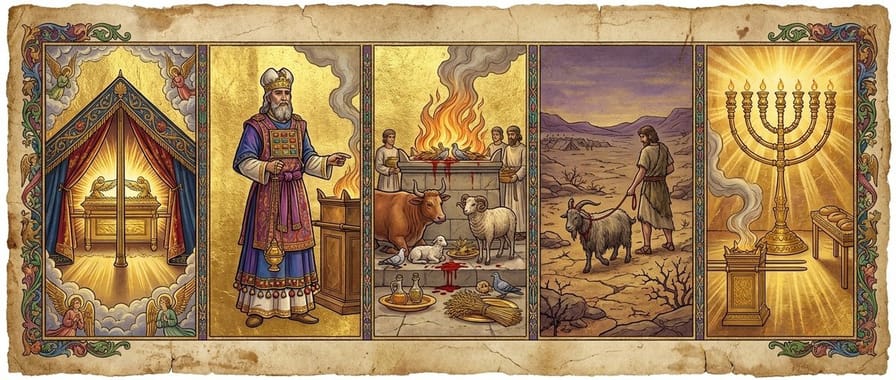
Illustration of the Book of Leviticus, one of the 39 books of the Old Testament (Nano Banana Pro).
The book of Leviticus, often neglected or misunderstood in contemporary Bible reading, is, in fact, a cornerstone for understanding God's holiness, the nature of sin, and the path to redemption. Far from being a mere collection of archaic laws and obscure rituals, Leviticus unveils the essence of the covenant between God and His people, Israel, establishing the foundations for a life of communion with the Holy One.
For the evangelical reader, immersed in the grace of the New Testament, the journey through Leviticus reveals the depth of divine provision for reconciliation and vividly and powerfully foreshadows the finished work of Jesus Christ. This book confronts us with the majesty of a God who is absolutely pure and morally perfect, and with the reality of human depravity that demands a radical atonement.
This introduction seeks to offer a comprehensive and scholarly analysis of Leviticus, serving simultaneously as a structural model for the study of any biblical book. Adopting a conservative evangelical Protestant perspective, we will emphasize the inerrancy of Scripture, traditional authorship, Christocentric typology, and the enduring relevance of God's Word. In each section, we will defend traditional theological positions, while engaging with the issues raised by modern academic criticism, always seeking a faithful and reverent interpretation of the sacred text.
An understanding of Leviticus is indispensable for grasping the fullness of God's redemptive plan, culminating in the cross and resurrection of our Lord. It is not merely a historical record of ancient laws, but a profound revelation of God's character and the way He has established for sinful humanity to draw near to Him and live in His holy presence.
1. Historical Context, Dating, and Authorship
1.1 Mosaic Authorship and Internal Evidence
Jewish and Christian tradition, over millennia, has attributed the authorship of the Pentateuch, including the book of Leviticus, to Moses. This position, known as Mosaic authorship, is consistently supported by internal evidence from the biblical text itself. Repeatedly, we find the phrase "The Lord spoke to Moses" (Leviticus 1:1, 4:1, 5:14, 6:1, 7:22, etc.), indicating that Moses was the recipient and scribe of the divine laws and instructions.
This formulation is not merely a literary device, but a declaration of divine authority and origin, mediated by Moses. The detailed and specific nature of the laws, rituals, and regulations demands a central authority figure for their transmission and codification, and Moses perfectly fits this role as the divinely commissioned leader of Israel during the Exodus and the wilderness wandering.
Beyond the explicit declarations of God speaking to Moses, the book's content itself reflects Moses' experience and leadership. The laws and regulations are presented as being given to a people recently freed from Egyptian bondage, in the process of formation as a theocratic nation, still encamped at Sinai, and with the Tabernacle newly constructed (Exodus 40). Familiarity with Egyptian rituals and customs, as well as legislation adapted for a nomadic life in the wilderness, are elements that corroborate the authorship of someone who lived and led Israel during this specific period.
Mosaic authorship is also presupposed in other parts of the Old Testament, where the "Law of Moses" is frequently mentioned as the source of Israel's legislation (Joshua 1:7-8, 1 Kings 2:3, 2 Chronicles 34:14, Nehemiah 8:1). In the New Testament, Jesus Christ and the apostles consistently refer to Moses as the author of the Law (Matthew 8:4, Mark 12:26, John 5:46-47, Acts 3:22, Romans 10:5). This unified testimony, both internal and canonical, offers a strong foundation for the acceptance of the traditional Mosaic authorship of Leviticus, a pillar of conservative evangelical hermeneutics.
1.2 Dating and Historical-Cultural Context
Accepting Mosaic authorship, the dating of Leviticus falls into the period immediately following the construction of the Tabernacle, as described in Exodus 40, and before Israel's departure from Mount Sinai, narrated in Numbers 10. This places the composition of the book around the second year after the Exodus from Egypt, approximately between 1446 and 1445 BC, following the traditional and conservative chronology of the Exodus.
The setting is the wilderness of Sinai, where the people of Israel are encamped, receiving divine instructions for their worship and covenant life. The book of Leviticus, therefore, covers a relatively short period of time, but one of profound theological significance, where God establishes the foundations for His relationship with Israel in the Promised Land.
The historical and cultural context is that of the Ancient Near East. Israel, a nation newly formed by a miraculous act of deliverance, was being called to be a distinct and holy people among the neighboring pagan nations, who practiced idolatrous cults, human sacrifices, sexual immoralities, and other abominations. Leviticus, therefore, serves as a manual to establish Israel's holiness in contrast to these pagan practices. The laws of purity, the sacrifices, and the priestly structure were not merely arbitrary rituals, but a pedagogical and practical means of teaching Israel about the nature of God and the seriousness of sin, radically distinguishing them from the surrounding cultures.
The presence of the Tabernacle as the center of worship is crucial for understanding Leviticus. The book presupposes the existence and functionality of this sacred tent, where God dwelt among His people. The detailed instructions about the sacrifices and the priesthood are intrinsically linked to the service in the Tabernacle, which was the meeting point between the Holy God and His sinful people. The book, therefore, prepares Israel to live in a covenant relationship with a holy God, providing the means for the atonement of sin and the maintenance of the ritual and moral purity necessary for this communion, a central theme for Old Testament theology.
1.3 Response to Modern Academic Criticism
Despite strong internal evidence and canonical tradition, Mosaic authorship and the early dating of Leviticus have been subject to intense criticism from higher criticism and modern academic skepticism, especially since the 19th century. The main alternative theory is the Documentary Hypothesis (JEDP), which posits that the Pentateuch is a compilation of different sources (Yahwist, Elohist, Deuteronomist, Priestly) written in periods much later than Moses, with Leviticus being predominantly attributed to the Priestly (P) source, dated to the post-exilic period (6th-5th centuries BC).
However, the conservative evangelical perspective maintains that the Documentary Hypothesis and its variations are largely speculative and lack conclusive textual or archaeological evidence. The supposed "inconsistencies" and "duplicities" that critics point to can be explained by varied literary styles, distinct theological emphases, or different pedagogical purposes, rather than multiple fragmented and compiled authorial sources.
The very complexity and sophistication of Leviticus' sacrificial and priestly system, which some critics view as a late development, can equally be interpreted as a detailed and precise divine revelation, given by God to Moses for a people who were being shaped for a holy identity. Conservative scholarship has demonstrated the internal coherence of the Pentateuch and the plausibility of Mosaic authorship, refuting the premises of higher criticism.
Additionally, archaeological discoveries in the Ancient Near East have revealed parallels with legal and ritual codes of ancient peoples (such as the Code of Hammurabi or texts from Nuzi and Ugarit) that demonstrate the existence of complex legal and ritual structures in periods earlier than those proposed by the Documentary Hypothesis. This weakens the argument that Levitical legislation would be anachronistic for the time of Moses. The evangelical position reaffirms the integrity of the biblical text as the inspired Word of God, written by Moses, under the direction of the Holy Spirit, for the people of Israel in the wilderness, and not as a patchwork of later documents.
2. Structure, Division, and Main Content
2.1 Literary Organization and Argumentative Flow
Leviticus is a predominantly legislative and ritualistic book, although it contains small narrative sections (such as the consecration of the priests in chapters 8-9 and the judgment on Nadab and Abihu in chapter 10). Its literary organization is highly structured and intentional, reflecting a logical progression in the revelation of God's holiness and the means by which a sinful people can draw near to Him and live in His presence. The book can be seen as a manual for worship and life in holiness, with the Tabernacle as the focal point of all instructions.
The argumentative flow of Leviticus begins with the means of atonement and access to God through sacrifice, moves through the consecration of those who serve God (the priesthood), establishes the laws of purity that govern the people, culminates in the annual ceremony of national purification (the Day of Atonement), and expands into a holiness code that encompasses all aspects of communal and personal life. This progression from the individual to the collective, from the ritual to the ethical, demonstrates that holiness is not merely a matter of isolated acts of worship, but permeates the entire existence of God's people.
The structure of Leviticus is often described as a chiasm or with concentric symmetry, although the most common divisions follow a clear thematic logic. The central theme that God is holy and demands holiness from His people is the guiding thread that unites all sections. The book is not a random collection of laws, but a body of divinely ordered instructions, designed to teach Israel how to live as "a kingdom of priests and a holy nation" (Exodus 19:6) in the presence of a holy God. This systematic organization underscores divine meticulousness in the revelation of His will.
2.2 Main Divisions and Their Characteristics
Leviticus can be divided into five main sections, each addressing a crucial aspect of Israel's covenant life with God:
- 1. Laws of Sacrifice (chapters 1-7): This section details the five main types of offerings, establishing the means by which sin can be atoned for and communion with God restored, always through the shedding of blood and substitution.
- a. Burnt Offering (Leviticus 1): An offering completely burned, symbolizing total dedication to God.
- b. Grain Offering (Leviticus 2): A bloodless offering of grain or bread, symbolizing gratitude and sustenance.
- c. Peace Offering (Leviticus 3): A communion offering, where part was eaten by the offerer, symbolizing peace with God.
- d. Sin Offering (chapters 4-5:13): For unintentional sins, emphasizing the need for atonement.
- e. Guilt Offering (chapters 5:14-6:7): For sins requiring restitution, with a focus on reparation.
- 2. Laws of Priesthood (chapters 8-10): Here are described the consecration of Aaron and his sons as priests, their garments, and their responsibilities. The tragic incident of Nadab and Abihu (Leviticus 10) serves as a severe warning about God's holiness and the need for strict obedience in His service. This section emphasizes that only designated and purified mediators can approach God on behalf of the people, foreshadowing the need for a perfect mediator.
- 3. Laws of Purity and Impurity (chapters 11-15): This vast section deals with the distinction between clean and unclean in various areas of life, aiming not only at hygiene, but primarily at ritual and symbolic distinction, teaching Israel about the nature of God and separation from sin and death.
- a. Clean and Unclean Animals (Leviticus 11): Dietary guidelines with implications for Israel's identity.
- b. Impurity after Childbirth (Leviticus 12).
- c. Laws concerning skin diseases (such as leprosy) and mildew (chapters 13-14): Methods of diagnosis, isolation, and purification.
- d. Bodily Impurities and Discharges (Leviticus 15): Rituals of purification to maintain holiness in the camp.
- 4. The Day of Atonement (Yom Kippur) (chapter 16): This chapter is the theological heart of Leviticus, describing the most solemn annual ritual, through which the entire nation was purified from its sins. The two scapegoats (one sacrificed, the other sent into the wilderness) illustrate the atonement and complete removal of sin. It is the apex of God's provision for a sinful people to dwell in His presence, a powerful prefigurement of Christ's work.
- 5. The Holiness Code (chapters 17-27): This final section expands the concept of holiness from ritual to daily life. It covers a wide range of moral and ethical laws, demonstrating that God's holiness must permeate all aspects of His people's lives, both in worship and in ethical and social behavior.
- a. Holiness in Food and Blood (Leviticus 17).
- b. Sexual Holiness (Leviticus 18).
- c. Social and Personal Holiness (chapters 19-20): Includes the commandment "You shall love your neighbor as yourself" (Leviticus 19:18).
- d. Holiness of Priests and Offerings (chapters 21-22).
- e. Holiness of Feasts and Vows (chapters 23-27): Calendar of annual feasts and laws concerning vows, tithes, and the Year of Jubilee.
3. Central Theological Themes and Purpose
3.1 God's Holiness and the Call to Holiness
The central and dominant theme of Leviticus is the holiness of God and the consequent call to holiness for His people. The word "holy" (Hebrew: qadosh) and its cognates appear more than 150 times in the book. God's holiness is not merely one attribute among others; it is the essence of His being, His radical separation from all that is profane, sinful, and impure. God is absolutely pure, morally perfect, and incomparably glorious.
This holiness is so intense that His presence is, at once, both a blessing and a danger to sinful humanity. Leviticus details the means by which this presence can be maintained safely and reverently. In Leviticus, God's holiness is revealed as the basis for the entire covenant system. Because He is holy, He demands that His people also be holy: "You shall be holy, for I, the Lord your God, am holy" (Leviticus 19:2).
This call to holiness is not a suggestion, but an imperative commandment that permeates all the laws of the book, from the rituals of sacrifice and purity to the ethical and moral guidelines for daily life. Israel's holiness is its identity as God's people, its distinction from pagan nations, and the condition for God's dwelling among them. Reformed theology emphasizes the sovereignty of God and His absolute perfection.
Leviticus illustrates that God's holiness is the source of all law and all morality. It is His holy nature that defines what is right and wrong, pure and impure. Holiness is not something humanity can achieve by itself, but it is a quality that God infuses and demands, providing the means for His people to draw near to Him without being consumed. Holiness is, therefore, both a gift from God and an imperative for the believer, reverberating in the doctrine of progressive sanctification in systematic theology.
3.2 Atonement, Sacrifice, and the Mediating Priesthood
Intimately linked to God's holiness and human sinfulness is the theme of atonement, which is central to Leviticus. The book details the sacrificial system as the divinely instituted means for the expiation of sin and the restoration of communion with God. The fundamental principle is that "the life of the flesh is in the blood, and I have given it to you upon the altar to make atonement for your souls; for it is the blood that makes atonement for the soul" (Leviticus 17:11).
The shedding of blood from an innocent substitute was the only way to cover sin and appease God's holy wrath. The different types of sacrifices in Leviticus (burnt offering, sin offering, guilt offering, etc.) illustrate various facets of sin and God's provision. They teach about the gravity of sin, the need for a substitute, the cost of atonement, and God's mercy in providing a way. The Day of Atonement (Leviticus 16) is the climax of this system, when the entire nation received annual purification from its sins, symbolizing the complete removal of guilt and the restoration of the covenant relationship.
The priesthood, led by Aaron and his descendants, acts as mediator between God and the people. The priests were responsible for officiating the sacrifices, maintaining the purity of the sanctuary, and instructing the people in God's laws. They were the guardians of holiness, ensuring that access to God was made in a correct and reverent manner. This structure of the priesthood points to the need for a mediator between God and humanity, a truth that finds its full realization in Christ Jesus, our High Priest.
3.3 Ritual and Moral Purity as a Reflection of Israel's Identity
The distinction between clean and unclean, detailed in Leviticus, is more than a matter of hygiene or health; it is a profound theological issue that reflects Israel's identity as the covenant people. The laws of ritual purity (clean and unclean animals, bodily impurities, skin diseases) served to teach Israel about separation from sin and death, and about the need to live distinctly from pagan nations.
The "unclean" was that which was associated with death, chaos, disorder, and sin, in contrast to the life, order, and holiness of God. Ritual purity was not an end in itself, but a pedagogical means for Israel to understand the moral purity that God required. The laws of the Holiness Code (chapters 17-27) demonstrate that God's holiness extends to all areas of life: sexual ethics, social justice, honesty in business, respect for parents, love for neighbor, and proper worship.
Moral impurity was much more serious than ritual impurity, for it contaminated not only the individual, but the entire land and God's sanctuary (Leviticus 18:24-28). Leviticus' primary purpose for the original audience was to instruct Israel on how to relate to a holy God, live in His presence in the Tabernacle, and maintain its identity as a holy nation.
The book provided the means for the atonement of sin, the maintenance of purity, and ethical and religious distinction. In a world of idolatry and immorality, Leviticus called Israel to be a living testimony to the sovereignty and holiness of the one true God, preparing the way for the full revelation of grace in Christ.
4. Relevance and Canonical Connections
4.1 The Place of Leviticus in the Canon and in Biblical Theology
Although often seen as a difficult and dated book, Leviticus occupies an indispensable place in the biblical canon and in biblical theology. It is the heart of the Pentateuch, providing the bridge between Israel's deliverance from Egypt (Exodus) and its preparation to enter the Promised Land (Numbers and Deuteronomy). Without Leviticus, an understanding of the nature of God, the gravity of sin, and the necessity of atonement would be severely incomplete.
It establishes the theological framework for all subsequent Old Testament revelation concerning the priesthood, sacrifice, and covenant. Leviticus is fundamental for understanding the progression of God's revelation. The laws and rituals are not merely arbitrary; they are shadows and types that point to a greater and more perfect reality. It prepares the ground for the coming of Christ, revealing the need for a perfect sacrifice and a sinless priest.
The absence of an understanding of Leviticus leads to a superficial appreciation of Jesus' redemptive work, for one does not grasp the depth of the problem of sin and the magnitude of the divine solution. For systematic theology, Leviticus is a rich source for the doctrines of hamartiology (the doctrine of sin), soteriology (the doctrine of salvation), and ecclesiology (the doctrine of the church, especially regarding the holiness of God's people).
It demonstrates the consistency of God's character throughout the history of redemption, revealing that His holiness and His justice always required a means of atonement, even if the form and fullness of that atonement were progressively revealed until Christ. Leviticus, therefore, is the foundation for understanding the covenant and redemption, essential for the development of biblical theology.
4.2 Christocentric Typology: Leviticus and the Work of Christ
The conservative evangelical perspective views Leviticus as a profoundly Christocentric book, full of typology that points to Jesus Christ and His redemptive work. The rituals, laws, and figures of Leviticus are not ends in themselves, but shadows and figures of what would be fulfilled in Christ. The book of Hebrews in the New Testament is the hermeneutical key to unraveling the typological connections of Leviticus with Christ.
- Jesus as the Perfect Sacrifice: All the sacrifices of Leviticus, with their shedding of blood and the death of an innocent substitute, prefigure the supreme sacrifice of Jesus Christ on the cross. He is the "Lamb of God who takes away the sin of the world" (John 1:29), the perfect and definitive sacrifice that does not need to be repeated (Hebrews 9:26-28). The sin offering and guilt offering find their fulfillment in Christ, who was made sin for us (2 Corinthians 5:21).
- Jesus as the Perfect High Priest: Aaron and his descendants served as priests who mediated between God and humanity, but they were sinners and died. Jesus, however, is the High Priest "according to the order of Melchizedek" (Hebrews 7:17), sinless, eternal, and able to save completely those who draw near to God through Him (Hebrews 7:23-28). He entered the heavenly sanctuary, not with the blood of goats and calves, but with His own blood, obtaining eternal redemption (Hebrews 9:11-14).
- The Day of Atonement Fulfilled in Christ: Yom Kippur, with its annual purification of the nation's sins, is the clearest type of Christ's atoning work. Jesus is the antitype of the scapegoat, taking upon Himself our sins and removing them far from us (Hebrews 9:12, Romans 3:25). His death on the cross was the unique and sufficient sacrifice to atone for the sins of all His people, once for all.
- Jesus as the Source of Our Purity: The purity laws of Leviticus, which required complex rituals to remove impurity, point to the inner and spiritual purification that is only possible through Christ. He makes us clean from all sin and sanctifies us by His Spirit (1 John 1:7, Titus 2:14).
4.3 Allusions and Quotations in the New Testament and Contemporary Relevance
The New Testament is replete with allusions and quotations from Leviticus, confirming its continuing importance and its fulfillment in Christ. Beyond the book of Hebrews, which is an extensive exposition of Levitical typology, other NT books make significant use of its themes. Romans 3:25 speaks of Christ as the "propitiation" (hilastērion), a term directly linked to the "mercy seat" or "atoning cover" (kapporet) on the Day of Atonement (Leviticus 16).
Leviticus' ethics are also reaffirmed in the New Testament. The commandment "You shall love your neighbor as yourself" (Leviticus 19:18) is quoted by Jesus as the second great commandment (Matthew 22:39) and is the basis for apostolic teaching on love (Romans 13:9, Galatians 5:14, James 2:8). The call to holiness remains central to Christian life, though now based on the work of Christ and the power of the Holy Spirit: "But just as he who called you is holy, so be holy in all you do; for it is written: 'Be holy, because I am holy'" (1 Peter 1:15-16, quoting Leviticus 11:44-45 and 19:2).
For the contemporary church, Leviticus offers a profound understanding of the nature of God, the seriousness of sin, and the glory of salvation in Christ. It reminds us that God is holy and demands holiness from His people. Although the sacrificial rituals are no longer practiced (for they were fulfilled in Christ), the underlying theological principles remain. We are called to reverent worship, to the confession of sin, to gratitude for Christ's sacrifice, and to a life of practical holiness, separated from the world and dedicated to God.
Leviticus teaches us that access to God is a costly privilege, paid with the blood of Christ, and that the Christian life is a continuous journey of sanctification, empowered by the Holy Spirit. Ultimately, understanding Leviticus is to deepen our appreciation for the magnitude of the salvation we have in Jesus Christ and to reaffirm our calling to live a life that glorifies God in holiness.
5. Hermeneutical Challenges and Critical Issues
5.1 Difficulties in Interpreting and Applying Levitical Laws
Reading Leviticus presents significant hermeneutical challenges for the contemporary reader. The detailed and ritualistic nature of many of its laws can seem obscure, culturally distant, and, at first glance, irrelevant to Christian life. Questions such as "Should we follow the dietary laws?" or "What is the relevance of animal sacrifices today?" naturally arise. The distinction between moral, civil, and ceremonial laws is crucial for correct interpretation and application.
Leviticus' ceremonial laws (sacrifices, priesthood, purity rituals) were given specifically to Israel under the Old Covenant and were fulfilled in Jesus Christ. Therefore, Christians are not obligated to practice them. However, the theological principles behind these laws—God's holiness, the gravity of sin, the necessity of atonement, and mediation—are eternally valid and find their full expression in Christ. The hermeneutical task is to discern these underlying principles and see how they are fulfilled and transformed in the New Covenant, without falling into legalism or antinomianism.
The civil laws (which governed Israelite society) are also not directly applicable to the church as a theocratic nation-state, but their principles of justice, equity, and care for the vulnerable are relevant for Christian social ethics. Leviticus' moral laws (such as prohibitions against idolatry, murder, theft, adultery, and sexual immorality) are eternal and continue to be normative for Christians, as they reflect the unchanging character of God.
The challenge is to apply these moral principles in a different cultural context, without legalism, but with an understanding of holiness that the Holy Spirit empowers us to live. The divine wisdom behind these laws, even those not directly applicable, offers valuable insights into the nature of God and ideal human conduct.
5.2 Literary Genre, Cultural Context, and Apparent Ethical Problems
The primary literary genre of Leviticus is that of a legal code and ritualistic instruction, punctuated by brief narratives. Interpretation must, therefore, recognize the prescriptive and didactic nature of the text. The cultural context of the Ancient Near East is vital for understanding the prohibitions against pagan practices and the distinctions Israel was meant to maintain. For example, prohibitions against certain types of sacrifices or sexual practices (chapter 18) are understood in contrast to the abominations of neighboring nations, which included child sacrifice and incest.
Some modern readers may encounter apparent "ethical problems" in Leviticus, such as severe punishments for certain transgressions (e.g., the death penalty for adultery or blasphemy), the exclusion of people with certain disabilities from the priesthood (Leviticus 21), or apparent gender discrimination in some laws. A faithful evangelical response recognizes that these laws were given in a specific context of an Old Testament theocracy, where God was the direct king of Israel and the nation functioned as a religious state. The severe punishments reflected the seriousness of sin against a holy God and the need to maintain the purity of the covenant community.
The exclusion of people with disabilities from the priesthood should not be interpreted as a devaluation of such individuals, but as an emphasis on the perfection and holiness required for those who represented a perfect God. The Levitical priesthood was a type, pointing to the perfection of Christ. In the New Testament, the church is the priesthood of all believers, and physical barriers are removed, with holiness being a spiritual and moral matter, accessible to all in Christ. Understanding the original context and purpose is fundamental to avoid anachronisms in interpretation.
5.3 Evangelical Response to Skeptical Criticism and Hermeneutical Principles
Skeptical criticism often attacks Leviticus for its supposed "primitivism," "legalism," or for presenting a "vengeful" God. The evangelical response, founded on biblical inerrancy and divine inspiration, defends that Leviticus is the revealed Word of God, perfectly suited for its time and with a timeless theological message. Far from being primitive, the Levitical system was advanced for its time, establishing standards of hygiene, health, and morality that far surpassed those of other ancient cultures.
The accusation of "legalism" fails to understand the context of grace in the Old Covenant. Leviticus' laws were not a means to earn salvation, but a response of obedience to a God who had already rescued Israel by His grace (Exodus 20:2). The sacrifices were a gracious provision for sin, allowing communion to be restored. Grace was the basis of the covenant, and the law was the guide for living within that covenant.
Leviticus, therefore, establishes the basis for understanding that salvation has always been by grace through faith, even if the rituals pointed to future fulfillment in Christ. The view of a "vengeful" God ignores God's mercy and patience demonstrated in providing a path for forgiveness and restoration, even in the face of Israel's constant rebellion. God's justice is always tempered by His grace, and Leviticus demonstrates this unequivocally.
For a correct interpretation of Leviticus, some hermeneutical principles are essential:
- 1. Historical-grammatical hermeneutics: Understanding the original meaning of the text in its historical, cultural, and linguistic context. What was the author's intention for the original audience?
- 2. Progression of revelation: Recognizing that God's revelation is progressive. Leviticus is part of the Old Covenant and must be read in light of the New Covenant, which fulfills and illuminates it, revealing the fullness of truth in Christ.
- 3. Christocentric and redemptive-historical reading: Interpreting Leviticus as part of the great narrative of redemption, seeing how its laws, rituals, and figures point to the person and work of Jesus Christ. He is the antitype of all that Leviticus prefigured.
- 4. Distinction between ceremonial, civil, and moral law: Carefully applying the laws of Leviticus, discerning which aspects were fulfilled in Christ (ceremonial), which are principles for society (civil), and which are permanent moral commandments (moral).
- 5. Emphasis on theological principles: Focusing on the great theological themes—God's holiness, human sinfulness, the necessity of atonement, God's grace, the importance of obedience, and the call to holiness—and how they are revealed and applied today through Christ and the Holy Spirit.
To conclude this introduction to Leviticus is to recognize that, although it is a book of ancient laws and rituals, its message is timeless and profoundly relevant. It forces us to confront the majesty and holiness of God, the depravity of the human heart, and the wonderful divine provision for salvation. By reading Leviticus with Christocentric eyes, we see not just an obsolete legal system, but the glorious shadows of the Lamb of God who came to purify us, sanctify us, and reconcile us with the Father, enabling us to live in His holy presence forever.