


Azariah
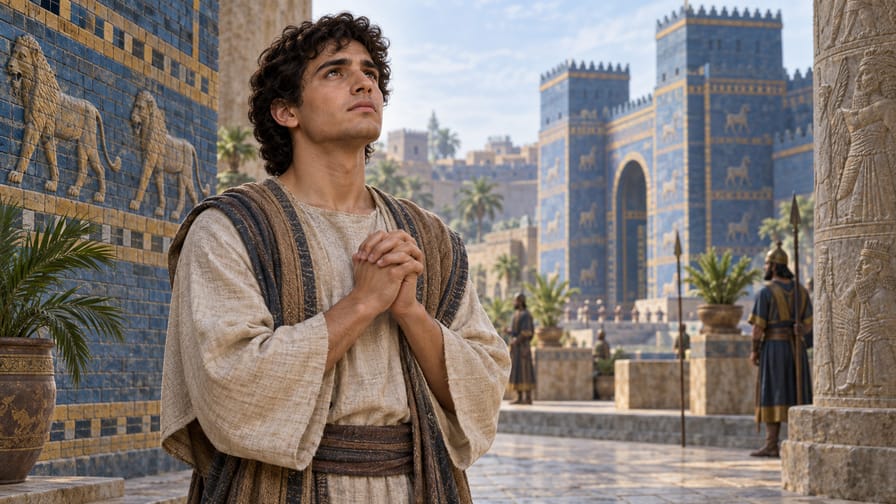
The figure of Azariah (Hebrew: עֲזַרְיָה, ‘Azaryah or עֲזַרְיָהוּ, ‘Azaryahu) is one of the most recurring and multifaceted in the biblical narrative, designating a series of individuals who played diverse and, in some cases, crucial roles in the history of Israel and Judah. The name, in itself, carries a deep theological significance, reflecting a central truth of monotheistic faith. This analysis will explore the etymology, historical context, character, theological meaning, and legacy of the main biblical figures who share this name, from a conservative evangelical Protestant perspective, emphasizing the authority of Scripture and its relevance for understanding the history of redemption.
Although many bear the name, three figures of Azariah stand out for their theological and narrative relevance: the prophet who exhorted King Asa (2 Chronicles 15), the high priest who confronted King Uzziah (2 Chronicles 26), and one of Daniel's three companions in Babylon, better known by his Babylonian name Abednego (Daniel 1-3). Each, in their own way, illustrates fundamental principles of faith, obedience, and divine sovereignty, contributing to the rich tapestry of biblical revelation.
1. Etymology and meaning of the name
The name Azariah, in Hebrew עֲזַרְיָה (‘Azaryah) or in the more complete form עֲזַרְיָהוּ (‘Azaryahu), is a theophoric name, meaning a name that incorporates the name of God. It is composed of two main parts: the verbal root עזר (‘azar), which means "to help" or "to aid," and the suffix יָה (Yah) or יָהוּ (Yahu), an abbreviated form of the tetragrammaton YHWH (יהוה), the personal name of God, Yahweh.
Literally, the name Azariah means "The Lord has helped," "Yahweh has aided," or "My help is Yahweh." This meaning is not merely descriptive but deeply declarative, expressing a confession of faith in divine providence and aid. In a cultural context where names often reflected the hope, faith, or experience of parents, the name Azariah served as a constant reminder of dependence on God and His power to intervene and sustain.
Variations of the name in other biblical languages are not significant, as the transliteration maintains the phonetic essence. In the Greek Septuagint, it appears as Azarias (Αζαριας), and in the Latin Vulgate as Azarias. The form Azariah is the most common in English translations.
There are numerous biblical figures who bear this name, testifying to the popularity of the concept that "The Lord helps." In addition to the three most prominent already mentioned, the Bible records other Azariahs, including: a son of Zadok (1 Kings 4:2), a prince of Judah in the reign of Jehoshaphat (2 Chronicles 23:1), a Levite in the time of Hezekiah (2 Chronicles 29:12), and various other priests and Levites. The repetition of the name underscores the importance of the theology it encapsulates: the unwavering belief in divine aid as a pillar of Israel's existence and history.
The theological significance of the name lies in its declaration of God's faithfulness. Each Azariah, bearing this name, was a living testimony to the belief that Yahweh is the sustainer and deliverer of His people. This reinforces the doctrine of divine providence, where God not only creates but actively sustains and intervenes in human history, especially in the lives of those who are faithful to Him.
2. Historical context and biblical narrative
The multiplicity of individuals with the name Azariah requires careful distinction for a contextualized analysis. We will address the three most notable to understand their specific contributions to the biblical narrative.
2.1. Azariah, the prophet in the reign of Asa (c. 911-870 BC)
One of the first prominent Azariahs is the prophet, son of Oded, who delivered a crucial message to King Asa of Judah. This event is narrated in 2 Chronicles 15:1-7. The historical period is the 9th century BC, after a significant victory by Asa over the Ethiopian army, a moment of euphoria and potential complacency for the kingdom of Judah.
The political, social, and religious context was one of a divided kingdom (Israel and Judah) and constant threat from neighboring nations. Asa, initially, had sought the Lord and undertaken reforms, but the victory over the Ethiopians could have led to a decrease in his dependence on God. Azariah's message came at an opportune moment, reinforcing the need to persist in obedience.
The prophetic message of Azariah is direct and powerful: "The Lord is with you while you are with him. If you seek him, you will find him, but if you abandon him, he will abandon you" (2 Chronicles 15:2). He emphasized the intrinsic connection between God's faithfulness and human obedience, promising blessings for the faithful and warning about the consequences of apostasy. This message prompted Asa to renew his religious reforms in Jerusalem, removing idols and restoring the altar of the Lord.
2.2. Azariah, the high priest in the reign of Uzziah (c. 792-740 BC)
Perhaps the most impactful of the Azariahs is the high priest who confronted King Uzziah, as recorded in 2 Chronicles 26:16-21. This event occurred in the 8th century BC, during the reign of one of Judah's most successful and, paradoxically, tragic kings.
Uzziah had prospered greatly under God's blessing, strengthening the army, developing agriculture, and fortifying Jerusalem. However, his heart became filled with pride. In an act of arrogance and usurpation of divine authority, Uzziah entered the Temple to burn incense on the altar, a function exclusively for the Levitical priests, descendants of Aaron, according to the Mosaic Law (Numbers 16:40, 18:7).
At this critical moment, the high priest Azariah, accompanied by eighty courageous priests, confronted the king. Their action was not one of rebellion, but of zealous defense of the Temple's sanctity and the established divine order. They declared to Uzziah: "It is not for you, Uzziah, to burn incense to the Lord, but for the priests, the sons of Aaron, who are consecrated to burn incense. Get out of the sanctuary, for you have trespassed, and it will bring you no honor from the Lord God" (2 Chronicles 26:18). The intervention of Azariah and the priests was crucial to defend the distinction between royal and priestly authority, a fundamental separation in the Mosaic covenant.
The audacity of Azariah was validated by God, for Uzziah was immediately struck with leprosy in the Temple, remaining leprous until the day of his death. This event underscores the seriousness of ritual transgression and God's sovereignty over all forms of human authority, including royalty.
2.3. Azariah, companion of Daniel in Babylon (c. 605-539 BC)
A third notable Azariah is one of the three young Jewish men taken captive to Babylon with Daniel, later known by his Babylonian name, Abednego (Daniel 1:7). This period is that of the Babylonian exile, at the end of the 7th and beginning of the 6th century BC, a time of deep national and spiritual crisis for Israel.
The context was one of foreign domination and attempts at cultural and religious assimilation by the Babylonian Empire. Azariah and his friends were selected for royal service, which implied training in Babylonian culture and religion, including eating the king's delicacies, which often violated Jewish dietary laws.
The narrative of Azariah (Abednego) stands out in Daniel 1, where he and his friends refuse the king's food to avoid defilement, and in Daniel 3, where they refuse to worship Nebuchadnezzar's golden statue. Their unwavering faith, even when faced with the fiery furnace, resulted in a miraculous intervention by God, who delivered them unharmed. This event demonstrates God's faithfulness to those who honor Him, even in the most adverse circumstances and in a foreign land.
3. Character and role in the biblical narrative
The analysis of the character of each Azariah reveals distinct traits of faith, courage, and obedience that are exemplary in the biblical narrative.
3.1. Azariah, the prophet of Asa
Prophet Azariah is characterized by his boldness and faithfulness in delivering the word of God. He did not hesitate to confront a victorious king with a message of warning and exhortation, demonstrating prophetic courage. His calling was to be a divine messenger, and he fulfilled this role with integrity, neither seeking favors nor fearing reprisals.
His role was crucial to the history of Judah, as his message inspired King Asa to deepen religious reforms. The nation renewed its covenant with God, and the Lord granted them a period of peace. This Azariah exemplifies the importance of the prophetic ministry in maintaining covenant faithfulness and in exhorting to holiness.
3.2. Azariah, the high priest of Uzziah
High priest Azariah is a model of zeal for God's holiness and the integrity of His laws. His main quality is moral courage and fearlessness in defending the divine order, even in the face of a powerful king's wrath. He understood the seriousness of Uzziah's transgression and the need to protect the sacred space and the priestly prerogatives established by God.
His role was as guardian of the Temple's sanctity and the distinction between the priestly and royal offices. By confronting Uzziah, Azariah affirmed God's sovereignty over the king himself and the inviolability of His ordinances. This heroic act not only defended the Law but also served as a testament to the seriousness of the sin of presumption and God's faithfulness in punishing disobedience, even of anointed kings.
There is no record of moral failures for this Azariah his narrative presents him as a faithful and zealous priest, fulfilling his duty to protect the house of God and the honor of the Lord. His action was decisive in reaffirming the authority of divine Law above human authority, including royal.
3.3. Azariah (Abednego), the companion of Daniel
Azariah, known as Abednego, personifies unwavering faith and integrity under pressure. His virtues include: the determination to honor God above all else, loyalty to the principles of his faith even in a foreign land, and the courage to face death rather than compromise his worship. He, along with his friends, demonstrates a profound trust in God's sovereignty and His ability to deliver.
His role in the biblical narrative is that of a testimony to God's faithfulness to His servants. The refusal of Azariah and his friends to bow to Nebuchadnezzar's statue, and their subsequent miraculous deliverance from the fiery furnace, served as a powerful testimony to the pagan king and to the entire Babylonian empire. They were instruments to reveal the greatness and power of the God of Israel to an idolatrous nation (Daniel 3:28-29).
There are no documented sins or weaknesses for this Azariah he is presented as an example of righteousness and unconditional faith. His development is marked by a growing demonstration of trust in God, culminating in his willingness to die for his faith, which results in one of the most spectacular miracles of the Old Testament.
4. Theological significance and typology
The lives and actions of the various characters named Azariah contribute significantly to the history of redemption and to the progressive revelation of God's will, offering theological insights and, in some cases, Christocentric prefigurations.
4.1. Azariah, the prophet of Asa: Obedience and blessing
The message of Prophet Azariah to Asa is a clear affirmation of the covenant principle: God's faithfulness is conditioned on the obedience of His people. "The Lord is with you while you are with him. If you seek him, you will find him, but if you abandon him, he will abandon you" (2 Chronicles 15:2). This resonates with the theology of retribution, common in the Old Testament, where blessings and curses are linked to obedience or disobedience to the Law (Deuteronomy 28).
His prophecy points to the importance of continuously seeking God and removing idols, not only physical ones but also those of the heart. While not directly typological of Christ, Prophet Azariah points to the need for a mediator who restores the covenant relationship, and to the truth that true help comes from Yahweh, a truth fully revealed in Christ as our only and perfect Helper (Hebrews 4:16).
4.2. Azariah, the high priest of Uzziah: Holiness, authority, and Christ
The confrontation between High Priest Azariah and King Uzziah is theologically rich. It establishes the inviolability of God's holiness and the clear distinction between priestly and royal authority. Uzziah's attempt to usurp the priestly function was a direct affront to the divine order, which rigidly separated the functions of the king (civil and military governance) and the priest (Temple service, mediation, and teaching of the Law).
Azariah's action demonstrates the importance of obedience to the Law and the defense of the purity of worship. Uzziah's leprosy validates Azariah's authority and God's holiness, showing that no one, not even a king, can violate divine commandments with impunity. This underscores the doctrine of God's holiness and the seriousness of sin, especially the sin of presumption and disrespect for His order.
In typological terms, Azariah, as high priest, indirectly prefigures Christ. While Azariah defended the sanctity of the earthly temple and the purity of the Levitical priesthood, Christ is the perfect High Priest, who entered the heavenly sanctuary once for all (Hebrews 9:11-12). Christ, unlike Uzziah, unites in Himself the functions of King and Priest, but without usurpation, for He is divinely appointed to both offices (Zechariah 6:13, Hebrews 7:1-3). Azariah's zeal for the house of God finds its apex in Jesus' zeal (John 2:17).
4.3. Azariah (Abednego), the companion of Daniel: Faith, sovereignty, and deliverance
The story of Azariah (Abednego) is a powerful testimony to God's sovereignty and the reward for unwavering faith. His refusal to worship idols, even under threat of death, illustrates the primacy of loyalty to God over any earthly authority. The miraculous intervention in the fiery furnace demonstrates that God is capable of protecting His servants in any circumstance, confirming the meaning of his name: "The Lord has helped."
This Azariah is a classic example of the doctrine of divine providence and God's power to deliver. His experience reinforces trust in God's faithfulness and His ability to sustain those who honor Him (Romans 8:31-39). He and his friends are mentioned in Hebrews 11:34 as examples of faith who "quenched the violence of fire", connecting their narrative with the great cloud of witnesses of faith.
Christologically, the deliverance of Azariah and his friends from the furnace can be seen as a prefiguration of God's power over death and evil, culminating in Christ's resurrection. The figure appearing in the furnace, described as "like a son of the gods" (Daniel 3:25), is often interpreted by evangelical theologians as a theophany or Christophany, a pre-incarnate appearance of the Son of God Himself, who joins His faithful amidst suffering and delivers them.
5. Biblical-theological legacy and canonical references
The legacy of Azariah in the Bible is multifaceted, reflecting the diverse figures who bore the name. Their stories, though distinct, contribute to the understanding of central themes of biblical theology and Christian tradition.
The different Azariahs are mentioned in historical and prophetic books of the Old Testament, such as 1 Kings, 2 Kings, 1 Chronicles, 2 Chronicles, and Daniel. Their contributions are not through authorship of books, but through the exemplification of divine principles and interaction with key figures in the history of Israel and Judah.
In biblical theology, the Azariahs highlight the importance of themes such as: the sovereignty of God, covenant faithfulness, the holiness of worship, prophetic and priestly courage, and divine providence amidst adversity. The story of High Priest Azariah, in particular, is fundamental for understanding the separation of powers in ancient Israel and the primacy of divine law over royal authority, a theme that resonates in Reformed theology regarding the separation between Church and State, and the submission of all authorities to God.
The figure of Azariah (Abednego) is frequently cited in sermons and studies on faith, obedience, and deliverance, being one of the clearest examples of heroic faith in the Old Testament. His inclusion in the "hall of faith" in Hebrews 11:34 solidifies his place as a model of perseverance for the Christian church.
In Jewish and Christian interpretive tradition, the Azariahs are seen as examples of righteousness and devotion. Commentators such as Matthew Henry and John Calvin frequently highlight the courage and integrity of these characters. Calvin, commenting on the Azariah who confronted Uzziah, emphasizes the importance of God's ministers defending the Lord's honor against ungodliness, even from powerful rulers.
Reformed and conservative evangelical theology values the narratives of Azariah as illustrations of the truth that God is faithful to those who seek Him and obey Him, and that He is sovereign over all circumstances and human authorities. The Christocentric typology, especially in the case of High Priest Azariah and Daniel's companion, points to the perfect work of Christ as King-Priest and the definitive Deliverer of His people.
In summary, the figure of Azariah, in its multiple manifestations, is an eloquent testimony to the meaning of his name: "The Lord has helped." Each of these men, in their respective contexts, demonstrated the truth that divine help is available to those who trust, obey, and are zealous for God's glory, contributing indelibly to the understanding of the biblical canon and the history of salvation.