


Abednego
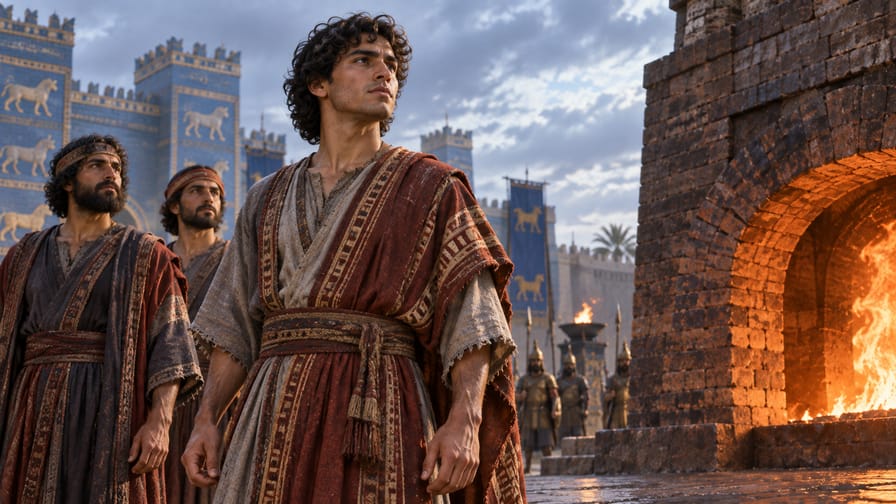
Who was Abednego? Abednego was one of three faithful Jewish companions of Daniel, along with Shadrach and Meshach, who served in the court of King Nebuchadnezzar during the Babylonian exile. His original Hebrew name was Azariah, meaning "the Lord has helped," but he was given the Babylonian name Abednego, which means "servant of Nego" (likely a reference to the Babylonian deity Nabu). He is primarily known for his unwavering commitment to God, even when it meant facing a fiery death, as recorded in the book of Daniel in the Old Testament. Abednego's story highlights themes of faith, divine protection, and resistance to idolatry during a critical period in Israelite history, around the 6th century BC.
The Story of Abednego in the Bible
The story of Abednego begins in Daniel chapter 1, following the conquest of Jerusalem by King Nebuchadnezzar of Babylon. Abednego, then known by his Hebrew name Azariah, was among the young, intelligent, and strong men from noble families chosen for special training in the king's service. Along with Daniel, Hananiah (Shadrach), and Mishael (Meshach), he was to learn the language and literature of the Chaldeans.
During this three-year training period, these four young men demonstrated their faithfulness by refusing to defile themselves with the king's rich food and wine. They requested a diet of vegetables and water, trusting God to sustain them. "At the end of ten days it was seen that they were better in appearance and fatter in flesh than all the young men who ate the king's food" (Daniel 1:15 ESV). God granted them knowledge and skill, and at the end of their training, they were found "ten times better than all the magicians and enchanters that were in all his kingdom" (Daniel 1:20 ESV).
Abednego's most famous act of faith, along with Shadrach and Meshach, is recorded in Daniel chapter 3. King Nebuchadnezzar commanded all officials to worship a massive golden image he had erected. Refusal to bow down meant certain death in a blazing fiery furnace. Abednego and his friends, holding fast to the first two commandments against idolatry, firmly refused.
When confronted by the furious king, they declared their resolve: "If this be so, our God whom we serve is able to deliver us from the burning fiery furnace, and he will deliver us out of your hand, O king. But if not, be it known to you, O king, that we will not serve your gods or worship the golden image that you have set up" (Daniel 3:17-18 ESV). This bold declaration infuriated Nebuchadnezzar, who ordered the furnace to be heated seven times hotter than usual.
Abednego, Shadrach, and Meshach were bound and thrown into the intense flames. The fire was so fierce that it killed the soldiers who threw them in. However, King Nebuchadnezzar was astonished to see not three, but four men walking unharmed in the fire, and "the appearance of the fourth is like a son of the gods" (Daniel 3:25 ESV).
Called out by the king, Abednego and his companions emerged completely unscathed. Not a hair on their heads was singed, their cloaks were untouched, and there was no smell of fire on them. This miraculous deliverance caused Nebuchadnezzar to praise the God of Abednego and his friends, issuing a decree that no one should speak against Him and promoting them in the province of Babylon. This powerful bible story of Abednego stands as a testament to God's protective power.
The Character and Legacy of Abednego
Abednego's character is defined by his unwavering faithfulness and remarkable courage, deeply rooted in his relationship with God. From his youth, when he chose a humble diet over the king's provisions, he demonstrated a commitment to purity and obedience that set him apart. This initial act of discipline laid the groundwork for his later, more dramatic stand against idolatry.
His primary strength was an unshakeable trust in God's sovereignty and power. He, along with Shadrach and Meshach, confidently declared that their God "is able to deliver us," yet they also acknowledged, "But if not," signifying that their obedience was not contingent on a guaranteed rescue (Daniel 3:17-18 ESV). This perspective reveals a profound and mature faith, understanding that God's will and glory were paramount, regardless of their personal outcome.
Abednego exemplified integrity, refusing to compromise his convictions even under threat of a horrific death. He prioritized the worship of the one true God above the demands of a powerful earthly king, demonstrating true spiritual fortitude. His refusal to bow was not an act of rebellion against legitimate authority, but a steadfast adherence to divine law when it directly conflicted with human decree.
His role in God's plan was significant: to bear witness to God's reality and power in a pagan land, before a pagan king. Through his and his companions' faithfulness, God's name was glorified, and Nebuchadnezzar was forced to acknowledge the supremacy of Israel's God. Abednego's life stands as a powerful lesson that obedience to God often comes at a cost, but God is always faithful to those who honor Him.
The Theological Significance of Abednego
Abednego’s story holds profound theological significance, particularly in its demonstration of God’s sovereignty, faithfulness, and power in the face of human idolatry and persecution. His unwavering commitment, along with Shadrach and Meshach, serves as a powerful testament to monotheism in a polytheistic world.
One of the most striking aspects is the clear contrast between the false gods of Babylon and the one true God of Israel. Nebuchadnezzar's golden image symbolized his power and the supremacy of his gods, yet Abednego’s defiance and God’s subsequent deliverance utterly discredited these idols. This narrative underscores the biblical theme that idols are powerless, while the Lord is a living, active God who intervenes in human affairs.
Abednego's miraculous rescue from the fiery furnace is a powerful display of divine preservation. It illustrates God's ability to protect His faithful servants even in the most extreme circumstances, reinforcing the promise that God is with His people through trials. The presence of the "fourth man" in the furnace, described as "like a son of the gods" (Daniel 3:25 ESV), is often interpreted as a Christophany, a pre-incarnate appearance of Jesus Christ. This foreshadows Christ's ultimate presence with believers in their suffering, a comforting doctrine for those facing persecution.
Furthermore, Abednego’s story contributes significantly to salvation history. It highlights God's continued faithfulness to His covenant people, even during their exile due to disobedience. It shows that God was still actively working among them, preserving a remnant and using their faithfulness to proclaim His glory to the nations. This foreshadows the broader plan of God to reach all humanity through His people, ultimately fulfilled in Christ.
His story also points to the broader biblical themes of steadfastness and endurance. Abednego’s refusal to compromise his faith under immense pressure serves as an enduring example for all who seek to live godly lives in a hostile world. It reinforces the truth that loyalty to God is paramount, and He honors those who honor Him, offering a glimpse of God's character as a mighty deliverer and protector.
Lessons from Abednego's Life
Abednego’s life offers timeless lessons for modern believers, particularly concerning faith, courage, and uncompromising devotion to God. His story encourages us to prioritize our relationship with God above all else, even when it demands great personal sacrifice.
Firstly, Abednego teaches us the importance of standing firm in our convictions. When faced with the king's command to worship an idol, he and his friends did not waver. In a world that often pressures us to conform, compromise our values, or dilute our faith, Abednego's example reminds us to hold fast to biblical truth, even if it means standing alone or facing difficult consequences.
Secondly, his story is a powerful testament to trusting God's sovereign plan. The declaration, "But if not," reveals a profound understanding that God's faithfulness is not dependent on Him always delivering us in the way we expect. We are called to obey and trust, leaving the outcome in His capable hands, knowing that His purpose is always good, whether in life or in death.
Moreover, Abednego's courage in the face of certain death is an inspiration. He modeled bravery born not of reckless abandon, but of deep faith in an all-powerful God. This encourages us to pray for and cultivate courage to live out our faith boldly in our daily lives, at work, in our communities, and among our friends.
Finally, the miraculous preservation in the furnace serves as a powerful reminder of God's ability to deliver. While we may not always experience such dramatic physical rescues, we can trust in God's spiritual deliverance and His promise to be with us through every trial, providing strength and comfort. Abednego's life calls us to unwavering faith and reminds us that God is ever present with His faithful children.
Conclusion: Remembering Abednego
Abednego, whose original name Azariah meant "the Lord has helped," lived up to that name through a life of exemplary faith and courage. Alongside Shadrach and Meshach, he demonstrated an unyielding commitment to God, defying idolatry and trusting in divine power, even when facing death in a fiery furnace. His story, deeply embedded in the book of Daniel, remains a beacon of hope and a challenge to believers throughout history.
Remembering Abednego means recalling a man who prioritized God's commands above human decrees, whose faithfulness glorified God before a pagan king. His life assures us of God's protective presence and encourages us to cultivate a similar steadfastness in our own walk of faith. Abednego’s powerful testimony reminds us that true worship demands integrity and a willingness to stand firm, trusting fully in the God who delivers.
Let his example inspire you to examine your own convictions and strengthen your resolve to follow God wholeheartedly. Explore more biblical characters and their stories to deepen your understanding of God's enduring faithfulness and His mighty acts throughout history.