


Jamim
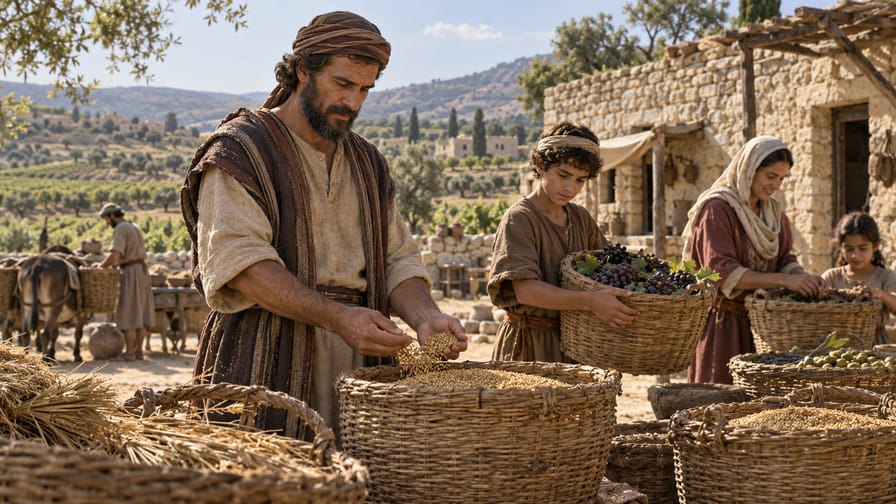
The figure of Jamim, though briefly mentioned in the Holy Scriptures, offers a starting point for a profound theological and historical analysis, especially from an evangelical Protestant perspective. He is one of those characters who, despite not starring in significant narrative events, comprises the essential genealogical fabric of the nation of Israel, underscoring God's faithfulness to His covenant and the precision of His providence in redemptive history. His inclusion in the genealogical lists is not accidental, but an integral part of the divine record that traces the lineage of the chosen people and, ultimately, of the Messiah.
This study proposes to explore the identity of Jamim, his onomastic meaning, the historical context in which he lived, his theological implication in the formation of the nation of Israel, and in the progressive revelation of God's plan. For a comprehensive understanding, canonical references, the implications of his name, and the relevance of his existence for biblical theology will be addressed, even in the absence of a detailed personal narrative. The analysis will emphasize biblical authority, historical accuracy, and the Christocentric perspective that permeates all of Scripture.
1. Etymology and Meaning of the Name
The name Jamim (in Hebrew: יָמִין, Yamin) is of Hebrew origin and carries a meaning deeply rooted in the culture and worldview of the Ancient Near East. The most common transliteration into Portuguese is Jamim, although other variations such as Iamin or Jamin may be found in different translations and academic contexts. The etymological root of the name, yamin, literally means "right hand" or "right side."
This root is rich in symbolic connotations. In the biblical and cultural context, the "right hand" frequently represents strength, power, honor, favor, blessing, and authority. For example, to be at someone's right hand meant occupying a position of honor and prestige, as seen in Psalm 110:1, where the Messiah is invited to sit at the right hand of God. Similarly, the right hand was used for oaths and to confer blessings, as in the case of Jacob blessing the sons of Joseph in Genesis 48:13-14.
Besides "right hand," the word yamin can also refer to the direction "south," because, for someone facing east (the primary direction of reference in ancient Israel, from where the sun rose), south would be to their right. Thus, Jamim can be interpreted as "he of the south" or "he who is on the right," which, in a figurative sense, can allude to a "fortunate" or "favored" person, given the association of the right with good and positive things.
There are no significant variations of the name Jamim for this specific character in other biblical languages, such as Aramaic or Septuagint Greek, where the name is generally transliterated phonetically (e.g., Iamin in Greek). However, the root yamin appears in other biblical names, the most prominent being Benjamin (בִּנְיָמִין, Binyamin), which means "son of the right hand" or "son of my strength/fortune," a name given by Jacob to his last son in Genesis 35:18, after Rachel had called him Ben-oni ("son of my sorrow").
The theological significance of the name Jamim resides in its potential allusion to divine favor and a position of honor. Even if the Bible does not directly attribute these qualities to the character, the name itself carries symbolic weight that refers to God's providence. The inclusion of a name with such meaning in a divine genealogy can be seen as a reminder of God's sovereignty over the lives of individuals and nations, and how He blesses and strengthens His people, according to the interpretation of commentators like John Calvin on divine providence that manifests even in the most minute details of creation and history.
2. Historical Context and Biblical Narrative
Jamim is introduced in the Scriptures as one of the sons of Simeon, who in turn was the second son of Jacob with Leah. His existence is firmly anchored in the patriarchal period of Israel's history, specifically during the migration of Jacob's family to Egypt and the subsequent censuses conducted during the Exodus. Biblical chronology places these events around the 18th century B.C. for the migration to Egypt and the 15th century B.C. for the Exodus, according to traditional evangelical Protestant chronology.
The historical context of Jamim's time is that of the initial formation of the people of Israel. Jacob and his family, totaling "seventy souls" (Genesis 46:27 Exodus 1:5), went down to Egypt to escape the famine that was ravaging Canaan. Jamim is explicitly mentioned in these genealogical lists that detail the members of Jacob's family who entered Egypt. His inclusion in these passages underscores the importance of each individual for the constitution of the nation promised to Abraham.
The main biblical passages where Jamim is mentioned are: Genesis 46:10, which lists the sons of Simeon who came with Jacob to Egypt Exodus 6:15, which reiterates the same list when describing the genealogy of Moses and Aaron through Levi Numbers 26:12, where he is listed as the founder of a family (the Jaminite clan) during the second census in the wilderness, before the entry into Canaan and 1 Chronicles 4:24, in a later genealogy of the tribe of Simeon. These mentions, though brief, are crucial for establishing the historicity and continuity of the Israelite lineage.
Geographically, Jamim's life would have been linked to two major settings. Firstly, he would have spent part of his childhood and youth in the land of Canaan, before the migration to Egypt. Secondly, most of his life and that of his immediate descendants took place in Egypt, where Jacob's family multiplied and became a great nation (Exodus 1:7). Subsequently, his descendants would have been involved in the wilderness journey, culminating in the eventual possession of the promised land.
Jamim's relationships with other biblical characters are primarily genealogical. He was the son of Simeon, brother of Reuben, Levi, Judah, Issachar, Zebulun (sons of Leah) Joseph and Benjamin (sons of Rachel) Dan and Naphtali (sons of Bilhah) Gad and Asher (sons of Zilpah). As Jacob's (Israel's) grandson, he was part of the second generation of the twelve tribes. His existence is, therefore, a vital link in the chain of redemptive history that leads to the formation of the nation of Israel, the people of God's covenant.
The social and religious context of the time was that of a semi-nomadic clan that was gradually settling. Faith in the God of Abraham, Isaac, and Jacob was central, even if many practices were still developing. Family and tribal life was the basis of society, with genealogies playing a fundamental role in identity and heritage. The inclusion of Jamim in these lists reflects the importance of each family and clan in the social and religious structure of early Israel, as highlighted by scholars like Gerhard von Rad in his analyses of Old Testament theology.
3. Character and Role in Biblical Narrative
The Bible, in its divine conciseness, offers no narrative details about Jamim's character, virtues, flaws, or specific actions. He is primarily a genealogical figure, a name in a list, which makes him one of many biblical characters whose importance lies more in his existence and lineage than in his individual feats. However, the absence of a personal narrative does not mean an absence of theological significance.
Jamim's role in the biblical narrative is to be an essential link in the genealogical chain of the people of Israel. His inclusion in the lists of Genesis 46:10, Exodus 6:15, Numbers 26:12, and 1 Chronicles 4:24 attests to the accuracy and historicity of the biblical record. He represents the continuity of the divine promise of the multiplication of Abraham's descendants and the formation of a great nation, as articulated in Genesis 12:2 and Genesis 15:5. His mere existence is a testament to God's faithfulness.
Although we cannot attribute "character" to him in the sense of personality traits or moral actions, we can infer his "role" from the context in which he is mentioned. He was one of the "seventy souls" who went down to Egypt, contributing to the preservation and growth of Jacob's family. His descendants, the Jaminite clan, were counted in the wilderness census, indicating that he was a progenitor of a family that maintained its tribal identity within the great nation of Israel, as observed in Numbers 26:12.
Jamim's vocation or function, in a broader sense, was to be part of God's covenant people. He was not a prophet, priest, or king, but a fundamental member of the community that God was forming for Himself. His life, though without recorded dramatic events, was part of the divine plan to establish Israel as a distinct nation and bearer of divine revelation to the world. His existence validates God's promise to multiply Abraham's descendants "as the stars of the heavens and as the sand on the seashore" (Genesis 22:17).
Significant actions and key decisions of Jamim are not recorded. However, his presence in the genealogies serves to reinforce the idea that every life, even those that seem "minor" in terms of narrative prominence, has its place in God's grand plan. The evangelical Protestant perspective emphasizes that God is sovereign over history and that He uses individuals from all walks of life to fulfill His purposes, from great leaders to the humblest members of the community, echoing the view of God as the Lord of history, as taught by theologians like B.B. Warfield.
Character development, as traditionally understood in a biography, does not apply to Jamim. Nevertheless, the inclusion of his name in different genealogical lists throughout the books of the Pentateuch and Chronicles demonstrates a divine concern for the preservation of lineage and tribal identity. This reflects the importance that God attributes to His covenant and to His promise that, through Israel, all the families of the earth would be blessed (Genesis 12:3). Jamim's "history" is, therefore, the story of his participation in the greater history of Israel.
4. Theological Significance and Typology
The theological significance of Jamim, though not directly derived from his actions, is deeply rooted in his position within Israel's redemptive history. He represents the continuity and faithfulness of God in fulfilling His covenant promises. As one of Simeon's sons, he is part of the second generation of patriarchs, a crucial link in the chain that leads to the formation of the twelve tribes, the foundation of the theocratic nation of Israel.
Jamim's existence and his inclusion in the biblical genealogies serve as a testament to the progressive revelation of God's plan. God chose a family, that of Abraham, and promised to make of it a great nation through which the Messiah would come (Genesis 12:3 Galatians 3:16). Each name in the genealogy, including Jamim's, is a reminder of God's meticulous attention to the details of His providence and His sovereignty over human history.
In terms of christocentric prefiguration or typology, Jamim is not a direct type of Christ. However, his existence contributes to the larger typology of the Messianic lineage. The preservation of Jacob's family, of which Jamim is a part, is a testament to God's faithfulness in maintaining the promised "seed" which, ultimately, would culminate in Jesus Christ. The accuracy of the Old Testament genealogies, which list figures like Jamim, demonstrates divine providence in preparation for the coming of the Savior, as argued by theologians like Geerhardus Vos, who emphasizes the organic unity of biblical revelation and the progression of redemptive history towards Christ.
The covenants and promises related to Jamim are the Abrahamic and Jacobite covenants. His life, though obscure, is a fulfillment of God's promise to Abraham that his descendants would be innumerable and that through them the world would be blessed (Genesis 15:5, Genesis 22:18). The inclusion of Jamim in the census lists in Numbers 26:12 demonstrates the reality of this multiplication and the organization of God's people into families and tribes, preparing them for life in the promised land.
There are no direct citations or references to Jamim in the New Testament. However, the importance of genealogies in the Old Testament is validated by the New Testament, which begins with the genealogies of Jesus Christ in Matthew 1:1-17 and Luke 3:23-38. These genealogies confirm the historical authenticity of the Old Testament and the continuity of God's redemptive plan, demonstrating that Jesus is the fulfillment of the promise made to the patriarchs, a central perspective in the theology of figures like J. Gresham Machen.
Jamim's connection to central theological themes is indirect, but significant. He connects with the doctrine of election, for he was born into the family chosen by God with God's faithfulness to His covenant, for his existence is proof of the fulfillment of the promise and with divine sovereignty, which orchestrates history and the life of each individual for His own purposes. His life, though without great deeds, is a silent testimony to God's grace that works through generations to accomplish His plan of salvation. The inclusion of Jamim in the lists also highlights the importance of genealogical obedience and the preservation of family identity within the people of God, an aspect of Mosaic law and Israelite culture.
5. Biblical-Theological Legacy and Canonical References
Jamim's legacy in the biblical canon is uniquely genealogical. He is one of the few characters whose existence is confirmed by multiple mentions in different books of the Bible, yet without any personal narrative attributed to him. His canonical references are found in Genesis 46:10, Exodus 6:15, Numbers 26:12, and 1 Chronicles 4:24. These repetitions are not redundant they reinforce the historical veracity of the genealogies and Jamim's importance as a progenitor of a family within the tribe of Simeon.
Jamim left no literary contributions, nor is the authorship of any book, Psalm, or epistle attributed to him. His impact resides not in what he wrote or did, but in what he represented: the continuity of Israel's lineage. His presence in the genealogies is a testament to the accuracy of the biblical records and the seriousness with which God dealt with the identity and descent of His chosen people.
Jamim's influence on biblical theology lies in the fact that his inclusion in the Old Testament genealogies underscores the importance of history and genealogy for understanding God's redemptive plan. The genealogical lists are not mere dry records they are theological documents that connect the past to the present and point to the future, guaranteeing the lineage of the Messiah. For Reformed and evangelical theology, the accuracy and historicity of these lists are crucial for the doctrine of the inerrancy and authority of Scripture, as argued by proponents like Louis Berkhof in his Systematic Theology.
In Jewish and Christian interpretive tradition, Jamim is generally treated as a minor character, whose main significance is his genealogical function. He is seen as an integral part of the historical tapestry of Israel, but without the prominence of figures like Abraham, Moses, or David. His importance is, therefore, corporate, as a member of the chosen nation, rather than individualistic, in the sense of great personal achievements. His existence validates the biblical narrative of the formation of the tribes and the multiplication of the people.
There are no significant references to Jamim in intertestamental literature, which is expected for a character of such a nature. However, the valuation of genealogies remained strong during this period, as evidenced in works like the Book of Jubilees, which seek to fill genealogical and narrative gaps, showing the persistent importance of lineage for Jewish identity.
The treatment of Jamim in Reformed and evangelical theology emphasizes his function within God's sovereign plan. He is an example of how God uses seemingly obscure individuals to fulfill His great purposes. His existence in the Scriptures reinforces the doctrine of divine providence, where God orchestrates all events and lives, however minor, for the realization of His redemptive objectives. The presence of names like Jamim in the Scriptures attests to God's faithfulness in fulfilling every detail of His covenant promises, demonstrating the inerrancy and sufficiency of the Word of God.
Jamim's importance for understanding the canon resides in his contribution to the historical authenticity of the Bible. Genealogies are an important literary genre that grounds the biblical narrative in concrete and verifiable facts (even if not all details can be archaeologically verified). The inclusion of Jamim and other similar genealogical characters ensures that the history of redemption is a real history, unfolding through real people and real families, culminating in the incarnation of Jesus Christ, the promised final descendant.