


Zebulun
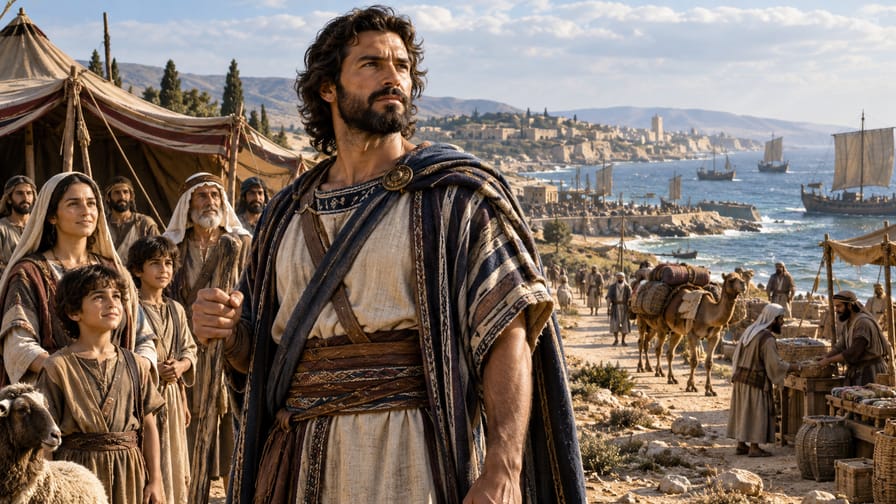
Zebulun (in Hebrew: זְבוּלֻן, Zebulun or זְבוּלוּן, Zevulun) is one of the patriarchal figures of the Old Testament, being the sixth and last son of Jacob by Leah. Although not a character with a prominent individual narrative, his importance lies in the founding of one of the twelve tribes of Israel, whose legacy and geographical location play a crucial role in salvation history, culminating in its connection with the ministry of Jesus Christ. An analysis of Zebulun, from an evangelical Protestant perspective, reveals themes of divine provision, tribal faithfulness, and prophetic fulfillment.
This in-depth study aims to explore the onomastic meaning of Zebulun, its historical context, the tribal character derived from the Scriptures, its theological and typological significance, and its legacy in the biblical canon. The approach will be exegetically and theologically informed, seeking to extract the lasting lessons that the history of this tribe offers for understanding God's redemptive work.
1. Etymology and meaning of the name
The name Zebulun (זְבוּלֻן, Zebulun) has its origin in Hebrew and is etymologically rich in meaning. The primary Hebrew root associated with the name is zabal (זָבַל), which can mean "to exalt," "to honor," "to endow," but also "to dwell" or "to reside." Leah's choice of this name, as recorded in Genesis 30:20, is fundamental to its understanding.
Leah exclaimed: "God has endowed me with a good endowment now my husband will dwell with me, because I have borne him six sons" (Genesis 30:20). The Hebrew word for "dwell" or "reside" is yizbeleni (יִזְבְּלֵנִי), a form of the verb zabal. Thus, the name Zebulun can be interpreted as "dwelling," "habitation," or "honor/endowment of dwelling."
The literal meaning points to Leah's desire for a permanent dwelling and a stable relationship with Jacob, now that she had borne him six sons. This longing for stability and recognition within the patriarchal family is expressed in the name, reflecting God's providence in her life and the human search for security.
Theologically, the name "habitation" can be seen as an echo of God's promise to dwell with His people, a recurring theme in Scripture, from the Tabernacle of Meeting and the Temple, to the incarnation of Christ (John 1:14, where the Greek verb skenoo, "tabernacled," echoes the idea of dwelling) and the New Jerusalem (Revelation 21:3).
Although there are no other prominent biblical characters with the exact name of Zebulun, the idea of "dwelling" is central to biblical faith. God's dwelling among His people is the essence of the covenant, and Zebulun's name, even if indirectly, alludes to this fundamental truth of the divine-human relationship, underlining the closeness God desires to have with humanity.
The variation of the name in genealogical lists or censuses is minimal, usually retaining the original Hebrew form. The name underlines Leah's dependence on God's grace and her hope that her fruitfulness would result in greater affection from Jacob, a theme that resonates with the human search for security and acceptance within the family and social structure.
2. Historical context and biblical narrative
The history of Zebulun begins in the patriarchal period, approximately in the 18th century BC, with his birth in Mesopotamia, before Jacob's migration to Canaan and later to Egypt. He is the tenth son of Jacob and the sixth of Leah, which places him directly in the lineage that would form the nation of Israel (Genesis 30:19-20).
Zebulun, as an individual, is first mentioned in the list of those who went down to Egypt with Jacob (Genesis 46:14). This mention is brief but crucial, as it positions him as one of the seventy original members of Jacob's family who would enter Egypt, setting the stage for the formation of a nation and the fulfillment of God's promises to Abraham.
2.1 Family origin and genealogy
Zebulun's origin is intrinsically linked to the story of Jacob and his wives, Leah and Rachel. His mother, Leah, though less loved by Jacob than Rachel, was blessed with many children, which she interpreted as a sign of divine grace and a means to win her husband's affection (Genesis 29:31-35 30:19-20). He was a full brother to Reuben, Simeon, Levi, Judah, and Issachar.
Zebulun's descendants are detailed in the censuses of Israel. In Numbers 26:26-27, his sons are named: Sered, Elon, and Jahleel, who became the heads of the families (clans) of the tribe of Zebulun. In the first census, the tribe numbered 57,400 men fit for war (Numbers 1:30-31), and in the second, 60,500 (Numbers 26:27), indicating significant growth and God's blessing on the lineage.
After the Exodus and the wilderness wandering, the tribe of Zebulun played its part in the conquest of Canaan. Its territorial inheritance was established by Joshua, being one of the northern tribes, located between the Sea of Galilee and the Mediterranean, though without direct and exclusive access to the sea (Joshua 19:10-16). This location was strategic, near trade routes and fertile regions.
Jacob's blessing in Genesis 49:13 prophesied: "Zebulun shall dwell at the seashore he shall be a haven for ships, and his border shall be by Sidon." Although the territory allotted to the tribe was not directly on the Mediterranean coast, its proximity to major trade routes and port cities like Acco and Tyre/Sidon allowed the tribe to actively participate in maritime and land trade, fulfilling the prophecy in some way.
During the period of the Judges, Zebulun demonstrated bravery and loyalty. They fought against the Canaanites, although they did not completely drive them out of some cities (Judges 1:30). More notably, the tribe of Zebulun, along with Naphtali, responded to the call of Deborah and Barak to fight against Sisera, the commander of the army of Jabin, king of Canaan (Judges 4:6, 10).
The Song of Deborah celebrates Zebulun's courage: "Zebulun is a people who risked their lives unto death, as did Naphtali, on the heights of the field" (Judges 5:18). This passage highlights the tribe's willingness to sacrifice itself for the liberation of Israel, demonstrating a combative spirit dedicated to the national cause, an example of faith and obedience to divine leadership.
Later, the tribe of Zebulun is mentioned for its participation in important events, such as supporting David when he became king over all Israel. 1 Chronicles 12:33 records that from Zebulun came 50,000 men of war, all trained for battle, equipped with every kind of weaponry, and not double-hearted, showing unwavering loyalty and unity with the new king.
In the time of King Hezekiah, during the period of the divided monarchy, some of Zebulun, along with other northern tribes, humbled themselves and went to Jerusalem to celebrate the Passover, despite the mockery of their neighbors (2 Chronicles 30:10-11). This demonstrates a faithful remnant in the tribe, even after the Assyrian captivity and the widespread apostasy of the Northern Kingdom, maintaining worship of the God of Israel.
3. Character and role in the biblical narrative
The character of Zebulun, as an individual, is sparsely detailed in the Scriptures, which is common for most of Jacob's sons. However, the character and role of his tribe are significantly delineated by prophetic blessings and recorded actions throughout Israel's history, revealing striking traits.
One of the most prominent qualities associated with the tribe of Zebulun is its courage and warrior spirit. The Song of Deborah, in Judges 5:18, is an eloquent witness: "Zebulun is a people who risked their lives unto death, as did Naphtali, on the heights of the field." This readiness for sacrifice in defense of Israel is a remarkable virtue, essential for the nation's survival.
Loyalty and unity are also striking traits. The participation of 50,000 men of Zebulun, "not double-hearted," in David's coronation in Hebron (1 Chronicles 12:33) demonstrates strong adherence to divinely instituted leadership and a sense of national unity, even in times of political and social division. This loyalty was crucial for the stability of the kingdom.
Jacob's blessing in Genesis 49:13 suggests a commercial character and connection to the outside world: "Zebulun shall dwell at the seashore he shall be a haven for ships, and his border shall be by Sidon." Although the tribe did not have direct access to the sea, its strategic location, near important trade routes, brought it into contact with foreign peoples and mercantile activities, facilitating cultural and economic exchange.
This inclination for commerce can be interpreted as a capacity for interaction with and influence over neighboring nations. Moses' blessing in Deuteronomy 33:18-19 reinforces this, describing Zebulun (along with Issachar) as those who "shall call peoples to the mountain there they offer sacrifices of righteousness for they shall draw from the abundance of the seas and the treasures hidden in the sand."
This passage in Deuteronomy reveals a spiritual and evangelistic calling for the tribe. They would not only benefit from trade but would also be a beacon for the Gentiles, calling them to worship God in Jerusalem and to offer "sacrifices of righteousness." This points to a missionary and priestly role, mediating divine revelation to the surrounding peoples, a precursor to the universal mandate of the Gospel.
In terms of weaknesses, Judges 1:30 records that Zebulun did not drive out the inhabitants of Kitron or Nahalol, allowing the Canaanites to live among them and pay tribute. While this is not an explicit sin of total disobedience like in other tribes, it indicates a failure to fully comply with the divine command to purify the land of Canaan, which could lead to future temptations of syncretism and apostasy.
However, the general narrative of Zebulun is that of an active and engaged tribe in the life of Israel, contributing military bravery, political loyalty, and a potential religious influence on neighboring peoples. Its role is more collective than individual, representing the strength and diversity of God's people in His redemptive purpose.
4. Theological and typological significance
The theological significance of Zebulun transcends its tribal history, embedding itself in the grand narrative of God's redemptive history. The tribe of Zebulun, as an integral part of the twelve tribes of Israel, is a link in the chain of divine promises and covenants, from Abraham to the coming of the Messiah, demonstrating God's faithfulness to His plan.
Moses' blessing in Deuteronomy 33:18-19 is particularly rich in theological implications. The mention of Zebulun and Issachar "calling peoples to the mountain" and offering "sacrifices of righteousness" prefigures a universal aspect of God's worship. This suggests that, from the Old Testament, there was a perspective that Israel would be a light to the nations, not just for itself, but a channel of blessing for the world.
This theme finds its full fulfillment in Christ, who is the light of the world. The geographical location of the tribe of Zebulun, in Galilee, becomes a focal point of progressive revelation and christocentric typology. It is in the territory of Zebulun and Naphtali that Jesus begins his public ministry, marking a new chapter in salvation history.
The evangelist Matthew, in Matthew 4:13-16, quotes the prophecy of Isaiah 9:1-2 to describe the beginning of Jesus' ministry in Capernaum, which was on the border of Zebulun and Naphtali: "The land of Zebulun and the land of Naphtali, by the way of the sea, beyond the Jordan, Galilee of the Gentiles—the people dwelling in darkness have seen a great light, and for those dwelling in the region and shadow of death, on them a light has dawned."
This is one of the most direct and impactful typologies associated with Zebulun. The region, often despised for being "Galilee of the Gentiles" and far from the religious center of Jerusalem, becomes the place where the "great light" of the Messiah first shines. Isaiah's prophecy, which spoke of a time of great distress and darkness, finds its fulfillment in the coming of Jesus, who brings salvation and hope to all.
The location of Zebulun, described by Jacob as a "haven for ships" (Genesis 49:13), can be symbolically seen as a point of connection and exchange. Just as trade and navigation brought goods and people, Jesus' ministry in this region brought the message of the gospel to Jews and Gentiles, making Zebulun a "port" for divine light and a center for the irradiation of truth.
The loyalty and warrior spirit of the tribe (Judges 5:18 1 Chronicles 12:33) can be seen as a prefiguration of the need for zeal and courage in Christian faith, especially in the "spiritual warfare" against the forces of darkness and in the defense of truth. Zebulun's readiness to fight is an echo of the call for believers to be "good soldiers of Christ Jesus" (2 Timothy 2:3), firm in faith.
The mention of Zebulun among the 144,000 sealed in the book of Revelation 7:8 reinforces its continued importance in God's eschatological plan. This demonstrates that, even in apocalyptic visions of the end times, Israel's tribal identity remains relevant, symbolizing the totality of God's people, both Jews and Gentiles, redeemed by Christ.
The figure of Zebulun, therefore, illustrates God's faithfulness to His promises, His sovereignty in choosing even the less prominent parts of His people for significant purposes, and the way the Old Testament consistently points to the person and work of Jesus Christ. He is a testament to the progression of revelation and the redemptive plan that culminates in the Messiah, the light of the world.
5. Biblical-theological legacy and canonical references
The legacy of Zebulun in the biblical canon is notable, not so much for a detailed individual biography, but for the persistence of its tribal identity and the fulfillment of prophecies associated with it. The tribe of Zebulun is mentioned in various books, from the patriarchs to Revelation, weaving a continuous thread through biblical history and demonstrating the unity of Scripture.
Its earliest mentions are in Genesis, in the account of his birth (Genesis 30:20) and in the list of those who went down to Egypt (Genesis 46:14). Jacob's blessing in Genesis 49:13 establishes expectations for its future location and activities, which would be confirmed in the distribution of the land of Canaan, a testament to divine foreknowledge.
In Numbers, Zebulun is consistently listed in the censuses of Israel (Numbers 1:30-31 2:12 26:26-27) and in the organization of the camp and the march (Numbers 10:16). Its leader is mentioned in the offering of the princes (Numbers 7:24) and in the list of the spies (Numbers 13:10), showing its full integration into the community of Israel in the wilderness and its active participation in the events of the wandering.
Moses' blessing in Deuteronomy 33:18-19 solidifies Zebulun's identity as a tribe with a calling for commerce and for the evangelization of neighboring peoples, a prophecy that many evangelical commentators, such as John Gill, interpret as a call to proclaim divine truth and to attract Gentiles to the worship of the true God.
In the book of Joshua, the demarcation of Zebulun's territory (Joshua 19:10-16) fulfills the patriarchal and Mosaic prophecies, though with interpretive nuances regarding direct access to the sea. The tribe's location, crucial for messianic fulfillment, is established in this period, demonstrating God's faithfulness to His territorial promises.
The period of the Judges highlights Zebulun's military bravery (Judges 4:10 5:18) and its participation in the fight against Israel's enemies, though it also records its failure to completely drive out the Canaanites (Judges 1:30). This duality of faithfulness and failure is a common theme in Israel's history, illustrating the need for divine grace and the persistence of human sin.
In the books of Chronicles, Zebulun is praised for its loyalty and military strength in supporting David (1 Chronicles 12:33) and for its willingness to participate in Hezekiah's Passover, even coming from an apostate kingdom (2 Chronicles 30:10-11). This underscores the presence of a faithful remnant within the tribe, which maintained its devotion to the Lord, even in times of great apostasy and division.
The most significant extra-patriarchal reference in the Old Testament for Zebulun is in Isaiah 9:1-2 (Hebrew version 8:23-9:1), which prophesies a "great light" over the "land of Zebulun and the land of Naphtali." This prophecy is central to the christocentric understanding of Zebulun, pointing to the coming of the Messiah.
In the New Testament, Matthew 4:13-16 explicitly quotes Isaiah 9:1-2 to describe the beginning of Jesus' ministry in Capernaum, in the region of Zebulun and Naphtali. This connection is vital for evangelical theology, as it demonstrates the authority and fulfillment of the Old Testament Scriptures in Christ, validating the divine inspiration of the entire Bible.
Jesus' presence in the Galilee of Zebulun and Naphtali is a testament to the universality of the gospel, which begins to shine in a region of "Gentiles" and "darkness," before spreading to the whole world. This event is one of the clearest prefigurations fulfilled in the person of Christ, the true light who came into the world.
Finally, the mention of Zebulun in the book of Revelation 7:8, as one of the twelve tribes of Israel sealed by God, reaffirms its eschatological relevance. The inclusion of Zebulun among the 144,000 sealed symbolizes the integrity and continuity of God's people through the ages, culminating in the consummation of redemptive history and the glory of the eternal kingdom.
In Reformed and evangelical theology, Zebulun is often studied as an example of God's sovereignty in using all parts of His people for His purposes, especially in preparation for the coming of the Messiah. The tribe serves as a tangible link between the prophecies of the Old Testament and their realization in the New Testament, underlining the unity of the divine plan of salvation and the inerrancy of the Word of God.
The history of Zebulun, though not the most spectacular, is a reminder that God acts through individuals and communities, often in unexpected places, to manifest His glory and fulfill His promises. The "light that dawned" in the land of Zebulun is the light of Christ, which illuminates all who are in darkness, a theological legacy of immense value for the church and for the world.