


Naphtali
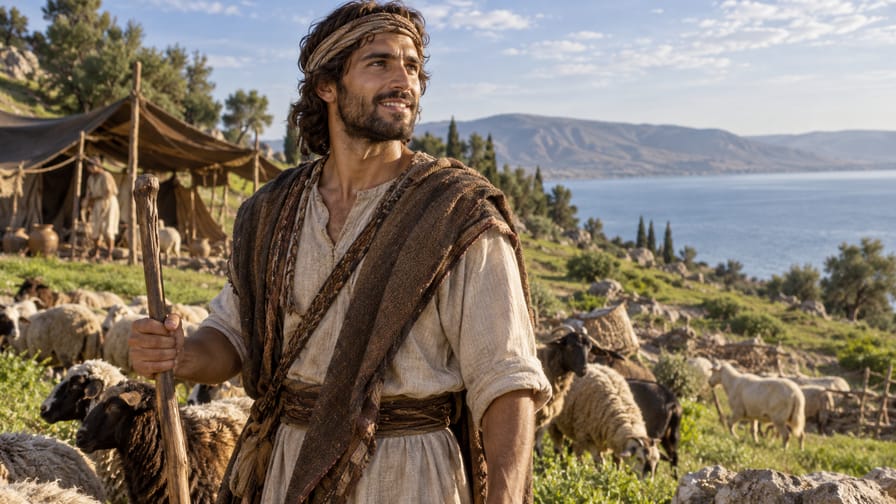
The figure of **Naphtali**, one of the twelve sons of Jacob and patriarch of one of the tribes of Israel, is a biblical character whose significance extends beyond his brief individual mention, impacting the redemptive history of Israel and, by extension, Christian theological understanding. Although the Scriptures do not provide extensive details about his personal life, an analysis of his name, the role of his tribe, and the prophecies associated with him reveal layers of meaning that are crucial for evangelical Protestant theology.
This article will seek to offer a deep and comprehensive analysis of **Naphtali**, exploring his etymology, his historical-narrative context, the character of his tribe, his theological and typological significance, and his canonical legacy. The adopted perspective will be evangelical Protestant, emphasizing biblical authority, historical accuracy, and Christocentric typology, suitable for a biblical-theological dictionary.
1. Etymology and Meaning of the Name
The name **Naphtali** (in Hebrew: נַפְתָּלִי, Naphtali) is of great etymological and theological relevance. He is the second son of Bilhah, Rachel's servant, and the sixth son of Jacob (Genesis 30:7-8). The origin of the name is explicitly explained in the biblical text by Rachel, who named him amidst her struggle to have children.
The etymological root of the name derives from the Hebrew verb נָפַל (naphal), which means "to struggle" or "to wrestle." Rachel declares in Genesis 30:8: "With great wrestlings (נַפְתּוּלֵי אֱלֹהִים, naphtulei Elohim) have I wrestled with my sister, and have prevailed." The name **Naphtali**, therefore, directly reflects this "struggle" or "wrestling" that Rachel experienced with her sister Leah in her quest to have children for Jacob.
The literal meaning of **Naphtali** is often translated as "my struggle" or "my wrestling." This meaning is not merely descriptive of a family event, but carries profound theological significance. The life of Jacob, **Naphtali**'s father, was marked by a literal and spiritual struggle with God (Genesis 32:22-32), resulting in his name change to Israel, "he who struggles with God."
Thus, the name of **Naphtali** echoes a central theme in the patriarchal narrative: the human struggle with life's circumstances and, by extension, with God. Although there are no significant variations of the name in biblical languages, the concept of "struggle" is recurrent. There are no other prominent biblical characters with the same name, which makes **Naphtali** unique in its representation of this theme.
The theological significance of the name resides in the idea that faith often involves struggle, perseverance, and divine dependence. Rachel's "struggle" was not only against Leah, but a plea to God for blessings. This resonates with the evangelical perspective that the Christian life is a continuous spiritual battle against sin, the world, and the devil, requiring the grace and strength of the Lord (Ephesians 6:12).
2. Historical Context and Biblical Narrative
2.1 Family Origin and Genealogy
**Naphtali** was born during the patriarchal period, approximately between 1800 and 1700 B.C., while Jacob resided in Paddan-Aram, serving Laban. His mother, Bilhah, was the servant whom Rachel had given to Jacob so that she might have children through her, a common practice in ancient Mesopotamia to ensure the continuity of the family lineage (Genesis 30:7).
He is the sixth son of Jacob and the second son of Bilhah, his brother Dan being Bilhah's firstborn (Genesis 30:6-8). The genealogy of **Naphtali** is traced in Genesis 46:24, where his sons are listed as Jahzeel, Guni, Jezer, and Shillem. These became the heads of the families (clans) within the tribe of **Naphtali**.
2.2 Main Events of His Life and the Tribe
The individual life of **Naphtali** is little detailed in the Scriptures after his birth. He is mentioned in the list of those who went down to Egypt with Jacob (Genesis 46:24) and again in the blessings of Jacob and Moses. Most of the biblical narrative focuses on the tribe of **Naphtali**, descendants of the patriarch.
During the Exodus, the tribe of **Naphtali** is counted in the censuses. In Numbers 1:43, the tribe numbered 53,400 men fit for war. In Numbers 26:50, the later census records 45,400 men, indicating a population decrease, though it was still a numerous and significant tribe within Israel.
The possession of the land of **Naphtali** is described in Joshua 19:32-39. The tribe received a portion in northern Canaan, in the region of Galilee, characterized by its fertility and natural beauty. Its borders included the Sea of Galilee to the south and extended to Lebanon to the north. Important cities such as Hazor, Kiriathaim, Adamah, and Ramah were within its territory.
The tribe of **Naphtali** played a crucial role in several events during the period of the Judges. They were prominent in the battle against Sisera, under the leadership of Deborah and Barak. Judges 4 and 5 describe the courage and readiness of the tribe of **Naphtali** and Zebulun to rise up against the oppressive Canaanites, demonstrating their loyalty and bravery (Judges 4:10, 5:18).
Later, the tribe of **Naphtali** also responded to Gideon's call to fight against the Midianites (Judges 6:35, 7:23). These passages illustrate the tribe's willingness to participate in the defense of Israel and in the liberation of its people, even in the face of great adversity.
In later periods, **Naphtali** is mentioned in connection with the divided kingdom. After the division of the kingdom, **Naphtali** became part of the Northern Kingdom (Israel). Isaiah 9:1-2 mentions the land of Zebulun and **Naphtali** in a prophetic context that would be fulfilled in the coming of the Messiah, Jesus Christ.
The region of **Naphtali**, especially Galilee, became a center of activity for Jesus in his earthly ministry (Matthew 4:13-16). The "Galilee of the Gentiles" was an area of ethnic and cultural diversity, and Jesus' presence there fulfilled Isaiah's prophecy, bringing light to a land that was in darkness.
3. Character and Role in the Biblical Narrative
The individual character of **Naphtali**, as a person, is not extensively developed in the Scriptures. He is one of the twelve sons of Jacob and, as such, a patriarch of the nation of Israel. The characteristics attributed to him are, in large part, inferred from the prophecies of Jacob and Moses, and from the actions of his tribe.
Jacob's prophecy in Genesis 49:21 describes **Naphtali** as a "doe let loose, who utters beautiful words" (or, in some translations, "who yields beautiful fawns"). This image suggests qualities of swiftness, agility, beauty and, possibly, eloquence or effective communication ability. Swiftness and agility are characteristics that manifested in the tribe.
The tribe of **Naphtali** is often described as courageous and combative. Their prominent participation in battles under Deborah and Barak (Judges 4-5) and with Gideon (Judges 6-7) demonstrates a willingness to fight and a commitment to the cause of Israel. They "risked their lives unto the death in the high places of the field" (Judges 5:18), evidencing their bravery.
Moses' blessing in Deuteronomy 33:23 adds that **Naphtali** is "satisfied with favor, and full of the blessing of the Lord: possess thou the west and the south." This blessing suggests that the tribe would enjoy prosperity and abundance, perhaps due to the fertility of its land in Galilee, which was rich in natural resources and strategically located.
The primary role of **Naphtali** and his tribe in the biblical narrative is to be an integral part of God's chosen people, contributing to the history of Israel and the progressive revelation of the divine plan. Although there is no specific prophetic, priestly, or royal calling for **Naphtali**, his geographical location and his participation in crucial moments are of great importance.
The absence of specific moral failings attributed to **Naphtali** individually is notable, but the tribe, like all the tribes of Israel, likely shared in the common failings and sins of the people, such as idolatry and disobedience to God at different periods in Israel's history.
Nevertheless, the biblical narrative emphasizes the loyalty of **Naphtali** in times of crisis, such as during the period of the Judges. Their willingness to rise in defense of Israel and their contribution to the nation's security demonstrate a character of faithfulness and service to God's purpose for His people.
4. Theological Significance and Typology
The theological significance of **Naphtali** and his tribe transcends their immediate history, inserting itself into the grand narrative of redemptive history. Jacob's blessing, which describes him as a "doe let loose" (Genesis 49:21), can be interpreted in various ways. Commentators such as Keil and Delitzsch suggest that the image of the doe emphasizes agility and swiftness, perhaps in battle or in the dissemination of "beautiful words," which could allude to a vocation for proclamation.
Moses' prophecy in Deuteronomy 33:23, "O **Naphtali**, satisfied with favor, and full of the blessing of the Lord, possess thou the west and the south," points to the prosperity and abundance that the tribe would enjoy in its territorial inheritance. This geographical blessing is crucial for the Christocentric typology associated with **Naphtali**.
The most significant connection of **Naphtali** with Christocentric typology lies in his geographical location. The region of Galilee, where the tribe of **Naphtali** (and Zebulun) settled, is explicitly mentioned in a Messianic prophecy from Isaiah 9:1-2: "But there will be no gloom for her who was in anguish. In the former time he brought into contempt the land of Zebulun and the land of **Naphtali**, but in the latter time he has made glorious the way of the sea, the land beyond the Jordan, Galilee of the Gentiles. The people who walked in darkness have seen a great light those who dwelt in a land of deep darkness, on them has light shone."
This prophecy is directly applied to Jesus Christ in the New Testament by Matthew (Matthew 4:13-16). When Jesus began his public ministry, he left Nazareth and went to live in Capernaum, "in the region of Zebulun and **Naphtali**." Thus, the land of **Naphtali**, once humbled and perhaps considered less prominent in Israel, became the birthplace of the Messiah's earthly ministry, the place where the "great light" began to shine for Israel and for the Gentiles.
The theme of "struggle" implicit in the name of **Naphtali** can also be seen as an echo of the spiritual struggle that is central to human experience and the journey of faith. Jacob wrestled with God and prevailed (Genesis 32:28). Christ Himself, in His incarnation, faced struggles and temptations, culminating in His victory over sin and death. The Christian life, as taught in evangelical theology, is a constant struggle for faith (1 Timothy 6:12), but a struggle in which the believer is empowered and victorious through Christ.
The tribe of **Naphtali**, in its readiness for battle and its loyalty, also prefigures the church, which is called to be militant against the forces of evil, trusting in the victory already achieved by Christ. The location of **Naphtali** in the "Galilee of the Gentiles" also points to the inclusion of the Gentiles in God's plan of salvation, a central theme in Pauline theology and the mission of the church.
In summary, **Naphtali**, through his name, his blessings, and, crucially, the inheritance of his land, contributes significantly to the progressive revelation of God. He points to divine providence which, even in unexpected or "humbled" places, sets the stage for the manifestation of salvation in Christ, the "Light of the world" (John 8:12).
5. Biblical-Theological Legacy and Canonical References
The legacy of **Naphtali** in biblical theology is multifaceted, extending throughout the entire canon. His mentions are not limited to the Pentateuch, but appear in historical, prophetic, and apocalyptic books, solidifying his importance in the history of Israel and the narrative of salvation.
Besides the references in Genesis, Numbers, Deuteronomy, and Joshua, the tribe of **Naphtali** is notably present in the book of Judges, as already discussed, where their bravery and participation in crucial battles are recorded (Judges 4:6, 5:18, 6:35, 7:23). In the book of 1 Chronicles, **Naphtali** is mentioned in the genealogies (1 Chronicles 7:13) and in the list of warriors who came to David in Hebron to make him king (1 Chronicles 12:34), showing their continued military and political relevance.
The influence of **Naphtali** in biblical theology is most pronounced through the prophecy of Isaiah 9:1-2 and its fulfillment in Matthew 4:13-16, which explicitly connects the region of **Naphtali** with the beginning of Jesus' ministry. This connection is fundamental to New Testament theology, demonstrating God's faithfulness in fulfilling His promises and the universality of the gospel message, which began in a "Galilee of the Gentiles."
In the Old Testament, the tribe of **Naphtali** is also mentioned in Ezekiel 48:3-4, in the vision of the future division of the land in restored Israel, where **Naphtali** receives a portion alongside other tribes. This indicates their inclusion in the eschatological hope of Israel, an important theme in prophetic theology.
In the New Testament, besides the citation in Matthew, **Naphtali** appears in the list of the twelve tribes of Israel in Revelation 7:6, among the 144,000 sealed. This final mention in the canon underscores the continuity of the identity of God's people throughout the ages and the inclusion of the historical tribes in the culmination of redemptive history. For Reformed and evangelical theology, this list is often interpreted symbolically, representing the fullness of God's people, both Jews and Gentiles, united in Christ.
Jewish and Christian interpretive tradition has historically recognized the importance of **Naphtali**, especially in relation to his land. Evangelical commentators like Matthew Henry and John Calvin, while not delving extensively into the individual character of **Naphtali**, highlight Jacob's and Moses' blessings as prophecies of the prosperity and capability of his tribe.
Reformed and evangelical theology emphasizes God's sovereignty in the choice and purpose of every part of His creation and of His people. The history of **Naphtali**, though less detailed than that of other patriarchs, serves as a reminder of God's faithfulness in using all the tribes of Israel for His purposes, culminating in the coming of Christ. Rachel's "struggle," which gave **Naphtali** his name, and the future "light" that would shine in his land, serve as a microcosm of the journey of faith and the Messianic hope for all of God's people.
The importance of **Naphtali** for understanding the canon lies in his contribution to the progression of divine revelation, from the patriarchal promises to the ministry of Christ and the eschatological vision. He represents God's faithfulness in fulfilling His promises and in using even the less prominent parts of His people to accomplish His grand plans of salvation.