


Amariah
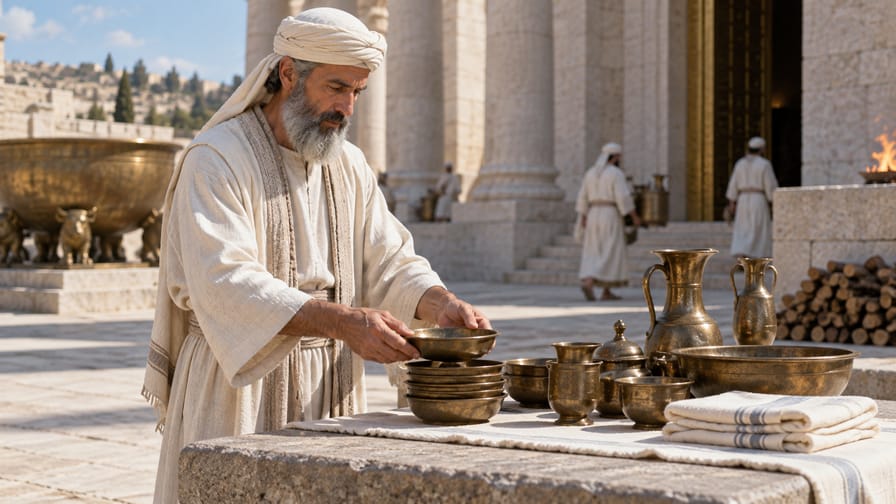
The biblical figure of Amariah (in Hebrew, אֲמַרְיָה, ’Ămaryāh, or אֲמַרְיָהוּ, ’Ămaryāhû) is multifaceted and appears in various passages of the Old Testament, referring to multiple individuals across different periods of Israel and Judah's history. Although no single Amariah is a central character with an extensive narrative, an analysis of his mentions offers valuable insights into the priestly lineage, temple administration, justice, and faithfulness to God in Israel. The richness of the name and the contexts in which it appears contribute to a deeper understanding of divine revelation and God's redemptive plan.
This study aims to explore the etymology of the name, the historical and narrative context of the main characters named Amariah, their characteristics and roles, their theological and typological significance, and their biblical-theological legacy, from a conservative evangelical Protestant perspective. The multiplicity of individuals with this name requires a careful approach to distinguish their contributions and relevance for understanding the biblical canon.
1. Etymology and Meaning of the Name
The name Amariah, in both its shorter form (אֲמַרְיָה, ’Ămaryāh) and longer form (אֲמַרְיָהוּ, ’Ămaryāhû), is a Hebrew theophoric name, common in the Old Testament period. It is composed of two elements: the Hebrew verb אָמַר (’āmar), meaning "to say," "to speak," "to declare," or "to promise," and the abbreviated form of the Tetragrammaton YHWH, יָה (Yah) or יָהוּ (Yahû), which represents the name of the God of Israel, Yahweh.
Therefore, the most accepted meaning for Amariah is "Yahweh has said" or "Yahweh has promised." Other interpretations include "Yahweh spoke" or "Yahweh declared." This meaning is deeply theological, as it points directly to God's sovereignty and communicative initiative. The idea that "Yahweh has said" implies that God's word is authoritative, effective, and trustworthy, forming the basis of all divine revelation and promise.
The root אָמַר (’āmar) is fundamental in biblical theology, associated with creation (Genesis 1:3, 6, 9), the law (Exodus 20:1), covenant promises (Genesis 12:1-3), and prophecy (Jeremiah 1:7). To bear a name carrying such meaning was not merely personal identification but also a public testimony of belief in God's word and authority. For the priests and Levites who bore this name, it underscored their role as mediators of God's word to the people.
There are at least eight distinct characters named Amariah in the Hebrew Bible, which demonstrates the popularity and theological resonance of the name. This multiplicity of individuals with the same name requires distinguishing each of them in their respective mention and context, although the underlying meaning remains constant and relevant to all.
2. Historical Context and Biblical Narrative
The presence of the name Amariah in different historical periods of the Old Testament underscores its relevance in various phases of Israel's history. Each individual with this name contributes, in some way, to the narrative and theological tapestry of the Scriptures.
2.1. Amariah, the Ancestor of Zadok
One of the most prominent Amariahs is the ancestor of the high priest Zadok, one of the pillars of the Levitical priesthood. He is mentioned in 1 Chronicles 6:7 (verse 5:33 in some English translations) and 1 Chronicles 6:52 (verse 5:38 in some English translations). This lineage dates back to Aaron, passing through Eleazar and Phinehas, and culminating in Zadok, who became high priest in the time of David and Solomon. The inclusion of Amariah in this genealogy establishes a legitimate and continuous line of priestly succession, fundamental to the order of worship in the temple.
The historical period of this Amariah predates the monarchy, falling between the period of the Judges and the beginning of the united kingdom. His mention in a priestly genealogy highlights the importance of the purity and continuity of the lineage for the priestly office, as established in the Mosaic Law (Exodus 28:1).
2.2. Amariah, the High Priest in the Reign of Jehoshaphat
Another Amariah of great importance was the high priest appointed by King Jehoshaphat of Judah (c. 870-848 BC). This appointment is recorded in 2 Chronicles 19:11. Jehoshaphat, a king who "walked in the former ways of David his father, and did not seek the Baals" (2 Chronicles 17:3), undertook significant reforms in Judah, including the appointment of judges and administrators to ensure justice and faithfulness to God's Law.
In this context, Amariah, the high priest, was appointed to preside over "every matter of the Lord," that is, all religious and ecclesiastical affairs. He worked together with Zebadiah, the prince of the house of Judah, who presided over "every matter of the king." This division of responsibilities demonstrates Jehoshaphat's organization to ensure both civil and religious justice, with the high priest playing a crucial role in the interpretation and application of divine law in Jerusalem and throughout the kingdom of Judah.
2.3. Amariah, the Levite in David's Organization
During the reign of David (c. 1010-970 BC), when the king organized the Levites for temple service, an Amariah is mentioned as the son of Hebron, from the family of Kohath (1 Chronicles 23:19 and 1 Chronicles 24:23). He was part of the priestly and Levitical division that would serve in the temple to be built by Solomon. This meticulous organization reflected David's reverence for the worship of God and the importance of order and discipline in religious service.
2.4. Amariah, the Levite in Hezekiah's Time
In the time of King Hezekiah (c. 715-686 BC), another Amariah is recorded as one of the Levites who helped distribute the sacred offerings and tithes brought to the temple during Hezekiah's reforms (2 Chronicles 31:15). Hezekiah, like Jehoshaphat, was a king who sought to restore the worship of Yahweh and purify the temple. This Amariah was under the supervision of Kore, the gatekeeper of the East, and his function was to ensure the just distribution of goods dedicated to the priests and Levites, demonstrating the importance of integrity in the administration of sacred resources.
2.5. Amariah, the Priest in the Post-Exilic Period
After the return from the Babylonian exile, several individuals named Amariah are mentioned. A priest named Amariah returned with Zerubbabel (c. 538 BC) and is listed in Nehemiah 10:3 (verse 2 in some translations) as one of the signatories of the covenant made under Ezra. He also appears in the list of priests and Levites who returned with Zerubbabel in Nehemiah 12:2 and 12:13, indicating the continuity of priestly service in the post-exilic community.
Another Amariah, mentioned in Ezra 10:42, was among those who had married foreign women during the time of Ezra (c. 458 BC). This passage reflects the challenge of ethnic and religious purity in the restored community and Ezra's effort to restore faithfulness to God's Law.
2.6. Amariah, the Ancestor of the Prophet Zephaniah
Finally, an Amariah is mentioned as the fourth ancestor of the prophet Zephaniah (Zephaniah 1:1). This mention serves to establish the prophet's lineage and contextualize him within the history of Judah, linking him to a family that likely had a heritage of faith and service to God.
3. Character and Role in the Biblical Narrative
Although the Scriptures do not offer detailed biographies for most individuals named Amariah, their roles and the circumstances of their mentions allow us to infer aspects of their character and the importance of their functions. The meaning of their name, "Yahweh has said," serves as a theological backdrop for understanding their lives.
The Amariah, ancestor of Zadok, although a genealogical figure, represents the continuity and sanctity of the priestly lineage. His inclusion in Chronicles emphasizes God's faithfulness in maintaining His promise of a perpetual priesthood through Aaron (Numbers 25:13). The legitimacy of the priesthood was crucial for the validity of worship and atonement, and Amariah is a link in this sacred chain, demonstrating divine providence in preserving His order.
The high priest Amariah in the reign of Jehoshaphat (2 Chronicles 19:11) is, without a doubt, the most prominent. His appointment as chief over "every matter of the Lord" indicates that he was a man of great wisdom, integrity, and knowledge of the Law. Jehoshaphat entrusted him with the oversight of God's judgments and statutes, which required an irreproachable character and a deep reverence for Yahweh. His function was to ensure that divine justice was administered correctly and that the people lived according to the commandments. He was, in essence, a guardian of faith and morals in Judah.
The Levites named Amariah, whether in David's organization (1 Chronicles 23:19, 24:23) or in the administration of Hezekiah's offerings (2 Chronicles 31:15), demonstrate the dedication and organization necessary for temple service. Their functions, though perhaps less glamorous than those of the high priest, were vital for the proper functioning of worship. The precision and faithfulness in distributing tithes and offerings, for example, were essential to sustain the priesthood and ensure that service to God was continuous and successful. They embodied the spirit of service and obedience to the divine order.
The priest Amariah who returned from exile with Zerubbabel (Nehemiah 10:3, 12:2, 12:13) represents the resilience and hope of the post-exilic community. His participation in the signing of the covenant under Ezra underscores the renewed commitment to God's Law after the captivity. He symbolizes the continuity of the priesthood and dedication to the spiritual and physical reconstruction of Jerusalem. His presence in the lists of priests reflects the importance of restoring cultic order and maintaining Israel's religious identity.
The case of the Amariah who married a foreign woman (Ezra 10:42) serves as a reminder of human frailty and the constant temptation to stray from God's Law, even among those who should be examples. The mention of his name in this context does not diminish the theological significance of the name itself but illustrates the need for repentance and continuous obedience. Ezra's action in dealing with these marriages shows the seriousness with which the purity of faith and lineage was treated, especially for priests.
Finally, the Amariah, ancestor of Zephaniah (Zephaniah 1:1), contributes to the prophet's credibility, rooting him in the history of Judah. Although we know nothing about the life of this Amariah, his inclusion in the prophetic genealogy suggests a family with a heritage of faith, from which God raised a messenger to speak His word. Thus, all the Amariahs, in their varied contexts, fulfill roles that, in one way or another, serve to bear witness to the word and will of Yahweh.
4. Theological Significance and Typology
The theological significance of the figure of Amariah, or of the various individuals with that name, is deeply intertwined with the nature of the priesthood, the authority of God's word, and the history of redemption. From a conservative evangelical Protestant perspective, these characters contribute to the progressive revelation of the divine plan, culminating in Christ.
4.1. The Authority of God's Word
The name Amariah itself, "Yahweh has said," is a constant reminder of the authority and primacy of God's word. For the priests and Levites who bore this name, it was a calling to be heralds and guardians of divine revelation. They were responsible for teaching God's Law to the people (Deuteronomy 33:10) and for mediating the divine will. The integrity of their service was crucial for God's word to be communicated faithfully.
This theme resonates with the Protestant principle of Sola Scriptura, which affirms the Bible as the sole infallible rule of faith and practice. The lives and service of figures like Amariah reinforce the conviction that God reveals Himself and speaks, and that His word is the foundation of all truth. The name itself testifies to God's communicative nature and His sovereignty over history and human life.
4.2. The Priesthood and Mediation
Most individuals named Amariah are linked to the priesthood or Levitical service. The high priest Amariah in Jehoshaphat's time is a preeminent example of the mediating role of the Old Testament priesthood. He not only administered religious justice but also represented the people before God and God before the people. His function was to ensure that the people lived in covenant with Yahweh, according to the terms of the Law.
This mediating function of the Levitical priesthood is typological, pointing to Jesus Christ. The Aaronic priesthood, with its sacrifices and rituals, was a shadow of the reality to come (Hebrews 10:1). Christ is the perfect and eternal high priest, established not by genealogy or Levitical ordinances, but by the power of an indestructible life (Hebrews 7:16). He is the one mediator between God and men (1 Timothy 2:5), whose sacrifice was made once for all, inaugurating a new and superior covenant (Hebrews 9:11-12).
The name "Yahweh has said" is particularly significant in this context, for Christ not only speaks the word of God, but He is the Word (John 1:1). He is the final and complete revelation of God. The service and faithfulness of priests like Amariah prefigured the coming of Him who would be the communicator and the definitive fulfillment of God's will and promise.
4.3. Covenant Faithfulness and Reform
The participation of Amariah in the reforms of Jehoshaphat and Hezekiah, and in the post-exilic covenant renewal under Ezra, highlights the importance of faithfulness to God's covenant. These moments of reform in Israel's history called for a return to obedience to the Law and pure worship. Amariah, in his respective roles, contributed to the restoration of order and justice, essential elements for maintaining the covenant relationship with God.
This emphasis on covenant faithfulness and the pursuit of pure worship resonates with Reformed theology, which values the holiness of the church and obedience to God's commandments as a response to His saving grace. The reforms led by figures like Amariah serve as historical examples of the continuous need for repentance and spiritual renewal in the community of faith.
4.4. God's Providence in Genealogies
The inclusion of Amariah in priestly and prophetic genealogies (as an ancestor of Zadok and Zephaniah) reveals God's providence in preserving key lineages for His redemptive purposes. God worked through families and generations to prepare the way for the coming of the Messiah and to maintain the testimony of His truth. Genealogies are not mere lists but narratives of God's faithfulness in fulfilling His promises and in maintaining the continuity of His plan.
5. Biblical-Theological Legacy and Canonical References
The legacy of Amariah, though dispersed among different characters, is that of a name that resonates with divine authority and the importance of service to God. His canonical mentions are found primarily in the books of Chronicles, Ezra, Nehemiah, and Zephaniah, all in the Old Testament. There are no direct references to Amariah in the New Testament, but the theological principles associated with him are extensively developed.
The Amariahs contribute to biblical theology in several ways:
-
Understanding of the Aaronic Priesthood: The presence of several Amariahs in priestly lineages and functions reinforces the structure and importance of the Levitical priesthood in the Old Testament. They help to understand the divine preparation for the perfect priesthood of Christ, as developed in the Epistle to the Hebrews.
-
Authority of God's Word: The meaning of the name, "Yahweh has said," serves as a perennial reminder of the centrality of divine revelation. For Reformed and evangelical theology, this underlines the principle of Sola Scriptura and the necessity of basing all faith and practice on God's revealed word.
-
Faithful Leadership: The role of the high priest Amariah under Jehoshaphat exemplifies pious leadership and just administration, in both religious and civic matters. He demonstrates the importance of having leaders who fear God and seek to apply His law in all spheres of life, a model for ecclesiastical and civil leadership.
-
Continuity of God's Plan: The appearance of the name in different historical eras, from the ancestors of Zadok to the post-exilic period and the prophetic genealogy, illustrates God's continuous faithfulness in His redemptive plan. He keeps His promises and raises up men to fulfill His purposes across generations, even in times of difficulty and exile.
-
The Need for Reform and Repentance: The participation of some Amariahs in moments of reform and the mention of another in a context of transgression (mixed marriages) show the dynamic of covenant life. There is a constant need to return to faithfulness to God and to correct course when there are deviations, a relevant lesson for the church of all times.
The Jewish interpretive tradition values priestly continuity and the authority of the Law, points where the Amariahs are relevant. In the Christian tradition, especially in Reformed and evangelical theology, these characters are seen as part of the larger narrative of redemption, where the Old Testament points to the New Testament and to Christ. Commentators like Matthew Henry and Keil & Delitzsch often highlight the importance of divine order and obedience to the Law, echoing the principles that the various Amariahs represented in their respective contexts.
In summary, the figure of Amariah, although not the subject of a book or an extensive narrative, is a name that permeates biblical history, marking crucial points in the priestly lineage, the administration of justice, and the restoration of worship. Its meaning, "Yahweh has said," encapsulates the essence of biblical faith: trust in the sovereign and communicative word of God, which culminated in the Person and work of Jesus Christ, the incarnate Word (John 1:14), the eternal and perfect High Priest (Hebrews 7:24-28).