


Hezekiah
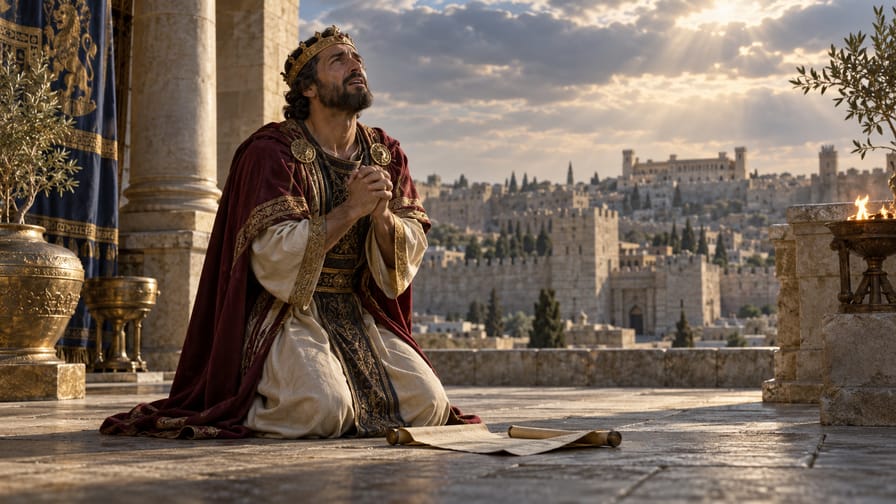
The figure of Hezekiah (in Hebrew, חִזְקִיָּהוּ, Ḥizqiyyahu or יְחִזְקִיָּהוּ, Yeḥizqiyyahu) emerges in the Old Testament narrative as one of the most significant kings of Judah.
His life and reign are recorded in various canonical passages, notably in 2 Kings, 2 Chronicles, and the book of the prophet Isaiah, offering rich material for historical, theological, and typological analysis.
From an evangelical Protestant perspective, Hezekiah is a complex example of faith, obedience, and human failure, whose legacy points to God's sovereignty and the need for a perfect Redeemer.
This analysis will seek to explore his journey, character, and lasting significance in the panorama of redemptive history.
1. Etymology and meaning of the name
The name Hezekiah, in its original Hebrew form, is predominantly found as חִזְקִיָּהוּ (Ḥizqiyyahu) or, in some variations, יְחִזְקִיָּהוּ (Yeḥizqiyyahu).
Both forms are composed of two parts: the verbal root חזק (ḥazaq), meaning "to be strong," "to strengthen," or "to hold firm," and the theonym יה (Yah), an abbreviation of Yahweh (YHWH), the covenant name of God.
Thus, the literal and symbolic meaning of the name Hezekiah is "YHWH is my strength" or "YHWH strengthens." This meaning is deeply prophetic and theologically relevant to the king's life.
His journey, marked by great challenges and divine interventions, precisely reflects the truth contained in his name: the strength and salvation he experienced came from the Lord.
Other variations of the name can be found in different translations or manuscripts, such as Hizkiah or Hizkiyahu. Although there are other biblical characters with similar names or who share the root ḥazaq, the king of Judah is, by far, the most prominent.
The theological significance of the name lies in its declaration of divine dependence. In a period of great apostasy and external threats, the name of Hezekiah serves as a constant reminder of where his true strength should come from.
It contrasts with reliance on horses and chariots (Isaiah 31:1) or political alliances, underscoring that the strength of the king and of Judah was in God, not in human resources.
2. Historical Context and Biblical Narrative
2.1 Period and Political-Religious Context
Hezekiah reigned in Judah for 29 years, approximately between 715 and 686 BC, succeeding his father, the wicked King Ahaz (2 Kings 18:1-2 2 Chronicles 29:1).
His reign occurred during a critical period in the history of the Ancient Near East, characterized by the rise and dominance of the Assyrian Empire, which had subjugated the Northern Kingdom (Israel) in 722 BC and now threatened Judah.
The religious context in Judah, inherited from Ahaz's reign, was one of deep decay and idolatry. Ahaz had introduced pagan practices, including the worship of Assyrian gods and child sacrifices, and had closed the doors of the Temple of the Lord (2 Kings 16:1-4 2 Chronicles 28:1-4, 22-25).
Hezekiah faced the challenge of reversing this apostasy and restoring monotheistic worship to YHWH, while dealing with Assyrian oppression and the political pressures of the time.
2.2 Genealogy and Family Origin
Hezekiah was the son of King Ahaz and Abijah (or Abi), daughter of Zechariah (2 Kings 18:2 2 Chronicles 29:1). Hezekiah's Davidic lineage is crucial for messianic theology, as he is part of the royal lineage through which the Messiah would come.
Despite his father's wickedness, Hezekiah "did what was right in the eyes of the Lord, according to all that his father David had done" (2 Kings 18:3), indicating a striking contrast with the previous generation.
2.3 Key Life Events and Biblical Passages
Hezekiah's reign is narrated in detail in 2 Kings 18-20, 2 Chronicles 29-32, and Isaiah 36-39. The most notable events include:
Religious reform: Early in his reign, Hezekiah undertook a comprehensive religious reform. He reopened and purified the Temple (2 Chronicles 29:3-19), restored the priesthood and Levitical service, and celebrated a great Passover in Jerusalem, even inviting the remnants of Israel (2 Chronicles 30:1-27).
He also destroyed pagan altars, Asherah poles (asherim) and high places, and crushed the bronze serpent that Moses had made, which had become an object of idolatry (2 Kings 18:4).
Rebellion against Assyria and Sennacherib's invasion: Hezekiah broke away from Assyrian vassalage, trusting in the Lord (2 Kings 18:7). This provoked the invasion of Sennacherib, king of Assyria, in 701 BC, who conquered many fortified cities of Judah and besieged Jerusalem (2 Kings 18:13 Isaiah 36:1).
Although Hezekiah initially paid a heavy tribute (2 Kings 18:14-16), Sennacherib persisted in demanding surrender, mocking YHWH through his emissaries (2 Kings 18:17-35).
Miraculous deliverance of Jerusalem: In the face of the Assyrian threat, Hezekiah sought the Lord in prayer and through the prophet Isaiah (2 Kings 19:1-4, 14-19 Isaiah 37:1-4, 14-20).
God responded, promising to protect Jerusalem. That same night, the angel of the Lord struck down 185,000 Assyrian soldiers, forcing Sennacherib to withdraw in humiliation (2 Kings 19:35-36 Isaiah 37:36-37).
Illness and miraculous recovery: After the deliverance of Jerusalem, Hezekiah fell mortally ill. The prophet Isaiah instructed him to put his house in order, for he would die (2 Kings 20:1 Isaiah 38:1).
Hezekiah prayed fervently, and God, through Isaiah, promised to add fifteen years to his life and gave a miraculous sign: the shadow on Ahaz's sundial would go back ten steps (2 Kings 20:2-11 Isaiah 38:2-8).
Visit of the Babylonian envoys: In an act of imprudence and pride, Hezekiah showed all his treasures to the envoys of Merodach-Baladan, king of Babylon, who had come to congratulate him on his recovery (2 Kings 20:12-13 Isaiah 39:1-2).
Isaiah prophesied that, because of this, all Hezekiah's treasures and descendants would be carried away to Babylon, a foreshadowing of the exile (2 Kings 20:14-18 Isaiah 39:3-7).
2.4 Geography and Relationships with Other Characters
Hezekiah's narrative is intrinsically linked to the city of Jerusalem, where he reigned and which was miraculously preserved. Other cities of Judah, such as Lachish (2 Kings 18:14), are also mentioned in relation to the Assyrian invasion.
His main interlocutors were the prophet Isaiah, his spiritual counselor Sennacherib, the Assyrian king, his military adversary and Merodach-Baladan, the Babylonian king, who indirectly exposed his flaw.
3. Character and Role in the Biblical Narrative
3.1 Analysis of Character and Spiritual Qualities
Hezekiah's character is predominantly portrayed as one of the most righteous and pious among the kings of Judah, perhaps surpassed only by David and Josiah (2 Kings 18:5-6).
His life demonstrates deep faith and trust in the Lord, especially in times of crisis. He "trusted in the Lord, the God of Israel so that there was none like him among all the kings of Judah, either before or after him" (2 Kings 18:5).
His virtues include a fervent zeal for the purity of YHWH's worship, evidenced by his radical reforms against idolatry (2 Kings 18:4 2 Chronicles 29:3-31:1).
He demonstrated courage and determination in breaking the Assyrian yoke and in facing Sennacherib's threat, refusing to yield to fear, but seeking God in prayer (2 Kings 19:14-19).
Hezekiah's humility is visible in his response to Isaiah's prophecy about his terminal illness, where he prays with great supplication and weeps bitterly before God (2 Kings 20:2-3 Isaiah 38:2-3).
His dedication to prayer and his willingness to seek God through the prophet Isaiah underscore his dependence on God in times of distress.
3.2 Sins, Weaknesses, and Moral Failures
Despite his piety, Hezekiah was not exempt from flaws. His most notorious weakness is revealed in the episode of the visit of the Babylonian envoys (2 Kings 20:12-19 Isaiah 39:1-8).
Driven by pride, he displayed all the riches and treasures of the palace and the temple, instead of giving glory to God for his healing and the deliverance of Jerusalem (2 Chronicles 32:25-26).
This act of ostentation and lack of discernment reveals a fleeting reliance on his own resources and a failure to recognize the true source of his prosperity and security.
Isaiah's prophecy about the future Babylonian exile was a direct consequence of this proud display, demonstrating that even the most righteous kings can fall into sin and that God judges arrogance.
3.3 Vocation and Role in Judah's History
Hezekiah's role was multifaceted: he was a king, a religious reformer, and a military leader. His primary vocation was to govern Judah with justice and faithfulness to God's covenant.
He fulfilled this vocation primarily through his religious reforms, which aimed to purify the nation from idolatry and restore legitimate worship to YHWH, according to the Law of Moses.
His significant actions included the cleansing of the Temple, the restoration of the Passover, and the destruction of idols, which represented a spiritual revival in Judah (2 Chronicles 29-31).
As a military leader, he strengthened Jerusalem's defenses, building a tunnel to ensure water supply during the siege (2 Kings 20:20 2 Chronicles 32:30), and led the nation in resistance against Assyria.
His development throughout the narrative shows a king who grows in faith and dependence on God amidst crises, but who is still susceptible to pride and failure, reminding us that perfection resides only in Christ.
4. Theological Significance and Typology
4.1 Role in Redemptive History and Progressive Revelation
Hezekiah plays a crucial role in redemptive history by preserving the Davidic lineage and the nation of Judah at a time of extreme danger (2 Kings 19:30-34).
His religious reforms were a high point of faithfulness to God, delaying the divine judgment that would eventually come upon Judah due to persistent idolatry.
He is a vital link in the progressive revelation of God's plan, especially concerning the preservation of the covenant people and the messianic promise. Judah's survival under his leadership ensured that the promise of a descendant of David could be fulfilled.
4.2 Prefiguration or Christocentric Typology
Hezekiah's life offers various typologies that point to Christ, though he is not a perfect type:
- The righteous king and deliverer: Hezekiah was a righteous king who brought deliverance to his people from Assyrian oppression (2 Kings 19:35). This prefigures Christ as the righteous and perfect King who delivers His people from sin and death (Romans 5:8-10).
- The reformer and purifier: His religious reforms, purifying the Temple and restoring worship, point to Christ, who cleansed the Temple (John 2:13-17) and established the new covenant, making worship in spirit and truth possible (John 4:23-24).
- The intercessor: Hezekiah's fervent prayer for the nation and for his own life (2 Kings 19:15-19 20:2-3) prefigures Christ's perfect intercession for His people (Hebrews 7:25 Romans 8:34).
- His failure as a contrast: Hezekiah's failure in the Babylonian episode (2 Kings 20:12-19) serves as a contrast, highlighting the need for a King who is completely without sin and whose reign is not marred by pride or weakness.
4.3 Covenants, Promises, and Related Prophecies
Hezekiah's reign is deeply connected to the Davidic Covenant (2 Samuel 7:12-16). The promise of an eternal throne for David's offspring is reaffirmed in the preservation of Judah and the royal line through Hezekiah.
The prophecies of Isaiah, Hezekiah's contemporary, are intrinsically linked to the events of his reign, especially the prophecies of judgment against Assyria and deliverance for Jerusalem (Isaiah 10:24-27 37:33-35).
The prophecy of the Babylonian exile (Isaiah 39:5-7) is also an important milestone, showing that divine faithfulness does not nullify the consequences of human sin.
4.4 Connection with Central Theological Themes
Hezekiah's story illuminates several central theological themes:
- Faith and obedience: His life demonstrates the importance of faith and obedience to God, which result in blessings and deliverance (2 Kings 18:5-7).
- Divine sovereignty: The miraculous destruction of the Assyrian army and Hezekiah's healing are clear testimonies to God's sovereignty and power over history and human life (2 Kings 19:35 20:5-6).
- The power of prayer: Hezekiah's prayer is an example of the power of sincere and humble supplication before God (2 Kings 19:14-19 20:2-3).
- Idolatry and judgment: Hezekiah's reform highlights the seriousness of idolatry and the need for purification, as well as the inevitable judgment on disobedience (2 Kings 18:4).
- Grace and mercy: Despite the failures of Judah and Hezekiah himself, God demonstrates grace and mercy by delivering Jerusalem and extending the king's life (2 Kings 19:34 20:5).
5. Biblical-Theological Legacy and Canonical References
5.1 Mentions in Other Biblical Books and Literary Contributions
In addition to the extensive accounts in 2 Kings, 2 Chronicles, and Isaiah, Hezekiah is mentioned in Proverbs 25:1, which attributes the compilation of Solomon's proverbs to "the men of Hezekiah, king of Judah."
This suggests that he was a patron of wisdom and literary preservation, contributing to the sapiential canon. Hezekiah himself composed a song of thanksgiving after his recovery from illness, recorded in Isaiah 38:9-20.
This song offers an intimate perspective of his faith and the experience of divine salvation, being a personal testimony of his dependence on God.
5.2 Influence on Biblical Theology and Interpretive Tradition
Hezekiah's influence on biblical theology is considerable. He is an archetype of the righteous king who seeks God, serving as a model of godly and reforming leadership.
His story illustrates the dynamic between human faithfulness and divine sovereignty, and how God works through godly leaders to fulfill His purposes.
In the Jewish interpretive tradition, Hezekiah is often praised as one of the most righteous kings of Judah, with some rabbis even suggesting that he could have been the Messiah, were it not for his failure in the Babylonian episode.
Christian tradition, in turn, recognizes his righteousness and faith, but also uses his failures to underscore the need for Christ as the perfect, sinless King.
5.3 Treatment in Reformed and Evangelical Theology
In Reformed and evangelical theology, Hezekiah is often studied as an example of God's grace working through an imperfect, yet believing, individual.
He is seen as a model of spiritual revival, demonstrating that true reform begins with the purification of worship and a return to the Word of God.
Commentators such as John Calvin and Matthew Henry highlight the centrality of Hezekiah's prayer and God's providence in his life and in the destiny of Judah.
His story is used to teach about the importance of dependence on God amidst crises, the gravity of pride, and God's faithfulness to His promises, even when His people fail.
5.4 Importance for Understanding the Canon
Hezekiah's story is vital for understanding the biblical canon, especially for the theology of the Old Testament.
It provides a "high point" in Judah's history, showing a moment of spiritual renewal in contrast to the apostasy of many other kings.
His story connects the historical narratives (Kings, Chronicles) with Isaiah's prophecies, demonstrating the interaction between divine action, human response, and prophetic fulfillment.
In summary, Hezekiah is a complex and inspiring figure, whose reign is a testament to God's faithfulness, the power of prayer, and the need for a perfect Redeemer, the Messiah, Jesus Christ.