


Zeraiah
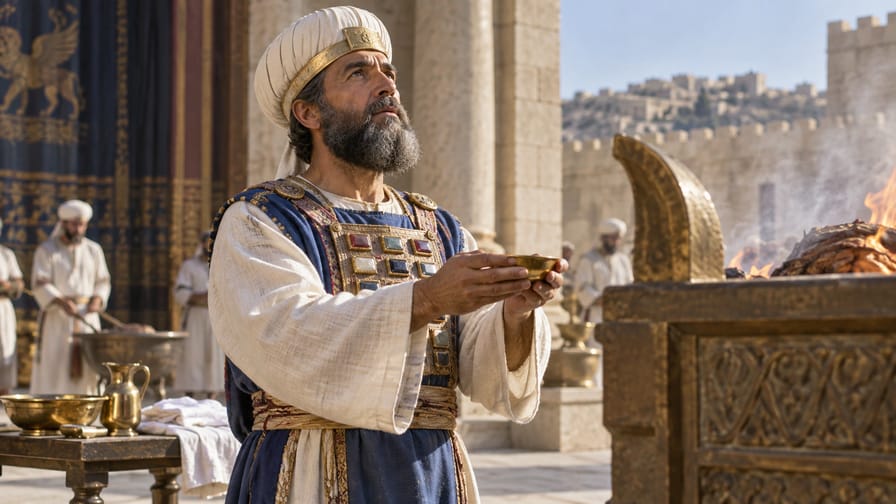
The figure of Zerahiah (Hebrew: זְרַחְיָה, Zeraḥyāh) is mentioned in the Hebrew Scriptures in genealogical contexts, playing a significant role in understanding the priestly continuity and the redemptive history of Israel. Although not a character with an extensive narrative or detailed heroic deeds, his inclusion in biblical genealogies, especially in the line of the high priesthood, grants him a theological relevance that transcends the scarcity of direct biographical information. This entry will explore the etymology, historical context, genealogical role, theological significance, and legacy of Zerahiah from a conservative evangelical Protestant perspective.
The analysis will primarily focus on the Zerahiah who is part of the priestly lineage of Aaron and is an ancestor of the scribe Ezra, as recorded in 1 Chronicles 6 and Ezra 7. Other mentions of individuals with the same name will be briefly addressed to differentiate and contextualize the central figure. The depth of the analysis stems from interpreting his position in the Scriptures, connecting him to larger themes such as God's faithfulness, the Levitical Covenant, and the typology of the priesthood of Christ.
1. Etymology and meaning of the name
1.1 Original name and linguistic derivation
The name Zerahiah is derived from the Hebrew זְרַחְיָה (Zeraḥyāh), which is a theophoric name, meaning a compound name that includes a divine element. The first part of the name comes from the verbal root זרח (zaraḥ), which means "to rise," "to dawn," "to shine," or "to appear," often used to describe the rising of the sun or the breaking of light. The suffix -יָה (-yāh) is an abbreviated form of the Tetragrammaton YHWH (Yahweh), the personal and covenantal name of God.
Thus, the complete name Zeraḥyāh can be interpreted as "Yahweh has risen," "Yahweh has appeared," or "Yahweh has shined." This connotation of light and divine manifestation is intrinsic to the name and carries a profound theological meaning, especially for an individual belonging to the priestly lineage, whose members were mediators of God's presence among His people.
1.2 Literal and symbolic meaning of the name
Literally, the name evokes the image of divine light manifesting, dispelling darkness. Symbolically, for a priest, "Yahweh has risen" can mean that God, through priestly service, reveals His presence, His will, and His grace to the people. The priest was one who "brought the light" of God, mediating divine knowledge and holiness, as Malachi 2:7 declares concerning the priest's lips preserving knowledge and the law.
The name Zerahiah, therefore, is not merely an identifier but a theological declaration in itself. It points to God's revealing activity, a central truth for evangelical faith which believes in God's revelation through the Scriptures and, supremely, in Jesus Christ, the Light of the world (John 8:12).
1.3 Other biblical characters with the same name
It is important to note that the name Zerahiah is not exclusive to the priestly ancestor of Ezra. The Scriptures mention at least two more individuals with this name, albeit with distinct contexts and roles. Differentiation is crucial for accurate analysis.
- A Zerahiah is listed in 1 Chronicles 4:13 as the father of Joab and one of the sons of Kenaz, belonging to the tribe of Judah and the lineage of Caleb. This Zerahiah is part of a tribal lineage and not the priestly one, indicating that the name was relatively common.
- Another Zerahiah is mentioned in Ezra 10:44 as one of the men who had married foreign women during the post-exilic period, being compelled to send them away. This individual is a contemporary of Ezra, living many centuries after the high priest Zerahiah.
The existence of multiple individuals with the same name underscores the importance of identifying the specific genealogical and historical context when studying any biblical character. For the purposes of this analysis, the main focus will be on the Zerahiah of the priestly lineage, due to his genealogical and theological prominence.
1.4 Theological significance of the name in the biblical context
In the context of the priestly lineage, the name Zerahiah acquires a particular resonance. Priests were designated by God to "draw near" to Him and serve in the tabernacle and, later, in the temple, maintaining Yahweh's presence in the midst of Israel (Exodus 28:1). The name "Yahweh has risen/shined" can be seen as a prophecy or an affirmation of the priestly function of bringing the light of God's presence to the people.
This name, therefore, points to the mediating nature of the Levitical priesthood, which was an imperfect, yet divinely instituted, reflection of God's glory. It prefigures the full manifestation of God in Jesus Christ, who is the true Light of the world (John 1:4-9) and the perfect High Priest who reveals the Father to us (Hebrews 8:1-2).
2. Historical context and biblical narrative
2.1 Historical period and context
The Zerahiah of the priestly lineage is mentioned in two crucial passages that establish his place in Israel's history: 1 Chronicles 6:6-7 (Hebrew version 6:5-6) and Ezra 7:4. He is the son of Uzzi and the father of Meraioth. The chronology of the priestly lineage is complex, but Zerahiah is situated in a period that dates back to the beginnings of Israel's history after entering the Promised Land, probably during the period of the Judges or at the start of the united monarchy.
This period was characterized by significant challenges for the nation of Israel, including military conflicts with neighboring peoples and cycles of apostasy and repentance. The maintenance of the priestly lineage and the worship of Yahweh was fundamental to Israel's religious identity and covenant with God, even in times of great instability. The presence of a priest like Zerahiah in an unbroken lineage demonstrates God's faithfulness in preserving His priesthood.
2.2 Genealogy and family origin
The genealogy of Zerahiah is of paramount importance, as he is part of the lineage of the high priests of Israel, direct descendants of Aaron through Eleazar and Phinehas. 1 Chronicles 6:1-15 (Hebrew version 6:1-15) details the genealogy of Levi, with a special focus on the sons of Kohath, to whom Aaron and his descendants belonged. The specific lineage of Zerahiah is as follows:
- Aaron (1 Chronicles 6:3)
- Eleazar (1 Chronicles 6:3)
- Phinehas (1 Chronicles 6:4)
- Abishua (1 Chronicles 6:4)
- Bukki (1 Chronicles 6:5)
- Uzzi (1 Chronicles 6:5)
- Zerahiah (1 Chronicles 6:6)
- Meraioth (1 Chronicles 6:6)
- Amariah (1 Chronicles 6:7)
- Ahitub (1 Chronicles 6:7)
- Zadok (1 Chronicles 6:8)
This genealogy is reiterated in Ezra 7:1-5, where the scribe Ezra traces his own ancestry back to Aaron, the first high priest. Ezra is identified as "the son of Seraiah, son of Azariah, son of Hilkiah, son of Shallum, son of Zadok, son of Ahitub, son of Amariah, son of Meraioth, son of Zerahiah, son of Uzzi, son of Bukki, son of Abishua, son of Phinehas, son of Eleazar, son of Aaron, the chief priest" (Ezra 7:1-5, with some variations in order and common omissions in biblical genealogies). The inclusion of Zerahiah in both genealogies underscores his importance in maintaining the priestly lineage.
2.3 Key biblical passages
The primary passages where Zerahiah is mentioned are the aforementioned genealogies:
- 1 Chronicles 6:6 (Hebrew version 6:5): "and of Uzzi, Zerahiah and of Zerahiah, Meraioth."
- Ezra 7:4: "son of Meraioth, son of Zerahiah, son of Uzzi, son of Bukki."
These mentions, though brief, are crucial. They do not provide narrative details about Zerahiah's life, but they confirm his existence and his unquestionable position in the priestly line. The repetition of the name in different biblical books, written in different contexts (Chronicles, compiled after the exile, and Ezra, focusing on the return), reinforces the authenticity and significance of his genealogical position.
2.4 Relationships with other important biblical characters
As a member of Aaron's lineage, Zerahiah is directly connected to all the high priests who preceded and succeeded him. His connection with Aaron establishes his priestly authority. His descent, which culminates in Ezra, links him to one of the most important reformers and scribes of the post-exilic period, who was fundamental to the restoration of God's law in Israel.
The lineage of Zerahiah extends to Zadok, who became the high priest during the reign of David and Solomon, solidifying the continuity of the priesthood in Jerusalem (1 Kings 2:35). This connection with Zadok is vital, as the Zadokite lineage was the only one recognized as legitimate in Solomon's temple and, prophetically, in the future temple described by Ezekiel (Ezekiel 44:15).
3. Character and role in the biblical narrative
3.1 Analysis of character as revealed in the Scriptures
The Scriptures offer no narrative details about Zerahiah's personal character. There are no descriptions of his actions, words, or decisions that reveal his virtues or flaws. His presence is purely genealogical, serving to fill a vital link in the unbroken chain of the priestly lineage. Therefore, any inference about his character must be made from his position and what was expected of a priest in the Levitical Covenant.
As a priest, Zerahiah was expected to be a man of holiness and obedience to the Law of Moses. Priests were called to be pure, to mediate God's presence, and to teach the people (Leviticus 10:10-11). The mere inclusion of his name in the unbroken lineage suggests that he fulfilled his role and was not disqualified from the priesthood, unlike other priests who were removed due to unfaithfulness (e.g., Hophni and Phinehas in 1 Samuel 2:34).
3.2 Vocation, calling, or specific function
Zerahiah's main vocation was to be a Levitical priest, a descendant of Aaron. His function, like that of all priests, was to serve God in the tabernacle (and later in the temple) through the performance of sacrifices, offerings, purification rituals, and intercession on behalf of the people. They were the guardians of the Covenant, the interpreters of the Torah, and the mediators between God and Israel (Deuteronomy 33:10).
Although there is no specific record of his priestly actions, his existence as a link in the priestly chain is a testament to God's faithfulness in maintaining the priestly institution. He represented the continuity of God's promise to Aaron of a perpetual priesthood (Exodus 29:9), a promise that, although conditioned on obedience, God graciously sustained through the generations.
3.3 Role played in the biblical narrative
Zerahiah's role in the biblical narrative is, in essence, that of a genealogical pillar. His mention in 1 Chronicles 6 and Ezra 7 serves to validate the legitimacy of the priestly lineage. In 1 Chronicles, the genealogy establishes the structure of the nation of Israel and the order of divine worship, confirming the authority of the Levites and priests.
In Ezra, the genealogy is crucial for Ezra the scribe, as his authority to purify the people and restore the Law was based on his own priestly lineage. The inclusion of Zerahiah in his ancestry gives Ezra the credibility and legitimacy necessary for his mission. He is, therefore, a vital link in the chain of religious authority in Israel.
3.4 Character development throughout the narrative
As there is no developed narrative about Zerahiah, one cannot speak of "character development" in the traditional sense. However, his significance develops as the importance of genealogy in biblical theology is understood. He is a reminder that God's history with His people is a history of generations, where each individual, however briefly mentioned, plays a role in the divine plan.
The continuity of the priestly lineage, of which Zerahiah is a part, is a theme that extends throughout the Old Testament, culminating in the figure of the Messiah as the perfect High Priest. The presence of Zerahiah in the genealogies is a silent testament to divine providence that preserves the instruments of His covenant.
4. Theological significance and typology
4.1 Role in redemptive history and progressive revelation
The presence of Zerahiah in the priestly lineage is a testament to God's faithfulness to His covenant with Aaron and Levi (Numbers 25:10-13). The maintenance of the priesthood was essential for the redemptive history of Israel, for through it the sins of the people were atoned for and communion with God was restored, albeit temporarily. Zerahiah, as a link in this chain, indirectly participated in the preservation of worship and the progressive revelation of God's plan of salvation.
The Levitical priesthood, though imperfect and temporary, pointed to the need for a mediator and to the holy nature of God. The continuity of the lineage, ensured by figures like Zerahiah, demonstrates God's grace in sustaining a system that prepared the way for the full revelation of salvation in Christ.
4.2 Prefiguration or Christocentric typology
The priesthood of Israel, of which Zerahiah was a representative, is one of the clearest typologies in the Old Testament that points to Jesus Christ. Although Zerahiah is not a direct typological figure, the priesthood he represented prefigured the superior and eternal priesthood of Christ. The sacrifices offered by priests like Zerahiah were shadows of Jesus' perfect sacrifice on the cross (Hebrews 10:1-10).
The priestly mediation of Zerahiah and of the entire lineage of Aaron pointed to the only mediator between God and men, Jesus Christ (1 Timothy 2:5). The name Zerahiah, "Yahweh has risen/shined," can be seen as a prophetic echo of the coming of Christ, who is the "true Light that, coming into the world, enlightens every man" (John 1:9).
4.3 Connection with central theological themes
The existence of Zerahiah in the priestly genealogy connects to several central theological themes from an evangelical perspective:
- God's Faithfulness: The preservation of the priestly lineage for centuries, despite human failures and historical vicissitudes, is a testament to God's unwavering faithfulness to His covenant promises.
- Holiness: The priesthood was a constant reminder of God's holiness and the need for purification and mediation so that the sinner could approach Him.
- Grace: The provision of a priesthood and a system of sacrifices is an act of God's grace, allowing a sinful people to have access to His presence.
- Continuity of Revelation: The priestly lineage ensured the transmission of the Law and rituals, keeping God's revelation alive among generations.
4.4 Prophetic fulfillment or prefiguration fulfilled in Christ
The Levitical priesthood, including the role Zerahiah played in his lineage, found its final and perfect fulfillment in Jesus Christ. Christ is the High Priest according to the order of Melchizedek, not according to the order of Aaron (Hebrews 7:11-17). His priesthood is superior because it is eternal, needing no succession, and His sacrifice is unique and effective once for all (Hebrews 7:23-27).
The lineage of Zerahiah, although vital for the Old Testament, was superseded by a superior priesthood in Christ. The light that the name Zerahiah evokes – "Yahweh has risen" – is fully realized in Jesus, whom the apostle Peter describes as the "light shining in a dark place" (2 Peter 1:19), the Sun of Righteousness (Malachi 4:2) who brings salvation and full revelation of God.
5. Biblical-theological legacy and canonical references
5.1 Mentions of the character in other biblical books
As already detailed, Zerahiah is explicitly mentioned in 1 Chronicles 6:6 and Ezra 7:4. These are the direct canonical references to the priestly Zerahiah. The repetition in Ezra, a post-exilic book, underscores the importance of genealogy for the identity and restoration of the Jewish community after the return from Babylonian captivity. Genealogical accuracy was vital for establishing the legitimacy of priests and, consequently, of the restored worship.
Although there are no other direct mentions of Zerahiah in other books, the institution of the priesthood, of which he was a part, is a central theme throughout the Torah (Pentateuch), in the historical books, and in the prophets. The existence of Zerahiah is, therefore, implicitly referenced in all discussions about the Levitical priesthood.
5.2 Influence on biblical theology
Zerahiah's influence on biblical theology does not lie in his individual actions, but in his genealogical position as an unbroken link in the priestly lineage. This continuity is fundamental to Old Testament theology, which emphasizes God's faithfulness in maintaining the covenant and the instruments of worship that He Himself established. The priestly lineage was the vehicle for the mediation of the Mosaic covenant.
For evangelical theology, the preservation of the priestly lineage, of which Zerahiah is a part, serves to illustrate God's providence and preparation for the coming of Christ. The failure of the Levitical priesthood to permanently remove sin (Hebrews 10:4) highlights the need for the perfect priesthood of Christ, making Zerahiah's lineage an essential component in the narrative of salvation that culminates in the New Testament.
5.3 Presence in Jewish and Christian interpretative tradition
In Jewish tradition, genealogies are of extreme importance, and the priestly lineage in particular. The accuracy of a priest's ancestry was fundamental for his acceptance in Temple service. Zerahiah, as an ancestor of Ezra, one of the great restorers of the Law, is implicitly valued as part of the chain of tradition and authority.
In Christian tradition and in Reformed and evangelical theology, the study of genealogies serves to demonstrate the historicity of faith and divine preparation for the coming of Christ. Commentators like Matthew Henry and John Gill, for example, when addressing genealogies, highlight God's providence in preserving the families and lineages that would lead to the Messiah, as well as maintaining divine worship. Zerahiah, in this sense, is seen as a testament to God's faithfulness.
5.4 Treatment of the character in Reformed and evangelical theology
Reformed and evangelical theology, with its emphasis on God's sovereignty and predestination, views the preservation of the priestly lineage, of which Zerahiah is a member, as part of God's providential plan for salvation. God, in His wisdom, ordained the Levitical priesthood as a shadow and a type of the priesthood of Christ.
Thus, Zerahiah is studied not for his individual merits, but for his function in the divine plan. He is a reminder of the continuity of God's grace through the generations, preparing the way for the fullness of revelation in Jesus Christ. His inclusion in the Scriptures reinforces the belief in the authority and inerrancy of the Bible, which records even the smallest details with a theological purpose.
5.5 Importance of the character for understanding the canon
The inclusion of Zerahiah in the canonical genealogies of 1 Chronicles and Ezra is vital for understanding the structure and message of the biblical canon. Genealogies serve as historical and theological bridges, connecting different eras and books, and validating the continuity of salvation history. They demonstrate that God works through generations, fulfilling His covenant promises through specific lineages.
The figure of Zerahiah, though seemingly minor, is a testament to the precision and divine purpose in every detail of the Scriptures. His mention confirms the legitimacy of the Levitical priesthood, which in turn points to the eternal and perfect priesthood of Jesus Christ, the true mediator and revealer of God, whose name, "Yahweh has risen," finds its ultimate fulfillment in Him.