


Puvah
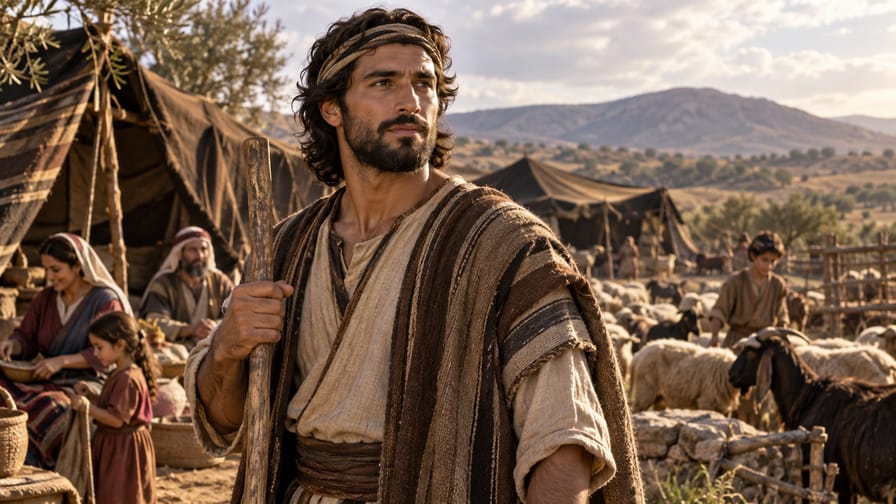
The figure of Puah, though briefly mentioned in the Scriptures, holds notable significance within the vast tapestry of Israel's redemptive history. He is one of the sons of Issachar, grandson of Jacob, and great-grandson of Abraham, and his name is intrinsically linked to the formation of the twelve tribes of Israel. The analysis of Puah transcends a mere genealogical list, revealing crucial aspects of divine faithfulness, the promise of multiplication, and the structure of the chosen nation.
From an evangelical Protestant perspective, the existence of Puah and the meticulous preservation of his lineage in the biblical canon underscore the inerrant authority of the Scriptures and God's sovereignty over history. His life, though silent in terms of narrative actions, is a testament to divine providence that weaves each individual into the grand narrative of salvation, culminating in Christ Jesus.
1. Etymology and meaning of the name
The name Puah appears in different transliterations and forms in the Hebrew text. In Genesis 46:13, the Hebrew form is פוּוָה (Puwwah, Strong H6327), while in Numbers 26:23 and 1 Chronicles 7:1, the spelling is פּוּאָה (Pû'āh, Strong H6326). Both forms are considered variants of the same name and refer to the same individual, the son of Issachar.
The etymological root of פוּוָה (Puwwah) and פּוּאָה (Pû'āh) is generally connected to a Semitic root meaning "mouth" or "to utter," "to speak." Some scholars suggest a connection to the idea of "splendor" or "brightness," but the most common and widely accepted interpretation derives from the notion of "mouth" or "declaration."
Thus, the literal meaning of the name Puah can be interpreted as "mouth," "pronouncement," or "he who speaks." This interpretation may carry a latent symbolism, suggesting the idea of testimony, communication, or the expression of something significant. While there are no direct narratives associating Puah with acts of speech, his name, by itself, can evoke the importance of the word and voice in Hebrew culture and divine revelation.
It is important to note that there is another biblical character with a similar name, the Egyptian midwife Puah (פּוּעָה, Pu'ah, Strong H6325), mentioned in Exodus 1:15. Although the Hebrew spelling is slightly different (with an ayin at the end), the etymological root is the same, also meaning "mouth." However, the midwife Puah is a distinct figure and should not be confused with Puah, the son of Issachar.
The theological significance of the name Puah, even if indirect, resides in the idea that every name in the biblical record is not random, but part of the divine plan. The connotation of "mouth" or "pronouncement" can symbolize the contribution of Puah and his descendants to the collective "voice" of Israel, which would bear witness to God among the nations. He is part of the "mouth" that God would use to utter His laws and promises to the world.
2. Historical context and biblical narrative
Puah emerges in the formative period of the nation of Israel, during the transition from the patriarchal era to tribal consolidation. He is first mentioned in the list of Jacob's descendants who went to Egypt, a fundamental event marking the beginning of Israel's sojourn in the foreign land and the fulfillment of the prophecies given to Abraham in Genesis 15:13-16.
The precise historical period of Puah's life can be situated approximately between 1800 B.C. and 1600 B.C., covering the end of the patriarchal period and the beginning of Egyptian servitude. He is listed as one of the four sons of Issachar, who in turn was the ninth son of Jacob, born to Leah in Paddan-Aram (Genesis 30:18).
The political and social context of the time was that of a semi-nomadic clan, Jacob's family, which settled in Egypt under Joseph's protection. God's promise to multiply Abraham's descendants was fully underway (Genesis 46:3). The presence of Puah in these genealogical lists attests to God's faithfulness in fulfilling that promise, even before the Egyptian oppression.
The key biblical passages where Puah appears are concise, but of great genealogical importance. In Genesis 46:13, he is named among the sons of Issachar: “The sons of Issachar were Tola, Puah, Jashub, and Shimron.” This mention is crucial for establishing the patriarchal lineage. He is again referred to in Numbers 26:23, during the second census in the wilderness, where his descendants are recorded: “The sons of Issachar according to their families: of Tola, the family of the Tolaites of Puah, the family of the Puahites.”
This second mention in Numbers demonstrates that, centuries after the journey to Egypt, Puah's line had multiplied and formed one of the main families or clans within the tribe of Issachar. The family of the Puahites (or Punites, depending on the translation) was one of the four tribal subdivisions, indicating their significant contribution to the demographic growth of Israel.
Finally, Puah is mentioned in 1 Chronicles 7:1, where the genealogy of the sons of Issachar is reiterated: “The sons of Issachar were Tola, Puah, Jashub, and Shimron, four.” The consistency of these references in different biblical books (Pentateuch and Historical Books) underscores the accuracy and importance of genealogies for the biblical narrative and the identity of Israel.
The geography related to Puah is initially the land of Canaan, where his father Issachar was born, and then the land of Egypt, where Jacob's family resided for centuries. Subsequently, the tribe of Issachar, of which Puah was a founding ancestor, received its territory in the Promised Land, in the region of the plain of Jezreel and its surroundings, a fertile and strategic area (Joshua 19:17-23). His relationships are primarily with his father Issachar, his brothers, and, by extension, the entire house of Israel.
3. Character and role in the biblical narrative
The Bible does not offer a direct description of Puah's character, nor does it narrate specific events of his life. He is not presented as a military leader, prophet, or prominent figure in individual actions. His presence is notable primarily in genealogical contexts, where his name marks the founding of a clan within the tribe of Issachar.
The absence of detailed narratives about Puah does not diminish his importance, but redefines it within the context of biblical theology. His main role is that of a vital link in the genealogical chain of Israel, an ancestor who contributed to the multiplication of God's people, according to the promise made to Abraham (Genesis 12:2 Genesis 15:5).
We can infer some qualities indirectly. As a family head and progenitor of a clan, Puah was expected to maintain faithfulness to his father Jacob's covenant with God. His existence and the continuity of his lineage suggest a life lived within the structure of the community of Israel, contributing to its resilience and growth.
His calling, therefore, was that of a patriarch, a progenitor. The "calling" of Puah and others like him was to be fruitful and multiply, a commandment that dates back to creation (Genesis 1:28) and was reiterated in the covenant with Noah (Genesis 9:1) and Abraham (Genesis 17:6). Obedience to this divine commandment was fundamental to the formation of the nation of Israel.
Puah's role, though passive in terms of recorded individual action, is active in the sense of his contribution to the collective identity of Israel. He is not a "character" in the sense of someone who acts and interacts in a plot, but rather a "foundation" upon which the tribal structure of Israel is built. His descendants, the Puahites, would be an integral part of the people who would inherit the Promised Land.
Therefore, the development of Puah's character is not narrative, but genealogical. He is a starting point for a lineage, a name that represents hundreds, if not thousands, of descendants. He symbolizes God's faithfulness in fulfilling His promises of growth and prosperity for His people, transforming one family into a great nation.
4. Theological significance and typology
The theological significance of Puah, though not explicit in direct teachings about his person, is profound when viewed in the context of Israel's redemptive history. He represents the actualization of the divine promise of multiplication, fundamental for the formation of the covenant people. His existence is evidence of God's faithfulness to His word, even in times of narrative silence.
Puah and his brothers are part of Jacob's lineage that went down to Egypt, an event prophesied by God to Abraham in Genesis 15:13-14. The multiplication of Jacob's family in Egypt, where "the Israelites were fruitful and multiplied greatly and became numerous and mighty, filling the land" (Exodus 1:7), is the direct fulfillment of the Abrahamic covenant (Genesis 12:2). Puah is a piece in this puzzle of prophetic fulfillment.
Although Puah is not a direct typological figure of Christ, his inclusion in the genealogies points to the importance of lineage and tribal identity, which are crucial for understanding the coming of the Messiah. The promise of a descendant who would crush the serpent's head (Genesis 3:15) and of a king from the lineage of David (2 Samuel 7:12-16) depended on the meticulous preservation of these genealogies. Thus, Puah, as a link, contributes to the structure that would eventually point to Christ.
The connection of Puah with central theological themes is undeniable. He is an example of God's faithfulness in keeping His covenant promises, of Israel's election as His particular people, and of divine sovereignty over human history. His life, though without great deeds, contributes to the progressive revelation of God's plan to redeem humanity through a chosen people.
In the New Testament, although Puah is not directly cited, the importance of Jesus' genealogies in Matthew 1:1-17 and Luke 3:23-38 reinforces the value of records such as those that include Puah. These genealogies demonstrate that Jesus Christ is the fulfillment of the promises made to the patriarchs, the final descendant of the lineage of Abraham and David, the awaited Messiah. The inclusion of figures like Puah in the Old Testament genealogies validates the historicity and accuracy of the messianic lineage.
The doctrine of election and grace is also illustrated by the inclusion of Puah. Not by his merits, but by God's sovereign choice, his descendants became part of the covenant people. He reminds us that salvation and participation in God's redemptive history are always initiated by divine grace, not by human works (Ephesians 2:8-9).
5. Biblical-theological legacy and canonical references
Puah's legacy is primarily genealogical and foundational for the tribal structure of Israel. His mentions in Genesis 46:13, Numbers 26:23, and 1 Chronicles 7:1 are the direct canonical references. These passages, though brief, are crucial for understanding the formation and organization of the twelve tribes, which are the backbone of the Old Testament.
Puah's contribution to biblical theology resides in the validation of the authority and accuracy of the Scriptures. The consistency of genealogies across different biblical books, written in distinct epochs, demonstrates divine care in preserving the history of His people. This is vital for the evangelical Protestant perspective, which upholds the inerrancy and infallibility of the Word of God.
In the Jewish interpretive tradition, genealogies are of utmost importance for identity and tribal belonging. Puah, as an ancestor of a clan of Issachar, is part of this rich tapestry that defines the Jewish people. In the Christian tradition, his mention reinforces the historicity of the Old Testament and the basis for the messianic lineage, which culminates in Jesus.
Although there are no references to Puah in intertestamental literature or apocryphal writings, his presence in the biblical canon is sufficient to establish his significance. His figure is a reminder that even the most "minor" characters in the biblical narrative have a divinely orchestrated role in the progressive revelation of God.
In Reformed and evangelical theology, Puah is treated as an example of God's sovereignty in history. The election of Israel, the multiplication of its descendants, and the preservation of its lineages are seen as acts of divine providence, which prepares the way for the coming of Christ and the formation of the Church. He is part of the "history of salvation" (Heilsgeschichte) that God is unfolding.
The importance of Puah for understanding the canon lies in his function as a "brick" in the building of the house of Israel. Each name, each family, each tribe contributes to the totality of revelation. Without these genealogical details, the biblical narrative would lose part of its historical basis, and the connection between the promises of the Old Testament and their fulfillment in the New Testament would be weakened. Puah, therefore, is a silent but powerful testimony to God's faithfulness and the integrity of His Word.