


Shimron
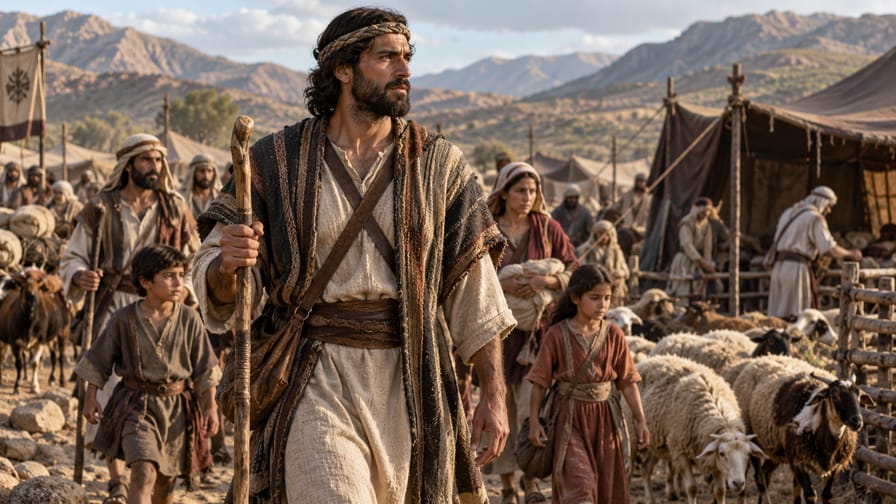
The figure of Shimron, or Shimron (שִׁמְרוֹן), is one of many biblical characters whose mentions are primarily genealogical in nature, but who, even in his apparent obscurity, offers rich opportunities for theological and historical analysis from an evangelical Protestant perspective. His inclusion in the Holy Scriptures is not accidental, but an integral part of the meticulous divine record of salvation history.
Although there are no extensive narratives detailing his life or deeds, the existence of Shimron in the patriarchal and tribal genealogies of Israel underscores God's providence in the formation of His people. He represents an essential link in the chain of the chosen lineage, through which the covenant promises would be fulfilled and, ultimately, the Messiah would come. The analysis of Shimron, therefore, goes beyond mere nominal identification, delving into the significance of his existence within God's great redemptive plan.
1. Etymology and meaning of the name
The name Shimron (in Hebrew: שִׁמְרוֹן, Shimron) is a Hebrew name that appears in various Old Testament passages. Its etymological root derives from the verb שָׁמַר (shamar), which means "to guard," "to watch," "to observe," "to protect," or "to preserve."
From this root, the literal meaning of Shimron can be interpreted as "guardian," "watcher," or "one who guards." This meaning carries a profound theological resonance in the biblical context, evoking the idea of protection, care, and faithfulness, attributes often associated with God and, by extension, with those whom He calls.
There are no significant variations of the name in biblical languages that alter its etymological essence. It is consistently transliterated as Shimron or Shimron in different versions and traditions. The plural form, or reference to a group, would be the Shimronites (הַשִּׁמְרֹנִי, ha-Shimroni), referring to the descendants of Shimron.
Besides the son of Issachar, the name Shimron also appears in other biblical references, although it does not refer to a person. An example is Shimron-Merom (שִׁמְרוֹן מְרֹאֹם), a Canaanite city whose king was defeated by Joshua (Joshua 11:1 and 19:15). The repetition of the name, even in geographical contexts, may indicate a cultural or geographical connection to the idea of vigilance or fortress.
From a theological point of view, the meaning of the name "guardian" for Shimron, an ancestor of one of the tribes of Israel, can be seen as a reflection of divine providence. God is the supreme Guardian of His people (Psalm 121:5). The existence of an ancestor named "guardian" in the lineage of Israel can symbolize the trust that God would guard His people and His promises, even through generations that would not have a prominent role in the narrative.
The theological significance of the name lies in the reminder that every individual, even those whose stories are briefly recorded, is part of God's larger plan, who guards and preserves His covenant and His people. God's faithfulness in "guarding" His word is a central theme in biblical theology, and Shimron, by his name, echoes this fundamental truth.
2. Historical context and biblical narrative
The figure of Shimron emerges in the Scriptures during a crucial period in Israel's history: the formation of the twelve tribes and the establishment of the nation. He is first mentioned in the book of Genesis, during the account of Jacob and his family's descent into Egypt, an event that marks the beginning of a long period of formation and growth for the people of Israel.
The precise historical period in which Shimron lived extends from the end of the patriarchal era, around the 18th century BC, until the generation that left Egypt and was counted in the wilderness, in the 15th century BC. He is part of Jacob's (Israel's) family that migrated to Egypt in search of sustenance during the famine, as recorded in Genesis 46.
The political, social, and religious context of the time was one of transition. Jacob's families were consolidating as a distinct group, the people of God's covenant. In Egypt, they grew from a small family into a great nation, setting the stage for the Exodus and the possession of the Promised Land. The preservation of the lineage was fundamental for the continuity of divine promises.
The genealogy of Shimron is clearly established. He is listed as the fourth son of Issachar, who in turn is the ninth son of Jacob and Leah. His brothers are Tola, Puvah, and Iashub (or Job, depending on the translation). This lineage is crucial for the establishment of the tribe of Issachar, one of the twelve tribes of Israel.
The key biblical passages where Shimron is mentioned are:
- Genesis 46:13: "The sons of Issachar: Tola, Puvah, Iashub, and Shimron." This is the first mention, in the context of the list of those who went down to Egypt with Jacob.
- Numbers 26:24: "The sons of Issachar, according to their families: of Tola, the family of the Tolaite of Puvah, the family of the Puvite of Iashub, the family of the Iashubite of Shimron, the family of the Shimronite." This passage places him as an ancestor of one of the tribal families during the census in the wilderness, before the entry into Canaan.
- 1 Chronicles 7:1: "The sons of Issachar: Tola, Puvah, Iashub, and Shimron, four." This reference reiterates his position in the genealogy of Issachar, confirming the consistency of the genealogical records.
The geography related to Shimron, although not directly linked to his individual movements, encompasses the land of Canaan (where he likely was born), the region of Goshen in Egypt (where Jacob's family resided and prospered), and the wilderness of Sinai (where his descendants were counted). These localities are milestones in Israel's journey as a covenant people.
His relationships with other biblical characters are primarily familial. He was the grandson of Jacob, son of Issachar, and brother of Tola, Puvah, and Iashub. His descendants formed the family of the Shimronites, who became an integral part of the tribe of Issachar. His existence is a testament to God's faithfulness in multiplying the descendants of Abraham, Isaac, and Jacob, according to the covenant promises (Genesis 12:2, Genesis 15:5).
3. Character and role in the biblical narrative
The Bible, in its divine conciseness, does not offer narrative details about Shimron's personal character, nor does it record any specific actions or decisions he may have taken. He is presented exclusively within a genealogical context, a common practice in the Scriptures to establish the lineage and identity of a people.
The absence of a personal narrative does not, however, diminish the relevance of Shimron. On the contrary, his inclusion in the lists of Jacob's descendants is, in itself, an affirmation of his essential role. He is not a secondary figure due to a lack of importance, but because his importance lies precisely in his existence as a link in the chain of salvation history.
The character of Shimron, therefore, cannot be analyzed based on his individual virtues or flaws, but must be inferred from his position in God's covenant. As the son of Issachar and grandson of Jacob, he belonged to God's chosen people. His existence attests to divine faithfulness in preserving the seed through which the redemptive plan would unfold.
His vocation and function were to be a progenitor, a "father" of one of the families that would make up the tribe of Issachar. In a tribal society, the ability to produce offspring and perpetuate the lineage was of utmost importance, not only for the survival of the group but for the fulfillment of divine promises of multiplication and inheritance of the land (Genesis 13:16, Genesis 22:17).
The role played by Shimron was to contribute to the demographic and social formation of the nation of Israel. He was one of the seventy individuals who went down to Egypt with Jacob, as recorded in Genesis 46:27. His presence in that list is a testament to the expansion of Jacob's family, which would become a great nation under God's protection and provision.
Although there is no character development for Shimron in the literary sense, his inclusion in the genealogies of Genesis, Numbers, and Chronicles demonstrates the consistency and importance that Scripture attributes to the continuity of lineages. Each recorded name is a confirmation of God's sovereignty over history and human life.
The relevance of Shimron, therefore, does not lie in great heroic deeds or prophetic sermons, but in his existence as part of the promise. He is a reminder that every generation, every family, and every individual, even the most "silent" in the biblical narrative, has a place and a purpose in God's great design for the redemption of humanity. His silent life speaks of God's faithfulness in keeping His word.
4. Theological significance and typology
The figure of Shimron, despite his narrative scarcity, holds a deep and relevant theological significance within the evangelical Protestant perspective, especially when considered in the context of redemptive history and progressive revelation. His genealogical existence highlights God's meticulousness in fulfilling His promises and in preparing the way for the coming of Christ.
The role of Shimron in redemptive history is that of a link in the covenantal lineage. As a descendant of Jacob and an ancestor of one of the tribes of Israel, he is part of the "seed" promised to Abraham, through whom all the families of the earth would be blessed (Genesis 12:3). His inclusion in the Scriptures reaffirms God's faithfulness in preserving the messianic line, even amidst the apparent insignificance of some of its links.
In terms of Christocentric typology, Shimron, as "guardian" (according to the meaning of his name), can be subtly seen as prefiguring aspects of Christ's work. Christ is the supreme Guardian of His people, the Good Shepherd who guards His sheep (John 10:11-15, John 17:12). He is the one who keeps the covenant and preserves His elect for eternal life (Jude 1:24).
The presence of Shimron in the Old Testament genealogies also reinforces the doctrine of divine sovereignty in election and providence. God chooses who will be part of His covenant and how He will build His nation. Each name in the genealogies is a testament to God's hand at work in history, guiding and protecting His seed through the generations, a central theme in Reformed theology.
The covenants and promises related to Shimron are the great Abrahamic, Mosaic, and Davidic covenants, of which he and his descendants were heirs and participants. The promise of a great nation (Genesis 12:2), the possession of the land (Genesis 15:18), and the coming of an eternal King (2 Samuel 7:16) form the theological backdrop for the existence of Shimron and the entire lineage of Israel.
There are no direct citations or references to Shimron in the New Testament. However, the New Testament validates the importance of Old Testament genealogies by presenting the genealogies of Jesus Christ Himself in Matthew 1 and Luke 3. These genealogies demonstrate the continuity of God's faithfulness in fulfilling His promises through a historical and verifiable lineage, of which Shimron was an integral part.
The connection of Shimron with central theological themes is undeniable. His existence underscores faith (or the faith of his ancestors) in God's promise. Obedience (even if implicit in his mere existence as part of the covenant people) is a recurring theme. God's grace is evident in the preservation of every link in the lineage, ensuring that the divine plan of salvation would not fail.
The prophetic fulfillment or prefiguration, though indirect for Shimron, is concretized in Christ. The lineage of Israel, of which Shimron is a part, culminates in Jesus, the Messiah. The doctrine and teachings associated with Shimron, therefore, are not about his actions, but about God's faithfulness in using each person for His sovereign purposes, culminating in the incarnation of Christ for the salvation of humanity (Galatians 4:4-5).
5. Biblical-theological legacy and canonical references
The legacy of Shimron, though not one of great individual deeds or direct teachings, is fundamental for understanding the family and tribal structure of Israel, and, consequently, for biblical theology as a whole. His mentions in Genesis, Numbers, and 1 Chronicles are not mere historical records they serve a greater theological purpose, demonstrating divine providence and the authenticity of the Scriptures.
The canonical references to Shimron are limited, but precise: Genesis 46:13 lists him among the sons of Issachar who went down to Egypt with Jacob. Numbers 26:24 identifies him as the ancestor of the family of the Shimronites, one of the four families of the tribe of Issachar, during the census of the second generation in the wilderness. Finally, 1 Chronicles 7:1 reiterates his position in the genealogy of Issachar, validating the consistency of the records.
The absence of literary contributions or book authorship by Shimron is expected, given the nature of his mentions. Nevertheless, his existence contributes to biblical literature by solidifying the genealogical basis of the tribes of Israel, which is essential for understanding the distribution of land in Canaan (Joshua 19:17-23) and for the tribal identity of God's people.
The influence of Shimron on biblical theology lies in the validation of the lineage and the continuity of the covenant. He is one of many links that demonstrate how God, from generation to generation, kept His promise of numerous descendants and a holy nation. This continuity is vital for evangelical Protestant apologetics, which emphasizes the historical and prophetic faithfulness of the Scriptures.
In the Jewish interpretive tradition, genealogies are seen as crucial for identity and inheritance. Each name is part of the tapestry of Israel's history. In the Christian tradition, especially the evangelical Protestant, these genealogies are equally important, as they establish the historicity of the lineage of Jesus Christ, confirming His identity as the promised Messiah through the descendant of David (Romans 1:3).
Although there are no references to Shimron in intertestamental literature, the valuing of genealogies continued during that period, as evidenced in texts like 1 Maccabees, which frequently refers to the importance of priestly and royal lineage. This underscores the consistency of the Judeo-Christian understanding of the relevance of ancestry.
In Reformed and evangelical theology, the treatment of characters like Shimron emphasizes God's sovereignty over history and divine providence in every detail. The inclusion of an apparently minor name serves to illustrate that God uses both the "great" and the "small" in the biblical narrative to fulfill His purposes. Each genealogical link is a testament to God's faithfulness in sustaining His covenant.
The importance of Shimron for understanding the canon lies in his contribution to the historical integrity of the Bible. Genealogies provide a chronological and familial structure that connects different parts of the Scriptures, from Genesis to the New Testament, where the lineage of Jesus is traced. He is a reminder of the precision and reliability of God's Word in all its details, great and small.