


Tola
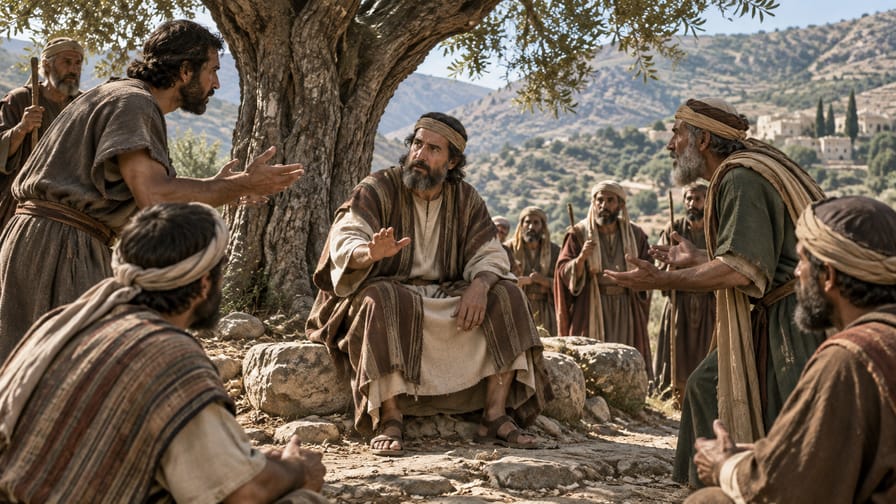
The figure of Tola, one of Israel's minor judges, is presented in the Scriptures with notable conciseness, yet his brief record in Judges 10:1-2, along with his genealogical mention in 1 Chronicles 7:1-2, offers starting points for a profound biblical and theological analysis. Despite the scarcity of details about his actions, Tola's presence in the sacred canon is significant for understanding divine providence and God's faithfulness in sustaining His people even during the darkest periods of Israel's history. This analysis seeks to explore his onomastic meaning, historical context, role in the biblical narrative, theological relevance, and legacy, from an evangelical Protestant perspective, emphasizing biblical authority and Christocentric typology.
The era of the Judges, in which Tola served, was a period of transition and instability, characterized by a recurring cycle of apostasy, foreign oppression, cries to God, and deliverance through divinely raised leaders. The absence of a king in Israel (Judges 17:6 21:25) resulted in political and moral decentralization, where "everyone did what was right in their own eyes". In this scenario, even judges whose stories are narrated with few lines play a crucial role, as they demonstrate the persistence of God's redemptive plan and His ability to use various individuals to fulfill His purposes, paving the way for the monarchy and, ultimately, for the promised Messiah.
The analysis of Tola, therefore, transcends mere biography, inviting reflection on the nature of divine leadership, God's faithfulness amidst human unfaithfulness, and the importance of each link in the chain of salvation history. His story, though brief, highlights God's sovereignty in raising deliverers and preserving His people, regardless of prominence or great recorded deeds. He serves as a reminder that silent faithfulness and consistent leadership, even without spectacular events, are valuable in God's eyes and essential for the continuity of His covenant with Israel.
By examining Tola, we delve not only into the life of a man but into the theological implications of his existence for understanding the history of Israel, the nature of God, and the progressive revelation that culminates in Jesus Christ. His inclusion in the sacred record testifies that all Scripture is God-breathed and profitable (2 Timothy 3:16), and that even seemingly minor details contribute to the grand tapestry of the redemptive narrative.
1. Etymology and Meaning of the Name
The name Tola (Hebrew: תּוֹלָע, Tôlāʿ) is derived from a root that has multiple meanings and implications in the biblical context. The most common etymology associates Tôlāʿ with the Hebrew word for "worm" or "caterpillar" (תּוֹלַעַת, tôlaʿat), specifically the scarlet worm (coccus ilicis or kermes vermilio), from which a crimson red dye was extracted. This dye was highly valued in antiquity and used in priestly garments and Tabernacle materials, as described in Exodus 25:4 and 26:1.
The etymological root, therefore, refers to the color "scarlet" or "crimson." This meaning can have various connotations. In a literal sense, it could simply describe the color of a person's skin or hair, or be a reference to an occupation or something associated with the family. However, biblical Hebrew often imbued names with deeper meanings, which could be prophetic or descriptive of an individual's or their family's nature or destiny.
The idea of "worm" or "caterpillar" might seem pejorative at first glance. However, in the biblical context, the "scarlet worm" was valuable and associated with royalty, holiness, and, paradoxically, with humility and redemption. Psalm 22:6, for instance, uses the image of the worm to describe the Messiah's humiliation: "But I am a worm and not a man, scorned by mankind and despised by the people." Humility and apparent insignificance can, thus, be transformed into an instrument for a greater purpose, a recurring theme in salvation history.
There are no significant variations of the name Tola in biblical languages, being consistently recorded as תּוֹלָע in the Hebrew Old Testament and similarly transliterated in the Greek versions of the Septuagint (Θωλά, Thōla). This name is notable for being shared by another biblical character: Tola, the firstborn son of Issachar, and ancestor of the judge Tola (Genesis 46:13 Numbers 26:23 1 Chronicles 7:1). This genealogical connection is crucial, as it establishes Judge Tola's lineage within the tribe of Issachar, a tribe known for its wisdom and understanding of the times (1 Chronicles 12:32).
The theological significance of the name Tola, although not explicitly detailed in the narrative, can be inferred. If the name indeed evokes the "scarlet worm," it could symbolize the judge's modesty or apparent insignificance compared to more grandiose figures like Gideon or Samson. However, it is precisely through such figures that God demonstrates His sovereignty and grace, using the "weak of the world to shame the strong" (1 Corinthians 1:27).
Furthermore, the scarlet dye, extracted from the worm, was a symbol of redemption and purification in the Old Testament sacrificial system (Hebrews 9:19). Although there is no direct connection with Tola in his function, the symbolism of crimson in the atonement for sin (Isaiah 1:18: "Though your sins are like scarlet, they shall be as white as snow") anticipates the work of Christ, whose blood was shed for the forgiveness of sins. Thus, even the name of an apparently minor judge can carry echoes of God's grand redemptive narrative.
2. Historical Context and Biblical Narrative
The biblical narrative presents Tola as the seventh judge of Israel, succeeding Abimelech, the illegitimate son of Gideon, whose tyranny and death are described in Judges 9. The period of the Judges (approximately 1375-1050 BC) was a tumultuous era in Israel's history, after the conquest of Canaan and before the establishment of the monarchy. It was a time of great political instability, social fragmentation, and spiritual decline, where the nation frequently fell into idolatry and was subjugated by neighboring peoples.
The book of Judges describes a vicious cycle: the people of Israel sinned against the Lord, God delivered them into the hands of oppressors, they cried out for help, and the Lord raised up a judge to deliver them (Judges 2:16-19). Each judge was a charismatic leader, military or civil, raised by God for a specific purpose of deliverance and administration of justice. Tola's rise fits this pattern, although his story is told with striking brevity.
Tola's genealogy is crucial for situating him. He was "the son of Puah, son of Dodo, a man of Issachar" (Judges 10:1). His tribe, Issachar, was one of the northern tribes of Israel, whose territory was located in the Plain of Jezreel and the hills of Galilee, a strategic and often disputed region. The mention of his tribe is important, as it indicates the origin and tribal support a judge typically possessed. The fact that he was from the tribe of Issachar is also confirmed in 1 Chronicles 7:1-2, where Tola is listed as Issachar's firstborn and father of several families.
The main biblical passage describing Tola is found in Judges 10:1-2: "After Abimelech, Tola the son of Puah, son of Dodo, a man of Issachar, arose to save Israel. He lived at Shamir in the hill country of Ephraim. He judged Israel twenty-three years then he died and was buried at Shamir." This is the totality of the record of his actions as judge. The expression "arose to save Israel" (לְהוֹשִׁיעַ אֶת יִשְׂרָאֵל, l’hoshiaʿ et Yisra’el) is standardized to describe the function of a judge, indicating that he was divinely commissioned to bring salvation to God's people.
His area of activity is notable: he lived in Shamir, in the hill country of Ephraim. Although he was from the tribe of Issachar, his residence and burial place in Ephraim suggest that his influence extended beyond tribal boundaries, or that he moved to a more central strategic region for his ministry as judge. Ephraim was a prominent and central tribe, which may indicate leadership recognized by various tribes.
The absence of details about his battles or heroic deeds, in contrast to judges like Gideon, Deborah, or Samson, is the most striking characteristic of his narrative. Tola is not associated with great military victories or dramatic miracles. His function is described as "judging" (שָׁפַט, shafat) for twenty-three years, which implies stable and peaceful leadership, focused on the administration of justice and the maintenance of order, rather than spectacular military deliverance.
He succeeded Abimelech, whose tyranny and self-proclamation as king brought great suffering to Israel. Tola's rise may have marked a period of restoration of order and justice after the chaos generated by Abimelech. His successor was Jair, another minor judge, who judged Israel for twenty-two years. This sequence of judges with long reigns and no major recorded events suggests a period of relative peace and stability overseen by leaders who exercised judicial and administrative authority more than military.
3. Character and Role in the Biblical Narrative
Analyzing Tola's character, given the brevity of his biblical mention, requires an inferential and contextual approach. The Scriptures do not provide details about his personality, specific virtues, flaws, or heroic actions. However, the fact that he was explicitly raised by God "to save Israel" (Judges 10:1) is the most significant information about his character and role.
This divine designation implies that Tola possessed essential qualities for leadership in Israel. He was chosen by God for a role of salvation and governance. Although there is no record of great battles, his long period of judging for twenty-three years suggests competent, just, and stable leadership. The absence of any criticism or record of failures, somewhat unusual for the judges (cf. Samson or even Gideon), may indicate a life of integrity and faithfulness to God's commandments.
His calling was that of a שֹׁפֵט (shofet), meaning a judge. In the Old Testament context, a judge was not merely a magistrate who administered the law, but also a military leader and a divinely empowered charismatic deliverer. In Tola's case, the focus seems to be more on the administration of justice and the maintenance of peace than on military exploits. He likely restored order after Abimelech's anarchy, ensuring that the people could live in relative security and follow God's law.
Tola's role, therefore, can be characterized as that of a "silent," yet effective, leader. He did not seek personal glory, nor is his story marked by great spectacles. Instead, he represented God's continuous faithfulness in providing leadership and stability for His people, even when the nation was in a state of spiritual decline. His administration for over two decades suggests that he was successful in maintaining peace and justice, allowing the nation to recover and strengthen itself.
Significant actions and key decisions of Tola are not detailed, which can be interpreted in several ways. It could mean that his period was relatively calm, without major external threats requiring dramatic military intervention. Alternatively, it could underscore that faithfulness and consistent administration, even without grandiose events, are fundamental for a nation's health and for the fulfillment of divine purposes. He "delivered" Israel, implying a divine intervention through him to free the people from some oppression or disorder, even if the details are not provided.
In a period where corruption and violence were common, the mere mention that Tola "judged Israel" for a prolonged period and was buried in peace, with no negative incidents recorded, speaks volumes about his character. He appears to have been a judge who faithfully fulfilled his mandate, serving God and the people of Israel with discretion and effectiveness. His ministry may have been an example of leadership based on righteousness and obedience, in contrast to Abimelech's ambition and violence.
Character development, in a narrative sense, is not applicable to Tola due to the brevity of his record. However, his existence and function in Israel's history reinforce the idea that God uses a diversity of leaders, some with great accomplishments and others with more discreet, yet equally vital, service. He represents the continuity of divine providence, filling a critical gap in Israel's leadership and setting the stage for future events in salvation history.
4. Theological Significance and Typology
The theological significance of Tola, although not explicit in major narratives, is profound in the context of Israel's redemptive history and God's progressive revelation. He is an integral part of the chain of judges whom God raised to maintain His covenant with Israel and preserve the chosen people, even in times of great apostasy and disorder. His existence demonstrates God's unwavering faithfulness in fulfilling His promises, even when Israel repeatedly failed in its obedience.
Tola's function as a deliverer ("arose to save Israel") places him in the typological lineage that points to the Messiah. All judges, in their capacity to save and govern, prefigure Jesus Christ, the ultimate and perfect Judge and Savior. Christ is the great Deliverer who saves His people not from external oppressors, but from sin and death (Matthew 1:21 Romans 5:8). While the judges offered temporary relief, Christ offers eternal and complete salvation.
The absence of dramatic details in Tola's life can paradoxically intensify his theological importance. He serves as a reminder that God's salvation does not depend on great human spectacles or charismatic leaders, but on sovereign divine choice and empowerment. God uses both the "great" and the "small" in His plan. God's faithfulness is the constant, while human prominence is variable. This echoes the truth that God's grace is sufficient (2 Corinthians 12:9), and His strength is made perfect in weakness.
There are no direct citations of Tola in the New Testament, nor is he mentioned in the "hall of faith" in Hebrews 11. Nevertheless, he is part of the period of the judges, which is recognized as a time when God acted through men and women of faith (Hebrews 11:32-34). His life, even in its discretion, contributes to the overall narrative of divine providence that guided Israel until the coming of the Messiah. He is a link in the long line of prefigurations and divine interventions that culminate in Christ.
Tola's connection to central theological themes is evident. His leadership for 23 years, characterized by the administration of justice, reflects God's holiness and justice. The deliverance he brought, though not detailed, points to God's grace and mercy towards His sinful people. Tola's existence in a period of anarchy underscores the need for divinely instituted authority for order and prosperity, a need that is only fully satisfied in the reign of Christ, the righteous and eternal King (Isaiah 9:6-7).
From the perspective of Reformed and evangelical theology, Tola exemplifies God's sovereignty, which not only chooses and empowers leaders but also preserves and uses them for His purposes, regardless of their fame. He is a testament to God's covenant faithfulness with Israel, a faithfulness that persisted even through the people's unfaithfulness. He reminds us that salvation history is the story of God acting, not only through the heroes of faith but also through those who serve faithfully in less visible roles.
Tola's figure, therefore, although not an explicit Christological type in his actions, is typological in the broader sense of a judge-deliverer's role. He is an imperfect precursor to the true Judge and King, Jesus Christ, who not only judges with righteousness but also offers definitive deliverance from the dominion of sin and death. His silent life and faithful service point to God's faithfulness in maintaining the Messianic line and preparing the world for the coming of His Son.
5. Biblical-Theological Legacy and Canonical References
Tola's legacy in biblical and Reformed theology lies primarily in his representation of God's continuous faithfulness amidst darkness and fragmentation. His mention, though brief, is canonically significant, as it fills a crucial gap in the succession of judges, ensuring the continuity of leadership in Israel after Abimelech's chaotic period.
In addition to Judges 10:1-2, Tola is mentioned in 1 Chronicles 7:1-2 as Issachar's firstborn, establishing his lineage and the importance of his family within the tribe. This genealogical mention reinforces his historical authenticity and his place in Israel's tribal structure, which was fundamental to the identity of God's people. The genealogy in Chronicles, often overlooked, serves to underscore divine providence in the preservation of lineages, including the Messianic one.
There are no literary contributions attributed to Tola, nor is he the focus of any prophecy or psalm. His influence on biblical theology, therefore, does not come from his words or great deeds, but from his very existence and function. He is an example of God's economy, which operates through varied instruments, some of which are not destined for fame or detailed record of their exploits. This highlights the truth that glory belongs to God, not to man (Psalm 115:1).
In Jewish and Christian interpretive tradition, Tola is generally treated as a "minor judge" due to the scarcity of information about him. Evangelical commentators like Matthew Henry and John Gill, though not dedicating extensive sections to him, recognize his role as part of divine providence. They often emphasize that the brevity of his narrative does not diminish the importance of his service, but, on the contrary, highlights God's sovereignty in raising deliverers from all spheres and prominences.
Reformed and conservative evangelical theology values Tola's inclusion in the canon as a demonstration of the authority and sufficiency of the Scriptures, where every detail, however minor, has a divine purpose. Tola's life underscores the doctrine of God's providence, which governs and sustains His people in all circumstances, even when human history seems insignificant or without notable events. He is a testimony that faithfulness to God does not always manifest in great miracles, but often in the consistent administration of justice and the maintenance of peace.
Tola's importance for understanding the canon lies in how he contributes to the comprehensive narrative of Israel's history. He represents the less dramatic, yet equally essential, links in the chain of events that led to the monarchy and, ultimately, to the Messiah. Tola's presence in the book of Judges shows that God was active in preserving His people and His covenant, even during the most turbulent and seemingly insignificant periods, preparing the stage for the fullness of time in Christ Jesus (Galatians 4:4).
In summary, Tola, the judge of Issachar, serves as a powerful theological reminder that God's greatness is not limited to great human deeds. He works through all His servants, whether famous or obscure, to fulfill His redemptive purposes. His life and ministry, though briefly recorded, reaffirm God's faithfulness, the need for righteous leadership, and the continuous preparation for the coming of the promised Savior, Jesus Christ, the perfect Judge and eternal Deliverer.