


Samuel
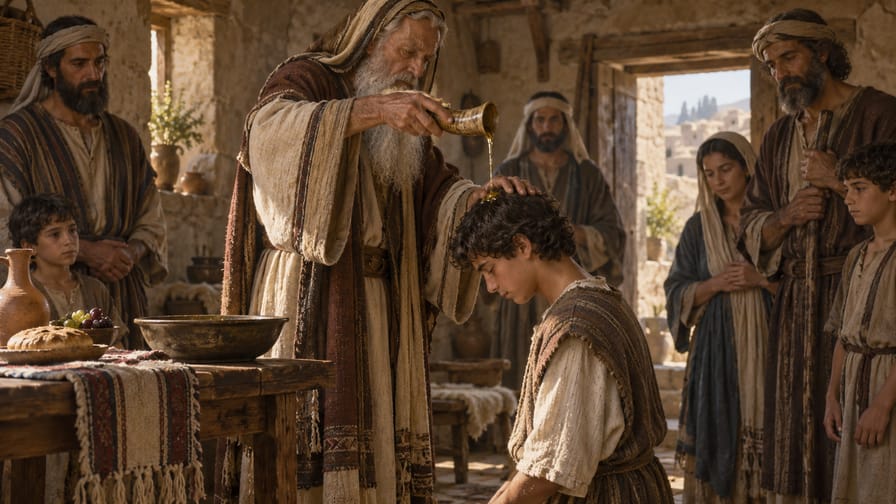
The figure of Samuel is one of the most prominent and multifaceted in the Old Testament, serving as the last of the judges, a prophet of great authority, and the anointer of Israel's first kings. His life and ministry mark a crucial period of transition in Israel's history, from the theocracy of the judges to the monarchy. From a Protestant evangelical perspective, Samuel is a notable example of faith, obedience, and service to God, whose ministry prefigures aspects of Christ's mediating office.
His narrative, recorded primarily in the books of 1 Samuel, offers rich lessons on divine sovereignty, the importance of obedience, and the consequences of disobedience. The analysis of his character, calling, and theological relevance is fundamental for understanding God's redemptive plan and the preparation for the coming of the Messiah.
1. Etymology and Meaning of the Name
The name Samuel, in Hebrew Shemu'el (שְׁמוּאֵל), possesses a rich and theologically significant etymology, which reflects the circumstances of his birth and his subsequent role in Israel's history. The most common and widely accepted interpretation is "Name of God" or "His Name is God," deriving from the combination of shem (שֵׁם, "name") and 'el (אֵל, "God").
Another quite strong interpretation, and one that aligns perfectly with the narrative of his birth, is "Heard by God" or "God Hears." This derivation connects with the Hebrew root shama' (שָׁמַע, "to hear"), as expressed by Samuel's mother, Hannah, in 1 Samuel 1:20: "Because I have asked him of the Lord" (literally, "I asked him of Yahweh").
The etymological ambiguity of the name does not diminish its meaning, but rather enriches it, pointing to the intimate relationship between God and His servant. Samuel's name, regardless of the exact derivation, underscores the divine intervention in his life and the nature of his ministry as a spokesman for God. He was both "heard by God" in prayer and the one through whom the "name of God" was proclaimed and glorified.
There are no other prominent biblical characters with the exact same name as Samuel. His onomastic uniqueness in the biblical canon reinforces the exclusivity of his calling and his mission. The name thus becomes a symbol of his calling and of the divine purpose for his life, from before his birth until the end of his ministry.
In the Septuagint (LXX), the name is transliterated as Samouēl (Σαμουήλ), maintaining the same sound and meaning. The theological significance of the name lies in its direct connection with God's sovereignty and the efficacy of prayer. He is a living testimony that God hears the cry of His people and acts in response, raising up leaders to fulfill His purposes.
2. Historical Context and Biblical Narrative
2.1. The Period of Transition in Israel
Samuel's life unfolds at the end of the period of the Judges and the beginning of the monarchy of Israel, approximately between 1100 BC and 1000 BC. This was a time of great political, social, and religious instability. After the death of Joshua, Israel had fallen into a cycle of apostasy, oppression by neighboring nations, crying out to God, and deliverance by divinely raised judges, as described in the book of Judges.
The religious landscape was particularly bleak. The priesthood in Shiloh, under Eli and his sons Hophni and Phinehas, was corrupt, dishonoring God and exploiting the people (1 Samuel 2:12-17, 22-25). The ark of the covenant, a symbol of God's presence, was in Shiloh, but God's glory seemed to have departed, culminating in its capture by the Philistines (1 Samuel 4:10-11, 21-22).
Politically, Israel was a tribal confederation, without a strong central government, making it vulnerable to enemies like the Philistines, who dominated much of the coastal region and threatened the interior. The need for a strong and unifying leader was pressing, preparing the ground for the transition to monarchy.
2.2. Family Origin and Miraculous Birth
Samuel was born in Ramah, in the hill country of Ephraim, the son of Elkanah and Hannah (1 Samuel 1:1-2). Although his family is associated with Ephraim, the genealogy in 1 Chronicles 6:33-38 connects him to the Levitical lineage of Kohath, through his father Elkanah. This explains his aptitude and priestly service, even without being from the lineage of Aaron.
Samuel's birth is a miraculous event, a response to the fervent prayer of his mother, Hannah, who was barren and suffered the provocation of Peninnah, Elkanah's other wife (1 Samuel 1:5-7). Hannah promised to dedicate her son to the Lord as a Nazirite, if God would grant her a son (1 Samuel 1:11). Her prayer was heard, and she gave birth to Samuel, fulfilling her promise by taking him to the temple in Shiloh while still a child (1 Samuel 1:24-28).
2.3. Key Events of Life and Ministry
Samuel's life can be divided into several distinct phases, each marking a crucial development in his ministry and in the history of Israel:
- Childhood and Divine Calling (1 Samuel 1-3): Raised in the temple under the tutelage of the priest Eli, Samuel received a direct call from God at a young age, prophesying judgment upon Eli's house (1 Samuel 3:1-18). This event established his credibility as a prophet.
- Judge and Deliverer (1 Samuel 4-7): After Israel's defeat by the Philistines and Eli's death, Samuel emerged as a judge and spiritual leader. He called Israel to repentance in Mizpah, and God granted a great victory over the Philistines at Ebenezer (1 Samuel 7:3-14). He judged Israel all the days of his life (1 Samuel 7:15-17).
- Establishment of the Monarchy (1 Samuel 8-12): Faced with the people's request for a king, Samuel warned them about the consequences, but obeyed God's direction to anoint Saul as the first king of Israel (1 Samuel 8:4-22 10:1). He oversaw the transition, ensuring that God's sovereignty was recognized.
- Confrontation with Saul (1 Samuel 13, 15): Samuel confronted Saul for his disobedience, first for offering an improper sacrifice (1 Samuel 13:8-14) and then for sparing Agag and the best of the spoil from the Amalekites (1 Samuel 15:1-35). In these episodes, Samuel proclaimed that obedience is more important than sacrifice.
- Anointing of David and Later Years (1 Samuel 16-25): By God's command, Samuel anointed David as the future king of Israel, while Saul still reigned (1 Samuel 16:1-13). He continued to minister, establishing schools of the prophets, and his death is recorded in 1 Samuel 25:1, being mourned by all Israel.
The geography related to Samuel includes Ramah, his hometown Shiloh, the religious center of his childhood Mizpah, where he gathered Israel and Bethlehem, where he anointed David. His relationships with Eli, Saul, and David are central to the narrative, illustrating the complexity of leadership and the divinely orchestrated transition of power.
3. Character and Role in the Biblical Narrative
3.1. Character and Spiritual Qualities
Samuel's character is consistently portrayed in the Scriptures as a model of piety and integrity. From childhood, he demonstrated unwavering devotion to God, serving in the temple with faithfulness (1 Samuel 2:18-21 3:1). His obedience to the divine calling, even when it meant delivering a difficult message to Eli, is notable (1 Samuel 3:15-18).
He was a man of deep and constant prayer, interceding tirelessly for Israel (1 Samuel 7:5, 8 12:19, 23). His prayer was a powerful force, and the people trusted in his intercession. Samuel also stood out for his righteousness and justice as a judge, governing Israel with impartiality and without corruption (1 Samuel 12:3-4), a striking contrast with his own sons (1 Samuel 8:3).
His courage in confronting powerful leaders like Saul, proclaiming the word of God without fear, demonstrates his steadfastness and primary loyalty to Yahweh (1 Samuel 13:13-14 15:16-23). The holiness of his life was such that, like Moses and Aaron, he is remembered as one of those who called upon the name of the Lord and were heard (Psalm 99:6).
3.2. Weaknesses and Failures
Although Samuel is generally presented in a positive light, the Bible does not hide his weaknesses, demonstrating the honesty of the Scriptures and the humanity of its heroes. The main recorded flaw is the corruption of his sons, Joel and Abijah, who "turned aside from the way and pursued dishonest gain, accepting bribes and perverting justice" (1 Samuel 8:3). This failure to raise godly successors was a catalyst for Israel's request for a king.
Another point that some interpret as a weakness is his excessive sorrow and lament for Saul after the divine rejection (1 Samuel 15:35 16:1). God rebuked Samuel, asking: "How long will you mourn for Saul, since I have rejected him as king over Israel?" (1 Samuel 16:1). This suggests a possible reluctance to fully accept God's sovereign will in the face of human failure, though it can also be interpreted as the deep sorrow of a mentor and prophet over the fate of his anointed one.
3.3. Calling and Role in the Narrative
Samuel played multiple crucial roles in the history of Israel, serving as a transitional figure between eras:
- Prophet: He is considered the first of the great classical prophets, a mediator between God and the people, who received and proclaimed the divine word with authority. From an early age, "all Israel from Dan to Beersheba knew that Samuel was established as a prophet of the Lord" (1 Samuel 3:20). He established "schools of the prophets," indicating the institutionalization of the prophetic ministry (1 Samuel 19:20).
- Priest: Although he was not of the Aaronic lineage, Samuel functioned as a priest, offering sacrifices in Mizpah and Bethlehem (1 Samuel 7:9 16:5). His Levitical lineage (via Kohath) may have facilitated this role, which was common for Levites in certain circumstances, especially in the absence of a faithful Aaronic priesthood.
- Judge: He was the last and one of the most effective judges of Israel, leading the people in obedience to God and ensuring justice. He "judged Israel all the days of his life" (1 Samuel 7:15), restoring order and faith after a period of great decline.
- Anointer of Kings: Samuel's most singular role was to anoint the first two kings of Israel, Saul and David, marking the transition from the theocracy of the judges to the monarchy. He was the divine agent to establish the royal lineage that would culminate in the Messiah (1 Samuel 10:1 16:13).
Samuel's key actions and decisions shaped the future of Israel. His leadership in the restoration of faith, his warning against the monarchy, and his obedience in anointing the kings, even with initial reluctance, demonstrate his submission to God's sovereign will. He was God's instrument to prepare the way for the Davidic kingdom and, consequently, for the Messianic kingdom.
4. Theological Significance and Typology
4.1. Role in Redemptive History and Progressive Revelation
Samuel occupies a pivotal position in Israel's redemptive history, acting as a link between the period of the judges and the era of the monarchy. His ministry not only prepared the ground for the institution of kingship but also established the parameters for the theocratic government under a king. He was fundamental in the progressive revelation of God's plan for Israel and for humanity.
Through Samuel, God demonstrated His sovereignty in raising up and rejecting leaders, and His faithfulness in establishing a king "after His own heart" (1 Samuel 13:14). The transition from direct theocracy to monarchy was a necessary step in the divine plan, which aimed at the eventual coming of the Messiah, the perfect King. Samuel, therefore, is an essential instrument in the preparation for the Davidic Covenant (2 Samuel 7), which is the basis for Messianic hope.
4.2. Prefiguration and Christocentric Typology
From a reformed evangelical perspective, Samuel serves as a type or prefiguration of Jesus Christ in several aspects:
- Miraculous Birth and Dedication: Just as Samuel was a promised son, born of a barren mother by divine intervention and dedicated to the Lord from birth (1 Samuel 1:20, 28), Jesus was miraculously born of a virgin and was fully dedicated to His Father's work (Luke 1:35 2:49).
- Prophet, Priest, and King (in function): Samuel exercised the three offices of prophet (proclaiming God's word), priest (offering sacrifices and interceding), and judge (exercising authority and leadership). Jesus Christ is the supreme Prophet, Priest, and King, who perfectly fulfills these offices. He is the incarnate Word, the perfect sacrifice, and the eternal King.
- Mediator and Intercessor: Samuel acted as a mediator between God and Israel, interceding for the people and conveying the divine will (1 Samuel 7:5-9 12:23). Christ is the one Mediator between God and men (1 Timothy 2:5), who continually intercedes for His people (Romans 8:34 Hebrews 7:25).
- Anointer of Kings and Establishment of the Kingdom: Samuel anointed the kings of Israel, establishing the monarchy that would culminate in the lineage of David. Christ is the Anointed King par excellence (the very meaning of Messiah/Christ), who establishes the Kingdom of God definitively and eternally.
- Spokesman for the Word of God: The word of the Lord came to Samuel, and he faithfully transmitted it (1 Samuel 3:21 15:22-23). Jesus Christ is the very Word of God incarnate (John 1:1, 14), the final and complete revelation of God.
4.3. Connection with Theological Themes and the New Testament
Samuel's life is intrinsically linked to central theological themes. His story illustrates God's sovereignty in choosing His servants and in directing history, even through human failures (such as Saul's and his own sons'). Obedience is emphasized as superior to sacrifice (1 Samuel 15:22), a principle that resonates throughout the Old and New Testaments and points to Christ's perfect obedience.
Hannah's prayer (1 Samuel 2:1-10) is a prophetic hymn that anticipates the exaltation of the humble and the downfall of the powerful, finding its ultimate fulfillment in the incarnation of Christ and in Mary's proclamation of the Magnificat (Luke 1:46-55). Both prayers celebrate God's sovereign action in salvation history.
In the New Testament, Samuel is recognized as one of the great prophets. In Acts 3:24, Peter states that "all the prophets from Samuel onward, and those who followed him, spoke of these days," referring to the days of the Messiah. He is also listed in the "faith hall of fame" in Hebrews 11:32, among the heroes of faith who "through faith conquered kingdoms, enforced justice, obtained promises." This solidifies his importance as a model of faith and a precursor in salvation history.
The rejection of Saul and the anointing of David also underscore the doctrine of divine election and the need for an obedient heart. God sought a king who would reflect His own heart, preparing the way for the King-Messiah who would perfectly fulfill this expectation. The figure of Samuel, therefore, is a pillar for understanding covenant theology and divine sovereignty in choosing and empowering leaders for His redemptive purposes.
5. Biblical-Theological Legacy and Canonical References
5.1. Mentions in Other Biblical Books and Literary Contributions
Samuel's influence transcends the books that bear his name (1 and 2 Samuel), in which he is the central figure. He is mentioned in Psalm 99:6, where he is placed alongside Moses and Aaron as one of those who called upon the name of the Lord and were heard. This mention highlights his stature as one of Israel's greatest intercessors and spiritual leaders.
In Jeremiah 15:1, God speaks to Jeremiah, saying: "Though Moses and Samuel stood before me, yet my heart would not turn toward this people." This powerful declaration underscores Samuel's reputation as an effective intercessor, whose prayer carried great weight before God, even though, at that moment, not even his pleas could change the divine judgment upon Judah.
Traditionally, Samuel is considered the author of a significant portion of the first book that bears his name, specifically up to chapter 24, which describes his death. 1 Chronicles 29:29 states that "the acts of King David, from first to last, are written in the chronicles of Samuel the seer, and in the chronicles of Nathan the prophet, and in the chronicles of Gad the seer." This suggests that Samuel, or his prophetic records, formed the basis for parts of the historical books.
5.2. Influence on Biblical Theology and Interpretative Tradition
The figure of Samuel exerted a profound influence on biblical theology, especially in the understanding of the prophetic ministry and divine monarchy. He established the precedent for the prophet as the voice of God to the king and the people, a role that would be continued by prophets like Nathan, Elijah, and Elisha. He also demonstrated the primacy of God's law and word over royal authority, a recurring theme in prophetic theology.
In Jewish interpretative tradition, Samuel is revered as one of Israel's greatest prophets and leaders, a man of God, upright and powerful in prayer. He is seen as the founder of the prophetic school, which played a vital role in the preservation and transmission of monotheistic faith.
In Christian theology, and particularly from a reformed and evangelical perspective, Samuel is celebrated as an example of faithfulness and obedience. His life is studied for its Christocentric typology, pointing to Jesus as the supreme Prophet, Priest, and King. His dedication to God from childhood, his integrity amidst corruption, and his courage in proclaiming the truth are virtues that believers are encouraged to emulate.
5.3. Importance for Understanding the Canon
Samuel's narrative is essential for understanding the continuity and coherence of the biblical canon. He bridges the gap between the decentralized period of the Judges and the formation of the nation under a unified monarchy. Without Samuel, the transition to the era of kings, the Davidic Covenant, and the development of Messianic hope would be incomprehensible.
His life illustrates God's faithfulness in raising up leaders and in fulfilling His promises, even in times of great apostasy. The story of Samuel is a testimony to divine sovereignty operating through flawed yet dedicated human instruments to advance His redemptive plan. He is a pillar connecting the patriarchal and Mosaic promises with the hope of the Messiah, the Son of David, who would come to establish an eternal kingdom.