


Abijah
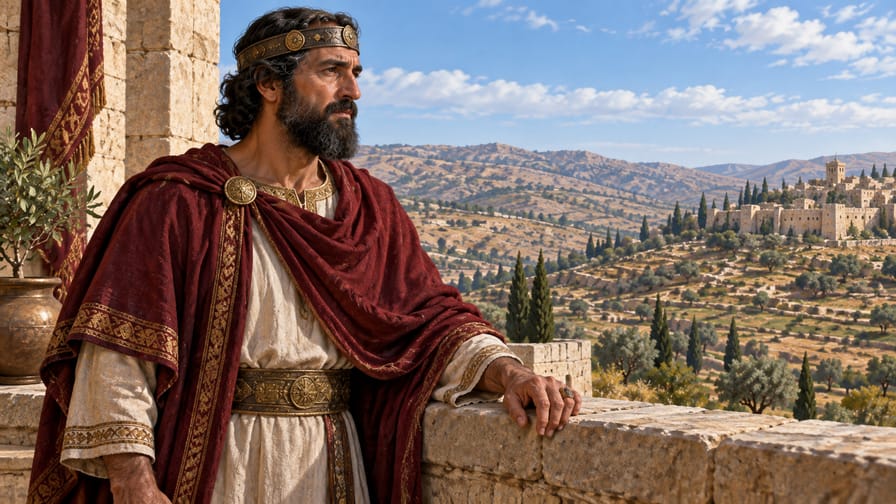
The figure of Abias (also known as Abijah or Abijam) is a complex and significant biblical character, especially in his role as king of Judah. His narrative, though brief, offers crucial insights into the history of divided Israel, God's faithfulness to His Davidic covenant, and the consequences of obedience and disobedience. This analysis explores his etymology, historical context, character, theological significance, and legacy, from a conservative evangelical Protestant perspective.
1. Etymology and Meaning of the Name
The name Abias, in Hebrew, is most frequently found as ʼĂḇiyyāh (אֲבִיָּה) or the more complete form ʼĂḇiyyāhû (אֲבִיָּהוּ). Both forms are theophoric, combining the root ʼāḇ (אב), which means "father," with Yah (יה) or Yahû (יהו), the abbreviated forms of the divine name Yahweh (YHWH).
Thus, the literal meaning of Abias is "My Father is Yahweh" or "Yahweh is my Father." This name reflects a declaration of faith or a pious aspiration on the part of the parents who bestowed it, indicating a relationship of dependence and recognition of divine fatherhood. It is a common name in the Old Testament, attesting to the importance of God's identity as Father in the Israelite worldview.
However, in 1 Kings 15:1, the king of Judah is called Abijam (אֲבִיָּם - ʼĂḇiyyām). The variation between Abias and Abijam has been the subject of academic debate. Some scholars suggest that Abijam may be a corrupted or altered form, perhaps with a negative connotation, meaning "Father of the Sea" or "My Father is the Sea," possibly linking him to pagan cults or instability.
Another theory is that "Abijam" may have been a deliberate alteration by a later scribe to avoid using the divine name for a king considered impious, or simply a dialectal variation. However, most evangelical commentators tend to consider Abias as the preferred and theologically richer form, with "Abijam" being a less common variation or of uncertain purpose.
The theological significance of the name Abias lies in its declaration of divine fatherhood. In a culture where family identity and lineage were crucial, calling God "Father" is a testament to Israel's relationship with its Creator. For King Abias, this name highlights the contrast between the ideal of faith in Yahweh and his own failures, as recorded in the Scriptures.
Besides the king of Judah, several other biblical characters bear the name Abias or Abijam, demonstrating its popularity. Among them are: *Abias*, the son of Samuel, who, like his brother Joel, "did not walk in his father's ways" (*1 Samuel 8:2-3*) *Abias*, a priest in the time of David, head of one of the twenty-four priestly divisions (*1 Chronicles 24:10*) and *Abias*, the mother of King Hezekiah (also called Abi in *2 Kings 18:2* and Abijah in *2 Chronicles 29:1*).
There is also *Abias*, one of the priests who returned from exile with Zerubbabel (Nehemiah 12:4, 7) and who sealed the covenant (Nehemiah 10:7). In the New Testament, the "division of *Abias*" is mentioned as the priestly order to which Zechariah, father of John the Baptist, belonged (*Luke 1:5*). The prevalence of the name underscores the importance of the concept of God as Father in Israelite faith throughout generations.
2. Historical Context and Biblical Narrative
King Abias of Judah reigned during a critical period in Israel's history, approximately between 913 and 911 BC, according to the chronology of Edwin Thiele, one of the most respected biblical chronologists. This was the initial period of the divided monarchy, shortly after the secession of the ten northern tribes, who formed the kingdom of Israel under Jeroboam I, while Rehoboam, father of Abias, governed the southern kingdom, Judah.
The political, social, and religious context of the era was one of intense turbulence. The division of Solomon's kingdom brought with it constant hostilities between Judah and Israel. Jeroboam I had established centers of idolatrous worship in Bethel and Dan, with golden calves, to divert the people of Israel from Jerusalem and the Temple, which was the legitimate center of Yahweh worship (1 Kings 12:26-33).
Judah, in turn, under Rehoboam, had also strayed, "doing what was evil in the sight of the Lord" and building "high places, pillars, and Asherah poles on every high hill and under every lush tree" (1 Kings 14:22-24). Abias inherited a kingdom that, although it maintained the Temple in Jerusalem, was spiritually compromised and militarily threatened.
The genealogy of Abias is crucial to understanding his role. He was the son of Rehoboam, the first king of Judah after the division, and of Maacah (or Micaiah), daughter of Absalom, according to 2 Chronicles 11:20-22. However, 1 Kings 15:2 describes her as "Maacah, daughter of Abishalom." This apparent discrepancy is generally explained as a reference to the same Absalom, son of David, or that "Abishalom" was another name for Maacah or one of her ancestors, or even a scribal error. The Davidic lineage of Abias is, nevertheless, unquestionable and fundamental to Old Testament theology.
The main events of **Abias**' life are narrated in 1 Kings 15:1-8 and, in more detail and with a different perspective, in 2 Chronicles 13:1-22. He ascended to the throne in the eighteenth year of Jeroboam I's reign and reigned for only three years in Jerusalem. His reign was marked primarily by a great war against Jeroboam I.
The battle, described in 2 Chronicles 13, is the climax of his narrative. Abias gathered 400,000 men from Judah and Jeroboam 800,000 from Israel. Before the confrontation, Abias delivered a powerful speech from Mount Zemaraim, located in the mountainous region of Ephraim, addressing Jeroboam and all Israel. In this speech, he defended the legitimacy of the house of David and the worship in Jerusalem, condemning Jeroboam's apostasy (2 Chronicles 13:4-12).
Despite the numerical disadvantage, Judah obtained an overwhelming victory, with 500,000 men of Israel killed. This victory is attributed to divine intervention, for the men of Judah "relied on the Lord, the God of their fathers" (2 Chronicles 13:18). After the battle, Abias consolidated his power, conquering some cities of Israel, including Bethel, Jeshanah, and Ephron.
The geography related to Abias is the kingdom of Judah, with its capital in Jerusalem, and the border areas with the kingdom of Israel, particularly the region of Ephraim, where the battle took place. His relationships with other biblical characters are primarily with his father Rehoboam and his adversary, Jeroboam I. His death and burial in Jerusalem are recorded in 1 Kings 15:8 and 2 Chronicles 13:21-22, concluding a brief but militarily decisive reign for Judah.
3. Character and Role in the Biblical Narrative
The character of Abias is presented in a complex and, at first glance, contradictory way in the Scriptures, depending on the perspective of the book that describes him. The book of 1 Kings portrays him predominantly negatively, stating that "he walked in all the sins of his father, which he had committed before him and his heart was not wholly true to the Lord his God, as the heart of David his father" (1 Kings 15:3).
This assessment suggests that Abias continued the idolatrous practices and lack of complete devotion to Yahweh that characterized the reign of his father, Rehoboam. The comparison with David, the standard of ideal kingship in Israel, serves to underscore his failure to live up to the covenant. The mention that his heart was not "wholly true" indicates a divided or superficial devotion, common among the kings of Judah.
In contrast, the book of 2 Chronicles presents Abias in a more favorable light, especially concerning his victory over Jeroboam. His speech before the battle (2 Chronicles 13:4-12) reveals a king who, at least at that moment, demonstrated a deep theological understanding of the Davidic covenant and an explicit trust in Yahweh as the God of Israel.
In that speech, Abias highlights the legitimacy of the Davidic monarchy, established by "a covenant of salt" (2 Chronicles 13:5), and condemns Jeroboam's apostasy, who had abandoned the Levites and the priests of Yahweh to create his own illegitimate gods and priests. He emphasizes that Judah had the Lord as their God, His priests, and His legitimate rituals, and calls on Israel not to fight against Yahweh.
The reconciliation of these perspectives is an important point for evangelical exegesis. Many commentators, such as John Gill, suggest that the assessment in 1 Kings may describe **Abias**' general character and the conduct of his reign, which was marked by failures and idolatry. The narrative in 2 Chronicles, on the other hand, may focus on a specific event — the war against Jeroboam — where **Abias** indeed sought and received divine help, perhaps out of a pragmatic need for survival or a moment of genuine (though not persistent) faith.
Thus, **Abias**' virtues included military courage and a remarkable capacity for theological articulation, as seen in his speech. He demonstrated trust in God for victory, at least at that critical moment. His primary role was that of king of Judah and defender of the Davidic lineage and legitimate worship in Jerusalem against the threats from the northern kingdom.
However, his failures, according to 1 Kings, included idolatry and the lack of a heart "wholly true" to God. He failed to completely break with the sins of his father, indicating a flaw in his personal devotion. Although God used him to preserve the Davidic lineage and defeat Jeroboam, this does not signify full approval of his character or his reign as a whole.
The role of Abias in the biblical narrative is, therefore, that of an instrument in the hands of God. He was the king who, despite his imperfections, was used by Yahweh to maintain the territorial and religious integrity of Judah and, more crucially, to preserve the Davidic covenant and the messianic lineage. His brief military leadership was decisive for the survival of the southern kingdom at a time of great vulnerability.
4. Theological Significance and Typology
The theological significance of Abias lies fundamentally in his role in God's redemptive history, especially concerning the preservation of the Davidic lineage. Although he himself is not an example of consistent piety, his story illustrates God's sovereignty and faithfulness to His covenant, even in the face of human unfaithfulness.
**Abias**' victory over Jeroboam I, as narrated in 2 Chronicles 13, is not attributed to his own righteousness, but to divine intervention: "Thus God defeated Jeroboam and all Israel before **Abias** and Judah" (2 Chronicles 13:15). This demonstrates that God acts to fulfill His purposes, even through imperfect instruments, to protect His people and the messianic promise.
In terms of Christocentric typology, **Abias** does not serve as a direct type of Christ in the sense of prefiguring His virtues or ministry. However, his role in defending the "covenant of salt" with David (2 Chronicles 13:5) indirectly points to Christ. The Davidic covenant, which promised an eternal throne to a descendant of David (2 Samuel 7:12-16), is the basis for the coming of the Messiah.
**Abias**' victory ensured the continuity of this royal lineage, which would culminate in Jesus Christ, the true and eternal King on David's throne (Luke 1:32-33). He defended the legitimacy of the Levitical priesthood and worship in the Temple, elements that pointed to the superior priesthood and perfect sacrifice of Christ (Hebrews 7-10).
The story of Abias connects directly with central theological themes. The faithfulness of God to the covenant is prominent: God honored His promise to David, not because of **Abias**' righteousness, but because of His own grace and commitment. The sovereignty of God is evident in how He grants victory and preserves His plan, regardless of the failures of human leaders.
The contrast between legitimate worship in Judah and Jeroboam's apostasy in Israel highlights the importance of true worship. **Abias**, in his speech, argued that Judah had "the Lord [Yahweh] our God" and had not abandoned Him, unlike Israel (2 Chronicles 13:10-11). This emphasizes the doctrine of true worship and the condemnation of idolatry.
Furthermore, the narrative of Abias addresses grace and judgment. Judah's victory was an act of grace for the southern kingdom, which still harbored the messianic promise, and a judgment upon Jeroboam's apostasy. This demonstrates that God is both just and merciful, judging sin while faithfully upholding His promise.
Although Abias is not directly quoted in the New Testament, the Davidic covenant he defended is the backbone of Jesus' genealogy and messianic identity. The promise of an eternal King from the house of David is central to the gospel, and the preservation of this lineage through kings like Abias is a testament to divine providence in salvation history.
The doctrine that God uses imperfect vessels to fulfill His purposes is a valuable lesson from the life of Abias. His story serves as a reminder that the salvation and preservation of God's people depend on God's faithfulness, and not on human perfection. This perspective is central to Reformed and evangelical theology, which emphasizes the sovereign grace of God.
5. Biblical-Theological Legacy and Canonical References
The legacy of Abias, though not greatly highlighted in terms of textual length, is significant for understanding the history of Israel and biblical theology. His primary canonical mentions are in 1 Kings 15:1-8 and 2 Chronicles 13:1-22. These passages, though brief, offer crucial insight into the continuity of the Davidic covenant and the sovereignty of God.
There are no literary contributions attributed to Abias, such as Psalms or prophetic books. His influence, therefore, lies more in the historical narrative and the theological lessons drawn from his reign. He is an example of how divine providence operates in history, using flawed leaders to advance His redemptive purposes.
In biblical theology, **Abias**' reign reinforces the importance of the Davidic lineage. The victory over Jeroboam, described in 2 Chronicles, is a turning point that ensures the survival of Judah and, with it, the continuity of the messianic promise. Without this victory, David's lineage could have been extinguished, compromising God's plan for the coming of the Messiah.
The presence of Abias in Jewish and Christian interpretative tradition has been a subject of analysis, especially the apparent discrepancy between the accounts in Kings and Chronicles. Evangelical theologians and commentators, such as Gleason Archer and Walter Kaiser Jr., frequently defend biblical inerrancy and infallibility, explaining that the differences lie in the differing emphases and theological purposes of the authors.
In Reformed and evangelical theology, Abias is frequently discussed in contexts that address God's sovereignty, election, grace, and the preservation of the covenant. His story is used to illustrate that salvation and God's redemptive history do not depend on the perfection of men, but on God's unwavering faithfulness to His promises.
The preservation of the house of David through Abias, despite his own iniquities, is a testament to God's prevenient grace. He is a link in the genealogical chain that leads to Jesus Christ, demonstrating that God was in control of every detail of history to fulfill His promise to send a Savior.
In summary, the figure of Abias is vital for understanding the biblical canon, not for his own moral greatness, but for being an instrument through which God manifested His faithfulness. His story teaches us about the complexity of the human heart, the persistence of sin, but, above all, Yahweh's unwavering faithfulness to His covenant and His redemptive plan, which culminates gloriously in Jesus Christ.