


Amaziah
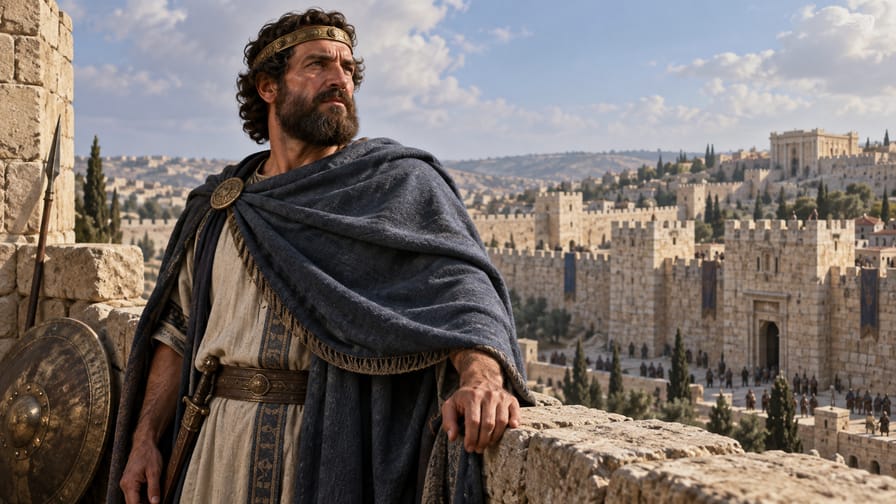
The figure of Amaziah, king of Judah, emerges in the Scriptures as a complex and instructive character, whose trajectory oscillates between initial obedience to God and the subsequent fall into idolatry and pride. His story, detailed mainly in the books of 2 Kings and 2 Chronicles, offers rich theological lessons on the nature of genuine faith, the consequences of disobedience, and divine sovereignty in guiding the history of the people of Israel.
From a Protestant evangelical perspective, the analysis of Amaziah emphasizes biblical authority as the primary source for understanding his life and character. The narrative serves as a mirror for believers of all ages, warning about the dangers of religious syncretism, self-confidence, and apostasy, while simultaneously reiterating God's faithfulness even amidst human failures.
This study will delve into the onomastic, historical, characterological, and theological aspects of Amaziah, contextualizing him within redemptive history and extracting relevant principles for Christian faith and practice.
1. Etymology and Meaning of the Name
The name Amaziah (in Hebrew: אֲמַצְיָהוּ, transliterated as Amatzyahu or Amatsyah) is a theophoric name, meaning a name that incorporates one of God's names. It is composed of two main parts that reveal a profound and, ironically, contrasting meaning with the king's life.
The first part, ʾamatz (אמץ), derives from the Hebrew verbal root meaning "to be strong," "to be courageous," "to strengthen oneself," or "to show oneself strong." This root is frequently used in the Old Testament to encourage courage and steadfastness, especially in contexts of faith and obedience to God, as in Deuteronomy 31:6-7 and Joshua 1:6-7.
The second part of the name is Yah (יָהּ), an abbreviated form of the tetragrammaton YHWH (יהוה), the personal and covenantal name of God, often translated as Yahweh or Lord. The combination of these two parts results in the literal meaning of "Yahweh is strong," "The strength of Yahweh," or "Strengthened by Yahweh."
This onomastic meaning is intrinsically theological, as it declares the divine source of all strength and power. The name of Amaziah, therefore, not only describes a characteristic but proclaims a truth about God and, ideally, about the one who bears it: that their strength comes from the Lord.
However, the biblical narrative of Amaziah reveals a tragic irony. Although his name pointed to the strength of Yahweh, his life was marked by moments when he sought strength in unholy alliances and, even worse, in pagan gods, demonstrating a failure to live up to the meaning of his own name. He did not consistently remain "strengthened by Yahweh."
There are no other prominent characters in the Bible named Amaziah who have such an extensive and detailed narrative. There are some secondary mentions, such as a priest in Bethel who opposed the prophet Amos (Amos 7:10-17), but the king of Judah is by far the most well-known and studied.
The theological significance of the name lies in its ability to foreshadow divine potential in an individual's life, while simultaneously highlighting human responsibility to correspond to that grace. The name of Amaziah is a reminder that true strength and success come from God, and not from human resources or false gods, a central theme in Protestant evangelical theology.
2. Historical Context and Biblical Narrative
Amaziah ascended to the throne of Judah around 796 BC and reigned for 29 years (2 Kings 14:2 2 Chronicles 25:1). His reign occurred during the Divided Kingdom period, an era of great political and religious instability for Judah and Israel. He succeeded his father, Joash, who had been assassinated in a conspiracy, and was the father of Uzziah (also known as Azariah), one of Judah's most successful kings.
2.1 Family Origin and Genealogy
Amaziah was the son of King Joash and Jehoaddan, from Jerusalem (2 Kings 14:2 2 Chronicles 25:1). His lineage connected him directly to the Davidic dynasty, a crucial lineage for salvation history, as it was from it that the promised Messiah would come. This connection underscores the importance of his reign in maintaining the promise of the Davidic covenant (2 Samuel 7:12-16).
2.2 Main Events and Narrative Chronology
The narrative of Amaziah's life is told in 2 Kings 14:1-22 and, with more detail and theological emphasis, in 2 Chronicles 25:1-28. His story can be divided into distinct phases:
-
Ascension and Initial Justice: After assuming the throne, Amaziah demonstrated a righteous stance by executing the officials who had assassinated his father, King Joash. However, he obeyed the Law of Moses by sparing the children of the assassins, in accordance with Deuteronomy 24:16, which prohibited punishing children for their parents' sins (2 Kings 14:5-6 2 Chronicles 25:3-4). This initial act was a sign of his intention to do what was right in the eyes of the Lord.
-
Preparation for War against Edom: Amaziah gathered an army of 300,000 men from Judah and Benjamin. Additionally, he hired 100,000 mercenaries from Israel for one hundred talents of silver. However, a prophet of God warned him to dismiss the Israelite mercenaries, for the Lord was not with Israel. The prophet assured him that God had the power to grant victory, regardless of the number of soldiers. Amaziah, in a rare moment of obedience, heeded the advice, losing the mercenaries' money, but demonstrating trust in divine providence (2 Chronicles 25:5-10).
-
Victory over Edom and Apostasy: With the army of Judah, Amaziah marched against Edom, in the Valley of Salt, where he achieved an overwhelming victory, killing 10,000 Edomites. He also captured Sela, the Edomite capital, and renamed it Joktheel (2 Kings 14:7 2 Chronicles 25:11-12). However, this glorious victory was followed by a catastrophic spiritual fall. Amaziah brought the gods of Edom, established them in Judah, and worshipped them, burning incense to them (2 Chronicles 25:14). This was a grave violation of the first commandment and an act of religious syncretism.
-
Prophetic Reprimand and Scorn: In response to his idolatry, God sent a prophet to reprimand Amaziah, questioning why he worshipped gods that could not save their own people. Amaziah, in his pride and obstinacy, rejected the prophet's message, threatening him with death. The prophet then declared that God had determined to destroy him because of his idolatry and for not having heeded divine counsel (2 Chronicles 25:15-16).
-
War against Israel and Humiliating Defeat: Driven by the pride of victory over Edom and perhaps by anger over the Israelite mercenaries who plundered cities of Judah on their way back, Amaziah challenged Jehoash, king of Israel, to battle. Jehoash responded with a parable that depicted Amaziah as an arrogant thistle that would be trampled by a wild beast. Ignoring the warning, Amaziah proceeded, and the armies clashed at Beth-Shemesh. Judah was severely defeated, Amaziah was captured, and Jehoash of Israel invaded Jerusalem, broke down part of the wall, plundered the temple and the palace, and took hostages (2 Kings 14:8-14 2 Chronicles 25:17-24).
-
Death by Conspiracy: After his humiliating defeat and the destruction of Jerusalem, Amaziah lived for fifteen more years (2 Kings 14:17 2 Chronicles 25:25). However, his final years were marked by a conspiracy against him in Jerusalem. He fled to Lachish, but was pursued and assassinated there. His body was brought back to Jerusalem and buried with his fathers (2 Kings 14:19-20 2 Chronicles 25:27-28).
Geographically, the events of Amaziah's life are concentrated in Jerusalem (his capital), the Valley of Salt and Sela (locations of the Edomite campaign), Beth-Shemesh (site of the defeat by Israel), and Lachish (site of his death). His relationships with other characters include his father Joash, his son Uzziah, King Jehoash of Israel, and an anonymous prophet who played a crucial role in his story.
3. Character and Role in the Biblical Narrative
The character of Amaziah is a study of contrasts and inconsistencies. The Bible describes him as someone who began his reign doing what was right in the eyes of the Lord, but with an important caveat: "but not with a whole heart" (2 Chronicles 25:2). This phrase is the key to understanding his trajectory and his failures.
3.1 Virtues and Qualities
Initially, Amaziah demonstrated some admirable qualities. His obedience to the Law of Moses by not punishing the children of his father's assassins (2 Kings 14:6) reveals a respect for divine ordinances and a sense of justice. Furthermore, his decision to dismiss the Israelite mercenaries, trusting the prophet's word that God would grant victory with a smaller army (2 Chronicles 25:7-9), shows a moment of faith and dependence on Yahweh.
He also possessed military courage, leading his people to victory against Edom, a traditional enemy of Judah. These initial acts suggest a king with potential for pious and effective leadership.
3.2 Sins, Weaknesses, and Moral Failures
Amaziah's primary failure was the inconsistency of his heart. The phrase "but not with a whole heart" (2 Chronicles 25:2) indicates that his righteousness was superficial, perhaps motivated by pragmatism or an incomplete understanding of the covenant with God, rather than by deep and exclusive devotion.
His greatest transgression was flagrant idolatry after the victory over Edom. Bringing the Edomite gods and worshipping them (2 Chronicles 25:14) was a shocking act of apostasy, especially after having experienced Yahweh's powerful hand. This idolatry reveals a dangerous syncretism and a lack of understanding of the exclusivity of worship to God.
Pride and arrogance were also prominent traits of his character. His refusal to listen to the prophet who reprimanded him for his idolatry (2 Chronicles 25:16) and his reckless challenge to Jehoash, king of Israel (2 Kings 14:8), demonstrate excessive self-confidence and a disregard for divine wisdom. The proverb "Pride goes before destruction, and a haughty spirit before a fall" (Proverbs 16:18) applies perfectly to his situation.
Additionally, Amaziah's cruelty is evident in his treatment of the Edomites, where 10,000 were thrown from the top of a cliff (2 Chronicles 25:12). Although ancient warfare was brutal, this specific act highlights a harshness that contrasts with divine mercy.
3.3 Vocation and Role in the Narrative
Amaziah's primary role was that of king of Judah, exercising political, military, and religious authority over his people. His calling was to govern according to God's Law and to guide Judah in exclusive worship of Yahweh. However, he failed significantly in this latter aspect.
His story serves as a vivid example of the consequences of inconsistent leadership and apostasy. He is a character who illustrates the danger of a "divided heart," one that seeks God only when convenient or for results, rather than with total devotion.
The development of his character is tragic: from a promising start with acts of justice and faith, he degenerates into idolatry, pride, and is ultimately deposed and assassinated, a dark fate for a king who had the potential for much more.
4. Theological Significance and Typology
The life of Amaziah, though not typologically strong for Christ, is of great theological importance in the redemptive history of Israel. His narrative fits into the progressive revelation of God and offers crucial lessons for Protestant evangelical faith.
4.1 Role in Redemptive History and Progressive Revelation
Amaziah was a link in the Davidic lineage, the lineage through which the promised Messiah would come. Despite his personal failures, God's sovereignty ensured that the promise of the Davidic Covenant (2 Samuel 7) was maintained, securing the continuity of the throne in Judah. His story demonstrates that God's faithfulness to His covenant does not depend on the perfect faithfulness of an individual king, but on divine grace.
His life also reveals the persistence of the problem of idolatry in Judah, even after divine judgments and the reforms of previous kings. This underscores the need for an inner transformation and not just external reforms, a fundamental theme in biblical and Reformed theology.
4.2 Christocentric Prefiguration or Typology
Unlike figures such as David or Solomon, Amaziah is not a direct and clear type of Christ. On the contrary, his life serves more as an antitype or a contrast, highlighting the need for a perfect King who would not fail. Christ is the King who rules with a "perfect heart," whose obedience is complete, and whose faithfulness to God is unwavering.
Amaziah's failure to remain faithful to Yahweh, his fall into idolatry, and his pride serve as a vivid reminder of the fragility of human leadership and the need for a divine Redeemer who can truly strengthen His people and guide them in complete righteousness (Hebrews 7:26-28).
4.3 Connection with Central Theological Themes
The story of Amaziah illuminates several essential theological themes:
-
Obedience and Heart: The caveat in 2 Chronicles 25:2 ("but not with a whole heart") is crucial. It teaches that external obedience without an internal and exclusive devotion to God is insufficient. Evangelical theology emphasizes that true faith is not merely intellectual assent, but a total surrender of the heart to God (Matthew 22:37).
-
Idolatry: Amaziah's apostasy after the victory over Edom is a severe warning about the insidiousness of idolatry. Even after experiencing God's powerful hand, he turned to false gods, showing the human propensity to worship the creation instead of the Creator (Romans 1:25). Reformed theology vehemently condemns any form of idolatry, be it literal or spiritual (such as the worship of possessions, power, or self).
-
Pride and Judgment: Amaziah's pride in challenging Jehoash of Israel and in rejecting the prophet led directly to his humiliation and fall. This illustrates the biblical principle that "God opposes the proud but shows favor to the humble" (James 4:6 1 Peter 5:5). Divine judgment on Amaziah is a testament to God's justice against sin and disobedience.
-
Sovereignty of God: Even in Amaziah's failures and Judah's defeat, God's sovereignty is evident. He uses events, including the invasion of Jerusalem and the plundering of the Temple, as instruments of judgment and to fulfill His purposes, always keeping the Davidic lineage intact for the advent of the Messiah.
-
Consequences of Sin: Amaziah's life is a clear example of how sin has severe consequences, not only for the individual but also for the nation. His idolatry and pride resulted in military defeat, national plunder, and ultimately, his own violent death.
4.4 Doctrine and Associated Teachings
The story of Amaziah reinforces the doctrine of the need for genuine and persevering faith. It teaches that faith is not a one-time event, but a continuous relationship of trust and obedience to God. Amaziah's life is a case study on apostasy and the importance of remaining vigilant against the temptations of syncretism and pride.
For evangelical theology, the story of Amaziah highlights the importance of exclusive worship of God, the authority of the prophetic Word (which he scorned), and the need for humility before the Lord. It is a narrative that calls for reflection on the integrity of the heart in the life of faith.
5. Biblical-Theological Legacy and Canonical References
Despite his problematic trajectory, Amaziah occupies a significant place in the biblical canon, especially in the historical books of 2 Kings and 2 Chronicles. His story is not merely a chronological record, but a theologically charged narrative that contributes to the understanding of salvation history and divine principles.
5.1 Mentions in Other Biblical Books
The primary references to Amaziah are in 2 Kings 14:1-22 and 2 Chronicles 25:1-28. He is also mentioned in the genealogy of Jesus in Matthew 1:8, albeit indirectly. Matthew's genealogy, which often omits generations for thematic grouping purposes, lists "Joram begot Uzziah." Uzziah (Azariah) was the son of Amaziah. This mention, even if indirect, underscores Amaziah's importance as a link in the Davidic lineage that would culminate in Christ.
5.2 Literary Contributions and Influence on Biblical Theology
Amaziah is not known to have contributed any biblical writings, such as Psalms or prophetic books. However, his life is a "text" in itself, a narrative that shapes biblical theology in various ways.
His story illustrates the theology of kingship in Judah, showing the fragility of human monarchy in contrast to God's sovereignty. It reinforces the theology of divine judgment on idolatry and pride, and the importance of heartfelt obedience for the well-being of the nation and the individual. The narrative of Amaziah is a testament to God's faithfulness to His covenant, even when the kings of Judah repeatedly failed in their own faithfulness.
5.3 Presence in Interpretative Tradition
In the Jewish interpretative tradition, Amaziah is often seen as a king who started with good intentions but deviated, becoming an example of how pride and idolatry can lead to ruin. Rabbinic commentators highlight the irony of his name versus his actions.
In the Christian tradition, especially in Reformed and evangelical theology, Amaziah is a classic example of spiritual inconsistency and the dangers of syncretism. His life is often used in sermons and Bible studies to illustrate the need for genuine faith, the exclusivity of worship to God, and the consequences of disobedience. Theologians like John Calvin and Matthew Henry, in their commentaries, often point to Amaziah as a cautionary case.
Conservative evangelical theology emphasizes the practical relevance of Amaziah's story for believers today. It serves as a reminder that true strength and security come only from God, and that any deviation to "other gods" (whether literal idols, wealth, power, or self-confidence) inevitably leads to ruin. Amaziah's story is a call to spiritual vigilance and unwavering devotion to the Lord.
5.4 Importance for Understanding the Canon
Amaziah's story is vital for understanding the biblical canon, as it fits into the larger pattern of apostasy and restoration that characterizes much of Israel's history. It demonstrates God's patience in sending prophets and warnings, but also His justice in allowing the consequences of sin to manifest.
His narrative contributes to the complete panorama of Old Testament history, which points to the need for a Messiah who could govern with perfection and fulfill God's will in its totality, something that human kings, like Amaziah, repeatedly failed to do. Thus, Amaziah's life, with its failures and lessons, serves to magnify the perfection and faithfulness of Christ.