


Manasseh
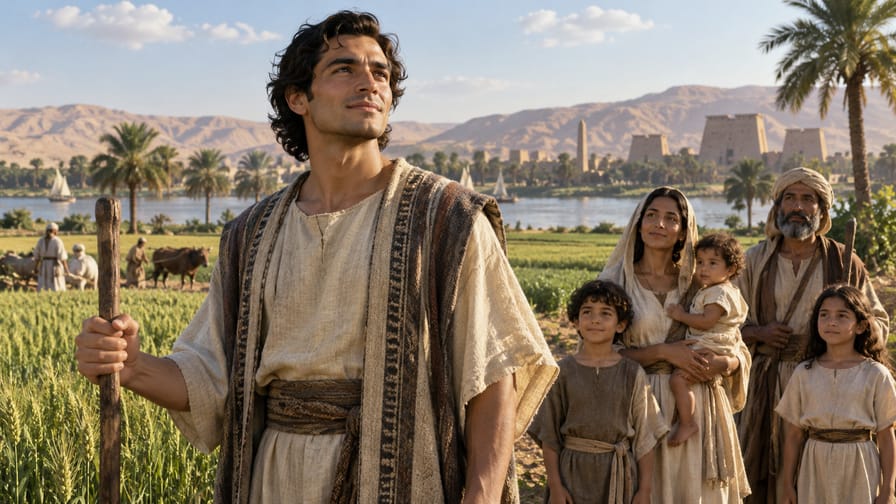
The figure of Manasseh, king of Judah, emerges in the Hebrew Scriptures as one of the most complex and controversial characters in the monarchical history of Israel. His life, marked by a period of profound apostasy followed by a notable conversion, offers a rich field for biblical and theological analysis. His narrative is crucial for understanding the dynamics of the covenant, the depth of human sin, and the extent of divine grace, especially from a Protestant evangelical perspective that values the sovereignty of God and the centrality of Scripture.
This study will explore the etymology of his name, his historical context, the development of his character, his theological significance, and the legacy he left in the biblical canon. The analysis will be based on the inerrant authority of the Bible, seeking to extract lessons that resonate with the reformed Christian faith, emphasizing God's grace manifested even in the vilest sinners and the lasting consequences of disobedience.
1. Etymology and meaning of the name
The name Manasseh, in Hebrew Mənaššeh (מְנַשֶּׁה), derives from the verbal root nāšāh (נָשָׁה), which means "to forget" or "to make forget". The literal meaning of the name is "he who makes forget" or "causing forgetfulness". This etymology is primarily explained in the Old Testament in relation to the first notable bearer of the name.
The first Manasseh was the firstborn son of Joseph with his Egyptian wife Asenath, born in Egypt (Genesis 41:50-51). Joseph named him thus, saying, "God has made me forget all my toil and all my father's house". For Joseph's son, the name symbolized the divine providence that had comforted him from his afflictions and made him prosper in a foreign land.
For Manasseh, the king of Judah, the meaning of the name acquires a layer of irony or contrast. While his ancestor's name pointed to the forgetting of pains by God's action, King Manasseh is remembered for having led Judah to "forget" the Lord and His Law, introducing pagan practices that had been abolished. He caused the nation to turn away from true worship, forgetting its covenant with Yahweh.
On the other hand, the notable conversion of Manasseh, recorded in 2 Chronicles 33, may suggest a new meaning: perhaps God "forgot" Manasseh's sins due to his genuine repentance. However, the primary interpretation of the name for the king is often seen in contrast to his initial actions, which seemed to make the nation forget the Lord, and not the other way around.
Although the name Manasseh is most prominent with Joseph's son and the king of Judah, it also designates one of the twelve tribes of Israel, descended from Joseph's son. There are no other individual biblical characters of great prominence with this name. The theological significance of the name lies in the idea of memory and forgetfulness, which are recurring themes in covenant theology, where the people are exhorted to remember the Lord and His works, and God, in His mercy, promises to remember repentant sins no more.
2. Historical context and biblical narrative
King Manasseh reigned in Judah for an exceptionally long period of 55 years (approximately 697/696 to 642/641 B.C.), being the monarch with the longest reign in Judah's history. He ascended to the throne at only twelve years of age, succeeding his father, the pious King Hezekiah (2 Kings 21:1 2 Chronicles 33:1). His mother was Hephzibah (2 Kings 21:1).
The period of his reign was marked by the hegemony of the Assyrian Empire, under the reigns of Esarhaddon and Ashurbanipal. Judah operated as a vassal state of Assyria, which significantly influenced the kingdom's foreign and domestic policies. Assyrian pressure often led to the assimilation of pagan religious practices, in an effort to maintain peace or to please foreign overlords.
2.1 Ascent and profound apostasy
The biblical narrative, in both 2 Kings 21:1-18 and 2 Chronicles 33:1-20, describes Manasseh's ascent and his immediate and radical reversal of his father Hezekiah's religious reforms. Hezekiah had dedicated himself to purifying worship and centralizing the worship of Yahweh in Jerusalem (2 Kings 18:3-6).
Contradicting his father's legacy, Manasseh "did what was evil in the eyes of the Lord" (2 Kings 21:2 2 Chronicles 33:2). He rebuilt the high places that Hezekiah had destroyed, erected altars to Baal, made an Asherah pole (Asherah), and worshiped all the host of heaven, abominable practices that the Canaanites had introduced (2 Kings 21:3 2 Chronicles 33:3).
The height of his apostasy was the introduction of altars for idols within the very Temple of the Lord in Jerusalem, the place sanctified for the exclusive worship of Yahweh (2 Kings 21:4-5 2 Chronicles 33:4-5). He also made his son pass through fire as a sacrifice to Molech, practiced divination, sorcery, necromancy, and consulted mediums and spiritists, which was an abomination to the Lord (2 Kings 21:6 2 Chronicles 33:6).
The Bible states that Manasseh "seduced Judah and the inhabitants of Jerusalem to do worse than the nations whom the Lord had destroyed before the sons of Israel" (2 Chronicles 33:9). Furthermore, he shed "much innocent blood," filling Jerusalem from one end to another, which suggests persecution and execution of prophets and those faithful to Yahweh (2 Kings 21:16).
2.2 Judgment and repentance
In the face of such transgression, the Lord sent prophets to warn Manasseh and the people of Judah, but they paid no attention (2 Kings 21:10-15 2 Chronicles 33:10). As a consequence, God allowed the commanders of the Assyrian army to come against Judah. They captured Manasseh with hooks, bound him with bronze chains, and led him away to Babylon, which was then an Assyrian province (2 Chronicles 33:11).
It is in Babylon that the most dramatic turning point in Manasseh's life occurs, recorded exclusively in 2 Chronicles. In his distress, he "entreated the Lord his God and humbled himself greatly before the God of his fathers" (2 Chronicles 33:12). He prayed to God, and God heard his plea and restored him to his kingdom in Jerusalem (2 Chronicles 33:13). This episode is a powerful testimony to God's grace and mercy, even for the most sinful of kings.
2.3 Return and late reforms
After his return to Jerusalem, Manasseh undertook reforms, though limited in nature compared to the extent of his apostasy. He removed the foreign gods and the idol from the Temple, tore down the altars he had built on the temple mountain and in Jerusalem, and cast them outside the city (2 Chronicles 33:15). He repaired the altar of the Lord and offered sacrifices of peace offerings and thank offerings, ordering Judah to serve the Lord, the God of Israel (2 Chronicles 33:16).
However, the text of 2 Chronicles notes that "the people still sacrificed on the high places, but only to the Lord their God" (2 Chronicles 33:17), indicating that Manasseh's reforms were not as comprehensive or effective as those of his father Hezekiah or his grandson Josiah. His long and profound apostasy had so deeply rooted idolatry that even his repentance and efforts could not completely eradicate it from the heart of the people.
Manasseh died and was buried in the garden of his house, in the Garden of Uzza, and his son Amon reigned in his place (2 Kings 21:18 2 Chronicles 33:20). The narrative of his life is a vivid reminder of the complexity of faith and life in ancient Israel.
3. Character and role in the biblical narrative
Manasseh's character is presented in the Scriptures with a striking duality, revealing both the depth of human depravity and the extent of divine grace. Initially, he is portrayed as the epitome of ungodliness and rebellion against Yahweh, surpassing in wickedness even the pagan nations that God had driven out before Canaan (2 Kings 21:9).
His actions demonstrate a deliberate and systematic rejection of God's commandments and the legacy of his father Hezekiah. The Scriptures detail a series of grave sins: widespread idolatry, including the worship of Baal, Asherah, and the host of heaven the profanation of the Temple of Jerusalem with pagan altars the abominable practice of child sacrifice and involvement with occult arts such as divination, sorcery, and necromancy (2 Kings 21:3-6 2 Chronicles 33:3-6).
In addition to his religious transgressions, Manasseh is accused of shedding "much innocent blood" (2 Kings 21:16). This accusation suggests tyranny, persecution, and execution of all those who opposed his religious policy or remained faithful to the Lord. Such cruelty reveals a hardened heart and a complete lack of fear of God or compassion for others, highlighting his moral and spiritual depravity.
Manasseh's role in the biblical narrative is multifaceted. Firstly, he serves as a grim example of the apostasy and corruption that can afflict even God's chosen nation. His leadership brought Judah to a point of no return in its covenant faithfulness, solidifying idolatry in such a way that Josiah's subsequent reforms, though vigorous, could not completely reverse the course of divine judgment.
However, the narrative in 2 Chronicles 33 introduces a crucial turning point in his character. After being led captive to Babylon, Manasseh demonstrates profound and genuine repentance. He "entreated the Lord his God and humbled himself greatly" (2 Chronicles 33:12). This radical change reveals God's ability to transform even the hardest heart and the truth of the possibility of repentance for forgiveness.
Manasseh's humility in Babylon contrasts sharply with his previous arrogance and rebellion. His return to Jerusalem and the reforms he implemented, though incomplete, indicate a sincere intention to honor God, showing a character development from extreme depravity to a restored faith. He becomes a living testimony to God's grace and mercy, which extends even to the greatest of sinners.
His role, therefore, is twofold: he represents the ultimate expression of Israel's unfaithfulness and, at the same time, God's extraordinary capacity to forgive and restore. This complexity makes his story a vital case study for the theology of sin, judgment, and redemption, emphasizing that while the consequences of sin may persist, God's grace is always greater than man's sin.
4. Theological significance and typology
The story of Manasseh holds profound theological significance within the redemptive history of Israel and in God's progressive revelation. He is not typologically a prefiguration of Christ, but his life serves to illustrate central theological principles of the Protestant evangelical perspective, such as the nature of sin, divine justice, the depth of grace, and the reality of repentance.
4.1 Sin and divine judgment
Manasseh personifies the most severe apostasy and rebellion against God's covenant. His actions, detailed in 2 Kings 21 and 2 Chronicles 33, represent a direct and flagrant violation of each of the Ten Commandments, especially the first ones, which demand exclusivity in the worship of Yahweh (Exodus 20:3-6). He broke the Mosaic covenant so radically that the nation of Judah was irrevocably compromised.
God's response to Manasseh's sins demonstrates His holiness and justice. God did not ignore the wickedness. Manasseh's capture by the Assyrians and his exile to Babylon (2 Chronicles 33:11) are clear acts of divine judgment, fulfilling the warnings of condemnation for covenant disobedience (Deuteronomy 28:36-37). His story, therefore, underscores the seriousness of sin and the certainty of God's punishment for persistent disobedience.
4.2 Grace and genuine repentance
The narrative of Manasseh in 2 Chronicles 33:12-13 is one of the most powerful biblical testimonies to sovereign grace and the transformative power of genuine repentance. Despite his extreme depravity, when Manasseh humbled himself and prayed to the Lord in his distress, God heard him and restored him. This event demonstrates that God's mercy is deeper than the deepest of human sins, echoing truths such as those in Psalm 103:8-12 and Isaiah 55:7.
For Reformed theology, the story of Manasseh illustrates the doctrine of irresistible grace and God-given repentance. It was not Manasseh's own will that led him to repentance, but the sovereign hand of God that disciplined him and called him to conversion. His experience serves as a paradigm that no sinner is beyond the reach of God's redemptive grace, if there is a true brokenness and a turning towards Him.
4.3 Consequences of sin and divine sovereignty
A crucial point is that, although Manasseh was personally forgiven and restored, the national consequences of his long years of sin were irreversible. The prophet Jeremiah, years later, still attributes the fall of Judah and the Babylonian exile to Manasseh's sins (Jeremiah 15:4). This teaches that, even if sin is forgiven, its ramifications and effects in history and society can persist, demonstrating that God's justice is complex and operates on multiple levels.
The story of Manasseh also highlights the sovereignty of God over human history. God used the Assyrian Empire, a pagan nation, as an instrument of His discipline towards Judah and to bring Manasseh to repentance. This demonstrates that God rules over kings and empires, and that His redemptive and just purposes will be fulfilled, regardless of the wickedness or goodness of human leaders.
4.4 Antitype and the need for Christ
In terms of Christocentric typology, Manasseh serves more as an antitype. His failure to be a just king and his inability to truly purify the nation once and for all point to the need for a perfect and messianic King. He prefigures the inability of the law and human kings to bring lasting salvation and holiness, underscoring the urgency of the coming of Jesus Christ, the true King who not only forgives sin but also completely purifies the heart and establishes an eternal kingdom of righteousness (Hebrews 7:26-28).
The story of Manasseh is a powerful sermon on the total depravity of man and the abundant grace of God, culminating in the glorious truth that in Christ there is forgiveness for all sins, and the promise of a new heart and a new spirit (Ezekiel 36:26), something that not even Manasseh, in his repentance, could fully bestow upon his nation.
5. Biblical-theological legacy and canonical references
Manasseh's legacy in biblical theology is complex and enduring, being a figure who continues to be studied for his profound relevance to themes such as sin, repentance, judgment, and grace. His story is told in two of the main historical works of the Old Testament, the books of Kings and Chronicles, each offering a slightly different perspective that, together, form a complete view.
5.1 Mentions in other biblical books
In addition to the detailed narratives in 2 Kings 21:1-18 and 2 Chronicles 33:1-20, Manasseh is mentioned in other prophetic books, which underscores the gravity of his actions and their lasting impact. The prophet Jeremiah, years after Manasseh's death, explicitly refers to his sins as one of the main reasons for the impending judgment on Judah and the Babylonian exile. In Jeremiah 15:4, the Lord declares: "I will make them a horror to all the kingdoms of the earth because of Manasseh, the son of Hezekiah, king of Judah, for what he did in Jerusalem."
This reference shows that, even after Manasseh's death and Josiah's reforms, the memory of his apostasy and the idolatry he rooted in the nation persisted in the divine mind as a fundamental cause for judgment. This demonstrates that a leader's actions can have consequences that transcend their own life and affect generations.
5.2 Influence on biblical theology and tradition
The dual narrative of Manasseh in Kings and Chronicles has been the subject of much theological discussion. The book of Kings primarily focuses on his extreme wickedness and the contribution of his sins to the fall of Judah, without mentioning his repentance. Chronicles, on the other hand, while acknowledging his wickedness, dramatically emphasizes his humiliation and repentance before God. Both perspectives are canonical and complementary in evangelical theology.
The Reformed and evangelical perspective sees this duality as a rich source of teaching. The account in Kings highlights God's unwavering justice and the seriousness of the consequences of sin, especially when committed by leaders who influence an entire nation. It serves as a reminder of accountability before God.
The account in Chronicles, in turn, highlights God's boundless mercy and the transforming power of genuine repentance. It offers hope to all sinners, however deep their sins, showing that God is willing to forgive and restore those who turn to Him with a contrite and humbled heart (Psalm 51:17). John Calvin, in his Institutes, frequently points to God's mercy extended to sinners, and the story of Manasseh is a prime example.
In the Jewish interpretive tradition, Manasseh is often remembered as the worst of Judah's kings, with his repentance in Chronicles being a point of debate or a note of hope. In the Christian tradition, especially the evangelical, he is a classic case to illustrate the extent of God's grace and the doctrine of regenerated, where a hardened heart can be radically transformed by the Holy Spirit.
5.3 Importance for the canon and the understanding of grace
The story of Manasseh is vital for understanding the biblical canon because it demonstrates the complexity of the interaction between divine sovereignty, human responsibility, sin, and grace. It shows that God is just in His judgment, but also infinitely merciful in His willingness to forgive. The persistence of the consequences of his sins, even after his repentance, illustrates the seriousness of sin and the truth that grace does not nullify justice.
Ultimately, Manasseh is a testimony to the truth of the Gospel: that there is no sinner so great that God's grace cannot reach, but also that grace is not a license for sin, and that God's judgment is certain and its consequences can be lasting. His life points, albeit antithetically, to the necessity of Christ, the only King who could and can truly purify His people and establish an eternal kingdom of righteousness and peace.