


Levi
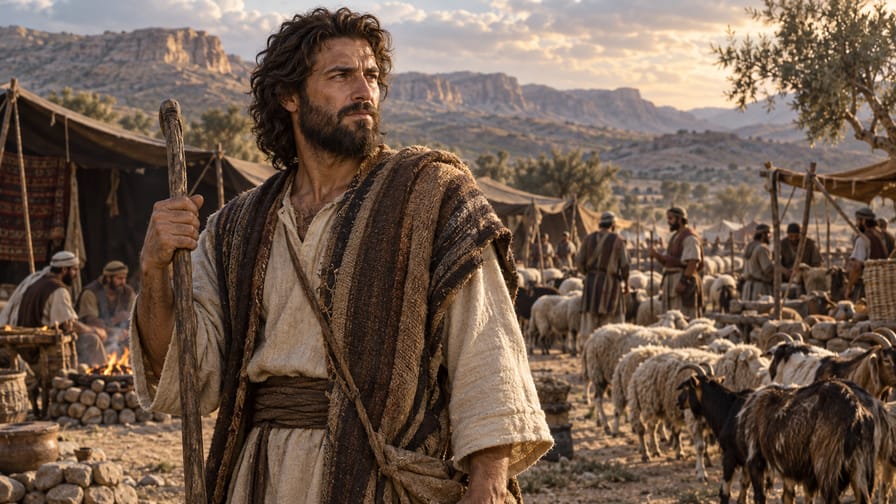
The figure of Levi (in Hebrew, לֵוִי, Lewi), one of the twelve sons of Jacob, occupies a paradoxical and profoundly significant place in biblical narrative and evangelical Protestant theology. Although his personal history is marked by an act of severe violence, his descendants were divinely chosen for a central role in the worship and religious life of Israel. The analysis of Levi, therefore, is not restricted to the individual, but expands to the tribe that originated from him, revealing themes of judgment, grace, redemption, and the sovereignty of God in salvation history.
From his birth to the establishment of his tribe as the priesthood of Israel, the trajectory of Levi and his descendants illustrates the progression of divine revelation and the preparation for the coming of the Messiah. The evangelical Protestant perspective emphasizes the authority of the Scriptures to understand the complexity of his character and the divine purpose behind the election of his tribe, consistently pointing toward consummation in Christ.
1. Etymology and meaning of the name
The name Levi, in Hebrew Lewi (לֵוִי), derives from the verbal root lavah (לָוָה), which means "to join," "to unite," "to accompany," or "to cling to." Levi's own mother, Leah, explains the origin of the name at the time of his birth, as recorded in Genesis 29:34.
She declares: "This time my husband will be joined to me, because I have borne him three sons." Leah's hope was that by giving Jacob more sons, she would become more loved and "united" with him. This literal meaning carries a connotation of proximity and attachment, reflecting the human desire for connection and belonging.
The theological significance of the name, however, transcends the initial context of Levi's birth. Paradoxically, the tribe of Levi, although initially cursed to dispersion by Jacob (Genesis 49:5-7), was later "joined" and "attached" to God in a unique and exclusive way, being set apart for priestly and Levitical service in the tabernacle and, later, in the temple.
In the New Testament, we find a character named Levi, the tax collector, who is called by Jesus to be one of his apostles. This Levi is identified as Matthew, the author of the first Gospel (Mark 2:14, Luke 5:27). Although it is the same name, this Levi is not the patriarch, but a different individual, whose adherence to Christ symbolizes the new "union" with God through faith.
The choice of the name Levi for the priestly tribe acquires a profound symbolic meaning: the Levites were those who were "joined" to God in a special way, dedicated exclusively to His service and to mediation between God and the people of Israel. They were the connecting link, the point of union between the Holy God and His sinful people, prefiguring Christ's role as the only Mediator.
2. Historical context and biblical narrative
2.1 Family origin and genealogy
Levi was born in Haran (Paddan-Aram), in Mesopotamia, around the 19th century BC. He was the third son of Jacob with his first wife, Leah, after Reuben and Simeon (Genesis 29:34). His genealogy is crucial, as he is the ancestor of prominent figures in Israel's history.
His sons were Gershon, Kohath, and Merari (Genesis 46:11, Exodus 6:16). Through Kohath, Levi became the grandfather of Amram, who married Jochebed, and together they bore Moses, Aaron, and Miriam (Exodus 6:18-20, Numbers 26:58-59). This lineage establishes Levi's direct connection to the most important leaders of the Exodus and the establishment of the Law.
2.2 Main events of his life
Levi's life, as an individual, is briefly narrated in the book of Genesis. The most notable and impactful events involving him are the revenge against Shechem and the prophetic pronouncement of his father Jacob.
The incident of Shechem (Genesis 34) is the darkest point in Levi's biography. After Dinah, his sister, was violated by Shechem, son of Hamor, the Shechemites proposed a marriage and alliance agreement. However, Simeon and Levi, acting with cunning and cruelty, planned a brutal revenge.
They demanded that all the men of Shechem be circumcised as a condition for the alliance. On the third day, while the men of Shechem were weakened by the surgery, Simeon and Levi "took each his sword, entered the city unmolested, and killed all the males" (Genesis 34:25). They rescued Dinah, plundered the city, and took women and children captive.
This act of violence and treachery was vehemently condemned by Jacob, who feared the repercussions of such a slaughter among the Canaanite peoples (Genesis 34:30). The response of Simeon and Levi, "Should he treat our sister like a prostitute?" (Genesis 34:31), reveals a mixture of righteous indignation and a disproportionate and sinful execution of justice.
Decades later, on Jacob's deathbed, this event resurfaces in his prophecy about his sons. Jacob curses the anger and fury of Simeon and Levi, declaring: "Simeon and Levi are brothers their swords are weapons of violence. May I not enter their council, nor my soul be joined to their company for in their anger they killed men, and in their self-will they hamstrung oxen. Cursed be their anger, so fierce, and their fury, so cruel! I will divide them in Jacob and scatter them in Israel" (Genesis 49:5-7).
This prophecy of dispersion, which at first glance seems like a curse, later transforms into a blessing for the tribe of Levi. The geography associated with Levi, therefore, is not of a defined tribal land, but of cities scattered throughout Israel, where the Levites would serve the Lord.
3. Character and role in biblical narrative
3.1 Analysis of character and moral failings
The character of Levi, as revealed in the Scriptures, is complex and initially problematic. His participation in the massacre of Shechem demonstrates an inclination to violence, vengeance, and perfidy. The "fierce" anger and "cruel" fury mentioned by Jacob (Genesis 49:7) are striking traits of his personality at that stage of life.
This incident reveals a serious moral failing: the inability to control anger and the willingness to use deceptive and brutal means to achieve his goals, even if motivated by an apparently just cause (the honor of his sister). His action was not an isolated act of self-defense, but a calculated and excessive retaliation, which brought dishonor and danger to his family.
3.2 The transformation of the tribe and the priestly calling
Despite Levi's initial flawed character, the biblical narrative testifies to a remarkable transformation of his tribe's destiny. Jacob's curse on the dispersion of Simeon and Levi (Genesis 49:7) was fulfilled in distinct ways for each. While Simeon was absorbed into Judah and his tribal identity diminished, Levi's dispersion became the basis of his blessing.
The turning point for the tribe of Levi occurs at Mount Sinai, after the sin of the golden calf (Exodus 32). When Moses calls out: "Whoever is on the LORD's side, come to me!", the "sons of Levi" promptly stand with Moses. They demonstrate incomparable zeal for the Lord, executing judgment on the idolaters, killing about three thousand men (Exodus 32:26-28).
This act of loyalty and obedience to God, even against their own brothers, is what D.A. Carson and other evangelical theologians identify as the foundation of the tribe's consecration. Moses then declares: "Today you have ordained yourselves for the LORD, each one against his son and against his brother, so that he may bestow a blessing upon you today" (Exodus 32:29).
From that moment on, the tribe of Levi is set apart for the service of the Lord. They do not receive an inheritance of land like the other tribes, for "the LORD, the God of Israel, is their inheritance" (Joshua 13:33, Numbers 18:20). Their primary role was to serve in the tabernacle and, later, in the temple, as priests and priestly assistants.
The Levites were responsible for guarding the sanctuary, transporting the tabernacle, performing sacrifices, teaching the Law, and maintaining ritual purity. Aaron and his descendants were designated as priests, while the other Levites assisted them in various functions (Numbers 3:5-10). This specific vocation demonstrates God's sovereignty in transforming a curse into a redemptive purpose, using a people with a stained past for holy service.
4. Theological significance and typology
4.1 Role in redemptive history and the Mosaic Law
The tribe of Levi plays an indispensable role in the redemptive history of Israel, particularly in the context of the Mosaic Law and the covenant system. The Levitical priesthood and the complex sacrificial system they administered were the heart of Israel's religious life and relationship with God.
They were God's designated mediators to offer sacrifices for the sins of the people, administer the laws of purity, and teach the divine statutes (Leviticus 10:11, Deuteronomy 33:10). The book of Leviticus is, in large part, a manual for priestly service and Levitical worship, detailing the rituals, offerings, and responsibilities of the Levites.
This system, though imperfect and temporary, was essential for maintaining God's holiness in the midst of a sinful people. It taught the gravity of sin, the necessity of atonement, and the importance of holiness and obedience. As John Calvin observes, the purpose of the Levitical priesthood was "to keep the people in the fear of God and in expectation of a future Redeemer."
4.2 Prefiguration and Christocentric typology
The deepest theological significance of Levi and his tribe lies in their typological function, prefiguring the person and work of Jesus Christ. The Epistle to the Hebrews extensively explores the superiority of Christ's priesthood over the Levitical priesthood, establishing a clear connection and a fundamental theological contrast.
The author of Hebrews argues that the Levitical priesthood was imperfect and transitory. Levitical priests were sinful and died, and their animal sacrifices were repetitive and incapable of definitively removing sin (Hebrews 7:23-28, Hebrews 10:1-4). They served a "copy and shadow of heavenly things" (Hebrews 8:5).
In contrast, Christ is the perfect High Priest, "according to the order of Melchizedek," not according to the order of Aaron (Hebrews 7:11-17). He is without sin, eternal, and offered Himself as the unique and perfect sacrifice, which atoned for sins once and for all (Hebrews 9:11-14, Hebrews 10:10-14).
The transition from the Levitical priesthood to the priesthood of Christ represents the shift from the Old to the New Covenant, a "superior" covenant established on "better promises" (Hebrews 8:6). The figure of Levi, therefore, points to Christ indirectly, through the imperfection and provisionality of the system that originated from him, which cried out for a fulfillment and perfection that would only be found in the Messiah.
The exclusive dedication of the Levites to the service of God, without earthly inheritance, can also be seen as a shadow of Christ's total consecration to the Father's will and the calling of believers to live for the Kingdom of God, where God Himself is their greatest inheritance. The "union" (meaning of the name Levi) that the Levites sought to mediate finds its fullness and reality in the believer's union with Christ, the great Mediator.
4.3 Doctrine and associated teachings
The story of Levi and his tribe reinforces several central doctrines of the evangelical faith. First, the doctrine of God's sovereignty: He can redeem and use even those with a sinful past for His glorious purposes. The transformation of Jacob's curse into a blessing for the Levites is a testimony to divine grace.
Second, the doctrine of sin and the need for atonement: The Levitical system emphasized God's holiness and the profound separation caused by sin, requiring continuous sacrifices. This prepared the people for an understanding of the need for a final and perfect sacrifice.
Third, the doctrine of mediation: The Levites were mediators between God and man. This function typifies the unique and effective mediation of Jesus Christ, the "one mediator between God and men" (1 Timothy 2:5). Understanding the Levitical priesthood is crucial for appreciating the greatness of Christ's priesthood.
5. Biblical-theological legacy and canonical references
5.1 Mentions in other biblical books and influence
Beyond Genesis and Exodus, the tribe of Levi is prominent in almost all books of the Pentateuch, especially in Leviticus and Numbers, which detail their functions, responsibilities, and laws. In Deuteronomy, Moses reiterates the laws and importance of the Levites (Deuteronomy 18:1-8).
In the historical books (Joshua, Judges, Samuel, Kings, Chronicles), the Levites are mentioned in relation to their dispersion in Levitical cities (Joshua 21), their role in worship (1 Chronicles 23-26), in religious reform (2 Chronicles 29-31), and in the return from exile (Ezra 2:40-42, Nehemiah 8:7-9). They were the guardians of the Law, the teachers of the people, and the administrators of worship.
The prophets also refer to the Levites, sometimes in condemnation for their failure to fulfill their duties (Malachi 2:1-9), but also with promises of restoration of a pure priesthood (Jeremiah 33:18, Ezekiel 44:15-16). These references demonstrate the centrality of the tribe of Levi in the life and faith of Israel throughout its history.
5.2 Presence in interpretive tradition and Reformed theology
In the Jewish interpretive tradition, the Levites continued to be a respected lineage, with a distinctive role in the synagogue and in the preservation of the Torah. In the Christian tradition, especially in Reformed and evangelical theology, the figure of Levi and his tribe are fundamental for understanding the Old Testament and its relationship with the New Testament.
Reformed theology emphasizes the continuity and discontinuity between the covenants, viewing the Levitical priesthood as a "guardian" or "tutor" (Galatians 3:24) who pointed to Christ. The doctrine of the "priesthood of all believers" (1 Peter 2:9, Revelation 1:6) is often contrasted with the exclusive priesthood of Levi, showing that in Christ, all believers have direct access to God, without the need for human mediators.
Evangelical commentators like Matthew Henry and Keil & Delitzsch highlight divine providence in the election of Levi, showing how God can transform a curse into a blessing and use imperfect instruments for His perfect purposes. They underscore that the tribe's obedience and zeal at Sinai were crucial for its consecration, despite the original sin of its patriarch.
5.3 Importance for understanding the canon
The history of Levi and the institution of the Levitical priesthood are vital for understanding the biblical canon as a whole. They provide the necessary background to understand the theology of sacrifice, atonement, and mediation that culminates in Jesus Christ.
Without knowledge of the Levitical system, the depth of Christ's work as High Priest and sacrificial Lamb would be unintelligible. The figure of Levi, therefore, is not merely that of an ancient character, but that of a theological pillar that supports the understanding of God's progressive revelation and the glory of the New Covenant in Jesus Christ, the true and eternal High Priest.