


Hodiah
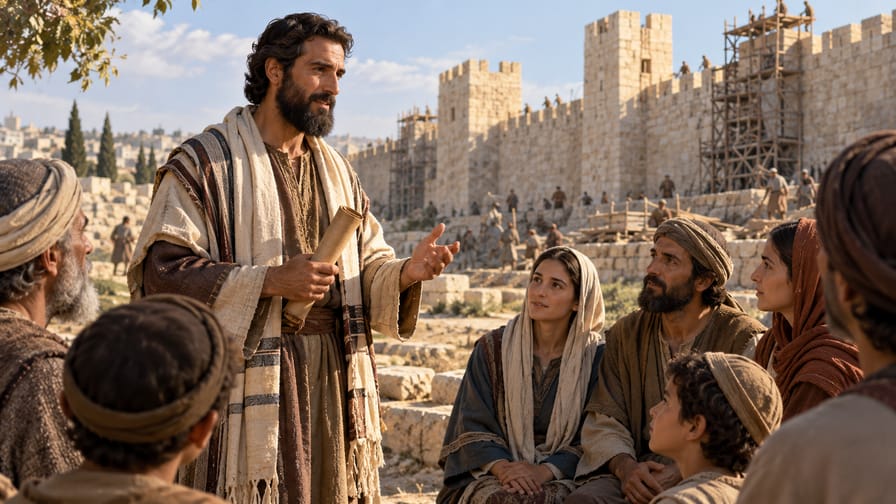
The figure of Hodiah, though not among the most prominent in the Hebrew Scriptures, emerges in significant contexts that allow for a deep analysis of his onomastic meaning, historical role, and theological relevance. The name appears in different passages, indicating the existence of more than one individual with this designation, which requires a careful approach to distinguish their respective contexts and contributions. The conservative evangelical Protestant perspective values every biblical mention, seeking to extract eternal truths and principles applicable to Christian faith and practice, always in light of biblical authority and the progressive revelation that culminates in Christ.
The analysis of the life and role of less detailed characters in the Scriptures, such as Hodiah, often resides in understanding the historical-cultural background and the intrinsic meaning of their names. Such studies not only enrich our knowledge of the biblical text but also reveal divine meticulousness in recording every detail of the history of redemption. Even in seemingly secondary roles, God's providence is manifested, and valuable lessons can be discerned about faithfulness, service, and divine sovereignty in leading His people.
This study proposes to explore the figure of Hodiah through various lenses, encompassing everything from the etymology of his name to his theological legacy, as documented in the Scriptures and interpreted by the evangelical tradition. The distinct individuals who bore this name will be examined, with particular focus on those who served in the post-exilic period, as narrated in the book of Nehemiah. The relevance of these characters, though often overshadowed by central figures, is crucial for understanding the tapestry of biblical history and God's faithfulness to His people.
The reconstruction of the life and meaning of Hodiah, given the scarcity of biographical details, will largely depend on the exegesis of the texts where his name is mentioned and the contextualization of these texts within the broader narrative of Israel's history. Emphasis will be placed on the importance of obedience to the Word of God, the renewal of the covenant, and the role of Levitical service, central themes that the different Hodiahs, especially the Levites, helped to embody.
1. Etymology and Meaning of the Name
The name Hodiah (in Hebrew: חֹדִיָּה, Ḥodiya) is a theophoric name, meaning a name that incorporates a divine element, in this case, the name of God, Yahweh (YHWH). The etymological root of the name derives from hôd (הוֹד), which means "splendor," "majesty," "glory," or "honor." Combined with the theophoric suffix -yah (יָהּ), a shortened form of Yahweh, the name Hodiah can be translated as "My splendor is Yahweh," "Yahweh is my majesty," or "The glory of Yahweh."
This onomastic meaning is profoundly theological, as it expresses a confession of faith. The bearer of the name, or his parents in naming him, declared that true glory, honor, and majesty reside not in wealth, human power, or physical beauty, but in God. It is an affirmation of Yahweh's sovereignty and transcendence, recognizing Him as the source of all true dignity and splendor. This declaration was particularly significant in a culture where names often reflected hopes, prayers, or divine attributes.
Although the name Hodiah is consistently transliterated as such in Portuguese, in other languages and translations there may be minimal variations, but the Hebrew root and central meaning remain the same. The structure of the name follows a common pattern in Israel, where many personal names were composed with elements of Yah (יָהּ) or El (אֵל), serving as constant reminders of God's presence and attributes in the life of His people. Examples include Elijah (Eliyahu, "My God is Yahweh") and Isaiah (Yesha'yahu, "Yahweh saves").
In the Scriptures, we identify at least three distinct individuals named Hodiah, although it is not impossible that some of those listed in Nehemiah are the same person:
- A Levite who helped explain the Law and sealed the covenant (Nehemiah 8:7 9:5 10:10).
- A leader of the people who sealed the covenant (Nehemiah 10:13).
- Another leader of the people who sealed the covenant (Nehemiah 10:18).
- A descendant of Judah, son of Naham's sister (1 Chronicles 4:19).
The theological significance of the name Hodiah in the biblical context lies in the reaffirmation of monotheism and the centrality of Yahweh in individual and communal life. In a polytheistic world, naming a son "Yahweh is my majesty" was a prophetic testimony to the uniqueness and supremacy of the God of Israel. For the Levites, in particular, this name underscored their calling to serve and exalt the glory of God, acting as mediators and instructors of the people in divine Law, as exemplified in Nehemiah 8:7-8.
2. Historical Context and Biblical Narrative
Most mentions of Hodiah occur in the book of Nehemiah, placing him in the post-exilic period, specifically during the second half of the 5th century BC, around 445-430 BC. This was a crucial time in Israel's history, marked by the return of the exiles from Babylon to Jerusalem under Persian decrees. The context was one of physical reconstruction (city walls, Temple) and, more importantly, spiritual and social renewal, led by figures such as Ezra and Nehemiah.
The political context was that of the Persian Empire, which allowed the Jews a certain religious and cultural autonomy. Socially, the people were reorganizing after the trauma of exile, facing challenges such as poverty, the oppression of local governors, and cultural assimilation. Religiously, there was a concentrated effort to restore the worship of Yahweh, the observance of the Mosaic Law, and the purity of the community of Israel. The book of Nehemiah documents the rebuilding of Jerusalem's walls and the renewal of the covenant with God, essential elements for the identity and survival of the Jewish people.
The key passages in Nehemiah that mention Hodiah are:
- Nehemiah 8:7: One of the Levites who helped Ezra explain the Law to the people. "And Jeshua, Bani, Sherebiah, Jamin, Akkub, Shabbethai, Hodiah, Maaseiah, Kelita, Azariah, Jozabad, Hanan, Pelaiah, and the Levites, taught the people the law and the people stood in their place."
- Nehemiah 9:5: One of the Levites who led the great prayer of confession and praise. "Then the Levites, Jeshua, Kadmiel, Bani, Hashabneiah, Sherebiah, Hodiah, Shebaniah, and Pethahiah, said: 'Stand up and bless the Lord your God from everlasting to everlasting and blessed be Your glorious name, which is exalted above all blessing and praise!'"
- Nehemiah 10:10: One of the Levites who sealed the covenant. "And their brethren: Shebaniah, Hodiah, Kelita, Pelaiah, Hanan..."
- Nehemiah 10:13: A leader of the people who sealed the covenant. "Hodiah, Bani, Benin..."
- Nehemiah 10:18: Another leader of the people who sealed the covenant. "Hodiah, Hashum, Beai..."
The primary geography for the Hodiahs of Nehemiah is Jerusalem, the center of Jewish restoration. They were directly involved in the events that occurred in the rebuilt city, participating in the reading of the Law in the square and the solemn assembly for the renewal of the covenant. Their relationships were with prominent figures such as Ezra, the scribe and priest, and Nehemiah, the governor. As Levites, they worked in conjunction with other members of their tribe, such as Jeshua, Bani, and Sherebiah, in the task of instructing the people and leading worship.
The Hodiah of 1 Chronicles, on the other hand, is linked to the region of Judah, specifically to families and clans that settled in certain localities. His mention in a genealogy serves the purpose of tracing lineages and inheritances, connecting him to the vast network of families of the tribe of Judah, which was vital for maintaining tribal identities and land claims in Israel. Although there are no details about his life, his existence is a testament to the continuity of Jewish lineages through the generations.
3. Character and Role in the Biblical Narrative
The character of the Levite Hodiah, as revealed in Nehemiah, is that of a faithful servant dedicated to the instruction and worship of God. He is listed among the Levites who played a crucial role in the spiritual restoration of Israel. His active participation in explaining the Law (Nehemiah 8:7) demonstrates a commitment to divine truth and the education of the people. This role required not only knowledge of the Scriptures but also the ability to communicate that truth in an understandable way, so that the people "understood the reading" (Nehemiah 8:8).
His presence among the leaders who led the prayer of confession and praise in Nehemiah 9:5 reveals deep spirituality and a heart turned toward worship. The prayer in Nehemiah 9 is one of the most powerful texts of confession and recognition of God's faithfulness in Israel's history. Hodiah's participation in this moment suggests that he was a man of prayer and a spiritual leader capable of guiding the people in a collective act of repentance and exaltation of Yahweh.
The signing of the covenant in Nehemiah 10:10, where Hodiah is listed as a Levite, solidifies his image as someone committed to obedience to the divine covenant. The act of sealing the covenant was a solemn commitment to obey the Law of Moses, to not intermarry with foreign peoples, to observe the Sabbath, and to support the service of the Temple (Nehemiah 10:29-39). This attitude demonstrates integrity and a willingness to take responsibility for the nation's faithfulness to God.
There is no record of documented sins, weaknesses, or moral failures for Hodiah in the Scriptures, which is common for characters with such concise mentions. The biblical narrative presents him solely in a context of positive and faithful service. His vocation and function were clearly those of a Levite, assisting the priests in teaching the Law, leading worship, and administering Temple affairs, as established in the Torah.
The role played by Hodiah and his fellow Levites was essentially priestly and prophetic, although they were not priests in the lineage of Aaron. They acted as interpreters of God's Word and leaders of worship, functions that prefigured the ministry of Christ as the High Priest and the supreme Prophet. Their significant actions include explaining the Law, leading in corporate prayer, and sealing the covenant, all key decisions for the restoration of Israel's religious life.
For the Hodiah of 1 Chronicles 4:19, there is no information about his character or role beyond his position in a genealogy. His inclusion, however, is a testament to the importance of lineage and inheritance in Israel. The genealogies in Chronicles serve to establish the continuity of God's people, the legitimacy of the priesthood and the monarchy, and the possession of the land, pointing to God's faithfulness in preserving His people through the generations, even in times of difficulty.
Character development, in the sense of a biographical trajectory, is limited for all the Hodiahs. However, the mere mention of his name in contexts of spiritual renewal and faithfulness to the covenant, especially for the Levite Hodiah, suggests a growth in faith and commitment to God, reflecting the spirit of revival that permeated the post-exilic community. He is an example of how individuals, even without great prominence, contribute to God's work through their faithful service and obedience.
4. Theological Significance and Typology
The theological significance of Hodiah, particularly the Levite in Nehemiah, is intrinsically linked to his role in Israel's redemptive history and God's progressive revelation. He represents Levitical faithfulness in the preservation and transmission of God's Law, a vital role in maintaining Israel's identity as a covenant people. In the post-exilic period, when the nation was being restored, the centrality of the Law and the worship of Yahweh was fundamental, and Levites like Hodiah were instrumental in this process.
Hodiah's involvement in explaining the Law (Nehemiah 8:7-8) prefigures the need for a perfect interpreter of God's will. The people, by themselves, could not fully understand the Law, needing mediation. This need culminates in Jesus Christ, who not only explained the Law but perfectly fulfilled it (Matthew 5:17) and revealed its true intention. Christ is the incarnate Logos, the very Word of God, who brought full understanding and enabled obedience through the Holy Spirit.
Hodiah's leadership in the prayer of confession in Nehemiah 9:5 points to the importance of the confession of sins and corporate worship in the life of God's people. This prayer is a model of repentance and recognition of divine sovereignty, elements that are central to the Christian faith. Jesus Christ, in turn, is the only one who can mediate the forgiveness of sins (1 John 1:9) and grant us direct access to the Father through His sacrifice (Hebrews 4:14-16). The Levitical prayer, therefore, prefigures the need for a perfect mediator.
The act of sealing the covenant in Nehemiah 10:10 and 10:13, 18 symbolizes the people's commitment to God's promises and demands. Although this was a renewal of the Old Covenant, human imperfection would always lead to its breaking. This event, therefore, typologically points to the need for a New Covenant, prophesied in Jeremiah 31:31-34 and established in Christ Jesus through His blood (Luke 22:20 Hebrews 8:6-13). The obedience that the Hodiahs promised is fully realized and made possible in Christ, who is the guarantor of a superior covenant.
Hodiah's connection with central theological themes is evident. His participation in teaching the Law emphasizes the doctrine of special revelation and the authority of the Scriptures. His leadership in corporate prayer highlights the doctrine of communion with God and the need for repentance. The sealing of the covenant reinforces the doctrine of God's faithfulness to His promises, even in the face of human unfaithfulness, and the importance of obedience to His will.
The figure of Hodiah, the Levite, is not directly cited in the New Testament, but his ministry fits into the broader category of Levitical service, which is interpreted in the New Testament as a shadow of heavenly realities and Christ's priestly ministry (Hebrews 8:4-5 10:1). The Levites were essential for maintaining worship and instruction, but their work was imperfect and transitory, pointing to Jesus' eternal and perfect priesthood.
In summary, the theological relevance of Hodiah lies in his role as a faithful servant of the Old Covenant, whose actions and ministry underscore the need for a perfect Savior and Mediator. He and his fellow Levites were instruments in God's hand to prepare the way for the Messiah, demonstrating man's inability to fulfill the Law by himself and the need for divine grace for true obedience and communion with God. His life, though briefly recorded, is a testament to God's faithfulness in using ordinary people to advance His redemptive purposes.
5. Biblical-Theological Legacy and Canonical References
The biblical-theological legacy of Hodiah, though not that of a book author or a major prophet, is significant within the context of the post-exilic restoration and the theology of the canon. His mentions in Nehemiah directly embed him in the narrative of one of the most important periods for the redefinition of Israel's identity. He left no direct literary contributions, but his service as an interpreter of the Law and a leader of worship contributed to the spiritual formation of the people who would, eventually, receive the New Testament.
Hodiah's influence on biblical theology lies in exemplifying faithful Levitical ministry. Old Testament theology emphasizes the importance of the Law, the Temple, and the priesthood for the maintenance of the covenant. Hodiah, as a committed Levite, reinforces these themes, showing how obedience and service were essential for Israel's religious life. His role in explaining the Law underscores the doctrine of the inerrancy and sufficiency of the Scriptures, for the people needed to understand the Word to obey God (Nehemiah 8:8).
In Jewish interpretive tradition, the Levites of Ezra and Nehemiah's time are seen as models of zeal for the Torah and for worship. The figure of Hodiah, in this sense, aligns with this valuing of Levitical service. For the Christian tradition, especially the Reformed and evangelical, the faithfulness of figures like Hodiah is seen as a testament to God's providence in preserving a faithful remnant and preparing the way for the coming of Christ. He represents the continuity of faith and service to God through the generations, even in challenging times.
Although there are no direct references to Hodiah in intertestamental literature, the period in which he lived was fundamental for the formation of Second Temple Judaism, which would serve as the backdrop for Jesus' ministry. The efforts of Ezra and Nehemiah, in which Hodiah participated, laid the groundwork for the synagogue, the centrality of the Torah, and the importance of the covenant community, elements that would later be adapted and reinterpreted in the New Testament.
In Reformed and evangelical theology, the history of Israel, including the post-exilic restoration, is often analyzed through the lens of redemptive history. Hodiah, as a faithful Levite, is an example of how God uses individuals to accomplish His plans, even if they are not the main characters. He illustrates the principle of calling and service in the kingdom of God, where each member, regardless of their prominence, has a vital role to play in the edification of the body of Christ (1 Corinthians 12:12-27).
Finally, the mention of the genealogical Hodiah in 1 Chronicles 4:19, though brief, is important for understanding the theology of biblical genealogies. These lists are not mere records but serve to demonstrate God's faithfulness in keeping His promises through lineages, culminating in the genealogy of Jesus Christ (Matthew 1:1-17 Luke 3:23-38). Thus, each Hodiah, in his respective context, contributes to the rich tapestry of biblical revelation and to the understanding of God's redemptive plan.