


Adaiah
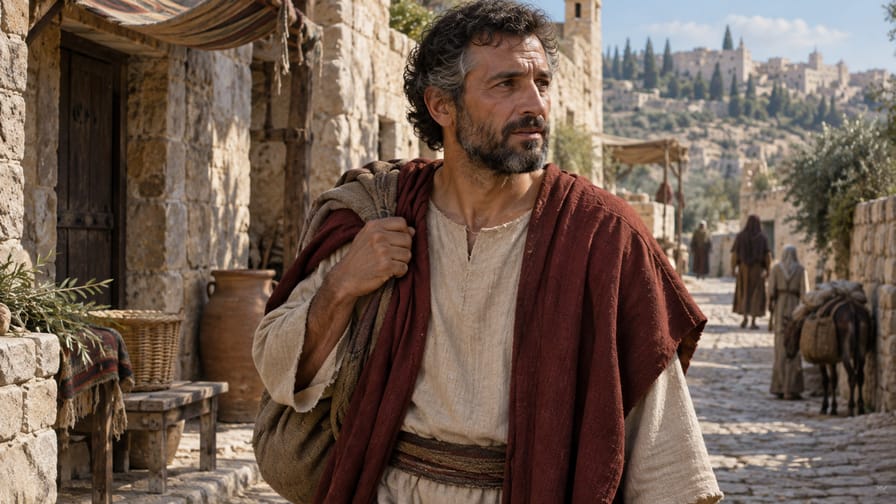
The figure of Adaiah (in Hebrew: עֲדָיָה, ʻAdāyāh) is a fascinating example of how the Holy Scripture, in its richness and meticulousness, preserves the memory of individuals who, though not protagonists of grand narratives, contribute significantly to the tapestry of redemptive history. The name Adaiah is associated with several characters in the Old Testament, each inserted into distinct contexts, yet all, in some way, revealing aspects of divine providence and human faithfulness (or the lack thereof) within the covenant. This analysis aims to deeply explore the onomastic meaning, historical context, character, theological relevance, and legacy of these individuals, from a conservative evangelical Protestant perspective.
The approach will be rigorous in its exegesis, seeking to extract teachings and typological connections that point to Christ and to the great themes of the Christian faith. Even for figures of brief mention, Reformed theology recognizes the importance of every detail of the canon, viewing it as divinely inspired and useful for teaching, rebuking, correcting, and training in righteousness, as 2 Timothy 3:16 affirms. The multiplicity of individuals with the same name compels us to a careful analysis of each occurrence, discerning their individual and collective contributions to the understanding of God's work in Israel and, ultimately, in the Church.
1. Etymology and meaning of the name
The Hebrew name Adaiah, עֲדָיָה (ʻAdāyāh), is a theophoric name, meaning it incorporates one of God's names. It is composed of two parts: the verbal root עָדָה (ʻādah) and the abbreviated form of the divine name Yahweh, יָהּ (Yah). The root ʻādah has a variety of meanings in biblical Hebrew, including "to pass by," "to remove," "to adorn," or "to decorate."
Considering the nuances of the root, Adaiah can be interpreted in two main ways. Firstly, as "Yahweh has adorned" or "Yahweh has decorated," suggesting the idea that God conferred beauty, honor, or distinction upon the person or their family. This meaning emphasizes divine grace and providence in the lives of individuals.
Secondly, it can mean "Yahweh has passed by" or "Yahweh has removed," which could indicate divine intervention to deliver, purify, or forgive. Such an interpretation points to God's action in saving or judging, depending on the context. The ambiguity enriches theological reflection on the name.
There are no significant variations of the name Adaiah in the original biblical languages that fundamentally alter its meaning. The transliterated form ʻAdāyāh is consistent. However, it is crucial to note that the name is relatively common in the Old Testament, being attributed to at least eight distinct individuals, which requires attention to context for each mention.
The different individuals named Adaiah are:
- A Benjamite, son of Shimhi, mentioned in 1 Chronicles 8:21.
- A father of Maaseiah, who was one of the army captains who supported Jehoiada in the coronation of Joash, as per 2 Chronicles 23:1.
- A descendant of Judah, of the lineage of Perez, listed in 1 Chronicles 9:12 as the father of Maaseiah.
- A priest, son of Jeroam, who returned from the Babylonian exile and settled in Jerusalem, mentioned in 1 Chronicles 9:12 and Nehemiah 11:12. He is listed as the father of Maaseiah.
- An ancestor of Joah, a Kohathite Levite who participated in the purification of the Temple during Hezekiah's reign, recorded in 2 Chronicles 29:12.
- The father of Jedidah, the mother of King Josiah of Judah, as per 2 Kings 22:1.
- One of the sons of Bani who married a foreign woman in the post-exilic period, as per Ezra 10:29.
- Another son of Bani who also married a foreign woman, mentioned in Ezra 10:39. It is possible they are the same individual or two distinct ones.
The theological significance of the name, regardless of the individual, lies in its theophoric nature. It serves as a constant reminder that God (Yahweh) is the active agent in human life, whether adorning with gifts and blessings, or intervening to guide, judge, or redeem. For the people of Israel, theophoric names reinforced the identity of a people under the sovereignty and grace of Yahweh, the God of the covenant, as expressed in Reformed covenant theology.
2. Historical context and biblical narrative
The various individuals named Adaiah span different periods of Israel's history, from the pre-monarchical or early genealogies to the post-exilic period, reflecting the continuity of life and faith over centuries. Each mention, however brief, places the character in a specific historical, social, and religious setting.
2.1. Adaiah in genealogies and family lines
The Benjamite Adaiah, son of Shimhi (1 Chronicles 8:21), is situated within the context of the genealogies of the tribes of Israel, which were vital for maintaining tribal identity, land inheritance, and purity of lineage, especially for the messianic expectation. He is part of the intricate network that demonstrates Israel's social organization and the importance of family.
Another Adaiah is mentioned as a descendant of Judah, from the family of Perez (1 Chronicles 9:12). The tribe of Judah was of particular importance due to the promise that the Messiah would come from its lineage (Genesis 49:10). The inclusion of Adaiah in this genealogy, even concisely, connects him to salvation history and God's faithfulness in preserving the royal line.
The presence of Adaiah as an ancestor of Joah, a Kohathite Levite (2 Chronicles 29:12), places him in the history of the priesthood and Temple service. The Levites played a crucial role in worship and in instructing the people in God's Law. Joah's participation in the purification of the Temple during Hezekiah's reign highlights the importance of the Levitical lineage in restoring true worship.
2.2. Adaiah and Temple service
One of the most prominent Adaiahs is the priest, son of Jeroam, mentioned in 1 Chronicles 9:12 and Nehemiah 11:12. He is listed among the priests who returned from the Babylonian exile and settled in Jerusalem after the Temple's reconstruction. His son, Maaseiah, is also mentioned, indicating an active priestly lineage.
The historical context here is the post-exilic period (approximately 538-444 B.C.), a time of national and spiritual restoration under the leadership of Zerubbabel, Ezra, and Nehemiah. The presence of priests like Adaiah was fundamental to re-establishing Temple rituals, offerings, and the religious life of the Jewish community, which had been devastated by the exile. He was among those who dedicated themselves to rebuilding not only the Temple but also Israel's spiritual identity itself.
2.3. Adaiah and the royal lineage of Judah
An Adaiah of great indirect significance is the father of Jedidah, the mother of King Josiah (2 Kings 22:1). Jedidah was from Bozkath, a city in Judah. Josiah is recognized as one of Judah's most righteous kings, who led a great religious reform, eliminating idolatry and restoring the observance of the Law. This Adaiah lived in the 7th century B.C., during a period of moral and spiritual decline in Judah, before Josiah's reform.
The mention of the king's mother's father is not merely genealogical it underscores God's providence in shaping the leaders of His people. The influence of a godly mother, or the mere existence of a lineage that produced a queen mother, is a testament to divine sovereignty operating through ordinary individuals for extraordinary purposes, even in times of apostasy.
2.4. Adaiah and the purity of the post-exilic community
Two men named Adaiah are listed in Ezra 10:29 and Ezra 10:39 among those who had taken foreign wives in the post-exilic period. This event occurred around 458 B.C., during Ezra's leadership. The context is Ezra's reform, which sought to purify the community of Israel and restore its faithfulness to the Mosaic Law, especially concerning interreligious marriage, which was seen as a threat to the identity and faith of God's people (Deuteronomy 7:3-4).
The mention of these Adaiahs, along with many others, highlights a significant challenge for the restored community: the temptation to assimilate into surrounding pagan cultures. Their inclusion in the list of Ezra 10 suggests that they participated in the collective repentance and separation from these unions, demonstrating a renewed commitment to God's covenant.
3. Character and role in the biblical narrative
Analyzing the character of the various Adaiahs is challenging due to the brevity of their mentions. For most, their presence is purely genealogical, serving to fill gaps and establish the continuity of important lineages. However, even in these mentions, we can infer aspects of their role and, in some cases, their character through the context and the actions of their descendants or contemporaries.
3.1. Character inferred from lineages and service
For the Adaiahs mentioned in genealogies (1 Chronicles 8:21, 1 Chronicles 9:12), their primary "virtue" is their very existence and the maintenance of their lineage within the covenant. The preservation of these genealogies was an act of faith and obedience to the divine promise of offspring, especially the messianic. They represent the continuity of Israel's faith and history.
The Adaiah who is the father of Maaseiah, one of the captains who helped Jehoiada crown Joash (2 Chronicles 23:1), can be inferred as part of a family loyal to the priesthood and the legitimate Davidic line. Although his own action is not described, his son's loyalty reflects a family environment of faithfulness to the covenant and to the order established by God, in contrast to Athaliah's usurpation.
The Levite Adaiah, ancestor of Joah (2 Chronicles 29:12), is linked to Temple service. His priestly lineage suggests a dedication to the worship of Yahweh, transmitted through generations. Joah's participation in Hezekiah's reform, purifying the Temple, reflects the seriousness with which Adaiah's family regarded their Levitical responsibilities.
3.2. The priest Adaiah: faithfulness and restoration
The priest Adaiah, son of Jeroam (1 Chronicles 9:12, Nehemiah 11:12), played a crucial role in the restoration of Jerusalem's religious life after the exile. His return and settlement in the city demonstrate a personal commitment to the reconstruction of Israel's community and the reactivation of Temple service. He represents the dedication and perseverance necessary for the restoration of worship to God.
His role was essentially the maintenance of liturgical order and the instruction of the people. The presence of faithful priests like Adaiah was a pillar for Israel's spiritual renewal, ensuring that sacrifices and rituals were performed according to the Law, pointing to the need for atonement and communion with God. His existence attests to the continuity of the priestly order even after the trauma of the exile.
3.3. The father of Jedidah: providence in dark times
The Adaiah who was the father of Jedidah, mother of King Josiah (2 Kings 22:1), plays an indirect but profoundly significant role. In a period of great apostasy in Judah, where kings like Manasseh and Amon had led the nation to idolatry and immorality, divine providence acted to raise up Josiah, a king who "did what was right in the eyes of the Lord" (2 Kings 22:2).
Although nothing is said about Adaiah's own character, his daughter gave birth to one of Judah's most godly kings. This illustrates God's sovereignty in preparing the way for reform and renewal, even through anonymous individuals. Adaiah's lineage contributed to the continuity of the Davidic promise and to the messianic hope, a central theme in Reformed theology.
3.4. The Adaiahs with foreign wives: failure and repentance
The two Adaiahs listed in Ezra 10:29, 39 are examples of the challenge the post-exilic community faced in maintaining the purity of the covenant. Their failure to obey the Law by marrying foreign women represents a moral and spiritual weakness that threatened Israel's identity as a people set apart for God. This issue was crucial for Ezra, who saw in these marriages a recurrence of the sins that led to the exile.
However, the fact that their names are on the list in Ezra 10 implies that they participated in the collective repentance and separation from these wives. This demonstrates an ability to recognize sin, submit to the authority of the Law, and seek the restoration of the covenant. Their story, therefore, illustrates both human frailty and the possibility of repentance and renewal within the community of faith.
4. Theological significance and typology
Despite being figures of brief mention, the various Adaiahs contribute to the progressive revelation of God's redemptive history, echoing central theological themes. Their existence in the biblical canon, however discreet, is a testament to the inspiration and usefulness of all Scripture, from an evangelical Protestant perspective.
4.1. The sovereignty of God in history
The name Adaiah, "Yahweh has adorned" or "Yahweh has passed by," in itself, is a mini-theology of divine sovereignty. It points to a God who is not distant, but who actively "adorns" (grants grace, beauty, gifts) and "passes through" (intervenes, delivers, judges) in the life of His people. This truth is fundamental to Reformed theology, which emphasizes God's absolute sovereignty over all creation and over salvation history.
The inclusion of Adaiah in various genealogies demonstrates God's faithfulness in preserving the lineages necessary for the fulfillment of His promises, especially the messianic promise. Each name in the genealogical lists is a link in the chain that leads to Christ, the descendant of David and Judah, as Matthew 1:1-17 and Luke 3:23-38 testify.
4.2. The priesthood and worship in Christ
The priest Adaiah (1 Chronicles 9:12, Nehemiah 11:12) prefigures, in a general sense, the need for mediation and a life dedicated to the worship of God. The Levitical priesthood, with its demands for purity and service, pointed to the imperfection of human worship and the need for a perfect high priest.
In Christ, this typology finds its supreme fulfillment. Jesus is the perfect and eternal High Priest, who not only offers sacrifices but is the sacrifice itself (Hebrews 7:27). He "passed through" (ʻādah) the veil of the heavenly temple, entering God's presence once for all, to adorn us with His righteousness and reconcile us with the Father (Hebrews 9:11-14).
4.3. The royal lineage and the Messiah
The Adaiah who was the father of Jedidah, mother of King Josiah (2 Kings 22:1), plays a crucial role in the preservation of the Davidic lineage. Josiah was a righteous king who brought significant reform, a type of leader who restored the nation to the covenant. His existence was an act of divine grace amidst apostasy, maintaining the hope of an ideal king.
This line of righteous kings, imperfect but pointing to the future, culminates in Jesus Christ, the true King of Israel, the descendant of David who reigns eternally (Isaiah 9:6-7, Luke 1:32-33). God's providence in preserving the lineage through figures like Adaiah demonstrates His faithfulness to the Davidic covenant and His plan of redemption for humanity.
4.4. The purity of the covenant and the holiness of the Church
The Adaiahs who married foreign women (Ezra 10:29, 39) illustrate the continuous tension between Israel's call to holiness and the temptation to conform to the world. Ezra's reform emphasized the purity of the covenant community, a "holy nation" and "royal priesthood" (Exodus 19:6, 1 Peter 2:9), which was to be separated from pagan practices.
This concern for purity and faithfulness to the covenant finds its analogue and fulfillment in the Church, the bride of Christ. The Church is called to be holy and blameless, without spot or wrinkle (Ephesians 5:25-27), separated from the world and dedicated exclusively to Christ. The story of these Adaiahs serves as both a warning and an encouragement to repentance and obedience, reinforcing the doctrine of progressive sanctification.
5. Biblical-theological legacy and canonical references
The legacy of the individuals named Adaiah, though not of great heroic deeds or authorship of biblical books, is multifaceted and resonates with profound themes of biblical theology. Their presence in the canon, however discreet, is a testament to the inspiration and usefulness of all Scripture, according to the evangelical Protestant perspective.
5.1. The importance of genealogical mentions
The repeated mentions of Adaiah in genealogical lists (1 Chronicles 8:21, 1 Chronicles 9:12, 2 Chronicles 29:12) underscore the importance of genealogies in biblical theology. They are not mere historical records, but serve to: 1) demonstrate God's faithfulness in preserving the covenant lineages 2) establish the continuity of salvation history and 3) validate the identity and inheritance rights of individuals, crucial for understanding the coming of the Messiah from the Davidic and Judahite lineage.
Reformed theology sees each name in these lists as a link in the chain of divine providence, showing that God works through ordinary people to fulfill His grand purposes. The very existence of Adaiah in such records confirms the historicity of the biblical narrative and God's attention to the details of His people's lives.
5.2. Contribution to the theology of priesthood and monarchy
The priest Adaiah (1 Chronicles 9:12, Nehemiah 11:12) contributes to the theology of the Levitical priesthood, highlighting its vital function in maintaining worship and Israel's identity. His participation in the post-exilic restoration demonstrates the resilience of the priestly order and the continuous need for mediators between God and His people, until the coming of Christ, the eternal High Priest.
Similarly, the Adaiah who was the father of Jedidah, mother of Josiah (2 Kings 22:1), reinforces the theology of the Davidic monarchy. The preservation of the royal lineage, even in times of great corruption, points to God's faithfulness to His covenant with David (2 Samuel 7:12-16). Josiah's life, influenced by his mother, highlights how God raises godly leaders from seemingly humble origins, preparing the way for the Messianic King.
5.3. The purity of the covenant and the life of the Church
The inclusion of the Adaiahs who married foreign women (Ezra 10:29, 39) serves as a timeless lesson on the importance of covenant purity and the holiness of God's people. Ezra's reform was a crucial moment to reaffirm Israel's identity as a people separated for Yahweh, free from the contamination of neighboring nations.
For evangelical theology, this narrative resonates with the Church's call to holiness and separation from the world. The Church is the new Israel, the bride of Christ, and is exhorted not to be unequally yoked with unbelievers (2 Corinthians 6:14). The story of Adaiah and his contemporaries in Ezra serves as both a warning and an encouragement to repentance and obedience, reinforcing the doctrine of progressive sanctification.
5.4. Presence in interpretive tradition and Reformed theology
Although the individuals named Adaiah are not central figures in theological debates or extensive commentaries, their presence in the Scriptures is valued in the Christian interpretive tradition, especially in Reformed theology. Commentators such as Keil and Delitzsch, in their analyses of the historical and chronicled books, frequently highlight the importance of genealogies and lists for understanding divine providence and covenant faithfulness.
Reformed theology emphasizes that every word of Scripture is inspired by God (2 Timothy 3:16), and, therefore, even the briefest mentions of figures like Adaiah have a purpose. They contribute to the comprehensive testimony of God's sovereignty over human history, His care for details, and His continuous work of redemption, which culminates in Jesus Christ. The name Adaiah, with its meaning "Yahweh has adorned" or "passed through," is a reminder that God is always active, adorning His people with grace and intervening in their lives for His eternal purposes.