


Issachar
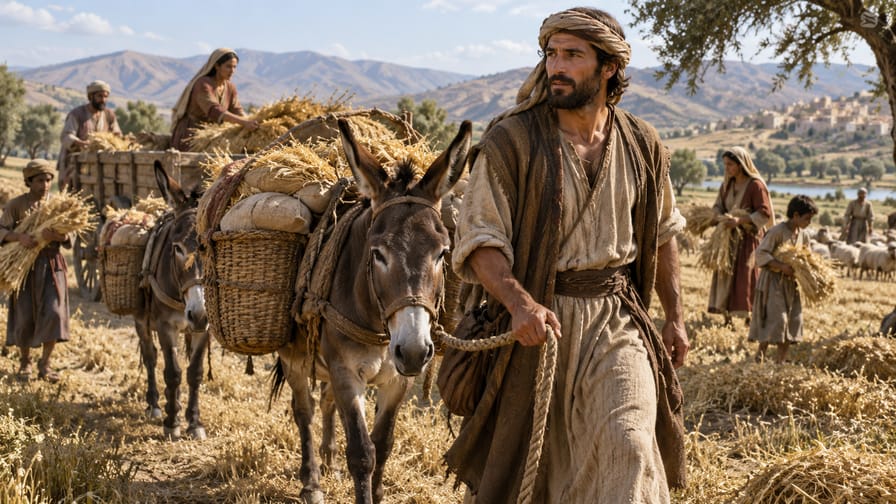
The figure of Issachar, one of Jacob's twelve sons and, subsequently, one of the patriarchs of the twelve tribes of Israel, occupies a distinct, though sometimes underestimated, place in the biblical narrative. His story and that of the tribe descended from him offer profound lessons on divine providence, tribal identity, and the role of wisdom and discernment in God's plan. This in-depth analysis will examine Issachar from a Protestant evangelical perspective, focusing on his etymology, historical context, character, theological significance, and legacy, as revealed in the Holy Scriptures.
We will address the relevance of Issachar not only as an individual but also as the progenitor of a tribe with unique characteristics that significantly contributed to the tapestry of Israel's history. Through careful exegesis and an understanding of biblical theology, we will seek to extract the enduring truths that the narrative of Issachar offers for contemporary faith and practice.
1. Etymology and meaning of the name
The name Issachar, in Hebrew Yissakhar (יִשָּׂשכָר), is of particular etymological and theological interest. Its origin is explained in the biblical narrative itself, in Genesis 30:18, where Leah, his mother, names him after conceiving with Jacob, thanks to the mandrakes Rachel had traded with her. Leah declares: "God has given me my reward [sachar], because I gave my servant to my husband".
The etymological root of the name is often associated with two main possibilities. The first derives from ’ish sakar (אִישׁ שָׂכָר), meaning "man of reward" or "hired man," underscoring the idea of a payment or compensation. The second, and more widely accepted, connects to the verb sakar (שָׂכַר), "to hire" or "to reward," suggesting "there is reward" or "he will bring reward."
This interpretation of "reward" resonates deeply with Leah's situation. She felt overlooked in favor of Rachel and saw the birth of Issachar as a sign of divine providence, a compensation for having given her servant Zilpah to Jacob. Thus, the name encapsulates Leah's belief that God had rewarded her for her generosity and patience amidst her affliction.
There are no other prominent biblical characters with the exact name of Issachar. However, the meaning of "reward" is a recurring theme in Scripture, reminding the faithful that God is a rewarder of those who diligently seek Him and serve Him faithfully (Hebrews 11:6). The name of Issachar, therefore, serves as an early testimony to God's faithfulness in answering prayers and compensating dedication.
From a theological perspective, the name of Issachar points to God's sovereignty over life and fertility. Even amidst complex family dynamics and rivalries, God orchestrates events to fulfill His purposes, demonstrating His providential hand. The "reward" is not merely a human payment but a divine gift that validates Leah's faith and hope in God.
2. Historical context and biblical narrative
Issachar was born during the patriarchal period, approximately between 1800-1700 BC, when Jacob and his family lived in Paddan Aram and, later, in Canaan. He was Jacob's ninth son and Leah's fifth (Genesis 30:18), born after the sons of Bilhah and Zilpah, and before Zebulun and Dinah.
The social and family context of Issachar was marked by polygamy and intense rivalry between the sisters Leah and Rachel, both wives of Jacob. The quest for children, especially male children, was crucial for family honor and legacy. The story of the mandrakes, which led to Issachar's conception, well illustrates this competitive dynamic and the belief in the efficacy of folk remedies for fertility (Genesis 30:14-16).
2.1 Family origin and genealogy
The genealogy of Issachar is clearly established in Genesis 35:23, Genesis 46:13, and Exodus 1:3, where he is listed as one of Jacob's sons with Leah. He had four sons of his own: Tola, Puah (or Puvah), Jashub (or Job), and Shimron. These sons became the heads of the families (clans) of the tribe of Issachar, as recorded in Numbers 26:23-25.
The descendants of Issachar, like those of the other tribes, are crucial for the formation of the nation of Israel. They migrated with Jacob to Egypt, where they multiplied during the centuries of slavery. In the census taken in the wilderness, the tribe of Issachar proved to be one of the largest, with 54,400 men fit for war in the first count (Numbers 1:29) and 64,300 in the second (Numbers 26:25).
2.2 Key events and tribal geography
The life of Issachar, the individual, is little detailed beyond his birth and his inclusion in genealogical lists. His significance lies more in the tribe descended from him. The tribe of Issachar played a notable role in Israel's history, especially after the conquest of Canaan.
The portion of land allotted to the tribe of Issachar was located in the heart of the Plain of Jezreel (or Esdraelon), one of the most fertile regions of Canaan, extending east of Mount Carmel. It included important cities such as Jezreel, Shunem, Megiddo, and Beth Shean (Joshua 19:17-23). This strategic and fertile location, however, also exposed them to invasions and conflicts.
Jacob's prophecy concerning Issachar in Genesis 49:14-15 is fundamental to understanding the tribe's destiny: "Issachar is a strong donkey, crouching between the saddlebags he saw that a resting place was good, and that the land was pleasant, so he bowed his shoulder to bear burdens, and became a slave at forced labor." This passage suggests a life of arduous labor and, possibly, a willingness for servitude in exchange for peace and agricultural prosperity.
The tribe of Issachar is also mentioned in Moses' blessing in Deuteronomy 33:18-19: "Rejoice, Zebulun, in your going out, and Issachar, in your tents. They shall call peoples to the mountain there they shall offer sacrifices of righteousness for they shall draw from the abundance of the seas and the hidden treasures of the sand." This blessing highlights prosperity and participation in religious rituals, possibly on Mount Tabor, located in their territory.
Throughout the period of the Judges and the monarchy, the tribe of Issachar interacted with other tribes, participating in battles and contributing to the leadership of Israel. For example, Tola, one of the judges, was from the tribe of Issachar (Judges 10:1). Their central and fertile location made them a point of transit and a source of resources, but also a constant target for enemies such as the Canaanites and, later, the Philistines.
3. Character and role in the biblical narrative
The character of Issachar, the individual, is sparsely detailed in Scripture, his personality overshadowed by that of his more prominent brothers. However, Jacob's prophecy in Genesis 49:14-15 and Moses' blessing in Deuteronomy 33:18-19, along with the actions of his descendants, provide crucial insights into the characteristics that would come to define the tribe.
The image of Issachar as a "strong donkey, crouching between the saddlebags" suggests a disposition for arduous labor and resilience. This metaphor may indicate a tribe that valued stability and agricultural productivity, preferring peace and material prosperity, even if it implied submission or heavy taxes. The phrase "he bowed his shoulder to bear burdens, and became a slave at forced labor" has been interpreted by commentators such as John Calvin as a willingness for servitude to avoid conflict, a characteristic that might be seen as a flaw in terms of courage, but also as a virtue of pragmatism.
However, the tribe of Issachar is also notable for a distinct intellectual and spiritual quality. In 1 Chronicles 12:32, we are told that among the warriors who came to David at Hebron, there were "of the sons of Issachar, two hundred chiefs who had understanding of the times, to know what Israel ought to do and all their brothers were at their command." This is, perhaps, the most significant revelation about the tribe's character.
The "men who had understanding of the times" (yod‘ê binah la‘ittim) are described as leaders endowed with wisdom and spiritual and practical discernment. They not only understood current events – political, social, military – but also interpreted these events in light of God's will, knowing "what Israel ought to do." This capacity for discernment is a spiritual virtue of great value, contrasting with the initial image of labor and submission.
This duality – the disposition for arduous labor and submission, combined with profound wisdom and discernment – defines Issachar's role in the biblical narrative. They were a tribe that, while perhaps not excelling in military prowess like Judah or Ephraim, contributed strategic intelligence and vital spiritual understanding to the nation.
The role of Issachar in the history of Israel is, therefore, multifaceted. They were providers of food due to the fertility of their lands, and also wise counselors. Moses' blessing in Deuteronomy 33:18-19 associated them with Mount Tabor, a place of sacrifice and gathering, suggesting active participation in the religious life of Israel. The presence of Tola, a judge of Israel, from the tribe of Issachar (Judges 10:1), also attests to their capacity for leadership and service to the nation.
4. Theological significance and typology
The theological significance of Issachar and his tribe lies in various layers of God's progressive revelation. Firstly, the story of his birth is a testament to divine providence. Leah's "reward," even amidst her rivalry and her own stratagems with the mandrakes, demonstrates that God is actively involved in the lives of His people, operating His purposes through human circumstances (Genesis 50:20).
Jacob's prophecy in Genesis 49:14-15, though seemingly somber, is a foreshadowing of the tribe's destiny and reflects an aspect of God's covenant with Israel. The disposition for labor and submission, while it might be seen as a weakness, can also be interpreted as a form of patience and perseverance, characteristics that God often uses to shape His people.
The deepest theological contribution of the tribe of Issachar, however, is found in the description of the "men who had understanding of the times, to know what Israel ought to do" (1 Chronicles 12:32). This verse has lasting theological resonance in the evangelical perspective. It highlights the importance of spiritual discernment and practical wisdom for leadership and for the body of Christ. These men were not merely intelligent, but possessed a divinely granted perception of God's will for their time.
This ability to "understand the times" is a central theme in biblical theology. Jesus rebuked the Pharisees and Sadducees for not discerning the "signs of the times" (Matthew 16:3), referring to His own coming and the fulfillment of messianic prophecies. The wisdom of Issachar prefigures the continuous need for discernment in the church, so that believers can understand God's will in their generation and act accordingly (Ephesians 5:15-17).
While there is no direct Christocentric typology of Issachar as an individual for Christ, the tribe of Issachar contributes to the redemptive narrative of Israel that culminates in Christ. The wisdom and discernment that characterized some of his descendants point indirectly to the perfect wisdom and knowledge of Christ, in whom "are hidden all the treasures of wisdom and knowledge" (Colossians 2:3). The Messiah is the supreme "understander of the times," who comprehends and fulfills God's plan in its entirety.
The connection of Issachar with theological themes such as the sovereignty of God, providence, the importance of wisdom and discernment, and the role of each part of the body of Christ (or the nation of Israel) in the divine plan, is undeniable. The tribe of Issachar, with its combination of labor and spiritual intellect, exemplifies how different gifts and callings contribute to the advancement of the kingdom of God. The "reward" of his name echoes the promise of reward for the faithful in Christ (Revelation 22:12).
5. Biblical-theological legacy and canonical references
The legacy of Issachar transcends the individual figure, manifesting primarily through the tribe that originated from him. In addition to the passages in Genesis, Numbers, Deuteronomy, and Joshua, the tribe of Issachar is mentioned in other canonical books, consolidating its presence in Israel's history.
In Judges 5:15, the Song of Deborah and Barak praises Issachar's participation in the battle against Sisera, indicating that the "princes of Issachar" were with Deborah, showing a commitment to Israel's deliverance. This passage refutes the idea that the tribe was merely passive or submissive, revealing moments of bravery and military engagement.
The book of 1 Chronicles is particularly rich in information about the tribe of Issachar. Besides the detailed genealogy in 1 Chronicles 7:1-5, which shows its expansion and strength, the mention in 1 Chronicles 12:32 about the "men who had understanding of the times" is one of the most cited and studied references. This characteristic highlights the tribe's intellectual and strategic contribution to the nation, especially in the context of David's ascent to the throne.
In the book of Nehemiah 9:14, the tribe of Issachar is listed among the tribes who received the Law at Sinai, reaffirming their identity as an integral part of God's covenant with Israel. Later, in the eschatological context of Ezekiel 48:25-26, Issachar is mentioned in the distribution of lands in the vision of the future temple, indicating his participation in the final restoration of Israel.
Finally, in the New Testament, in Revelation 7:7, the tribe of Issachar is again included in the list of the 144,000 sealed, representing the totality of redeemed Israel. This inclusion at the climax of biblical revelation underscores the permanence and importance of Issachar in God's redemptive plan, from the patriarchate to the consummation of the ages.
In the Jewish interpretive tradition, the characteristic of the "men who understood the times" is often valued, being associated with Torah scholars and wise counselors. In Reformed and evangelical Christian theology, this passage from 1 Chronicles 12:32 is often applied to emphasize the need for spiritual discernment in the church. Commentators such as Matthew Henry and Charles Spurgeon highlighted the importance for believers and church leaders to understand the times in which they live, so that they can guide God's people effectively and faithfully.
The figure of Issachar, therefore, contributes to the understanding of the biblical canon by illustrating the diversity of gifts and callings within the people of God. He reminds us that the strength of a nation or a church resides not only in military prowess or material wealth, but also in wisdom, discernment, and a willingness to serve and work, characteristics that, though sometimes discreet, are fundamental to the advancement of divine purposes.