


Bela
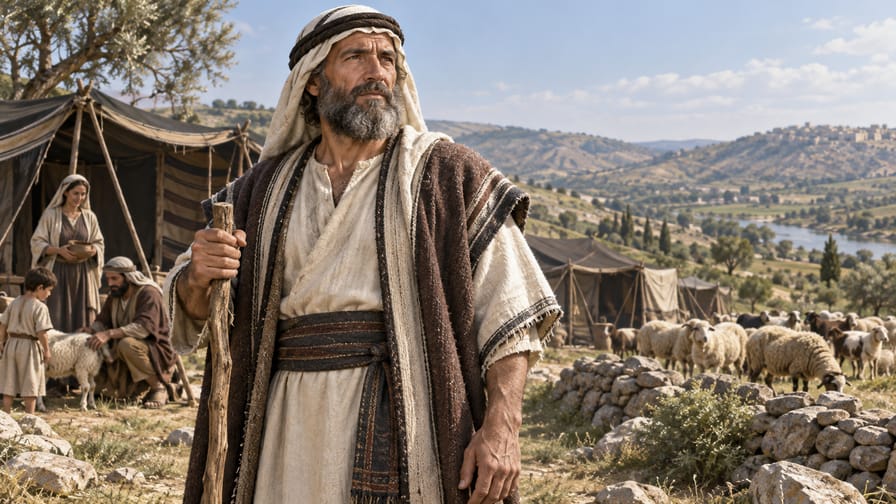
The figure of Bela, though not central to the major biblical narratives, appears in various Old Testament passages, representing different individuals who played significant roles in their respective contexts. An analysis of Bela requires a careful examination of genealogical and historical mentions, revealing the precision and intentionality of Scripture in recording lineage and divine sovereignty over peoples and individuals.
From a Protestant evangelical perspective, the understanding of Bela contributes to the appreciation of God's faithfulness in preserving lineages, establishing nations, and fulfilling His redemptive purposes. This study will delve into the occurrences of the name, exploring its meaning, the context of each character, and its theological relevance for a broader understanding of salvation history.
1. Etymology and Meaning of the Name
The name Bela (in Hebrew: בֶּלַע, transliterated as Belaʿ) is found in various Old Testament passages. The etymological root of בֶּלַע is often associated with the verb "to swallow," "to consume," or "to destroy." This connotation can suggest strength, power of annihilation, or even the idea of a "devourer."
In a biblical context, names often carried a prophetic or descriptive meaning, reflecting a person's character, destiny, or function. For a king, such as Bela of Edom, the name could symbolize the ability to dominate or the threat he posed to his enemies. For a tribal leader, such as Bela of Benjamin, it could evoke strength and resilience.
There are no significant variations of the name in biblical languages, with the Hebrew form Belaʿ being the most common. The transliteration into Portuguese generally maintains the spelling "Bela." The consistency of the name, despite the different individuals who bear it, underlines the accuracy of biblical records.
There are three main characters named Bela in the Bible, each with his own relevance:
- Bela, son of Beor, king of Edom (Genesis 36:32 1 Chronicles 1:43).
- Bela, firstborn son of Benjamin, patriarch of a clan (Genesis 46:21 Numbers 26:38 1 Chronicles 7:6-7 1 Chronicles 8:1-5).
- Bela, son of Azaz, a chief of the tribe of Reuben (1 Chronicles 5:8).
For the Edomite king, the name may prefigure the often belligerent and hostile nature of Edom in relation to Israel. For Benjamin's son, it may denote the strength and prominence of his lineage within the tribe, known for its bravery and military skills (cf. Judges 20:16).
2. Historical Context and Biblical Narrative
2.1. Bela, Son of Beor: The King of Edom
Bela, son of Beor, is presented in Scripture as the first of a series of kings who reigned over Edom "before any king reigned over the Israelites" (Genesis 36:31-39 1 Chronicles 1:43-50). This historical period dates back to an era preceding the Israelite monarchy, probably in the first half of the second millennium BC, during the patriarchal times or shortly thereafter.
The political context of the time showed Edom as an established and organized kingdom, descended from Esau, Jacob's brother. The mention of these Edomite kings in the book of Genesis highlights God's sovereignty over all nations, revealing that He establishes and deposes rulers, even among those who are not part of His covenant people (cf. Daniel 2:21).
The genealogy of Bela identifies him as the son of Beor and originally from Dinhabah, which was probably the capital or an important city of his kingdom (Genesis 36:32). The biblical passages do not record specific events of his life or reign, except for his position as king and the mention of his successor, Jobab. His importance lies in being the first in a list that establishes the chronology and structure of the kingdom of Edom.
The geography associated with this Bela is the territory of Edom, a mountainous region south of the Dead Sea, characterized by rocky and strategic terrain. Edom was a neighbor of Israel and frequently engaged in conflicts with the descendants of Jacob (cf. Numbers 20:14-21). The existence of an organized Edomite kingdom so early in biblical history is a testament to God's promise to Esau that he too would become a great nation (Genesis 27:39-40).
2.2. Bela, Son of Benjamin: The Patriarch
The second prominent Bela is the firstborn son of Benjamin, the youngest of Jacob and Rachel (Genesis 46:21). His life primarily unfolds in the patriarchal context, when he went down to Egypt with his father Benjamin and the rest of Jacob's family, totaling seventy souls (Exodus 1:5).
He is mentioned again in the census records of Israel in the wilderness, where his descendants, the Belaites, form one of the clans of the tribe of Benjamin (Numbers 26:38). The genealogies in 1 Chronicles 7:6-7 and 1 Chronicles 8:1-5 provide additional details about his posterity, listing his sons, such as Addar (or Ard), Gera, Abihu, Abishua, Naaman, Ahoah, among others, and highlighting that his family was numerous and composed of valiant and mighty men.
The historical period spans from the formation of the twelve tribes of Israel, through the sojourn in Egypt, the Exodus, and the conquest of Canaan. Bela is a foundational figure for the tribe of Benjamin, which would later be known for its ferocity in battle and for producing figures such as the first king of Israel, Saul (1 Samuel 9:1-2), and the apostle Paul (Philippians 3:5).
The initial geography associated with this Bela is Egypt, where Jacob's family multiplied. Subsequently, his descendants settled in the land of Canaan, in the territorial portion assigned to the tribe of Benjamin, between Judah and Ephraim, a strategically important region (cf. Joshua 18:11-28). The relationships of this Bela are intrinsic to the family of Israel, he being Jacob's grandson and an ancestor of one of the twelve tribes.
2.3. Bela, Son of Azaz: The Reubenite Chief
A third mention of Bela is found in 1 Chronicles 5:8, where he is identified as the son of Azaz and part of the tribe of Reuben. He is described as one of the chiefs who lived in Aroer and as far as Nebo and Baal-Meon. This mention is brief and fits into the context of the genealogies of the tribes of Israel in the pre-exilic period, probably focusing on the distribution of land and tribal organization east of the Jordan.
His role is purely genealogical, indicating the complexity and extent of families within the tribes of Israel. Although there are no narrative details about his life, his inclusion in the chronicles reinforces the meticulousness of biblical records in preserving tribal identity.
3. Character and Role in the Biblical Narrative
3.1. The Character of Bela, King of Edom
The Scriptures do not offer a detailed description of the character of Bela, the king of Edom. His mention is purely historical and genealogical (Genesis 36:32-33 1 Chronicles 1:43-44). There are no accounts of his virtues, failures, significant actions, or key decisions. He is presented as a ruler in a line of succession, which suggests an established kingdom and a functional political structure in Edom.
His primary role in the biblical narrative is that of a chronological marker and a testimony to God's sovereignty over the nations. The list of Edomite kings serves to underscore that Edom, descended from Esau, already possessed a monarchy before Israel. This can be interpreted as a partial fulfillment of Isaac's blessing to Esau, that he would become a nation and live by the sword (Genesis 27:40).
The lack of detail about his character or actions does not diminish his historical importance. In a biblical-theological dictionary, the absence of direct information about Bela's character serves to highlight that not all characters are presented with the same level of detail. Some are mere points of reference in the grand tapestry of salvation history, demonstrating the comprehensiveness of divine purposes.
3.2. The Character of Bela, Son of Benjamin
Similarly to the Edomite king, the Scriptures do not provide an explicit analysis of the character of Bela, son of Benjamin. His relevance lies in his position as the firstborn of Benjamin and patriarch of one of the main clans of the tribe (Genesis 46:21 Numbers 26:38 1 Chronicles 7:6-7 1 Chronicles 8:1-5). His role is fundamentally genealogical, ensuring the continuity and identity of the tribe of Benjamin within the nation of Israel.
The lists in 1 Chronicles describe his descendants as "valiant and powerful men" (1 Chronicles 7:7), which may infer a strong and capable lineage, perhaps reflecting qualities that were valued in Bela, the patriarch. The tribe of Benjamin was known for being combative and skilled with weapons (Judges 20:16), and Bela, as their firstborn and ancestor of many, played a crucial role in founding that tribal identity.
His main recorded action is his inclusion in the list of those who went down to Egypt with Jacob (Genesis 46:21), which places him at the beginning of the formation of the nation of Israel. He is a vital link in the genealogical chain that connects the patriarchs to the nation established in the wilderness and, subsequently, in Canaan. His development as a character is implicit in the prosperity and strength of his descendants.
3.3. The Character of Bela, the Reubenite
The mention of Bela, son of Azaz, in the tribe of Reuben (1 Chronicles 5:8), is even more concise. There is no information about his character, virtues, or failures. He is listed as a chief who dwelt in certain localities, which indicates a position of leadership or prominence within his clan. His role is strictly genealogical and territorial, contributing to the internal organization of the tribe of Reuben.
The presence of multiple individuals with the same name Bela, each fulfilling a distinct role (king, tribal patriarch, clan chief), demonstrates the richness and complexity of the Scriptures. Each Bela, in his own context, serves as a point of reference for understanding history, genealogy, and divine sovereignty over humanity.
4. Theological Significance and Typology
4.1. Bela, King of Edom: A Marker in Redemptive History
Bela, the king of Edom, is not a figure with direct typological significance for Christ. However, he plays a significant role in redemptive history by demarcating the existence and organization of a rival nation, descended from Esau. Edom often serves as an "anti-type" or a contrast to Israel, representing the nations that oppose God's covenant people (cf. Amos 1:11).
His mention in Genesis 36:31 ("These are the kings who reigned in the land of Edom, before any king reigned over the children of Israel") is theologically charged. It underlines the divine providence that allowed Edom to develop a monarchy before Israel, showing that God governs over all nations, even those not in His special covenant. This reinforces the universal sovereignty of Yahweh (Deuteronomy 32:8).
The existence of Bela and the nation of Edom are connected to the promises and prophecies given to Esau (Genesis 27:39-40), which include the formation of a powerful nation. The eventual enmity between Edom and Israel, manifested in events such as the refusal of passage to Moses (Numbers 20:14-21) and the prophecies of judgment against Edom (e.g., Obadiah 1), is a recurring theme that illustrates the separation between the lineage of promise and the external nations.
Therefore, Bela of Edom contributes to the theology of redemptive history by contextualizing God's sovereignty over pagan nations and the distinction between the lineage of the covenant and the surrounding peoples. He serves as a reminder of the divine plan that unfolds through complex interactions among peoples, culminating in the coming of the Messiah through the lineage of Israel.
4.2. Bela, Son of Benjamin: The Preservation of the Covenant Lineage
Bela, son of Benjamin, is also not a direct type of Christ. Nevertheless, his theological significance is profound in the context of the preservation of the covenant lineage and the formation of the nation of Israel. As the firstborn of Benjamin, he is fundamental to the identity and continuity of one of the twelve tribes, which are the recipients of divine promises (Genesis 46:21).
The inclusion of Bela and his descendants in the detailed genealogies of Numbers and 1 Chronicles emphasizes God's faithfulness in maintaining His covenant with Abraham, Isaac, and Jacob, promising to multiply their offspring and make them a great nation (Genesis 12:2 Genesis 22:17). These genealogical lists are not mere records they are a demonstration of divine providence in the formation of Israel.
Although salvation comes from Judah (John 4:22), the integrity of all the tribes was vital for national identity and for understanding God's plan for His people. Bela, as an ancestor, contributes to the theology of election and the preservation of God's people, through whom the messianic promise would ultimately be fulfilled. He represents the contribution of a specific tribe to the overall tapestry of redemption.
The tribe of Benjamin, through the lineage of Bela, produced the first king of Israel, Saul, and later, the apostle Paul, who described himself as "a Hebrew of Hebrews as to the law, a Pharisee" (Philippians 3:5). Thus, the figure of Bela, the ancestor, is indirectly linked to crucial figures in salvation history, demonstrating God's providence in preparing His people for the advent of the Messiah.
4.3. Bela, the Reubenite: The Importance of Genealogies
The mention of Bela, the Reubenite (1 Chronicles 5:8), reinforces the theological importance of genealogies in general. The genealogical lists in the Old Testament serve to establish identity, inheritance, and the continuity of the covenant. They are documentary proof of God's faithfulness in preserving His people and their tribal divisions, even after the exile.
These lists ensure that the history of Israel is not merely a collection of narratives, but a precise record of God's providence throughout generations. Each name, including Bela, contributes to the understanding of the family and social structure that sustained the nation and, ultimately, paved the way for the incarnation of Christ.
5. Biblical-Theological Legacy and Canonical References
5.1. Legacy of Bela, King of Edom
The mentions of Bela, king of Edom, are confined to Genesis 36 and 1 Chronicles 1. His legacy lies primarily in his function as a historical and genealogical marker. He is part of the larger narrative of Esau's descent, which is crucial for understanding the complex and often antagonistic relationship between Israel and Edom throughout biblical history (cf. Malachi 1:2-3).
In biblical theology, the inclusion of the kings of Edom serves to illustrate that God is not only the Lord of Israel but the sovereign of all nations. He allows empires to rise and fall, and their records are part of the testimony to the comprehensiveness of His providence. Jewish and Christian interpretive tradition recognizes these kings as historical figures, though without specific moral or spiritual attributions.
For Reformed and evangelical theology, the existence of Bela and his successors in Edom reinforces the doctrine of divine sovereignty over universal history. The distinction between the lineage of Esau and that of Jacob is a theme that points to divine election and the separation of the covenant people, a fundamental principle of covenant theology. The mention of Bela is, therefore, an element that contributes to the understanding of the canon as a faithful historical and theological record.
5.2. Legacy of Bela, Son of Benjamin
Bela, son of Benjamin, is mentioned in Genesis 46:21, Numbers 26:38, 1 Chronicles 7:6-7, and 1 Chronicles 8:1-5. His legacy is genealogical in nature, but with profound theological implications for the identity of Israel. As the patriarch of a prominent clan in the tribe of Benjamin, he is fundamental to the organization and social structure of the covenant people.
The extensive genealogies in 1 Chronicles, which detail the lineage of Bela, had a crucial theological purpose for the post-exilic community. They reaffirmed the identity of the returned Jews, connecting them to their ancestors and to God's promises, ensuring the continuity of the covenant people. The descent of Bela as valiant men (1 Chronicles 7:7) reinforces the importance of the tribe of Benjamin in the defense and leadership of Israel.
In Reformed and evangelical theology, the meticulous preservation of genealogies, including that of Bela, is seen as a testament to God's faithfulness. This genealogical precision is vital for understanding the redemptive plan, which culminates in the coming of Jesus Christ through the lineage of David, which in turn is embedded in the great family of Israel. The mention of Bela is a link that demonstrates the authenticity and historicity of the biblical narrative.
The influence of Bela in biblical theology lies in the validation of the authority of the Scriptures in their historical and genealogical records. He contributes to the doctrine of election and the preservation of God's people, which is manifested through the twelve tribes. His presence in the canon reinforces the view that every detail of the Bible, even lists of names, has a purpose in God's great design for the salvation of humanity.
5.3. Legacy of Bela, the Reubenite
The brief mention of Bela, the Reubenite, in 1 Chronicles 5:8, though limited, contributes to the understanding of the completeness and comprehensiveness of biblical records. He represents Scripture's attention to the details of Israel's tribal organization, especially for the tribes east of the Jordan, which are often less addressed in the major narratives.
His legacy, like the other Belas, is that of a genealogical point of reference that attests to the structure and identity of the tribes of Israel. For evangelical theology, these lists reinforce the historicity of the Bible and divine providence in the organization of His people. The mention of Bela and other tribal chiefs in 1 Chronicles demonstrates the importance of inheritance and continuity for understanding salvation history and the fulfillment of God's promises.