


Malchiel
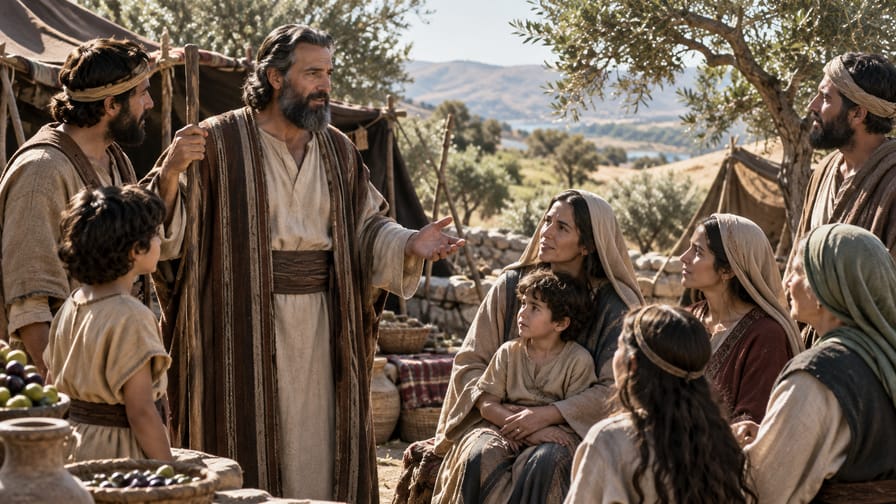
The figure of Malchiel, though briefly mentioned in the Scriptures, offers a starting point for a deep theological analysis of divine providence, the importance of biblical genealogies, and the significance of names in the context of salvation history. His appearance is limited to two Old Testament passages, both in genealogical lists, which demands an exegetical approach that transcends the absence of a detailed biographical narrative.
From a conservative evangelical Protestant perspective, every mention in the Bible is divinely inspired and, therefore, bears significance and purpose. The analysis of Malchiel, although challenging due to the scarcity of narrative data, allows for the exploration of themes such as God's faithfulness to His covenant, the formation of the people of Israel, and the preparation for the coming of the Messiah through carefully preserved lineages.
This study will seek to extract theological and spiritual lessons from the existence of Malchiel, pondering the role of "silent characters" in the biblical tapestry and how even a name in a list can point to God's sovereignty and His redemptive plans. The structure will follow the proposed thematic sections, ensuring a comprehensive and systematic approach.
1. Etymology and Meaning of the Name
The name Malchiel (Hebrew: מַלְכִּיאֵל) is composed of two significant parts: melek (מֶלֶךְ), meaning "king," and El (אֵל), which is one of the names of God. Thus, the most accepted meaning for Malchiel is "My King is God" or "King of God." This construction is common in Hebrew theophoric names, where one of the divine names is incorporated to express a belief or a declaration of faith.
The root melek (מֶלֶךְ) resonates with divine sovereignty and authority, a central theme throughout all Scripture, from creation to consummation. The concept of God as King (melek) is fundamental in Old Testament theology, appearing in Psalms like Psalm 10:16 ("The LORD is King forever and ever") and Psalm 99:1 ("The LORD reigns").
The second part, El (אֵל), is a generic term for "God" or "deity" in the ancient Near East, but in the Hebrew Scriptures, it refers specifically to the God of Israel. It appears in names such as Samuel ("heard by God"), Israel ("he who struggles with God"), and Daniel ("God is my judge"), underscoring the divine nature and the personal relationship with Him.
The combination "My King is God" or "King of God" for Malchiel is a powerful theological declaration. It suggests a familial or parental confession of faith, indicating that divine sovereignty was recognized and affirmed. In a context where human kings often failed or became oppressive, the name Malchiel points to the true and eternal kingship of Yahweh.
There are no other notable variations of the name Malchiel in biblical languages, nor other biblical characters with this name. The uniqueness of Malchiel's mention in two specific genealogies reinforces the idea that, even in its brevity, his existence and name were recorded with divine purpose, echoing the truth about the kingship of God.
The theological significance of the name Malchiel in the biblical context is the affirmation of God's sovereignty over individual and collective life. It anticipates the promise of a just and perfect king who would come from the lineage of David, whose kingdom would be eternal (2 Samuel 7:16), culminating in the messianic kingship of Jesus Christ, the King of kings and Lord of lords (Revelation 19:16).
2. Historical Context and Biblical Narrative
The figure of Malchiel is placed at two crucial moments in the formation of the people of Israel. The first mention occurs in Genesis 46:17, in the list of those who went down to Egypt with Jacob. He is identified as the son of Beriah and grandson of Asher, one of Jacob's twelve sons. This event dates to approximately the 18th century BC, marking the beginning of Israel's period in Egypt, which would last about 430 years (Exodus 12:40).
The historical context of Genesis 46 is the migration of Jacob's family to Egypt due to severe famine in the land of Canaan. Joseph, already established as governor in Egypt, provided a place for his family in the land of Goshen (Genesis 46:28-34). The inclusion of Malchiel in this list underscores the divine meticulousness in preserving Jacob's lineage, which would become the nation of Israel.
The second mention of Malchiel is in Numbers 26:45, in the census conducted by Moses and Eleazar in the wilderness of Moab, shortly before the entry into the Promised Land. Here, he is again associated with the tribe of Asher, identified as the head of the family of the Malchielites (Malki'elites). This census occurred approximately in the 15th century BC, after forty years of wandering in the wilderness.
The census of Numbers 26 had multiple purposes: to determine Israel's military capacity, to allocate lands by tribal inheritance, and to reaffirm the identity and continuity of Israel's families. The presence of the family of the Malchielites, descendants of Malchiel, testifies to God's faithfulness in multiplying Jacob's offspring, as promised to Abraham (Genesis 12:2).
The geography related to Malchiel, therefore, encompasses the land of Canaan (where he was born), the land of Goshen in Egypt (where his family settled and grew), and the wilderness (where his descendants were counted). He is a link in the genealogical chain that connects the patriarch Jacob to the formation of the twelve tribes of Israel, who would inherit the Promised Land.
The key passages are Genesis 46:17, which places him in the descent into Egypt, and Numbers 26:45, which confirms the continuity of his lineage as a distinct clan within the tribe of Asher. The connection with Asher is vital, as this tribe would receive its allotment of land in the northwest of Canaan (Joshua 19:24-31), and would be blessed with prosperity by Jacob (Genesis 49:20) and Moses (Deuteronomy 33:24-25).
3. Character and Role in the Biblical Narrative
The Bible offers no narrative details about Malchiel's character, virtues, flaws, or specific actions. His mention is strictly genealogical, meaning there are no episodes from his life that can be analyzed to infer personality traits or moral decisions. However, his mere existence and inclusion in the biblical genealogies are, in themselves, theologically significant.
Malchiel's role in the biblical narrative is, first and foremost, that of a progenitor. He is a fundamental link in the genealogical chain that connects Jacob to the formation of the tribes of Israel. His existence testifies to God's faithfulness in fulfilling His promises to multiply the offspring of Abraham, Isaac, and Jacob (Genesis 15:5 Genesis 22:17).
Although there is no explicit "call" or "vocation" for Malchiel in the sense of a prophet, priest, or king, his role as an ancestor is crucial to salvation history. He is part of the "multitude" of Israelites who formed in Egypt and who, through divine providence, were preserved to become a great nation. His function was to contribute to the demographic growth of the tribe of Asher.
The absence of a personal narrative for Malchiel serves to highlight an important principle: God uses ordinary and often "silent" individuals to fulfill His great purposes. Not all are called to be prominent leaders like Moses or David, but each one, in their own sphere, contributes to the divine plan. Malchiel's life, though without prominence, was an integral part of the history of Israel.
The meaning of his name, "My King is God," can be seen as a reflection of his family's faith or his parents' aspiration for him. Even if we have no evidence of his personal character, the name suggests a family environment that recognized the sovereignty of God. This, in itself, is a spiritual virtue, especially in an often idolatrous world.
The inclusion of Malchiel in the list of Genesis 46 and the mention of his descendants in Numbers 26 demonstrate that he was a real person, part of the covenant people. His contribution was to be a head of a family, ensuring the continuity of Asher's lineage. From a theological perspective, this underscores the importance of family and procreation for the fulfillment of divine promises.
4. Theological Significance and Typology
The theological significance of Malchiel, though not directly through his actions, lies primarily in his name and in his inclusion in the divinely inspired genealogies. He serves as a reminder of God's faithfulness in preserving and multiplying His people, according to His covenant with Abraham (Genesis 17:7-8).
The biblical genealogies, in which Malchiel is inserted, are not mere lists of names, but theological documents that demonstrate divine providence in the history of redemption. They establish the continuity of the messianic lineage, culminating in Jesus Christ, as we see in Matthew 1:1-17 and Luke 3:23-38. The presence of Malchiel in one of these lists, though indirect to the lineage of Christ, is part of the larger tapestry that ensures the formation of Israel, the people from whom the Messiah would come.
The name Malchiel itself, "My King is God," is a verbal and thematic prefiguration of the kingdom of God and the kingship of Christ. It points to the fundamental truth that God is the supreme sovereign. This implicit confession of faith in the name resonates with the message of the Gospel that Jesus is the Messiah, the promised King, whose kingdom will have no end (Isaiah 9:6-7 Luke 1:32-33).
Although Malchiel is not a direct type of Christ in the sense of an event or person that prefigures a specific aspect of Jesus, the context of his existence contributes to the general typology of the history of redemption. The preservation of the twelve tribes, including that of Asher, is part of God's plan to raise up a people for Himself, through whom the promise of salvation would be realized.
The inclusion of Malchiel in the genealogies emphasizes the doctrine of God's sovereignty and His election. God chooses and uses individuals, even those whose lives are not detailed, to fulfill His purposes. Malchiel's existence reinforces the idea that every member of God's people has a place and a function in the divine plan, however humble it may seem.
The absence of mentions of Malchiel in the New Testament does not diminish his theological importance, for he is part of the Old Testament foundation that points to Christ. Reformed and evangelical theology emphasizes that all Scripture is divinely inspired (2 Timothy 3:16) and useful for teaching, even genealogical lists, as they demonstrate God's faithfulness to His word and His promises.
5. Biblical-Theological Legacy and Canonical References
Malchiel's legacy, though not one of literary authorship or great narrated deeds, is deeply rooted in the canonical and theological structure of Israel. His main contribution is that of being a progenitor of the family of the Malchielites within the tribe of Asher, as recorded in Numbers 26:45. This family, like the others, was a vital social and religious unit for the organization of Israel in the wilderness and in the Promised Land.
The existence of Malchiel and his lineage reinforces the importance of genealogies as a means of confirming tribal identity and land inheritance in Israel. The tribe of Asher, of which he was a part, received a significant portion of land in the coastal region of northern Canaan (Joshua 19:24-31), known for its fertility, according to the prophetic blessings of Jacob (Genesis 49:20) and Moses (Deuteronomy 33:24-25).
In Jewish and Christian interpretive tradition, the inclusion of names in genealogies is seen as a testament to the historicity and continuity of God's people. Even if Malchiel is not a focus of midrash or extensive commentaries, his presence validates the meticulousness of the biblical records and divine providence in every detail of Israel's history.
For Reformed and evangelical theology, the case of Malchiel illustrates the doctrine of the inerrancy and sufficiency of Scripture. Every word, every name, every list has its place and purpose in the sacred canon. The inclusion of such a "silent" character as Malchiel demonstrates that God values every individual in His plan, and that salvation history is composed not only of prominent heroes, but also of ordinary people who faithfully fulfilled their role.
The figure of Malchiel, therefore, contributes to the understanding of the canon by underscoring the interconnectedness of generations and God's faithfulness through the centuries. He reminds us that the great biblical narrative is not only about grand events, but also about God's patient and persistent work through families and lineages, preparing the way for the coming of the Redeemer.
In sum, Malchiel's legacy is not one of personal fame, but of his silent and essential contribution to the tapestry of redemptive history. His name, "My King is God," resonates as an eternal truth that pervades all Scripture, pointing to the sovereignty of the Lord and, ultimately, to the eternal kingdom of Jesus Christ.