


Pallu
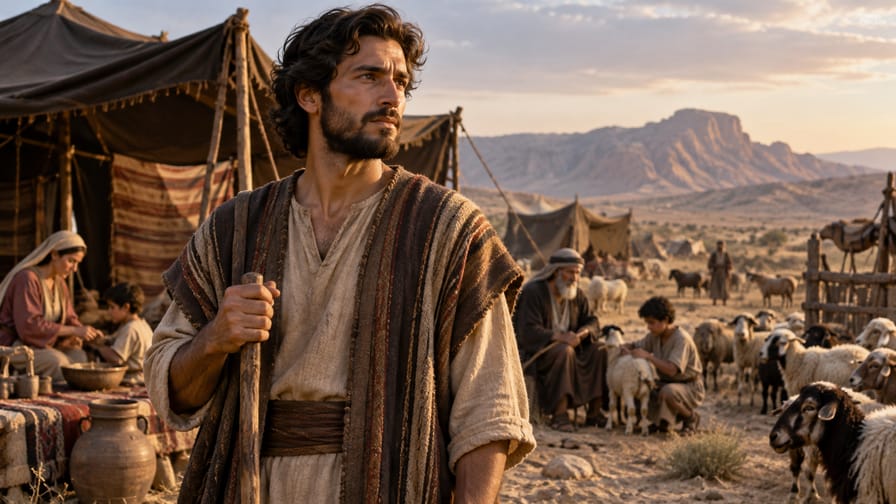
The figure of Palu, though not a central character in the biblical narrative, plays a significant role within the genealogy and tribal structure of Israel. His importance lies primarily in his position as one of the sons of Reuben, Jacob's firstborn, and as the ancestor of one of the families that composed the tribe of Reuben. For a profound understanding of Palu, it is essential to examine his onomastic meaning, his historical context, and his theological relevance within the evangelical Protestant perspective, which values biblical authority and the progression of salvation history.
The analysis of seemingly secondary figures like Palu is crucial for Reformed and evangelical theology, as it demonstrates the meticulousness of divine revelation and God's faithfulness in preserving the lineage and identity of His people. Every name and every generation contributes to the tapestry of redemptive history that culminates in Jesus Christ, the Messiah. Thus, even a figure with few direct mentions can offer insights into divine sovereignty and God's eternal purpose.
1. Etymology and meaning of the name
The name Palu is transliterated from Hebrew as פַּלּוּ (Pallu). The exact etymological root is a subject of some discussion among scholars, but the most accepted proposals connect it to Hebrew verbs with meanings of separation, distinction, or judgment. One of the most probable derivations is from the verb פָּלָה (palah), which means "to separate," "to distinguish," or "to mark as different."
If this derivation is correct, the name Palu could mean "distinct," "separated," or "notable." Another possibility is the connection with פָּלַל (palal), which means "to intercede" or "to judge," which could imply "judged" or "intercessor." However, the first option seems more plausible in the context of a proper name denoting a quality or state.
There are no significant variations of the name Palu in biblical languages, being consistently recorded as Pallu in translations into Portuguese and other modern languages. The original Hebrew form remains unchanged in the different Old Testament passages where he is mentioned. This name is not widely found in other prominent biblical characters, making Palu a unique figure with this designation.
The theological significance of the name, although not explicitly developed in Scripture for Palu, can be interpreted in light of Israel's role as a people "separated" or "distinct" by God for Himself (Deuteronomy 7:6). As one of the founders of a family within the tribe of Reuben, Palu contributes to the formation of this chosen people, whose identity is intrinsically linked to divine separation.
This separation refers not only to an ethnic distinction but to a calling to be a holy people, dedicated to the Lord. The existence of Palu and his descendants, the Palluites, is a testament to God's faithfulness in establishing and preserving His covenant with Abraham, separating a nation for Himself through whom His promises would be fulfilled (Genesis 12:1-3).
2. Historical context and biblical narrative
2.1 Family origin and genealogy
Palu emerges in the biblical scene during the patriarchal period, being explicitly identified as one of the sons of Reuben, Jacob (Israel)'s firstborn with Leah (Genesis 46:8-9). His brothers were Hanoch, Hezron, and Carmi. This affiliation places him directly in the lineage of the twelve patriarchs of Israel, fundamental for the formation of the twelve tribes.
The mention of Palu first occurs in the list of those who went down to Egypt with Jacob (Genesis 46:9). This list is of utmost importance, as it marks the beginning of the formation of the people of Israel as a distinct nation, living under divine providence in a foreign land, according to the prophecy given to Abraham (Genesis 15:13-14).
2.2 Key events and biblical passages
The key biblical passages where Palu is mentioned are primarily genealogical. In addition to Genesis 46:9, he is listed in Exodus 6:14, where Reuben's genealogy is repeated in the context of the calling of Moses and Aaron, emphasizing the continuity of the priestly and tribal lineage.
Even more significant is the mention in Numbers 26:5, during the second census of the Israelites in the wilderness, before they entered the Promised Land. Here, Palu is named as the ancestor of the "family of the Palluites," highlighting that his descendants formed a specific clan within the tribe of Reuben.
Finally, 1 Chronicles 5:3 reaffirms his position in Reuben's genealogy, showing the importance of maintaining genealogical records for the identity and inheritance of Israel. These repetitions in Scripture underscore the relevance of lineage to God's plan.
2.3 Historical context and geography
Palu's historical period spans the transition from the patriarchal era to the Exodus period. He was born in Canaan, likely before Jacob and his family went down to Egypt. His life unfolded at a crucial moment in Israel's history, when Jacob's family transformed into a great nation under Egyptian oppression.
The geography associated with Palu and his descendants includes the land of Canaan (where he was born), Egypt (where the family lived and multiplied for centuries), and the wilderness (where his descendants, the Palluites, were counted and organized as a clan).
2.4 Relationships with other characters
Palu's relationships are primarily familial. He is the son of Reuben, grandson of Jacob, and great-grandson of Isaac and Abraham, placing him directly in the covenant lineage. His brothers and their descendants form the other clans of the tribe of Reuben. Although there are no direct narrative interactions of Palu with other characters, his existence is intrinsic to the collective history of his family and tribe.
The tribe of Reuben, though firstborn, faced challenges due to his father's sin (Genesis 35:22 49:3-4). Reuben's descendants, including the Palluites, would be those who, despite their ancestor's failing, would be preserved by God to fulfill His sovereign purpose, demonstrating divine grace that operates through generations.
3. Character and role in the biblical narrative
The Bible offers no explicit details about Palu's personal character, nor does it record any specific actions or decisions he made. His presence in Scripture is strictly genealogical, serving as a link in the chain of Israel's lineage.
Given the absence of narrative information, we cannot attribute documented moral virtues or flaws to Palu. He is, first and foremost, a progenitor, whose importance lies in his existence and the continuity of his descendants, who contributed to the formation of the tribe of Reuben.
His primary role, therefore, is that of founder of one of the families (clans) of the tribe of Reuben, the Palluites (Numbers 26:5). This genealogical function is vital for the social, political, and religious structure of ancient Israel. The counting and organization of families were essential for land distribution, military service, and the maintenance of tribal identity.
Although Palu did not have a direct prophetic, priestly, or royal calling, his existence is a silent testimony to God's faithfulness in preserving Jacob's lineage. He represents the foundation upon which God's promise to multiply Abraham's descendants was fulfilled (Genesis 22:17).
Character development, in the traditional sense, does not apply to Palu. He is a static figure in the genealogies, but his reiterated inclusion in different biblical books (Genesis, Exodus, Numbers, Chronicles) demonstrates the importance biblical writers placed on genealogical precision to establish the identity and history of God's people.
The absence of narrative details about Palu does not diminish his relevance, but rather directs it towards a broader meaning: he is an essential component in salvation history, a brick in the construction of God's chosen nation. His life, though undescribed, was part of the divine plan that unfolded over the centuries.
4. Theological significance and typology
The theological significance of Palu, like that of many genealogical figures, lies in his contribution to redemptive history and the progressive revelation of God's plan. Although he is not a direct typological figure of Christ in the classical sense, his existence is fundamental to the lineage from which the Messiah would come.
The inclusion of Palu in the genealogies emphasizes God's faithfulness to His covenants. The promise made to Abraham that his descendants would be as numerous as the stars of the sky and the sand of the seashore (Genesis 15:5 22:17) is visibly fulfilled through individuals like Palu, who fathered families and clans.
The precision of the Old Testament genealogies serves a greater purpose: to establish the identity of the people of Israel as the covenant people and, ultimately, to trace the messianic lineage. Ultimately, all biblical genealogies, from Adam to Jacob and his sons, point to the fulfillment of the promise of a Redeemer.
Although there are no direct citations or references to Palu in the New Testament, the importance of genealogies is reaffirmed in Matthew 1 and Luke 3, which trace the lineage of Jesus Christ. The existence of Palu and his clan contributes to the integrity and continuity of Israel's genealogy, through which the Messiah, Jesus, would come.
The figure of Palu, therefore, is connected to central theological themes such as divine election, God's faithfulness to His covenant, and sovereignty in preserving a people for Himself. His life, though without narrated events, is part of God's grand design to establish a peculiar people through whom He would manifest His glory and work salvation.
In Reformed theology, the emphasis on God's sovereignty and predestination resonates with how God selects and preserves lineages and individuals for His purposes, even those who seem minor. The existence of Palu is a testimony to God's provident hand that guides history towards the fulfillment of His redemptive plans in Christ.
He represents the continuity of the promise, the perseverance of the covenant people, and the historical foundation upon which messianic typology is built. The fact that God cares to record every link in the chain demonstrates the importance of each individual in the great divine plan.
5. Biblical-theological legacy and canonical references
Palu's legacy is primarily genealogical and structural for the nation of Israel. He is mentioned in four canonical Old Testament books, attesting to the consistency and importance of his inclusion in the sacred genealogies. These mentions are:
- Genesis 46:9: In the list of those who went down to Egypt with Jacob.
- Exodus 6:14: In the genealogy of Reuben, in the context of the calling of Moses and Aaron.
- Numbers 26:5: In the second census, as the ancestor of the family of the Palluites.
- 1 Chronicles 5:3: In the genealogy of Reuben, reaffirming his position.
Palu's literary contribution does not involve the authorship of biblical books or texts. His importance lies in his contribution to the organizational structure of the nation of Israel, as the founder of a specific clan. This structure was fundamental for the identity and cohesion of the twelve tribes.
Palu's influence on biblical theology lies in the reaffirmation of the importance of genealogies as vehicles of salvation history and God's faithfulness. He is a link in the chain of generations through which God fulfilled His promises, sustained His covenant, and prepared the way for the coming of the Messiah.
In Jewish and Christian interpretive tradition, Palu is recognized as an integral part of the patriarchal lineage, although he is not the subject of extensive legends or midrashim. His presence in the genealogical lists is valued for its historical accuracy and its function of connecting generations.
Reformed and evangelical theology, with its high view of biblical authority and inerrancy, sees the inclusion of figures like Palu as evidence of divine providence and God's attention to detail in His redemptive plan. He is an example of how God uses seemingly "minor" individuals to fulfill His great purposes.
Palu's importance for understanding the canon lies in his contribution to the coherence and continuity of the biblical narrative. The genealogies provide the historical backbone upon which salvation history unfolds, showing how God works through people and events over time to fulfill His promises, culminating in Christ. Palu's life, though briefly mentioned, is an integral part of this larger narrative.