


Abishua
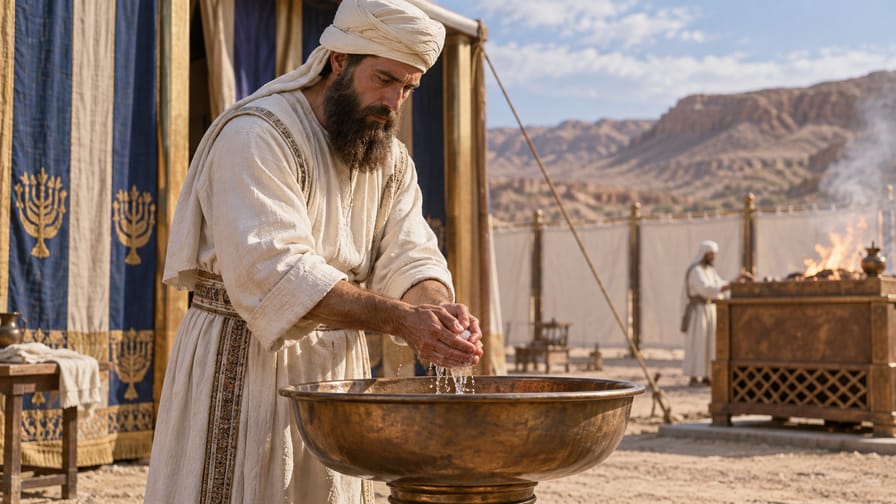
Abishua was a significant, though often overlooked, biblical figure who served as a High Priest in ancient Israel. He was the son of Phinehas, grandson of Eleazar, and great-grandson of Aaron, placing him firmly in the esteemed lineage of Israel's priestly succession. Living during the turbulent period of the Judges, Abishua played a crucial role in maintaining the continuity of the Aaronic priesthood, a vital institution for Israel's worship and covenant relationship with God. His life, though sparsely detailed in Scripture, represents a critical link in the sacred chain of high priests, ensuring the ongoing service and mediation required by the Mosaic Law. The Abishua bible mentions are primarily genealogical, highlighting his position rather than specific actions.
The Story of Abishua in the Bible
The biblical narrative concerning Abishua is primarily found within the genealogies of the priestly line, emphasizing his place in the sacred succession rather than recounting specific events of his life. He is mentioned in 1 Chronicles 6 and Ezra 7, passages dedicated to tracing the lineage of the high priests from Aaron down through the generations. These genealogies are not mere lists of names; they serve to authenticate the priestly office and demonstrate God's faithfulness to His covenant with Levi.
In 1 Chronicles 6, the text meticulously details the descendants of Levi, particularly focusing on the line of Aaron's sons who were consecrated as priests. We read, "and Eleazar was the father of Phinehas, Phinehas of Abishua, Abishua of Bukki, Bukki of Uzzi, Uzzi of Zerahiah" (1 Chronicles 6:4-6 ESV). This verse clearly establishes Abishua as the direct successor of Phinehas and the father of Bukki, confirming his position as the third High Priest after Aaron and Eleazar.
His name also appears in Ezra's own priestly genealogy, which Ezra uses to validate his authority and mission to return to Jerusalem and restore temple worship. Ezra 7:5 lists him as "the son of Abishua, son of Phinehas, son of Eleazar, son of Aaron the chief priest" (Ezra 7:5 ESV). This repetition reinforces Abishua's undisputed place in the continuous line of high priests, a lineage essential for the religious life of Israel.
While the Bible does not record any specific actions, miracles, or significant interactions involving Abishua, his very presence in these key genealogies speaks volumes. It signifies that during his lifetime, the high priestly office continued to function, sacrifices were offered, and the covenant laws were upheld. His era would have been during the period of the Judges, a time often marked by spiritual decline and chaos, yet the priestly line, through individuals like Abishua, persevered.
The bible story of Abishua is therefore one of quiet faithfulness and the steady maintenance of divine order amidst human turbulence. His service, though unrecorded in dramatic events, was indispensable for the spiritual well-being of the Israelite nation. He represents the unbroken chain of those called to mediate between God and His people, a critical role in the unfolding history of salvation. Abishua in scripture serves as a testament to the enduring nature of God's covenant promises.
The Character and Legacy of Abishua
Though the Scriptures offer no direct narrative detailing the character traits or specific actions of Abishua, his position as a High Priest in the lineage of Aaron allows us to infer certain virtues and understand his legacy. As a high priest, Abishua was entrusted with immense spiritual responsibilities, including ministering before God on behalf of the people of Israel, offering sacrifices, and upholding the Mosaic Law.
His very existence in the priestly line, particularly following the zealous Phinehas, suggests a commitment to the sacred duties passed down through his family. Faithfulness to God's covenant and obedience to His commands would have been paramount for anyone holding such a revered office. Abishua's life, therefore, embodies the virtue of steadfastness in fulfilling one's divine calling, even when not highlighted by grand deeds.
The continuity of the priesthood through Abishua speaks to his integrity and the respect he commanded. In a period often characterized by moral decay and a lack of central authority (the time of the Judges), the stable presence of the high priestly office, upheld by men like Abishua, was a beacon of covenant faithfulness. His role was not about personal glory, but about maintaining the essential spiritual infrastructure of the nation.
We can infer that Abishua demonstrated a quiet strength, diligently performing the rituals and intercessions that were central to Israel's worship. His life teaches us the importance of generational faithfulness—how one generation's commitment to God enables the next to continue His work. His legacy is not one of dramatic intervention but of consistent, dutiful service, ensuring that the covenant relationship between God and Israel remained active.
Abishua's life was integral to God's overarching plan for His people. He was a vital link in the chain that preserved the Aaronic priesthood, an institution that would ultimately foreshadow the perfect and eternal High Priesthood of Jesus Christ. His unheralded service underscores that every role, no matter how seemingly minor in the grand narrative, is significant in God's eyes when performed with faithfulness and obedience.
The Theological Significance of Abishua
The theological significance of Abishua, though not derived from specific heroic acts, is profound due to his indispensable role in the Aaronic priestly lineage. His place as the third High Priest after Aaron and Eleazar ensures the continuity of the divinely ordained system of worship and mediation, which carried deep theological implications for Israel and ultimately for all humanity through Christ.
Abishua's existence confirms God's faithfulness to His covenant with Levi, promising an enduring priesthood (Numbers 25:10-13). This unbroken succession, maintained through individuals like Abishua, underscored the stability of God's promises even amidst the fluctuating obedience of the Israelite people. His life served as a tangible link in salvation history, preserving the means by which Israel could approach God and receive atonement for sins.
Crucially, the entire Levitical priesthood, including Abishua's service, served as a powerful typology, foreshadowing the ultimate High Priest, Jesus Christ. The sacrifices offered by Abishua and his predecessors pointed to the perfect, once-for-all sacrifice of Christ. The mediation performed by Abishua prefigured Christ's eternal intercession on behalf of His people. The temporary nature of the Aaronic priesthood highlighted the need for a superior, eternal High Priest, as explained in the book of Hebrews.
Abishua’s role in the biblical narrative emphasizes the theme of mediation. As High Priest, he was the primary mediator between God and Israel, entering the Most Holy Place once a year on the Day of Atonement to make propitiation for the sins of the nation. This function, central to Old Testament theology, finds its ultimate fulfillment in Christ, who is "the mediator of a new covenant" (Hebrews 9:15 ESV).
His contribution to understanding God's character lies in revealing God's orderly nature, His demand for holiness, and His provision for reconciliation. Through the consistent operation of the priesthood, God demonstrated His desire for His people to draw near to Him in a prescribed, holy manner. Abishua, as a faithful high priest, was an instrument in conveying these divine truths to his generation, paving the way for a fuller revelation in Christ.
Lessons from Abishua's Life
While the Bible does not provide a detailed biography of Abishua, his quiet but crucial presence in the priestly lineage offers valuable lessons for modern Christian life. One primary lesson is the importance of faithfulness in fulfilling one's assigned role, no matter how unspectacular it may seem from an external perspective. Abishua faithfully carried on the sacred duties of the High Priesthood, ensuring the continuity of worship and covenant relationship during his time.
His example encourages us to embrace our own callings, whether prominent or behind the scenes, with diligence and integrity. God values faithfulness above all else, and often the most impactful work is done consistently over time, rather than through dramatic, one-off events. Abishua teaches us that true legacy is built on steadfast obedience and commitment to God's purposes across generations.
Furthermore, Abishua's life reminds us of the significance of spiritual heritage and the responsibility to pass on a legacy of faith. He received the priesthood from his father Phinehas and passed it on to his son Bukki. This highlights the intergenerational nature of faith, urging believers today to invest in the spiritual development of the next generation, ensuring that the truth of God continues to be known and honored.
We can also draw encouragement from the fact that God uses individuals even when their stories are not extensively detailed in Scripture. Abishua's life demonstrates that every person who serves God faithfully contributes to His grand plan, regardless of their fame or recognition. It's a call to humility and service, knowing that our efforts, however small, are seen and valued by God.
In a world that often prizes visibility and instant gratification, Abishua's quiet faithfulness stands as a powerful reminder that consistent, unheralded service is deeply significant in God's kingdom. It encourages us to persevere in our walk with God, trusting that our obedience contributes to a larger, divine tapestry.
Conclusion: Remembering Abishua
Abishua, though a figure whose story remains largely untold in the biblical narrative, holds an indispensable place in the sacred history of Israel. As the third High Priest in the line of Aaron, he represented the unwavering continuity of God's covenant and the vital institution of the priesthood during a foundational period. His significance lies not in specific deeds, but in his faithful maintenance of a divine office, linking generations of God's chosen mediators.
Remembering Abishua calls us to appreciate the quiet faithfulness that underpins God's grand plan. His life reminds us that every individual, regardless of their prominence, plays a crucial part in the unfolding story of salvation. He stands as a testament to the enduring power of lineage, the importance of spiritual inheritance, and the steadfastness required to uphold God's truth.
Let Abishua's legacy inspire us to diligently pursue our own callings with integrity and to pass on a heritage of faith to those who follow. We are encouraged to delve deeper into Scripture, uncovering the rich tapestry of characters who, in their unique ways, contributed to God's eternal purposes. Explore more biblical characters and discover the profound lessons embedded within their lives, both celebrated and unsung.