


Sered
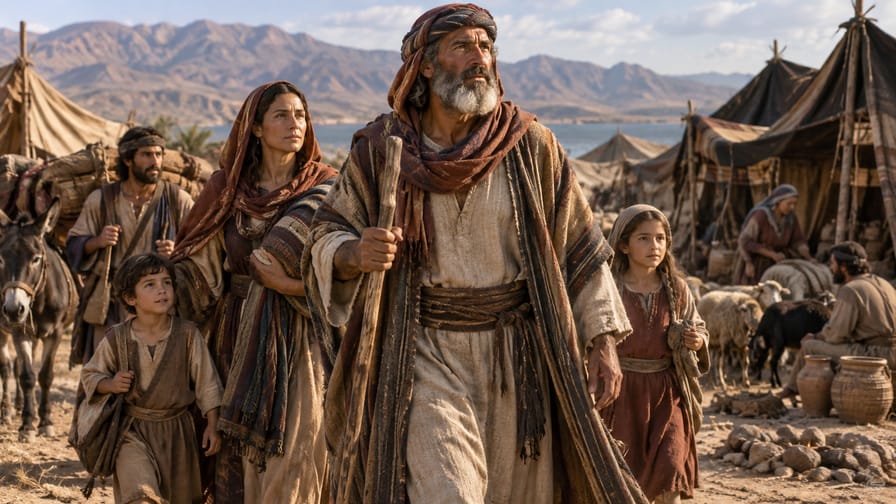
The figure of Sered, although not the protagonist of an extensive narrative in the Scriptures, occupies a significant place in biblical genealogies, serving as a crucial link in the formation of the twelve tribes of Israel. He is one of the grandsons of Jacob (Israel) and son of Zebulun, one of the twelve patriarchs, whose lineages are fundamental for understanding the history of salvation and the divine plan for the chosen people. His mention, even if brief, highlights the importance of family and tribal continuity in the divine economy, especially in the context of the Abrahamic covenant.
The analysis of Sered, from an evangelical Protestant perspective, requires an approach that values the authority of the Scriptures, historical accuracy, and the theological relevance of genealogies. Although there are no details about his character or actions, his inclusion in the sacred records invites reflection on God's providence in preserving His people and in preparing for the coming of the Messiah. Thus, we will examine his onomastic meaning, his historical context, his genealogical role, and his theological implications for the Christian faith.
1. Etymology and meaning of the name
The name Sered (in Hebrew: שֶׂרֶד, Sered) appears in the Hebrew Scriptures in two main genealogical passages: Genesis 46:14 and Numbers 26:14. The transliteration from Hebrew to Portuguese follows the traditional form, maintaining the original phonetics. The exegesis of the name is a point of interest, although there is some variation in academic interpretations regarding its exact root.
The etymological root of the name Sered is often associated with the Hebrew verb שָׂרַד (sarad), which can mean "to escape," "to remain," or "to be a survivor." In this sense, the name could be interpreted as "he who escaped" or "remnant." Other scholars suggest a connection with the idea of "fear" or "terror," although this is a less common interpretation and less aligned with the context of a personal name in a genealogy of blessing.
Considering the most probable meaning of "remnant" or "he who escaped," the name Sered acquires a particular theological symbolism. In the context of Jacob's family migrating to Egypt, fleeing famine, and subsequently, in the census for entry into the Promised Land, the idea of "survival" or "remnant" resonates with God's faithfulness in preserving His people. This points to the doctrine of election and divine grace that maintains the lineage of the promise.
There are no other prominent biblical characters with the exact name of Sered, which makes him unique in his mention. Linguistic variations are minimal, maintaining the original Hebrew form in translations, which underscores his specificity as a proper name within the lineage of Zebulun. The theological significance of the name, therefore, lies in the implication that God preserves the seed of the covenant through generations, even in times of adversity.
This preservation is a recurring theme in biblical theology, from the flood (Noah as a remnant) to the Babylonian exile and the return. Thus, the name Sered, even without a personal narrative, serves as an implicit reminder of divine sovereignty over history and the promise that God will never abandon His covenant. He is a silent testimony to the providence that guides the people of Israel toward His redemptive purposes.
2. Historical context and biblical narrative
Sered emerges in the biblical setting during the patriarchal period, specifically in the transition from the semi-nomadic life of the patriarchs in Canaan to their temporary residence in Egypt. The first mention of his name occurs in Genesis 46:14, when Jacob's family goes down to Egypt to escape the severe famine that plagued the land. This event marked a crucial turning point in Israel's history, as God had revealed to Abraham in Genesis 15:13.
The political and social context of the time was characterized by Egyptian hegemony in the region, while the Hebrews lived as shepherds, an occupation considered an abomination by the Egyptians (Genesis 46:34). Religiously, Jacob's family was monotheistic, worshipping the God of Abraham, Isaac, and Jacob, in contrast to Egyptian polytheism. The descent into Egypt was an act of divine providence, ensuring the survival and numerical growth of Jacob's family, which would become a great nation.
2.1 Family origin and genealogy
The genealogy of Sered is clear and concise. He is listed as one of the three sons of Zebulun, who in turn is Jacob's tenth son with Leah (Genesis 30:20). His brothers are Elon and Jahleel (Genesis 46:14). This lineage places him directly in the second generation of Jacob's grandsons who entered Egypt, being part of the "seventy souls" that formed the initial core of the people of Israel (Genesis 46:27).
The other key biblical passage where Sered is mentioned is Numbers 26:14, during the second census of Israel in the wilderness, before entering Canaan. Here, he is again identified as the son of Zebulun and ancestor of the Seredite clan (מִשְׁפַּחַת הַסַּרְדִּי, mishpachat hassardi). This mention is crucial, as it demonstrates the continuity of his lineage and the formation of a tribal subdivision that persisted for generations, contributing to the organizational structure of Israel.
The geography related to Sered, therefore, encompasses the regions of Canaan (where Zebulun was born), Egypt (where the family resided for centuries), and the Sinai desert (where the Seredite clan was counted). Although there are no specific records of his birth or death, his life fits into the great drama of Israel's formation, from the patriarchal promise to the preparation for the conquest of the Promised Land. He represents a vital link in this generational chain.
Sered's relations with other biblical characters are primarily familial and genealogical. He is connected to Jacob as his grandfather, to Zebulun as his father, and to his brothers Elon and Jahleel. His existence is proof of the multiplication of Jacob's descendants, a fulfillment of the divine promises of fruitfulness and growth (Genesis 35:11). He is part of a family that would become a theocratic nation.
3. Character and role in the biblical narrative
The Bible does not offer narrative details about the character or actions of Sered. He is presented exclusively in genealogical lists, meaning there are no virtues, spiritual qualities, sins, or moral failures directly documented for him. His figure, therefore, must be understood within the broader context of the theology of genealogies and the role of each individual in God's redemptive history.
However, the simple fact that Sered is included in the sacred genealogies implicitly suggests a character of faithfulness to the covenant, or at least his belonging to a lineage that was faithful. Inclusion in such lists was a recognition of legitimacy and of his contribution to the nation's continuity. He was a link in the chain of promise, and his existence was necessary for the fulfillment of God's divine purposes for Israel.
Sered's specific vocation or function, though not explicitly stated, was that of a progenitor. As a son of Zebulun, he was the head of one of the clans that would make up the tribe of Zebulun. His function was, therefore, to continue the lineage, ensuring the multiplication and organization of the people of Israel. This genealogical function is of utmost importance for the history of salvation, as it is through these lineages that the messianic promise would be transmitted.
The role played by Sered is, essentially, that of a tribal ancestor. He was not a prophet, priest, king, or apostle, but his contribution was fundamental to the social and religious structure of Israel. The existence of the Seredite clan (Numbers 26:14) attests to his enduring role in the formation of the tribe of Zebulun, which would later receive its portion in the Promised Land (Joshua 19:10-16).
There are no significant actions or key decisions attributed to Sered in the Scriptures. His life, like that of many others in the genealogies, is a testament to God's sovereignty working through ordinary individuals to fulfill His great purposes. The development of his character is not recorded, but his mere existence and the continuity of his offspring are the central point of his biblical relevance. He is a reminder that God's story unfolds through every generation and every family.
4. Theological significance and typology
The theological significance of Sered lies primarily in his inclusion in the sacred genealogies, which serve as the backbone of redemptive history. His existence, as part of the "house of Jacob" that went down to Egypt, is a testament to God's faithfulness to His covenant with Abraham, Isaac, and Jacob. The promise to multiply descendants (Genesis 12:2 22:17) began to be fulfilled through individuals like Sered, who contributed to Israel's demographic growth.
Although Sered is not a direct typological figure of Christ in the sense of actions or offices, his presence in the lineage of the promise indirectly points to the coming of the Messiah. Biblical genealogies, both in the Old and New Testaments (Matthew 1:1-17 Luke 3:23-38), are fundamental for establishing the Messiah's legitimacy as a descendant of David and, ultimately, of Abraham. Sered, as part of Jacob's lineage, is a link in this chain that would culminate in Christ.
The Abrahamic covenant, with its promises of land, numerous descendants, and blessing for all nations (Genesis 12:1-3), is the theological backdrop for Sered's existence. He is one of the many who ensured the continuity of the "seed" through which these promises would be fulfilled. His life, though obscure, is a reflection of divine providence that watches over the preservation of the chosen lineage, ensuring that the plan of salvation unfolds according to God's design.
There are no direct quotes or references to Sered in the New Testament, which is expected for such a secondary figure. However, the New Testament validates the importance of Old Testament genealogies by presenting its own lists to demonstrate Jesus' messianic sonship. The inclusion of Sered in the Old Testament lists reinforces the authenticity and historical continuity of the lineage that culminated in Christ.
Sered's connection with central theological themes is undeniable. His existence is linked to the doctrine of divine election, as he was born within the family chosen by God to be His people. He also exemplifies God's faithfulness in preserving His remnant (as his name may suggest), ensuring that, despite adversities (such as famine and Egyptian slavery), the seed of the promise would be kept alive. God's sovereignty over human history is clearly demonstrated through figures like Sered.
Thus, the figure of Sered, though not a character with his own narrative, serves as a reminder of the meticulous divine providence that weaves the tapestry of redemptive history through each generation. He is a link in the great chain of faith and lineage that God used to prepare the way for the coming of His Son, Jesus Christ, the true fulfillment of all promises and the pinnacle of salvation history.
5. Biblical-theological legacy and canonical references
The biblical-theological legacy of Sered, although not one of authorship of books or heroic deeds, is deeply rooted in the genealogical structure of the biblical canon. His mentions in Genesis 46:14 and Numbers 26:14 are the only direct canonical references to him, but his presence in these lists is of fundamental importance for understanding the formation of Israel and the continuity of the divine promise.
Sered's contribution to biblical theology lies in his representation of a vital link in the history of salvation. He is part of the lineage through which God established and preserved His people, Israel, to whom the divine promises and oracles were entrusted (Romans 3:2). The existence of his clan, the Seredites, demonstrates the fulfillment of God's promise to multiply Jacob's descendants.
In the Jewish interpretive tradition, genealogies are seen as historical and theological documents that attest to the identity and legitimacy of the tribes of Israel. The inclusion of Sered validates the lineage of Zebulun as an integral part of the chosen people. In the Christian tradition, these genealogies are equally important, as they establish the historical basis for the incarnation of Christ and His Davidic and Abrahamic sonship.
There are no references to Sered in intertestamental literature, which is understandable given his purely genealogical nature. However, the value of genealogies as a whole is consistently affirmed, both in rabbinic Jewish literature and in the writings of the Church Fathers, who recognized the importance of tracing the messianic lineage according to the Old Testament Scriptures.
In Reformed and evangelical theology, the precision and historicity of biblical genealogies are widely valued. Commentators such as John Calvin, in his expositions on Genesis, emphasize God's providence in preserving the "elect seed" through generations, even the less notable ones. Matthew Henry, in his commentary, highlights how God fulfills His promises through the multiplication of Jacob's family, of which Sered was a part.
Sered's importance for understanding the canon lies in his function of sustaining the historical and theological narrative of election and redemption. He is a reminder that God works through all parts of His people, from prominent patriarchs to lesser-known individuals, to fulfill His sovereign plan. Each name in the genealogy is a testament to God's faithfulness and the authenticity of biblical history, which culminates in the revelation of Jesus Christ.