


Hezron
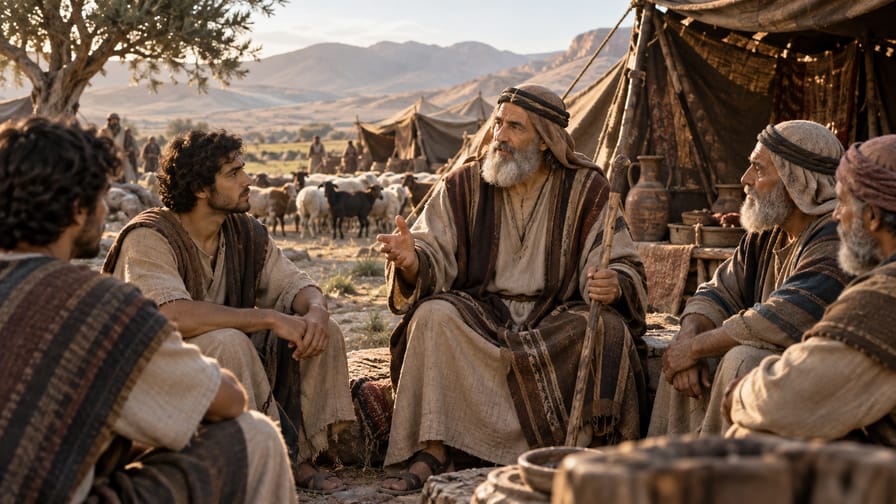
The figure of Hezrom, though not a central character with an extensive narrative in the Scriptures, possesses undeniable theological and historical relevance, especially within the evangelical Protestant perspective. His importance lies primarily in his genealogical role as a crucial link in the messianic lineage that culminates in Jesus Christ. This analysis seeks to explore his etymology, context, theological significance, and legacy, as revealed in the Bible.
The scarcity of narrative details about Hezrom does not diminish his significance. On the contrary, his repeated presence in biblical genealogies underscores God's faithfulness in preserving His promise throughout the generations. He is a silent testimony to divine sovereignty in guiding the history of salvation, a vital link in the chain connecting Abraham to David and, ultimately, to the Messiah.
1. Etymology and Meaning of the Name
The name Hezrom (in Hebrew: חֶצְרוֹן, Ḥeṣrôn) is found multiple times in the Old Testament. The primary etymological root for Ḥeṣrôn is ḥāṣēr (חָצֵר), which means "courtyard," "atrium," "enclosure," "village," or "settlement." This root is common in toponymy and the description of delimited spaces.
Literally, the name Hezrom can be interpreted as "enclosure," "fenced-in area," "village," or "settlement." This meaning evokes the idea of a delimited, secure, and inhabited place. Symbolically, it can suggest stability, belonging, and the founding of a community or dwelling.
There are no significant variations of the name Hezrom in biblical languages, being consistently transliterated from Hebrew. The name appears in crucial genealogical contexts, which reinforces its nature as a marker of lineage and territory.
There are two prominent biblical figures named Hezrom. The first is the son of Reuben, Jacob's firstborn, listed in Genesis 46:9, Exodus 6:14, and Numbers 26:6. From him descends the family of the Hezronites within the tribe of Reuben.
The second and more theologically significant Hezrom is the son of Perez and grandson of Judah, as recorded in Genesis 46:12, Numbers 26:21, Ruth 4:18-19, 1 Chronicles 2:5, and in the genealogies of Jesus in Matthew 1:3 and Luke 3:33. This Hezrom is the primary focus of this analysis due to his direct connection with the Davidic and messianic lineage.
The theological significance of the name Hezrom, especially in the context of Judah's grandson, lies in the implication of establishment and continuity. He represents an "enclosure" or "foundation" within the divine promise, a secure and necessary link in the genealogical chain that God designed to bring the Savior. His name, which refers to a settlement, can symbolize the steadfastness of God's purpose in establishing His covenant through this lineage.
2. Historical Context and Biblical Narrative
The Hezrom who is Judah's grandson and, therefore, an ancestor of David and Jesus Christ, lived during the patriarchal period and the beginning of the Israelites' stay in Egypt. His birth occurred shortly before or during the migration of Jacob's family to Egypt, as narrated in Genesis 46.
The historical-social context of the time was that of a semi-nomadic family in transition to a more established existence, first in Canaan and then in Egypt. The narrative of Genesis describes the challenges and blessings of Jacob's family, including the famine in the land of Canaan that led them to Egypt, where Joseph was already a figure of power (Genesis 45:16-20).
The genealogy of Hezrom is crucial. He is the son of Perez (פֶּרֶץ, Pereṣ) and grandson of Judah (יְהוּדָה, Yehudah), one of Jacob's sons. His mother is not named in the Scriptures. Perez, his father, was born to Tamar, Judah's daughter-in-law, in a notable episode that highlights divine providence in preserving the lineage (Genesis 38:27-30). Hezrom had a twin brother named Hamul (חָמוּל, Ḥamûl), also listed in the genealogies (Genesis 46:12).
The key biblical passages where Hezrom appears are primarily the genealogical lists. In Genesis 46:12, he is listed among the seventy members of Jacob's family who went to Egypt. In Numbers 26:21, he is again mentioned as the father of two families of Judah: the Hezronites and the Hamulites, descendants of his sons Ram and Hamul, respectively.
The genealogy in Ruth 4:18-22 is particularly significant, as it traces the lineage from Perez to David, including Hezrom as the father of Ram. This list is then replicated, with minor variations, in the genealogies of Jesus in Matthew 1:3 (where it is spelled Esrom in some Greek versions) and Luke 3:33 (also Esrom or Hezrom).
The geography associated with Hezrom is primarily the land of Canaan, where his father Perez was born, and subsequently the region of Goshen in Egypt, where Jacob's family settled. He would have lived most of his life during the period of the Israelites' growth in Egypt, before the Exodus. His life, though not detailed, is part of the formative period of the nation of Israel, under divine protection.
His relationships with other important biblical figures are primarily familial: his grandfather Judah, his father Perez, his brother Hamul, and his son Ram (רָם, Ram). Through Ram, the lineage continues with Amminadab, Nahshon, Salmon, Boaz, Obed, Jesse, and, finally, David (Ruth 4:19-22). This chain of ancestors is vital for understanding redemptive history.
3. Character and Role in the Biblical Narrative
The Bible offers no narrative details about Hezrom's character or actions. He is not a protagonist of stories, nor are his virtues or moral failings recorded. His presence in the Scriptures is strictly genealogical, serving as a crucial link in the chain of descent.
The absence of a direct narrative about Hezrom does not imply insignificance, but rather that his primary role in biblical revelation is that of a fundamental piece in God's plan for the history of salvation. His existence and offspring are evidence of divine faithfulness in preserving the promised lineage, regardless of individual dramas or lack of details.
We can infer that, as part of Jacob's family who went down to Egypt, Hezrom was an ordinary man of his time, living under God's providence. The mere mention of his name and offspring attests to the continuity of life and faith, implicit in obedience to the divine command to "be fruitful and multiply" (Genesis 1:28).
His specific calling or function, from a theological point of view, was to be a father in the lineage of the Messiah. He was not a prophet, priest, or king, but his fatherhood had far-reaching implications for redemptive history. His life was a testament to God's sovereignty working through ordinary individuals to fulfill His extraordinary purposes.
The "significant actions" of Hezrom, according to the biblical narrative, are limited to his procreation and the perpetuation of his family. He fathered Ram (father of Amminadab), who became a direct ancestor of David and Jesus Christ (Ruth 4:19 Matthew 1:3-4 Luke 3:33). This is his most vital contribution to biblical history.
There is no record of character development for Hezrom. He appears as a name on a list, proof of God's meticulousness in tracing the Messiah's genealogy. His importance lies not in what he did individually, but in what God did through his existence and his offspring.
4. Theological Significance and Typology
The theological significance of Hezrom is profound, though often underestimated due to his lack of narrative visibility. He is an irreplaceable link in redemptive history, connecting the Abrahamic promise (Genesis 12:3) and Judah's prophecy (Genesis 49:10) to the coming of the Messiah.
His inclusion in the genealogies of Jesus in Matthew 1:3 (as Esrom) and Luke 3:33 (as Esrom or Hezrom) is the most compelling proof of his relevance. He is a direct ancestor of the Lord Jesus Christ, which places him at the center of Christocentric typology. Although he is not a prophetic type in the sense of prefiguring Christ by his actions, he is a genealogical type, an essential "link" that points to the fulfillment of the promise of a descendant of Judah who would be the Savior.
Hezrom represents God's unwavering faithfulness to His covenants and promises. From the promise to Abraham that his offspring would be a blessing to all nations (Genesis 22:18) to the specific promise of a king from David's lineage (2 Samuel 7:12-16), the existence of Hezrom and his lineage demonstrates God's sovereign hand guiding history.
His presence in the Scriptures reinforces central theological themes such as divine sovereignty, election, grace, and the preservation of the messianic lineage. Even when the details of an individual's life are scarce, God works through them to fulfill His plan. Hezrom's life is a silent testimony that God uses ordinary people for His extraordinary purposes.
The inclusion of Hezrom in the New Testament genealogies, in particular, demonstrates the meticulous fulfillment of Old Testament prophecies. The coming of the Messiah was not a random event, but the culmination of a series of events and a lineage carefully preserved by God. He is proof of the historicity and reliability of the Scriptures.
Reformed and evangelical theology emphasizes God's providence in every detail of human history, especially in salvation history. Hezrom is an excellent example of this providence, a simple name on a list that, nonetheless, is fundamental to understanding the incarnation of Christ and the economy of redemption. He reminds us that every life, even the most obscure, has a place in the divine plan.
5. Biblical-Theological Legacy and Canonical References
The legacy of Hezrom is essentially genealogical and theological, reverberating through several canonical books. His mentions focus on lists of descent, which underscores his importance for the continuity of Israel's history and, more significantly, for the lineage of the Messiah.
He is first mentioned in Genesis 46:12 as one of those who went down to Egypt with Jacob. This passage establishes his existence and his immediate connection to Judah. Later, in Numbers 26:21, he is listed as the father of the families of the Hezronites and Hamulites, demonstrating the multiplication of his offspring within the tribe of Judah.
The most influential canonical reference to Hezrom, for Christianity, is found in Ruth 4:18-22. This genealogy, which traces the line from Perez to David, establishes Hezrom as the father of Ram, who in turn is the ancestor of figures such as Nahshon, Boaz, Obed, Jesse, and, finally, King David. This passage is crucial for the validation of the Davidic lineage.
In the New Testament, Hezrom (under the Greek transliteration Esrom) is explicitly named in the genealogies of Jesus Christ. Matthew 1:3 states: "Judah fathered Perez and Zerah by Tamar Perez fathered Esrom Esrom fathered Aaron" (referring to Ram, not Aaron, the priest). Similarly, Luke 3:33 includes him in Jesus' lineage, tracing it back to Adam: "the son of Esrom, the son of Perez, the son of Judah, the son of Jacob".
The inclusion of Hezrom in these canonical genealogies of the Old and New Testaments is of immense importance for biblical theology. It demonstrates the consistency and intentionality of God's redemptive plan throughout history. Divine faithfulness in preserving the promised lineage, even through individuals with little visibility, is a central theme.
In the Jewish interpretive tradition, Hezrom is recognized as a vital ancestor of the house of David, and, therefore, of the awaited Messiah. For the Christian tradition, he is proof of the incarnation of Christ as the fulfillment of Old Testament promises, a descendant of David and, by extension, of Judah and Abraham.
Reformed and evangelical theology attributes great value to the historical and genealogical accuracy of the Bible, seeing Hezrom as an element that reinforces the reliability of the Scriptures. The existence of figures like Hezrom, who are mere names on lists but are crucial to the larger narrative, underscores the doctrine of God's sovereign providence, which orchestrates every detail of history for the glory of Christ.
In summary, Hezrom is more than a name he is a symbol of God's faithfulness. His presence in the canon, though discreet, is a powerful testimony that God's plan for salvation through Jesus Christ is meticulously crafted and executed from the beginning, ensuring that all divine promises are fulfilled in their appointed time.