


Bilgai
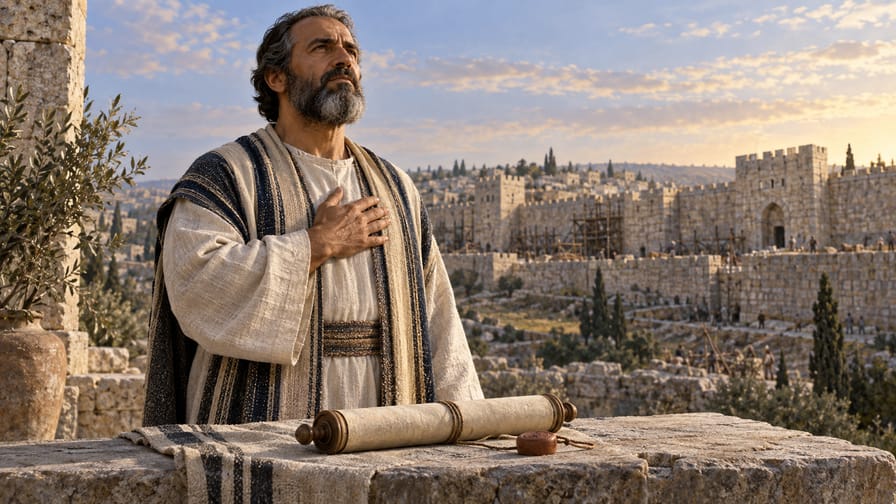
The figure of Bilgai, though briefly mentioned in the Scriptures, offers a valuable entry point for understanding the religious and social life of post-exilic Israel. His inclusion in the list of those who sealed the covenant in Nehemiah 10:8, a crucial moment of spiritual and national renewal, confers upon him an importance that transcends a mere listing of names.
From an evangelical Protestant perspective, the analysis of Bilgai is not limited to his historical role but extends to his theological significance, contextualizing his participation within God's great redemptive plan. This study aims to explore the etymology of his name, the historical context in which he lived, the inferred character of his actions, his theological relevance, and the legacy that, even discreetly, contributes to the understanding of the biblical canon.
His presence in the list of priests who committed themselves to the Law of God underscores the seriousness of that moment for the restored community. An in-depth analysis of Bilgai, therefore, serves as a microcosm to examine themes such as covenant faithfulness, priestly responsibility, and the dynamic of spiritual renewal in the Old Testament, which ultimately point to the finished work of Christ.
1. Etymology and Meaning of the Name
The name Bilgai (בִּלְגַּי) is of Hebrew origin and appears in the Bible in the book of Nehemiah. The most common transliteration from Hebrew to Portuguese is Bilgai. He is recorded in Nehemiah 10:8 as one of the priests who sealed the covenant of alliance renewal with God during the period of Ezra and Nehemiah.
The etymological root of Bilgai is debated among scholars. Some associate it with the root balag (בָּלַג), which can mean "to revive oneself," "to be joyful," or "to be bright." In this sense, the name could be interpreted as "my joy" or "my rejoicing," indicating a positive disposition or character trait.
Another interpretative line suggests a connection with the idea of "fading away" or "consuming," which would result in a meaning such as "my languishing" or "my weakness." However, this interpretation is less common and seems less likely, given the context of commitment and renewal in which the name appears.
The most widely accepted interpretation, and one that aligns better with the context of a priest sealing a covenant, is that which derives from bilgah (בִּלְגָּה), meaning "joy" or "contentment." Thus, Bilgai could be understood as "the joyful one" or "he who brings joy," or even "my joy."
It is important to note that there is a priestly family named Bilga (בִּלְגָּה) mentioned in Nehemiah 12:5 and 12:18, descended from one of the priests who returned from exile with Zerubbabel. It is highly probable that Bilgai, the priest who sealed the covenant, is a member or a representative of this same priestly family of Bilga.
The theological significance of the name, if interpreted as "my joy" or "the joyful one," resonates with the theme of joy in the Law of God and in obedience to His will. In the context of covenant renewal, joy in serving God and committing to His commandments was a vital aspect of the spiritual restoration of the people of Israel, as Nehemiah 8:10 declares: "the joy of the Lord is your strength".
Although there are no other biblical characters with the exact name of Bilgai, the connection with the family of Bilga in Nehemiah 12 suggests continuity and a priestly lineage. This connection reinforces the idea that Bilgai's participation in the sealing of the covenant was not an isolated act, but part of a generational commitment to the service of God.
2. Historical Context and Biblical Narrative
The figure of Bilgai emerges on the biblical scene during the post-exilic period, specifically in the context of the restoration of Jerusalem and the spiritual renewal of the Jewish community, as narrated in the books of Ezra and Nehemiah. This period spans approximately the 5th century BC, with the events in question occurring around 444 BC, during Nehemiah's first governorship of Judah.
After the return from the Babylonian captivity, which lasted about seventy years, the Jews faced the challenge of rebuilding not only the walls and the Temple but also their religious and social identity. The political context was that of the Persian Empire, under King Artaxerxes I, who permitted and supported the exiles' return to Jerusalem.
Socially, the community was in the process of reorganization, dealing with issues of racial and religious purity, the influence of neighboring peoples, and the need to re-establish the Law of Moses as the foundation of national life. Religiously, there was a strong movement led by Ezra, the scribe, and Nehemiah, the governor, to revive faith and obedience to the Torah.
Bilgai is mentioned in Nehemiah 10:8 (Almeida Revista e Atualizada - ARA version) as one of the priests who sealed the covenant of commitment. The text states: "Bilgai, Shemaiah, and Joiarib." This list of names follows Ezra's public reading of the Law, which led the people to deep repentance and a desire to renew their covenant with God, as described in Nehemiah 8 and 9.
The specific genealogy of Bilgai is not detailed, but his designation as "priest" indicates his belonging to the tribe of Levi and the lineage of Aaron, which conferred upon him the right and duty to serve in the Temple. As mentioned earlier, it is probable that he belonged to the priestly family of Bilga, listed in Nehemiah 12:5, 18, among the heads of the priests who returned with Zerubbabel and Jeshua.
The main events of Bilgai's life, according to the biblical narrative, are concentrated on his participation in this solemn act of sealing the covenant. This covenant included the commitment to walk in the Law of God, not to intermarry with foreign peoples, to observe the Sabbath and the festivals, and to support the Temple service (Nehemiah 10:29-39).
The geography related to Bilgai is Jerusalem and the region of Judah, the center of the religious and political life of the restored Jews. His action took place in the heart of the community, emphasizing the importance of public and collective commitment to the Law of God.
His relationships with other important biblical characters include Nehemiah, the governor who led the rebuilding of the walls and the civic reform Ezra, the scribe and priest who led the spiritual reform and the other priests, Levites, and chiefs of the people who, along with him, signed the solemn document. Bilgai's participation reflects the unity and consensus among the leadership and the people in the pursuit of a life of obedience to God.
3. Character and Role in the Biblical Narrative
Although the Bible does not offer a detailed description of Bilgai's character, his inclusion in the list of those who sealed the covenant in Nehemiah 10:8 allows us to infer certain qualities and his significant role in the post-exilic narrative. The mere presence of his name in this solemn document already points to an individual of recognized position and responsibility in the community.
As one of the priests who signed the covenant, Bilgai demonstrated a deep commitment to the Law of God and to the spiritual renewal of Israel. His action reflects virtues such as faithfulness to the divine covenant, obedience to the commandments, and the courage to make a public commitment at a crucial moment in his people's history. He was not merely a spectator but an active participant in the reform.
Bilgai's calling was priestly, meaning he belonged to the lineage of Aaron and had the responsibility to mediate between God and the people, offer sacrifices, and teach the Law. His participation in the sealing of the covenant underscores the importance of priestly leadership in promoting piety and religious order. Priests were guardians of the Torah and examples of holiness.
His primary role in the biblical narrative is that of a representative of the priestly class who, alongside other leaders and the people, reaffirmed their dedication to the statutes and commandments of the Lord. This act was not an empty formality but a solemn and binding declaration, an oath that invoked curses upon those who broke it (Nehemiah 10:29).
Bilgai's significant actions are encapsulated in his act of sealing the covenant. This gesture symbolized the personal and corporate acceptance of the Law's obligations, including separation from foreign peoples, observance of the Sabbath, and provision for the Temple service. It was a key decision that would shape the religious and social future of the restored Jewish community.
There is no record of sins, weaknesses, or moral failures documented for Bilgai in the Bible, which is common for characters mentioned only briefly. The lack of such details does not imply perfection but means that the biblical narrative presents him in the context of an act of faith and commitment. His name is associated with a moment of great righteousness and pursuit of God.
Character development, in the sense of a life trajectory with multiple events, is not provided for Bilgai. However, his presence in the list suggests that he was a respected and trustworthy leader, whose integrity was sufficient for his name to be included in such a vital document for the nation. He represents the conscience and dedication of the priestly leadership of that time.
In summary, Bilgai, as a priest and signatory of the covenant, embodies the spirit of renewal and commitment that marked the post-exilic period. He represents the faithfulness and responsibility that God expected from His leaders and from all His people, especially in the reaffirmation of His holy covenant. His action was a testament to the seriousness with which the Law of God was treated.
4. Theological Significance and Typology
Bilgai's participation in the renewal of the covenant in Nehemiah 10 has a profound theological significance, inserting itself into the redemptive history of Israel and the progressive revelation of God's plan. Although he is not a central figure, his act as a priest highlights crucial principles of God's relationship with His people.
His action highlights the continuing validity of the Mosaic covenant for post-exilic Israel and the need for a human response of obedience and commitment. The renewal of the covenant, in which Bilgai takes part, emphasizes that salvation and God's favor are intrinsically linked to faith expressed in obedience to His Law, a recurring theme in the Old Testament (Deuteronomy 28:1-14).
From a Christocentric typological perspective, Bilgai, as a priest of the Old Covenant, indirectly prefigures the work of Christ. The Levitical priesthood, to which Bilgai belonged, was a system of mediation between God and man, characterized by sacrifices and rituals that pointed to a greater reality. The need for constant covenant renewal and periodic repentance (Nehemiah 9:1-3) demonstrates the intrinsic limitation of the Old Covenant to provide complete and definitive redemption.
Christ, the perfect High Priest, established a New and Eternal Covenant through His own blood (Hebrews 8:6-13 9:11-12). Unlike the Levitical priesthood which required successors and repetitions of sacrifices, Christ offered a single and effective sacrifice, perfecting forever those who are sanctified (Hebrews 10:11-14). Bilgai's obedience to the old Law, though commendable, could not, by itself, bring full justification or forgiveness of sins.
The central theological themes associated with Bilgai include covenant faithfulness, the importance of obedience to God's Law, the responsibility of the priesthood, and the need for repentance and spiritual renewal. The renewal of the covenant in Nehemiah was a moment of grace, where God graciously allowed His people to restore their relationship with Him after the exile, despite their past failures (Nehemiah 9:16-17).
The experience of Israel, culminating in the covenant sealed by Bilgai and others, serves as a powerful reminder of God's persistence in calling His people to holiness and obedience. This persistence finds its supreme fulfillment in the New Covenant, where God writes His Law not on tablets of stone but on the hearts of His people (Jeremiah 31:33), enabling them to live in obedience through the Holy Spirit (Ezekiel 36:26-27).
Although Bilgai is not cited in the New Testament, his participation in the covenant reinforces the understanding of the temporary and pedagogical nature of the Mosaic Law (Galatians 3:24). The Law revealed sin and the need for a Savior, preparing the way for the coming of Christ, who is the fulfillment of the Law and the Prophets (Matthew 5:17).
The doctrine and teachings associated with the character, therefore, revolve around God's sovereignty in maintaining His covenant, even in the face of human infidelity, and the expected response of His people: faith, repentance, and obedience. Bilgai's life, in his humble act of signing, points to the majesty of God and the depth of His plan of salvation, which culminates in the grace and truth brought by Jesus Christ (John 1:17).
5. Biblical-Theological Legacy and Canonical References
Bilgai's legacy, though not that of a character with an extensive narrative, is significant within the context of biblical theology, especially for understanding the post-exilic period and the continuity of God's covenant with Israel. He is mentioned only once in the biblical canon, in Nehemiah 10:8, as one of the priests who sealed the covenant.
The mention of Bilgai in Nehemiah 10:8 is crucial for the integrity of the historical and theological record of that period. It attests to the seriousness of the commitment undertaken by the priestly leadership and the people. His inclusion in the list validates the authenticity and comprehensiveness of the covenant, showing that it was not an isolated act but a collective and representative decision.
There are no literary contributions attributed to Bilgai, such as authorship of books, psalms, or epistles. His importance lies in his action, which is an integral part of a larger event: the renewal of the Mosaic covenant. This event is fundamental to understanding the identity and religious practice of Second Temple Judaism, which would serve as a backdrop for the coming of Christ.
Bilgai's influence on biblical theology lies in the fact that he represents the necessary faithfulness of priestly leadership in maintaining the Law and cultic order. In a period of national and spiritual reconstruction, the participation of priests like Bilgai was vital for the re-establishment of worship to God according to divine precepts. He symbolizes the collective responsibility of the community of faith.
In Jewish and Christian interpretive tradition, Bilgai is not a character frequently highlighted individually. However, he is part of the group that exemplifies Israel's response to God's call for repentance and obedience. Commentators often include him in discussions about the meaning of the covenant in Nehemiah, emphasizing the importance of personal and corporate commitment to the Law.
Although there are no references in intertestamental literature specifically about Bilgai, the context of the covenant renewal in Nehemiah 10 is a precursor to the religious and theological developments that occurred during that period. The emphasis on the Law, purity, and Jewish identity, reinforced by acts like Bilgai's, continued to be central in the intertestamental era.
In Reformed and evangelical theology, the treatment of Bilgai and the other signatories of the covenant generally focuses on themes such as God's sovereignty in preserving His people, the centrality of the Word of God (the Law), and the need for a response of faith and obedience. The renewal of the covenant is seen as an example of God's grace in calling His people back to Himself, and of the human response of repentance and commitment.
The importance of Bilgai for understanding the canon lies in his contribution to the narrative of God's faithfulness and human responsibility. He is a reminder that, even in seemingly minor figures, there is a testimony to God's continuous work in history. His presence validates the seriousness of that covenant moment and the hope of a people seeking to restore their relationship with the Lord, a longing that would only be fully satisfied in Christ Jesus.