


Shechem
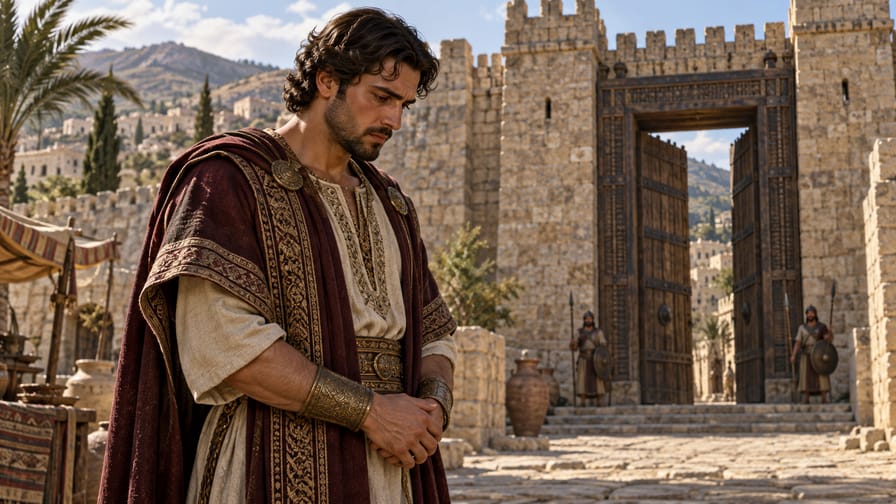
The figure of Shechem, whose name in Hebrew is Shekhem (שְׁכֶם), emerges in the patriarchal narratives of the book of Genesis as a character of theological and historical relevance, though briefly appearing, yet impactful. His story, intrinsically linked to the city that shares his name, the city of Shechem, serves as a microcosm of the tensions, dangers, and moral challenges faced by Jacob's family in their journey to become God's chosen nation. The analysis of Shechem from a conservative evangelical Protestant perspective seeks to extract lessons about sin, divine justice, the purity of the covenant, and the sovereignty of God.
This in-depth study proposes to explore the etymology of the name, the historical context and narrated events, the character and role of Shechem, his theological significance, and the legacy his story leaves for understanding the biblical canon and the Christian faith. Based on the inerrant authority of the Scriptures, we will seek a careful exegesis that reveals the eternal truths contained in this portion of God's Word, grounding each point in explicit biblical references and a robust theological understanding.
1. Etymology and meaning of the name
The name Shechem, transliterated from Hebrew as Shekhem (שְׁכֶם), has etymological roots that offer insights into its literal and, potentially, symbolic meaning. The main root appears to be connected to the Hebrew word for "shoulder" or "back" (שֶׁכֶם, shekhem), which can also refer to an "elevation" or "summit," especially in a geographical context.
This linguistic derivation may suggest various connotations. In a topographical sense, the city of Shechem was situated in a valley between Mount Gerizim and Mount Ebal, a "shoulder" or "ridge" of the land, which is consistent with the local geography. For the character, the name could indicate a position of prominence, strength, or leadership, given that he was the son of the prince of the land, Hamor, and thus a potential prince himself.
There are no other biblical characters named Shechem who play such a central role in the narrative as the son of Hamor. Although the name is primarily associated with the city of Shechem, the eponymous character is singular in his appearance. The direct association of the prince's name with the city's name reinforces the idea of his intrinsic connection to the place and his authority there.
From a theological point of view, the meaning of the name can be interpreted metaphorically. The "shoulder" may symbolize the responsibility or burden he carried as a leader, or perhaps the weight of his own actions. The prominence implied in the name contrasts dramatically with the tragic end of Shechem and all his people, underscoring the fragility of human power in the face of divine and human justice (or vengeance).
For some commentators, the name Shekhem may also evoke the idea of "strength" or "power," which aligns with Shechem's initial conduct, acting with force and authority in taking Dinah. This interpretation highlights the dimension of strength corrupted by sin, a recurring theme in biblical theology that points to the corruption of human nature.
2. Historical context and biblical narrative
The story of Shechem is set in the patriarchal period, approximately between the 19th and 18th centuries BC, an era marked by clan migration, the establishment of agreements, and interaction between nomadic peoples and Canaanite city-states. In this scenario, Jacob and his family lived as foreigners in the land of Canaan, seeking pastures and security, but also maintaining a cultural and religious distinction from their neighbors.
The political, social, and religious context of the time was complex. Canaanite cities were governed by kings or princes, like Hamor, the father of Shechem, who held significant local power. Canaanite society was polytheistic, with cultural and moral practices that often diverged drastically from the divine standards revealed to Abraham, Isaac, and Jacob. Hospitality was valued, but interethnic relations were frequently tense.
The genealogy of Shechem is simple: he is identified as the son of Hamor the Hivite, prince of the land of Shechem (Genesis 34:2). The Hivites were one of the Canaanite peoples who inhabited the region, as listed in passages such as Genesis 10:17. This lineage positioned him as an heir and a figure of authority in the city, giving him influence and power over his people.
The main events of Shechem's life are detailed in Genesis 34. The narrative begins with Dinah, daughter of Jacob and Leah, who goes out to visit the women of the land. Shechem, the prince, sees her, takes her, lies with her, and dishonors her (Genesis 34:2). This act of sexual violence is the catalyst for all subsequent tragedy, revealing the brutality of Canaanite society and the vulnerability of Jacob's family.
After the act, Scripture states that "his soul was drawn to Dinah, Jacob's daughter and he loved the young woman and spoke to her heart" (Genesis 34:3). Shechem then asks his father, Hamor, to arrange a marriage with Dinah. Hamor, in turn, approaches Jacob and his sons with a proposal for a marital and commercial alliance, suggesting that the peoples intermarry and that Jacob's sons take Canaanite daughters, and vice versa (Genesis 34:8-10).
However, Jacob's sons, especially Simeon and Levi, were furious about the dishonor of their sister. They devised a cunning and deceptive plan: they agreed to the marriage proposal, but imposed the condition that all the men of Shechem be circumcised, claiming that they could not give their sister to uncircumcised men, for that would be a disgrace to them (Genesis 34:13-17).
Shechem and Hamor accepted the condition and, motivated by the prospect of enrichment and power, convinced all the men of their city to be circumcised (Genesis 34:18-23). Three days later, while the men of Shechem were still sore and weak, Simeon and Levi, taking their swords, attacked the city, killed all the men, including Hamor and Shechem, and rescued Dinah (Genesis 34:25-26).
The geography of the narrative is crucial. The city of Shechem, located in the central region of Canaan, between Mount Gerizim and Mount Ebal, was a place of great significance. It was there that Abraham built his first altar in Canaan (Genesis 12:6-7) and where Joshua would later renew the covenant with Israel (Joshua 24). The presence of Jacob and his family in this strategic location put them in direct contact with an established Canaanite culture.
Shechem's relationships with other characters are central to the plot: with Dinah, as the victim of his violence with his father Hamor, whom he convinces to negotiate and accept the condition of circumcision and with Jacob and his sons, who become his executioners. The interaction with Simeon and Levi, in particular, reveals the cunning and brutality that would mark the early history of Israel, leading to Jacob's condemnation of his sons on his deathbed (Genesis 49:5-7).
3. Character and role in the biblical narrative
The character of Shechem is multifaceted and complex, as revealed in the narrative of Genesis 34. Initially, he demonstrates impulsiveness and a lack of respect for human dignity and moral law. His action of "taking" Dinah and "lying with her" is described as a dishonor, an act of sexual violence that ignores the victim's will and the customs of Jacob's family (Genesis 34:2).
However, after the act, Scripture records an apparent change in his behavior: "his soul was drawn to Dinah... and he loved her, and spoke to her heart" (Genesis 34:3). This description suggests that, although his initial actions were reprehensible, Shechem developed a genuine affection for Dinah and wished to marry her to repair the situation, at least on his own terms and those of his culture.
This duality in his character—initial brutality followed by a desire to legitimize the relationship—is crucial. Although he seems sincere in his desire to have Dinah as his wife, his initial approach is deeply flawed and sinful. He shows determination, persuading his father and his people to accept the painful condition of circumcision, demonstrating his influence and his apparent commitment to Dinah (Genesis 34:18-24).
Shechem's virtues or spiritual qualities are not evidenced in the narrative on the contrary, his actions are an example of moral failure. His initial sin of sexual violence is compounded by his subsequent permission for his people to be deceived and led to death. He is an example of human depravity and how the sin of one individual can have devastating consequences for many.
His specific calling or function is that of a prince, son of the city's ruler. This grants him authority and a position of leadership, which he uses to convince his people to submit to circumcision. His role in the narrative is, therefore, that of a catalyst for a crisis that exposes the tension between Jacob's family and the Canaanites, and that forces the issue of the purity of God's covenant people.
Shechem's significant actions include the act of dishonoring Dinah, his subsequent attempt to marry her, and his leadership in persuading his people to accept circumcision. His key decisions, though seemingly motivated by a newfound love, lead to his own destruction and that of his city. He does not experience positive character development, as his life is abruptly ended amidst the vengeance of Jacob's sons.
Shechem's role in the biblical narrative is fundamentally that of an antagonist who, through his sinful actions, unleashes a series of events with profound theological implications for the identity and holiness of God's people. His story serves as a cautionary tale about the consequences of sexual sin and cultural assimilation with pagan peoples, as well as the dangers of uncontrolled vengeance.
4. Theological significance and typology
The story of Shechem plays a significant role in redemptive history and the progressive revelation of God, though not directly through Shechem as a positive figure. On the contrary, his narrative illustrates the realities of human sin, the need for holiness for the covenant people, and the complexity of interactions between the lineage of promise and the pagan world around them.
The dishonoring of Dinah by Shechem and the subsequent vengeance of Jacob's sons highlight the seriousness of sexual sin and the importance of purity within the covenant community. The later Mosaic Law would explicitly prohibit such acts (Leviticus 18:9, 20:17), and the story in Genesis serves as a foreshadowing of the tensions Israel would face in the land of Canaan, where the temptation to intermingle with the local peoples would be constant (Deuteronomy 7:3-4).
There is no direct Christocentric prefiguration or typology in Shechem. He does not point to Christ in a positive way. However, the narrative as a whole can be seen as a contrast. The sin of Shechem, the violence of Simeon and Levi, and Jacob's distress underscore the need for a perfect Redeemer who not only forgives sin but also establishes a kingdom of justice and peace, something fallen human nature is incapable of producing.
The story of Shechem and Shechem also connects with central theological themes, such as the holiness of God's people. The concern of Jacob's sons regarding the "dishonor" of their sister and the impossibility of giving their sister to an "uncircumcised" man (Genesis 34:14) reflects an incipient understanding of the separation and purity that God desired for His lineage. Although their actions were sinful, the underlying motive, albeit distorted by anger, was the preservation of the covenant identity.
The narrative also addresses the issue of the covenant. Circumcision, which God had established as a sign of the covenant with Abraham (Genesis 17:10-14), is here profaned and used as an instrument of deceit and vengeance. This demonstrates the perversion of a sacred sign when manipulated by sinful hearts, a theme that resonates with the warning against mere external observance of the law without a transformed heart, as taught by prophets and by Jesus Christ (Matthew 23:27-28).
Although there are no direct citations or references to Shechem in the New Testament, the theological principles extracted from his story are broadly applicable. The emphasis on sexual purity, the holiness of God's people, the seriousness of sin, and the need for justice are recurring themes in New Testament ethics (1 Thessalonians 4:3-5 Ephesians 5:3-5). The anger and vengeance of Simeon and Levi serve as a contrast to the command to love enemies and leave vengeance to God (Romans 12:19).
The story of Shechem and Dinah, therefore, serves as a powerful reminder of human depravity and the need for divine grace. It illustrates the chaos and violence that arise when God's moral standards are violated and when justice is sought through sinful means. The contrast between God's promise to Jacob and the sinful reality of his family points to indispensable divine intervention and the coming of a Messiah who would bring true redemption and holiness.
5. Biblical-theological legacy and canonical references
The legacy of Shechem, as an individual character, is predominantly negative and limited to his appearance in Genesis 34. However, the story in which he is embedded has a lasting impact on biblical theology and the understanding of the canon. Although the character Shechem is not mentioned in other biblical books, the city of Shechem, intimately linked to his story, continues to be a place of great strategic and religious importance throughout the history of Israel.
The city of Shechem is the scene of crucial events: Abraham receives the promise of the land there (Genesis 12:6-7) Jacob buys a piece of land and builds an altar (Genesis 33:18-20) Joseph is buried there (Joshua 24:32) Joshua gathers Israel for a renewal of the covenant (Joshua 24) and it is the place where the kingdom of Israel divides after Solomon's death (1 Kings 12). The tragedy involving Shechem, therefore, marks one of the earliest and darkest chapters in the history of Israel's interaction with this significant place.
Shechem made no direct literary contributions to the canon. His influence on biblical theology lies in the fact that his story exemplifies the dangers of cultural assimilation and sexual immorality to the purity of the covenant lineage. The narrative of Genesis 34 is proof of the seriousness with which God viewed sexual holiness and the distinction of His people, even if the response of Simeon and Levi was sinful.
In Jewish and Christian interpretive tradition, the story of Shechem and Dinah is frequently debated. Rabbinic and medieval interpreters explored the nuances of Noahide law, the justice of vengeance, and community responsibility. In the Christian tradition, it serves as a case study on human depravity, the nature of sin, and the need for moral discernment, even when confronted with injustice.
Intertestamental literature, such as the Book of Jubilees (chapter 30), expands the narrative, justifying the actions of Simeon and Levi and presenting them as an act of zeal for divine law, although the Hebrew Bible and the conservative evangelical perspective consider their actions as sinful and condemned by Jacob (Genesis 49:5-7). This demonstrates the complexity of interpretation throughout history.
In Reformed and evangelical theology, the story of Shechem is often used to illustrate the doctrine of total depravity, the depth of sexual sin, and the consequences of living outside divine standards. It also highlights the sovereignty of God who, even amidst acts of human sin and violence, continues to preserve His covenant and guide the history of His people toward His redemptive purposes.
The importance of the character Shechem for understanding the canon lies in his function as a catalyst for a narrative that exposes the internal and external tensions and challenges faced by Jacob's family. It demonstrates that holiness is not merely a matter of rituals, but of moral conduct and purity of heart, and that the preservation of God's people's identity was a continuous struggle against the corrupting influences of the pagan world. The story, therefore, reinforces the need for complete redemption and a new covenant in Christ that truly purifies the heart and life.