


Semida
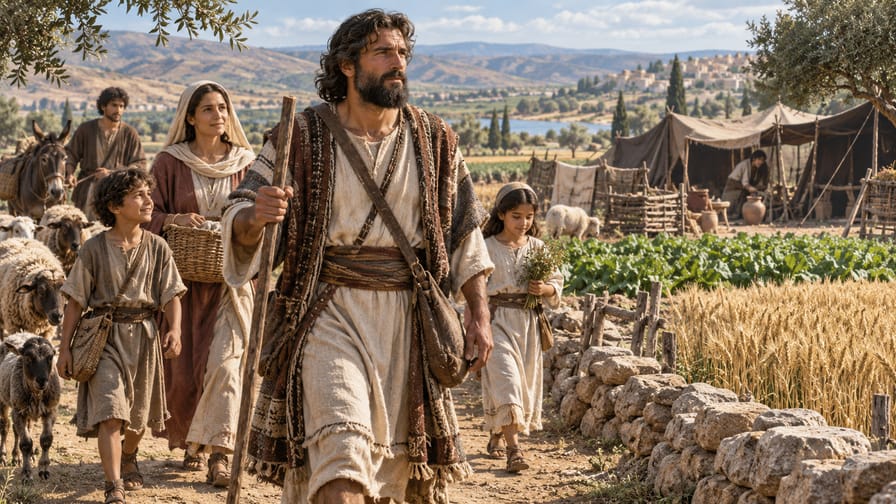
The figure of Semida (also spelled Shemida or Shemidah) is one of many biblical characters who, although not starring in extensive narratives, play a crucial role in the genealogical web and in the progression of God's redemptive history. His mention, predominantly in lineage lists, points to divine meticulousness in the preservation of Israel's offspring and in preparation for the coming of the Messiah. From a Protestant evangelical perspective, the analysis of Semida transcends mere cataloging, revealing profound truths about God's faithfulness and the importance of every link in the chain of salvation.
This study seeks to explore the etymology and meaning of the name of Semida, his historical context, and his position in the Holy Scriptures. We will analyze his inferred character and role, the theological significance of his existence, and the relevance of his lineage for Christocentric typology. Finally, we will consider his biblical-theological legacy and his importance for understanding the canon, highlighting how even the most discreet figures contribute to the grand narrative of divine revelation.
The approach will be scholarly, encyclopedic, and objective, grounded in biblical authority and careful exegesis. Reformed and conservative evangelical theology will guide the interpretation, emphasizing the sovereignty of God, the centrality of Christ, and the progressivity of revelation. The inclusion of Semida in the genealogies is not accidental, but a testament to divine providence operating in all the details of human history to fulfill His eternal purposes.
1. Etymology and meaning of the name
The name Semida (in Hebrew: שְׁמִידָע, Shemidaʿ or Shemidah) is found in the Hebrew Scriptures, and its etymology offers a glimpse into potential meanings. The most common transliteration is Shemida or Shemidah, maintaining the original Hebrew sound. This name appears in two main genealogical passages: Numbers 26:32 and 1 Chronicles 7:19, establishing his identity as an important ancestor in the tribe of Manasseh.
The etymological root of Shemidaʿ is frequently analyzed from two Hebrew components. The first part, shem (שֵׁם), means "name," a term of great theological weight in the Old Testament, often associated with the reputation, character, and identity of God or a person. The second part is more debated, but many scholars suggest a connection with yadaʿ (יָדַע), which means "to know," "to understand," or "to be familiar with."
Thus, the most accepted interpretation for the name Semida is "name of knowledge" or "the name knows." This significance may point to the idea that the bearer of the name was known or that his name was notable for some knowledge. In a theological context, it could evoke the idea of the knowledge of God or the knowledge of His name, which in Hebrew thought implies an intimate and revealed relationship with the divine (cf. Exodus 3:13-15).
Another possible derivation, though less probable for a patriarchal personal name, connects Shemidaʿ to the root shamad (שָׁמַד), meaning "to destroy" or "to exterminate." However, personal names rarely carry such direct negative connotations, especially in genealogical contexts that aim for continuity and blessing. The interpretation "name of knowledge" aligns better with the practice of theophoric names or names with positive meaning in Israelite families.
There are no other notable biblical figures with exactly the same name Semida, which makes him a unique figure in his mention. This uniqueness, despite its brevity in the Scriptures, underscores the precision of biblical genealogies and divine attention to each individual within the chosen lineage. The main variation is only in transliteration, such as Shemida or Shemidah, not altering the underlying meaning.
The theological significance of the name, "name of knowledge," can be seen as a reminder of the importance of the knowledge of God. For the Protestant evangelical perspective, the knowledge of God is not merely intellectual, but relational and salvific, revealed through His Word and culminating in Christ. The very existence of a name with such meaning in a genealogy points to divine providence in preserving those who, in some way, were connected to the knowledge of the true God.
2. Historical context and biblical narrative
The figure of Semida is firmly rooted in the historical period of the formation of the nation of Israel, specifically during the era of the Exodus and the conquest of Canaan. He is listed as the grandson of Manasseh and the son of Gilead, which places him chronologically sometime between the 15th and 13th centuries B.C., depending on the adopted dating of the Exodus (whether the early 15th century B.C. or the late 13th century B.C.).
The political, social, and religious context of the time was one of transition for the people of Israel. After centuries of slavery in Egypt, they were being shaped into a nation under the leadership of Moses, receiving the Law on Mount Sinai and preparing to enter the Promised Land. Genealogies in this period served crucial purposes: establishing tribal identity, determining eligibility for the priesthood, and, fundamentally, designating land distribution (cf. Numbers 26:52-56).
2.1 Family origin and genealogy
The genealogy of Semida is clearly established in the Scriptures. He is presented as one of the sons of Gilead, who in turn was the son of Manasseh (Numbers 26:29-32). Manasseh was one of the two sons of Joseph, the patriarch who saved his family from famine in Egypt (Genesis 41:50-52). Therefore, Semida belongs to the blessed lineage of Joseph, who received a double portion of inheritance among the tribes of Israel.
The key biblical passages where Semida is mentioned are:
- Numbers 26:32: "And the sons of Gilead were: Iezer, from whom came the family of the Iezerites Helek, from whom came the family of the Helekites Asriel, from whom came the family of the Asrielites Shechem, from whom came the family of the Shechemites Semida, from whom came the family of the Semidaites and Hepher, from whom came the family of the Hepherites."
- 1 Chronicles 7:19: "The sons of Shemida were Ahian, Shechem, Likhi and Aniam." (Note that this passage appears to list the sons of Semida, not his brothers, and there may be variations or the Numbers passage may be listing the main clans or branches).
The geography related to Semida is intrinsically linked to the tribe of Manasseh. His father, Gilead, gave his name to the region of Gilead, an important area on the east side of the Jordan River, which was divided among the tribes of Reuben, Gad, and the half-tribe of Manasseh (cf. Numbers 32:33, Joshua 13:29-31). Thus, the family of the Semidaites, descendants of Semida, would have had a portion of their inheritance in the fertile land of Gilead.
Semida's relationships with other important biblical figures are primarily genealogical. He is part of the lineage of Joseph, one of the great patriarchs of Israel, and the grandson of Manasseh. His existence is crucial for the continuity of the tribe of Manasseh, one of the twelve tribes of Israel, which played a vital role in the nation's history. He is a link in the chain that connects the patriarchs to the Israelites of the time of the conquest, demonstrating God's faithfulness in multiplying the descendants of Abraham (Genesis 12:2).
3. Character and role in the biblical narrative
The Bible does not offer a direct narrative about the character or actions of Semida, unlike figures such as Abraham, Moses, or David. His presence is strictly genealogical, meaning that any analysis of his character and role must be inferred from his context and the function of genealogies in the Scriptures. However, this absence of narrative does not diminish his theological importance, but shifts it to the realm of divine providence and covenant faithfulness.
As the head of a family (the Semidaites) that gave its name to a clan within the tribe of Manasseh, Semida, by implication, would have been a figure of relevance and authority in his time. In a patriarchal society, clan leaders were responsible for maintaining order, transmitting tradition, and ensuring the prosperity of their descendants. This suggests that Semida possessed qualities of leadership and responsibility, essential for the founding of a lasting family.
The spiritual virtues and qualities of Semida are not explicitly documented. However, his inclusion in biblical genealogies, which often served to trace the lineage of faith and covenant, suggests that he was part of the community of Israel that maintained faith in the God of Abraham, Isaac, and Jacob. The absence of any mention of failures or sins, while not proof of impeccability, indicates that he was not a figure of scandal deserving negative notation in the Scriptures.
The specific vocation or function of Semida was that of a patriarch and founder of a prominent family. His name is not just an entry in a list, but the starting point for a lineage that would contribute to the strength and composition of the tribe of Manasseh. His existence and the proliferation of his descendants are a testament to God's blessing upon His people, fulfilling the promise of multiplication made to the patriarchs (Genesis 17:6).
The role played by Semida is, therefore, fundamentally genealogical and ancestral. He was not a prophet, priest, king, or apostle, but a vital link in the chain of Israel's existence. His greatest "action" was that of begetting children and establishing a family that would perpetuate the presence of Manasseh within the chosen nation. Key decisions in his life would have been those related to family, obedience to the law, and participation in the life of the covenant community, although these are not recorded in detail.
There is no character development to be observed in the biblical narrative for Semida, as he is not a plot character. His importance lies in his structural function within the genealogies. He represents continuity, generational faithfulness, and God's providence in ensuring that His covenant and His promises of a great nation were fulfilled through individuals like him, who, though anonymous in their daily actions, were crucial to the divine plan.
4. Theological significance and typology
The theological significance of Semida, though not evident in prominent narratives, is profound and multifaceted from a Protestant evangelical perspective. His existence and inclusion in the sacred genealogies position him within God's redemptive history, contributing to the progressive revelation of the divine plan. He represents God's faithfulness in fulfilling His promises of multiplication and preservation of a holy seed.
The presence of Semida in the lineage of Manasseh and, consequently, of Joseph, is a testament to the Abrahamic covenant (Genesis 12:1-3). God promised Abraham numerous descendants, and every name in the biblical genealogies is proof of the fulfillment of that promise. Semida is one of these links that ensured the continuity of the lineage that would ultimately lead to the Messiah. His life, even if not described, is part of the greater narrative of God's grace and sovereignty.
In terms of prefiguration or Christocentric typology, Semida is not a direct type of Christ in the classic sense of an event, person, or institution that clearly points to Him. However, his inclusion in the genealogies serves a broader typological purpose. The genealogies themselves are a type that points to God's faithfulness in preparing the way for the Savior. They demonstrate divine meticulousness in preserving the messianic lineage, culminating in the genealogies of Jesus in Matthew 1 and Luke 3.
The covenants and promises related to Semida are those that apply to all the people of Israel. He was a participant in the Mosaic covenant, under which the Israelites lived in the wilderness and prepared to inherit the land. The family of the Semidaites would have received their portion of the inheritance of Canaan, fulfilling the promises of land and people. The obedience or disobedience of each generation, including that of Semida and his descendants, affected the experience of the covenant's blessing or curse (Deuteronomy 28).
There are no direct citations or references to Semida in the New Testament. However, the importance that the New Testament places on the genealogies of Jesus (Matthew 1:1-17 Luke 3:23-38) underscores the relevance of every Old Testament name that contributed to that lineage. Genealogical precision was fundamental for establishing Jesus' messianic identity as a descendant of David and Abraham, and figures like Semida paved the way for this historical proof.
Semida's connection with central theological themes is undeniable. His inclusion in the census lists (Numbers 26) speaks of Israel's election and God's attention to every family within the nation. It underscores the doctrine of divine sovereignty, which orchestrates history, including procreation and the formation of clans, to fulfill His redemptive purposes. Faith, obedience, and grace are implicit themes in the life of an ancestor who contributed to the continuity of the covenant people.
The prophetic fulfillment associated with Semida is indirect, but significant. His existence and that of his descendants are a fulfillment of the prophecies of multiplication and prosperity for Israel. The preservation of the lineage of Manasseh, of which he was a part, was essential for the tribal integrity of Israel, which, in turn, was fundamental for the identity of the people awaiting the Messiah. The doctrine of divine providence is central here: God uses ordinary people for His extraordinary plans.
5. Biblical-theological legacy and canonical references
The legacy of Semida, though subtle, is intrinsic to the structure and message of the biblical canon. His mentions in Numbers 26:32 and 1 Chronicles 7:19 establish him as a recognized ancestor within the tribe of Manasseh. These references are not mere lists, but theological documents that attest to God's faithfulness in preserving His people and fulfilling His covenant promises through generations.
Semida's literary contributions do not include the authorship of biblical books, Psalms, or epistles. His contribution is of an existential and genealogical nature: he is a name that represents the continuity and formation of a clan within Israel. The family of the Semidaites (שְׁמִידָעִי, Shemidaʿi) would have been one of the units that would make up the military strength and land distribution of the tribe of Manasseh, as evidenced by the census of Numbers 26.
His influence on biblical theology lies in the reaffirmation of the importance of genealogies as vehicles of salvation history. In the Old Testament, genealogies trace the lineage from Adam to Abraham, David, and finally to the Babylonian exile, establishing the continuity of God's plan. The inclusion of Semida demonstrates that every link, even the less detailed ones, is significant for understanding divine providence and the preparation for the coming of Christ.
In Jewish and Christian interpretive tradition, Semida is not a figure about whom extensive exegeses or specific midrashim have been developed, due to the lack of personal narrative. However, the importance of genealogies in general is highly valued. Jewish tradition, for example, has always placed great weight on the purity and continuity of lineages, especially for the priesthood and royalty. Christian tradition, in turn, uses genealogies to establish the messianic identity of Jesus.
Intertestamental literature makes no specific mention of Semida. However, works such as Jubilees and Genesis Apocryphon frequently expand biblical narratives and genealogies, which demonstrates the continuous fascination and importance attributed to ancestral lineages as a way of connecting the present to the past of God's covenant with Israel.
In Reformed and evangelical theology, the figure of Semida and others like him serve to illustrate the doctrine of God's sovereignty in all the details of history. The inclusion of names like his in the sacred records is not a coincidence, but a demonstration of divine providence that operates through ordinary people to fulfill His extraordinary plans. Theologian John Calvin, for example, emphasized God's particular providence that governs every aspect of creation and human history.
The importance of Semida for understanding the canon lies in his contribution to the historicity and continuity of the biblical narrative. Genealogies provide the historical backbone upon which the theology of covenant and redemption is built. They ensure that the history of Israel is not a myth, but a succession of real events involving real people, culminating in the incarnation of Jesus Christ. Semida, as an ancestor, is an integral part of this divine historical tapestry.