


Muppim
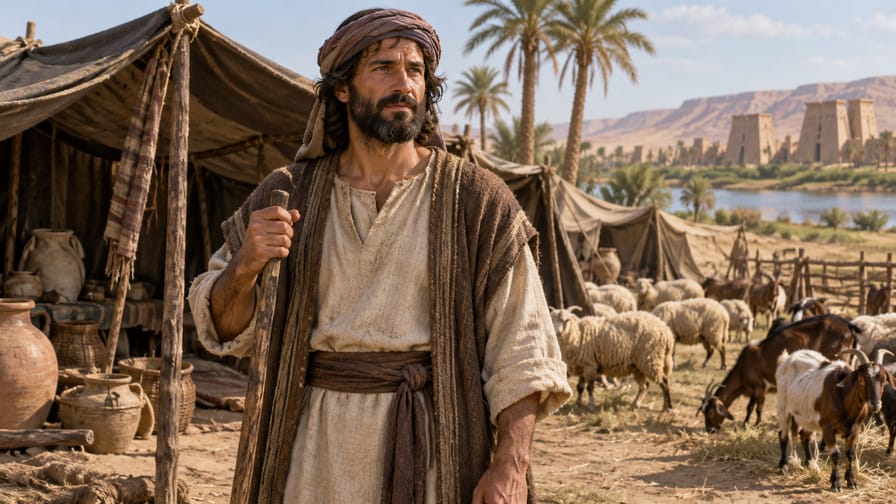
The figure of Mupim, though briefly mentioned in the Hebrew Scriptures, is a significant link in the vast genealogical tapestry of the people of Israel. His existence, recorded in lists detailing the formation of the twelve tribes, highlights the meticulous divine attention to the lineage and history of His chosen people.
This entry will explore the etymology and meaning of the name, the historical and narrative context of its appearance, the implicit role in its brief mention, its theological significance within the history of redemption, and its biblical-theological legacy, all from an evangelical Protestant perspective that values the authority and inerrancy of the Scriptures.
1. Etymology and meaning of the name
The name Mupim (in Hebrew: מוּפִים, Mupim) appears in the list of the sons of Benjamin who went down with Jacob to Egypt, as recorded in Genesis 46:21. However, it is important to note that this name presents significant variations in other biblical passages and ancient manuscripts, which complicates a definitive etymological analysis.
In Numbers 26:39, the same lineage is referred to as Shuppim (שׁוּפִים). In 1 Chronicles 7:12, the name appears as Shephupham (שְׁפוּפָם), and in 1 Chronicles 8:5 as Shephuphan (שְׁפוּפָן). These variations can be attributed to different copying traditions, scribal errors, or even alternative forms of the same name or person over time.
The etymological root of Mupim is uncertain. Some scholars suggest a possible connection with roots meaning "serpent" or "viper," as in shaphan (שָׁפָן), which is the name for the hyrax or rock badger. However, this interpretation is highly speculative and lacks a strong contextual or linguistic basis for the name in question.
Another possibility is that the name is of Egyptian origin, given the family's migration to Egypt, or that it is an abbreviated theophoric name, although no clear evidence supports these theories. The obscurity of the etymological root prevents the attribution of a conclusive literal or symbolic meaning to the name itself.
The variations of the name, such as Shuppim and Shephupham, are also of ambiguous etymology. The Septuagint (LXX), the ancient Greek translation of the Old Testament, also presents variations, reflecting the uncertainty already present in the Hebrew manuscripts. For example, in Genesis 46:21, the LXX transliterates it as Maphim (Μαφιμ).
There are no other prominent biblical characters with the exact name of Mupim or its variants who possess distinct narratives. The theological significance of the name, therefore, does not lie in its intrinsic meaning, but rather in its inclusion in the sacred genealogies, attesting to God's faithfulness in preserving the lineage of Abraham and in the formation of Israel.
The precision and apparent redundancy of biblical genealogies, even for minor figures like Mupim, underscore the importance of history and lineage in Hebrew theology. They serve as proof of divine providence and the veracity of covenant promises, preparing the ground for the coming of the Messiah.
2. Historical context and biblical narrative
Mupim emerges in the biblical setting during a crucial period of patriarchal history, approximately in the 18th or 17th century B.C., in the context of Jacob's family migrating to Egypt. This event is narrated in detail in the final chapters of the book of Genesis, marking the beginning of Israel's formation as a nation.
The political, social, and religious context of the time was dominated by a severe famine in the land of Canaan, which forced Jacob and his family to seek refuge in Egypt, where his son Joseph had ascended to a position of great power. The narrative of Joseph in Egypt (Genesis 37-50) is the immediate background for Mupim's appearance.
Mupim is listed as one of the sons of Benjamin, the youngest of Jacob and Rachel, and thus a grandson of Jacob. The genealogy in Genesis 46:21 includes him among the "seventy souls" of Jacob's household who went down to Egypt, a symbolic number representing the totality of the family of Israel.
The key biblical passages where Mupim is mentioned are: Genesis 46:21, where he is listed as one of the sons of Benjamin who went down to Egypt Numbers 26:39, where his descendants are recorded as part of the clan of the Shuppim, of the tribe of Benjamin and 1 Chronicles 7:12, where he is referred to as Shephupham, a son of Ir, who in turn is a son of Benjamin.
The geography related to Mupim encompasses the land of Canaan, where he was born, and the land of Goshen, in Egypt, where Jacob's family settled. The migration to Egypt was a transformative event, prefiguring the time of slavery and the eventual liberation under Moses, according to divine providence.
His most important relationships are with his father Benjamin, his grandfather Jacob (Israel), and his uncle Joseph, whose wisdom and position in Egypt ensured the family's survival. He is part of the generation that witnessed the transition from a family group to the beginning of a nation, under God's protection and direction.
Mupim's inclusion in the genealogies does not focus on his individual deeds, but on his belonging to the chosen lineage. He represents the continuity of the divine promise to multiply Abraham's descendants, even amidst the adversities and uncertainties of life in Egypt.
Variations in names and genealogical lists (e.g., Genesis 46 vs. 1 Chronicles 7) are a common phenomenon in the Scriptures, often reflecting different purposes of the authors or records at distinct points in Israel's history. Reformed theology recognizes that such variations do not compromise biblical inerrancy but offer nuances about the composition and transmission of the sacred text.
3. Character and role in the biblical narrative
Due to the extreme brevity of his mentions, the Bible offers no explicit details about Mupim's character, virtues, failings, or actions. He is a figure who appears only in genealogical lists, serving more as a name that fills a link in the family chain than as a character with a developed narrative.
Therefore, any analysis of his character and role must be inferred from his genealogical context and the importance of genealogies in biblical theology. His mere existence and inclusion in the list of those who went down to Egypt already carry a deep theological significance.
While we cannot identify specific virtues or spiritual qualities in Mupim, his presence in Jacob's family places him within the divine covenant. He was a member of the chosen people, part of the lineage through which God would fulfill His promises to Abraham, Isaac, and Jacob (Genesis 12:1-3 Genesis 26:3-4 Genesis 35:11-12).
There is no record of documented sins, weaknesses, or moral failings for Mupim, which is common for figures mentioned only in lists. His specific "vocation" or "function," from a divine perspective, was simply to exist as part of the lineage that would become the nation of Israel.
The role played by Mupim, though passive in the narrative, is crucial for the continuity of redemptive history. He was not a prophet, priest, or king, but one of many anonymous individuals who, by their existence and descent, contributed to the formation of the covenant people.
His significant actions and key decisions are not recorded. He is counted among those who "came with Jacob to Egypt" (Genesis 46:26), which implies his participation in the family migration. This collective decision to move to Egypt was an act of faith and obedience to divine providence, guided by Joseph.
Mupim's character development throughout the narrative is nonexistent. He remains a static figure, a name on a list, whose importance lies in his contribution to the demography of the people of Israel and the continuity of the messianic lineage. He is a reminder that God uses both the prominent and the obscure in His plans.
The evangelical Protestant perspective emphasizes that every name in the biblical genealogies, however insignificant it may seem individually, is divinely inspired and has its place in God's sovereign plan. Mupim, therefore, serves to reinforce the historical veracity and accuracy of the Scriptures, even in the smallest details.
4. Theological significance and typology
Despite his scarce mention, the figure of Mupim holds important theological significance within redemptive history and the progressive revelation of God. His inclusion in the Old Testament genealogies directly connects him to the divine plan of establishing a people for Himself, through whom the Messiah would come.
Mupim is part of the chosen lineage that went down to Egypt, an event that marked the transition from the patriarchal family to the germ of a nation. His existence is proof of God's faithfulness to His covenant with Abraham, who promised to multiply his descendants (Genesis 12:2 Genesis 15:5).
There is no direct Christocentric prefiguration or typology of Mupim. He is not a type of Christ in the classical sense. However, he points to Christ indirectly, as his inclusion in the genealogy is part of the unbroken chain that would lead to the birth of the Savior. The preservation of the tribe of Benjamin, of which he was a part, and of Israel as a whole, was essential for the fulfillment of the messianic promise.
His life is intrinsically linked to the covenants and promises made by God to the patriarchs. The promise of a "great nation" (Genesis 12:2) and that "all peoples on earth will be blessed through you" (Genesis 12:3) began to be fulfilled with the numerical growth of Jacob's family, of which Mupim was a member.
There are no direct quotations or references to Mupim in the New Testament. However, the New Testament frequently emphasizes the importance of Jesus' genealogies (Matthew 1:1-17 Luke 3:23-38), validating the significance of Old Testament genealogical records, which guarantee the Davidic and Abrahamic lineage of the Messiah.
Mupim's connection to central theological themes is evident. His life, though obscure, illustrates divine election (God chooses a family and a people), covenant faithfulness (God fulfills His promises through generations), and sovereign providence (God orchestrates events to preserve His lineage and redemptive plan).
He represents the idea of Israel's corporate identity, where each individual contributed to the totality of the covenant people. Salvation, faith, and obedience were corporate concepts before they were individualized, and Mupim was part of this collective body.
The prophetic fulfillment, as it pertains to Mupim, is the simple realization of the promise of the multiplication of Abraham's descendants. His existence and that of his brothers and cousins contributed to the number that would be the basis for the nation of Israel, God's "special people" (Deuteronomy 7:6), through whom the Messiah would come, thus fulfilling the prefiguration in Christ.
5. Biblical-theological legacy and canonical references
Mupim's legacy in the biblical canon is subtle yet significant. His mentions in Genesis 46:21, Numbers 26:39, and 1 Chronicles 7:12 (and their variants) serve as pillars of the genealogical structure that underpins the historical narrative of Israel. He left no literary contributions nor exerted great direct influence on biblical theology individually.
However, his inclusion in the genealogies reinforces the importance the Bible attributes to lineage and history. Genealogies are not mere lists of names they are theological documents that attest to God's faithfulness in preserving His covenant and fulfilling His promises through specific generations.
Mupim's presence in Jewish and Christian interpretive tradition is generally limited, given the lack of narrative details about his life. He is often grouped with the other "sons of Benjamin" or "seventy souls" who went down to Egypt, serving as an element to demonstrate the totality of Jacob's family.
In intertestamental literature, there are no notable references to Mupim, which is expected for such an obscure figure. His importance lies more in the structure of the canonical text than in any subsequent exegetical development.
In Reformed and evangelical theology, the inclusion of Mupim and other minor genealogical figures is seen as a testament to the inspiration and inerrancy of Scripture. Every detail, no matter how minute, is part of the divinely revealed record, contributing to the understanding of salvation history.
Evangelical commentators like John Calvin, in his "Commentaries on Genesis," and Matthew Henry, in his "Commentary on the Whole Bible," although not dwelling extensively on Mupim individually, emphasize the importance of genealogies as proof of God's providence and the preservation of the promised seed.
Mupim's importance for understanding the canon lies in his contribution to the historicity and continuity of the biblical narrative. He is a reminder that the history of Israel, and consequently the history of redemption, is a history of real individuals, born into real families, who were part of God's sovereign plan.
In summary, Mupim, though an almost invisible figure in the biblical narrative, is a silent testament to God's faithfulness, the accuracy of His Word, and the intricate web of events and people He uses to fulfill His redemptive purposes, culminating in the coming of Jesus Christ.