


Baaseiah
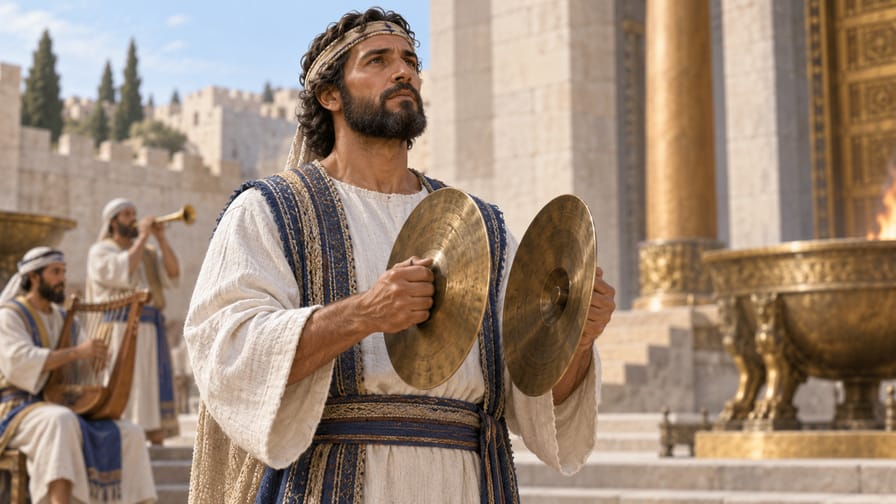
The figure of Baaseiah, though briefly mentioned in the Scriptures, offers a rich opportunity for biblical and theological analysis. His presence in a Levitical genealogy in the book of 1 Chronicles underscores the importance of the priestly lineage and service to God in the Old Testament. From a Protestant evangelical perspective, his inclusion in the sacred canon, even if concise, testifies to divine sovereignty in preserving every detail of redemptive history. Every name, every lineage, contributes to the larger tapestry of God's plan for humanity.
This study seeks to unfold the meaning of Baaseiah, exploring his etymology, the historical context in which he lived, the implications of his role as a Levite, and the theological relevance that his existence, even if peripheral in the narrative, carries for understanding the history of salvation and Christocentric typology. Exegetical precision and faithfulness to biblical authority will guide this analysis, in accordance with the reformed evangelical tradition.
1. Etymology and meaning of the name
The name Baaseiah (or Baaseiah, depending on the transliteration) comes from the Hebrew Ba‘ăśēyāh (בַּעֲשֵׂיָה). It is a theophoric name, meaning it contains an element of God's name. The structure of the name is composed of two main parts: ba‘aśeh (בַּעֲשֵׂה), which means "in/with the work of" or "in the service of," and Yah (יָהּ), an abbreviation of Yahweh (YHWH), the covenant name of God. Thus, the literal meaning of Baaseiah is "In the work of Yahweh" or "In the service of Yahweh."
The Hebrew verbal root ‘āśāh (עָשָׂה), from which ba‘aśeh derives, is very common in the Scriptures and can mean "to do," "to work," "to accomplish," "to create," or "to serve." The preposition bĕ- (בְּ) indicates "in," "with," or "by means of." The combination suggests a direct dedication or involvement with divine activity. This meaning is profoundly relevant for a Levite, whose life was intrinsically dedicated to the service of the Lord in the tabernacle or temple.
There are no significant variations of the name Baaseiah in biblical languages that alter its fundamental meaning. The transliteration into Greek in the Septuagint (LXX) may present forms such as Baaseia (Βαασεια), maintaining its phonetic and semantic essence. The consistency in the name's representation reinforces its origin and inherent theological meaning.
There are no other prominent biblical characters with the exact same name as Baaseiah, making him unique in his specific mention in 1 Chronicles 6:25 (or 6:40, depending on the numbering). This, paradoxically, highlights the chronicler's attention to each individual within the priestly lineage, even if their contribution to the narrative is limited to a simple genealogical mention.
The theological significance of the name "In the work of Yahweh" is profound, especially in the Levitical context. It describes not only an identity but also a vocation. For a member of the tribe of Levi, being "in the work of Yahweh" was the very reason for their corporate existence. Their life was a living demonstration of dedication to divine service, mediating the relationship between God and His people Israel, as established in the Mosaic covenant.
This name serves as a reminder that every individual, especially those called to sacred ministry, is an instrument in the hand of God. The life of Baaseiah, even if only in a list, is a testimony to God's faithfulness in raising up and preserving those who are "in His work." The mention of his name in a sacred genealogy is a seal of divine recognition of his function and lineage.
2. Historical Context and Biblical Narrative
2.1 Family Origin and Genealogy
Baaseiah is mentioned in the book of 1 Chronicles 6:25 (verse 10 in the Masoretic Text, or 1 Chronicles 6:40 in the Septuagint and some modern Bibles numbering), within an extensive genealogy of the Levites. He is identified as the son of Michael and the father of Malchiah. His lineage is traced through Gershon, one of the three sons of Levi, the ancestor of the Levitical tribe, as recorded in Genesis 46:11 and Exodus 6:16.
The complete genealogy in 1 Chronicles 6 is crucial for the chronicler, as it establishes the legitimacy of the priesthood and the Levitical service in Israel. The line of Baaseiah belongs to the Gershonites, who had the responsibility of transporting and caring for the curtains and coverings of the tabernacle, as well as other utensils, as instructed in Numbers 3:25-26 and Numbers 4:24-28. Although Baaseiah was not from the priestly lineage of Aaron (who were the Kohathites), he was an integral part of Israel's worship structure.
The historical period of Baaseiah can be inferred from the extent of the genealogy. Considering that Gershon was one of Levi's sons, who lived in Egypt, and that the list extends to the period of Solomon's temple and beyond, Baaseiah likely lived sometime between the exodus from Egypt and the establishment of the monarchy in Israel, possibly during the period of the Judges or the early united monarchy. Exact precision is difficult to determine without further data, but he clearly precedes figures like King David, who organized the Levitical service.
2.2 Political, Social, and Religious Context
The political and social context in which Baaseiah lived would have been that of a tribal Israel, perhaps during the period of the Judges, characterized by decentralized leadership and intermittent conflicts with neighboring peoples, such as the Philistines and Amalekites (cf. Judges 3:7-11). However, the chronicler's focus is not on these aspects, but rather on the continuity of the lineage and worship.
Religiously, the era would have been dominated by worship in the tabernacle, which, after the conquest of Canaan, was located in places such as Shiloh (cf. 1 Samuel 1:3), Gibeon (cf. 1 Chronicles 16:39) and, later, Jerusalem. The Levites, like Baaseiah, were essential for maintaining worship and for the religious education of the people, ensuring the observance of the Law of Moses and the sanctity of the worship of Yahweh.
The book of 1 Chronicles, where Baaseiah is mentioned, was written in a post-exilic period, with the purpose of encouraging the Israelites who returned from the Babylonian exile. The chronicler sought to reaffirm Israel's identity as God's people, emphasizing the continuity of the covenant, the importance of the temple and the legitimate priesthood, and the centrality of the worship of Yahweh (cf. 1 Chronicles 9:1-34).
The genealogies in Chronicles are not mere lists of names, but theological documents that establish the legitimacy and continuity of leadership in Israel. For the chronicler, faithfulness to the Levitical lineage was fundamental for the restoration of the nation and the purity of worship. The inclusion of Baaseiah, even if brief, serves this greater purpose, connecting the past with the present and the future of the post-exilic community.
3. Character and Role in the Biblical Narrative
3.1 Analysis of Character and Levitical Function
Due to the concise mention of Baaseiah in a genealogical list, the Scriptures do not provide explicit details about his individual character, his actions, or key decisions. There are no narratives directly involving him, nor descriptions of his virtues or flaws. His "character" is, therefore, primarily inferred from his identity as a Levite and the meaning of his name.
As a Levite, Baaseiah was part of a tribe set apart by God for sacred service. This implies that he was raised and lived within a system of life dedicated to the Law, to worship, and to the instruction of the people. The expectation for a Levite was faithfulness, obedience to the Torah, and dedication to the service of the tabernacle/temple (cf. Deuteronomy 33:8-10).
The meaning of his name, "In the work of Yahweh," suggests that his life was, in some way, marked by this dedication. While we cannot affirm his specific actions, his mention in the sacred genealogy indicates that he fulfilled his role in the lineage, begetting descendants who would continue the Levitical service. The continuity of the lineage was, in itself, an act of faithfulness and obedience to the divine order.
The role of Baaseiah was, therefore, that of a link in the chain of service to God. He was a guardian of the Levitical tradition, transmitting not only his genetic heritage but also the knowledge and practice of worship to his descendants. This generational faithfulness was vital for the preservation of the worship of Yahweh in Israel, a central concern of the chronicler (cf. 1 Chronicles 23:24-32).
His specific function, as a Gershonite, would have involved the care and transport of parts of the tabernacle. Although it was not a role of priestly leadership like Aaron's Kohathites, it was an essential and holy service. Each Levite, in their designated function, contributed to the order and sanctity of worship, demonstrating the importance of each part of the body of Christ, even the seemingly smaller ones (cf. 1 Corinthians 12:12-27).
The absence of narrative details about Baaseiah invites us to reflect on the importance of all who serve God faithfully, even if their names are not widely known or their stories intricately told. His presence in the genealogy confirms that his life and service were significant in God's eyes and for the continuation of His redemptive plan.
4. Theological Significance and Typology
4.1 Role in Redemptive History and Progressive Revelation
The inclusion of Baaseiah in the Levitical genealogy of 1 Chronicles embeds him in the vast tapestry of God's redemptive history. Although he is not a protagonist, his existence as part of the Levitical lineage is a testament to God's faithfulness in maintaining His covenant with Levi, setting apart a tribe for the service of the tabernacle and, later, the temple (cf. Numbers 3:11-13). This separation was an integral part of God's progressive revelation of His plan for holiness and mediation.
The Levites, including Baaseiah, represented the maintenance of access to God and the purification of the people under the Old Covenant. Their service, though imperfect and temporary, pointed to the need for a perfect mediator and a definitive sacrifice. They were a constant reminder of the separation between a holy God and a sinful people, and of divine provision for reconciliation.
4.2 Prefiguration and Christocentric Typology
The Levitical function as a whole is rich in Christocentric typology. The service of the Levites, including the care of the tabernacle and the facilitation of sacrifices, prefigured the ministry of Jesus Christ. He is the true and perfect High Priest, not of the order of Aaron, but of the order of Melchizedek (cf. Hebrews 7:11-17), who entered the heavenly sanctuary once for all, offering Himself as the perfect sacrifice (cf. Hebrews 9:11-14).
The name of Baaseiah, "In the work of Yahweh," is particularly significant in this context. Christ is the ultimate personification of one who is "in the work of Yahweh." Jesus declared: "My food is to do the will of Him who sent me and to finish His work" (John 4:34). He perfectly accomplished all the work the Father gave Him to do (cf. John 17:4), culminating in His death and resurrection, which are the supreme work of redemption.
Therefore, even if Baaseiah is not a direct typological figure in his actions (since there is no record of them), his identity and the meaning of his name indirectly connect him to the great work of God. He represents the necessary faithfulness in preparation for the coming of the Messiah, who would complete the "work of Yahweh" definitively and eternally. His life, silent in the Scriptures, is a link in the chain that paved the way for the manifestation of grace in Christ.
4.3 Connection with Central Theological Themes
The existence of Baaseiah and his inclusion in the genealogy reinforce several central theological themes from the Protestant evangelical perspective. Firstly, the sovereignty of God: He orchestrates every detail, from great nations to names in genealogies, to fulfill His purpose. The mention of Baaseiah demonstrates that God values faithfulness in all positions of service, great or small.
Secondly, the importance of covenant and obedience. The tribe of Levi was chosen by covenant, and the maintenance of its lineages was an act of obedience that guaranteed the continuity of worship. Baaseiah, by begetting Malchiah, fulfilled his part in this generational faithfulness. This resonates with the doctrine of the perseverance of the saints and God's faithfulness to His elect people.
Finally, the figure of Baaseiah, as part of the Levitical priesthood that pointed to Christ, illustrates the doctrine of grace. The Levitical system, with its sacrifices and services, was a shadow of the future reality (cf. Colossians 2:17, Hebrews 10:1). The work of Baaseiah was "in the work of Yahweh" in a mediated and provisional way the work of Christ is "the work of Yahweh" in its fullness and redemptive efficacy. God's grace is revealed in providing such a preparatory system and, ultimately, the fulfillment in Jesus.
5. Biblical-Theological Legacy and Canonical References
5.1 Contributions and Influence in Biblical Theology
The main contribution of Baaseiah to biblical theology lies in his existence as a link in the Levitical chain, as recorded in 1 Chronicles 6:25. Although there are no mentions of him in other biblical books, his inclusion in the book of Chronicles is of great significance. The chronicler, in reconstructing the history of Israel after the exile, placed great emphasis on the legitimacy of the priesthood and the organization of worship in the temple.
The genealogies in Chronicles are not merely historical records they are theological declarations about the continuity of God's covenant with His people and the importance of divine order for worship. The presence of Baaseiah in the line of Gershon reinforces the idea that each member of the tribe of Levi, regardless of their individual prominence, played an essential role in preserving religious identity and service to Yahweh.
In Old Testament theology, the Levitical lineage was fundamental for mediation between God and Israel. Baaseiah, as part of this lineage, symbolizes the generational faithfulness necessary to sustain the sacrificial and worship system that prefigured the coming of the Messiah. His mention, therefore, contributes to the understanding of the theological structure of pre-Christ worship and of divine providence in maintaining that structure.
5.2 Presence in Interpretive Tradition and Reformed Theology
The figure of Baaseiah, being of a genealogical nature, does not have a prominent presence in Jewish or Christian interpretive tradition, nor in intertestamental literature. However, the study of genealogies, where Baaseiah appears, is an important field for historical and theological exegesis.
In Reformed and evangelical theology, the approach to figures like Baaseiah emphasizes the authority and inerrancy of Scripture, even in its most seemingly "dry" parts, such as genealogies. Every name is divinely inspired and has a purpose in God's grand design. Commentators like John Calvin, in his Commentaries on Chronicles, although not dwelling on Baaseiah specifically, highlight the importance of genealogies for establishing divine order and the legitimacy of priests and Levites.
Matthew Henry, in his Biblical Commentary, highlights that genealogies serve to show God's providence in maintaining families and promises. The inclusion of Baaseiah serves as a reminder of God's faithfulness in preserving the lineages designated for service, ensuring that "no link in the sacred chain is lost." This reinforces the doctrine of divine providence and election.
The reformed evangelical perspective also sees the relevance of Baaseiah through a Christocentric lens. Even the most obscure Old Testament characters contribute to the narrative that culminates in Christ. The Levitical lineage, of which Baaseiah was a part, was a shadow of Jesus' high priesthood. His existence validates the continuity of service that, ultimately, pointed to the perfect service and sacrifice of the Messiah.
The importance of Baaseiah for understanding the biblical canon lies in the fact that his mention validates the integrity and accuracy of the Scriptures. Every name, every detail, however minor it may seem, is part of the divinely inspired record that reveals God's redemptive plan to us. It teaches us that, in God's eyes, even those who do not achieve fame or great deeds are valued for their faithfulness in their sphere of service, contributing to the greater history of salvation.