


Zechariah
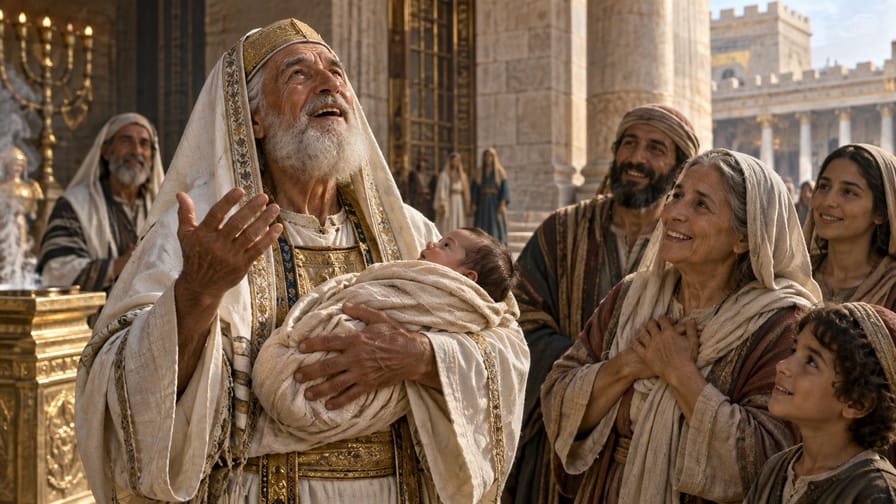
The figure of Zechariah, father of John the Baptist, is of paramount importance for understanding the transition between the Old and New Testaments, serving as a vital link in the narrative of salvation history. His story, recorded in the Gospel of Luke, reveals God's faithfulness and the fulfillment of His promises, marking the end of a long period of prophetic silence and the dawn of a new era. His experience in the Temple, initial unbelief, and subsequent prophecy, known as the Benedictus, offer rich layers of theological meaning for the evangelical Protestant perspective.
This study aims to comprehensively analyze Zechariah, exploring his onomastic meaning, historical context and biblical narrative, character and role, profound theological and typological significance, and his enduring legacy within the canon and Christian theology. The analysis will be grounded in Scripture, with attention to the original languages and Reformed evangelical interpretation, highlighting God's sovereignty and the centrality of Christ in the history of redemption.
1. Etymology and meaning of the name
The name Zechariah derives from the Hebrew זְכַרְיָה (Zekaryah) or זְכַרְיָהוּ (Zekaryahu), meaning "The Lord remembers" or "Yahweh remembers." It is a conjunction of the verbal root זָכַר (zakhar), "to remember," and the theophoric יָה (Yah), a shortened form of the divine name Yahweh (YHWH). In the New Testament, the name appears in its Greek form Ζαχαρίας (Zacharias), retaining the same meaning.
This name is quite common in Scripture, with several Old Testament characters bearing it, including the minor prophet Zechariah (author of the book of the same name), a king of Israel (2 Kings 15:8-12), and various priests and Levites (1 Chronicles 9:21 Ezra 8:16). The recurrence of the name underscores the importance of God's remembrance and faithfulness in His relationship with Israel, a central theme in biblical history.
For the New Testament Zechariah, the meaning of his name is particularly providential and theologically charged. His story is a vivid testimony that "The Lord remembers" His promises, even after centuries of apparent silence. The promise of a son, made to him in his old age, and the subsequent prophecy about John the Baptist, echo the meaning of his own name, revealing divine action at the right time.
The theology of the name "The Lord remembers" resonates with the doctrine of God's faithfulness to His covenant. God does not forget His people or His promises, but acts at the opportune time to fulfill His redemptive designs. The story of Zechariah and his wife Elizabeth is a microcosm of this greater truth, demonstrating divine patience and intervention in the lives of faithful individuals.
2. Historical context and biblical narrative
2.1 Historical period and context
The narrative of Zechariah unfolds during the period of the Roman Empire, specifically in Judea, under the reign of King Herod the Great (Luke 1:5). This was a time of great messianic expectation among the Jews, who lived under foreign rule and yearned for the restoration of Israel. Politically, the region was under Roman dominion, but with some local autonomy granted to Herod.
Religiously, Jewish life was centered around the Temple in Jerusalem, where the priesthood, divided into 24 courses (1 Chronicles 24:7-18), fulfilled its ritual functions. There were tensions between different religious groups, such as Pharisees and Sadducees, but worship and sacrifices in the Temple remained at the heart of Jewish identity. Zechariah, as a priest, was immersed in this environment of faith and tradition.
2.2 Family origin and genealogy
Zechariah was a priest of the division of Abijah (or Abijah, Luke 1:5), one of the 24 priestly divisions established by David (1 Chronicles 24:10). His wife, Elizabeth, was also of priestly lineage, "of the daughters of Aaron" (Luke 1:5). This priestly ancestry of both parents was highly valued in Jewish society, ensuring them a place of honor and duty in the service of God.
The absence of children was a great source of shame and sorrow for the couple, especially in Jewish culture, where fertility was seen as a divine blessing and barrenness as a possible sign of disfavor (Luke 1:7). However, their piety and righteousness were unquestionable, as attested by Luke: "And they were both righteous before God, walking blamelessly in all the commandments and ordinances of the Lord" (Luke 1:6).
2.3 Main events of his life
The life of Zechariah is briefly but significantly described in the first chapter of the Gospel of Luke. The crucial events include:
- Service in the Temple and the vision of the angel Gabriel: During his priestly course, Zechariah was chosen by lot to enter the Holy Place and offer incense (Luke 1:8-9). While performing this sacred duty, the angel Gabriel appeared to him, announcing that his wife Elizabeth, despite her advanced age, would bear a son, who would be named John (Luke 1:11-13).
- The prophecy about John the Baptist: Gabriel revealed that John would be great in the sight of the Lord, filled with the Holy Spirit from birth, and would prepare the way for the Lord "in the spirit and power of Elijah" (Luke 1:14-17), fulfilling the prophecy of Malachi (Malachi 4:5-6).
- Unbelief and temporary muteness: Faced with the magnitude of the news and its natural improbability, Zechariah expressed doubt: "How shall I know this? For I am an old man, and my wife is advanced in years" (Luke 1:18). As a sign and consequence of his unbelief, Gabriel rendered him mute and unable to speak until the day the promise was fulfilled (Luke 1:19-20).
- The birth of John and the recovery of speech: After the period of muteness, Elizabeth gave birth. On the eighth day, during the circumcision ceremony, there was a debate about the baby's name. Elizabeth insisted he should be named John. When they asked Zechariah for his opinion, he wrote on a tablet: "His name is John" (Luke 1:57-63). Immediately his mouth was opened and his tongue loosed, and he began to speak, praising God (Luke 1:64).
- The Benedictus (Song of Zechariah): Filled with the Holy Spirit, Zechariah uttered a powerful prophecy, the Benedictus, which praised God for the coming salvation and described John's role as the forerunner of the Messiah (Luke 1:67-79).
The geography related to Zechariah is primarily the hill country of Judea, where he and Elizabeth resided (Luke 1:39), and the Temple in Jerusalem, where he served. His relationships include his wife Elizabeth, his son John the Baptist, the angel Gabriel, and, indirectly, Mary, mother of Jesus, who was a relative of Elizabeth (Luke 1:36).
3. Character and role in the biblical narrative
3.1 Character analysis
The character of Zechariah is initially presented in an exemplary manner. Luke describes him, along with Elizabeth, as "righteous before God, walking blamelessly in all the commandments and ordinances of the Lord" (Luke 1:6). This description highlights his piety, obedience to the Mosaic Law, and a life of moral and spiritual uprightness. They were faithful in their devotion, despite the sorrow of being childless.
However, the narrative does not omit a crucial flaw in his character: unbelief in the face of divine revelation. His question to the angel Gabriel – "How shall I know this?" (Luke 1:18) – reflects hesitation and a demand for proof, indicating a lack of faith in God's ability to accomplish what was beyond human logic and natural circumstances. This doubt, though humanly understandable, was rebuked by Gabriel.
The punishment of his muteness served as a sign and a corrective discipline, leading him to a period of reflection and strengthening of faith. Ultimately, Zechariah demonstrates repentance and faith, confirming the name "John" for his son, which results in the restoration of his speech and profound praise to God, evidencing a transformation and spiritual maturation.
3.2 Vocation and specific role
Zechariah's primary vocation was that of a priest. He belonged to the tribe of Levi, of the lineage of Aaron, and fulfilled the ritual duties in the Temple of Jerusalem. His service was an essential part of Israel's religious life, mediating between God and the people through sacrifices and intercession. The lot to burn incense in the Holy Place was a unique privilege and of great honor (Luke 1:9).
His role, however, transcended that of a common priest. He became a prophet, not only by receiving the revelation from the angel Gabriel but also by uttering the Benedictus, a prophetic hymn that articulated the fulfillment of divine promises. He was chosen by God to be the father of the Messiah's forerunner, John the Baptist, and thus a direct participant and witness to the beginning of the new era of salvation.
Zechariah's significant actions include his faithful service in the Temple, his doubtful reaction to the angelic message, his subsequent obedience in naming his son John, and his Spirit-inspired prophecy. His story is an example of how God can use imperfect individuals in His perfect plans, transforming unbelief into faith and silence into prophetic praise.
4. Theological significance and typology
4.1 Role in redemptive history
Zechariah plays a crucial role in redemptive history as the bridge between the promises of the Old Testament and their fulfillment in the New Testament. His narrative opens the Gospel of Luke, setting the stage for the coming of Jesus Christ. Through him, God breaks a period of approximately 400 years of prophetic silence, signaling that the era of salvation is about to dawn.
His story illustrates God's sovereignty over nature and time. The conception of John the Baptist in old age for Elizabeth and Zechariah echoes the stories of Sarah and Abraham, and of Hannah, showing that God is the giver of life and that "with God nothing will be impossible" (Luke 1:37). This miracle prepares the ground for the even greater wonder of Jesus' virginal conception.
4.2 Prefiguration and prophetic fulfillment
Zechariah's prophecy in the Benedictus is rich in theological and prophetic significance. He praises God for "having visited and redeemed his people" (Luke 1:68), indicating that salvation was already underway with the imminent coming of the Messiah. He recognizes Jesus as the "horn of salvation" raised up "in the house of his servant David" (Luke 1:69), connecting him to the messianic promises of the Old Testament.
He also directly prophesies about his son John: "And you, child, will be called the prophet of the Most High for you will go before the face of the Lord to prepare His ways" (Luke 1:76). This declaration fulfills the prophecies of Isaiah (Isaiah 40:3) and Malachi (Malachi 3:1 4:5-6) concerning the messenger who would prepare the way for the Messiah, identifying John as the promised "Elijah".
The concept of "remembrance of His holy covenant" (Luke 1:72) and the "oath which He swore to our father Abraham" (Luke 1:73) underscores God's faithfulness to His covenant with Israel, culminating in the provision of a Savior. Zechariah's prophecy, therefore, not only announces the coming of Jesus and John but also interprets these events as the fulfillment of God's covenant history.
4.3 Connection with central theological themes
The story of Zechariah is intrinsically linked to several central theological themes of evangelical faith:
- God's faithfulness: The name of Zechariah and the unfolding of his story testify that God fulfills His promises at the right time, even when circumstances seem impossible or when there is a long silence.
- Divine sovereignty: God chooses and empowers His servants, and His plans come to fruition regardless of human weakness, such as Zechariah's unbelief.
- Grace and judgment: Zechariah's muteness is a temporary judgment for his unbelief, but also an act of grace that leads him to deeper faith and prophetic proclamation.
- The role of the Holy Spirit: Zechariah is "filled with the Holy Spirit" (Luke 1:67) when uttering the Benedictus, highlighting divine empowerment for prophetic ministry and the revelation of God's truth.
- Salvation and redemption: Zechariah's song celebrates the salvation that would come through the Messiah, who would bring "the knowledge of salvation to His people by the remission of their sins" (Luke 1:77) and guide those who are "sitting in darkness and the shadow of death" into "the way of peace" (Luke 1:79).
The narrative of Zechariah is a theological prologue that prepares the reader for understanding the redemptive work of Jesus Christ, connecting the hope of the Old Testament with the reality of the New Testament.
5. Biblical-theological legacy and canonical references
5.1 Mentions and literary contributions
The figure of Zechariah is primarily and almost exclusively developed in the Gospel of Luke, chapter 1. There are no explicit mentions of him in other canonical books of the New Testament, although his son, John the Baptist, is a central figure in all four Gospels and the Acts of the Apostles. The importance of Zechariah lies in his function of establishing the legitimacy and divinely ordained character of John's ministry.
His greatest literary contribution is the prophetic song known as the Benedictus (from the Latin "Blessed be the Lord God of Israel"), recorded in Luke 1:68-79. This hymn is one of the four great Christmas canticles in Luke (along with Mary's Magnificat, the angels' Gloria in Excelsis, and Simeon's Nunc Dimittis), and has been incorporated into Christian liturgy for centuries, particularly in morning prayer in various traditions.
5.2 Influence on biblical theology
The story of Zechariah and his Benedictus have a profound influence on biblical and systematic theology. They reinforce the continuity of God's covenant and divine faithfulness in fulfilling His prophetic promises. The narrative demonstrates that God was actively involved in preparing for the coming of His Son, orchestrating events and raising up forerunners.
For Reformed and evangelical theology, Zechariah serves as an example of God's sovereignty, who chooses and uses ordinary people for His extraordinary purposes. His initial unbelief and subsequent restoration of faith illustrate God's grace acting even amidst human weakness, transforming the heart and mouth for divine praise. The emphasis on the fullness of the Holy Spirit in Zechariah and John the Baptist also highlights the Spirit's role in empowering for service and prophecy in the era of the New Covenant.
The Benedictus is a key text for understanding the Christocentric typology of John the Baptist. It defines John not as the Messiah, but as the one who would prepare the way, pointing to the "dayspring from on high who has visited us" (Luke 1:78), that is, Jesus Christ. This aligns Zechariah's theology with the evangelical perspective that all Scripture points to Christ.
5.3 Treatment in tradition and relevance to the canon
In Christian tradition, Zechariah is revered as a prophet and one of the last links between the old dispensation and the new. The Orthodox Church and the Roman Catholic Church honor him as a saint, and his feast day is often celebrated along with Elizabeth's. His story is a reminder of the importance of faith and obedience, as well as God's patience with His servants.
The relevance of Zechariah for understanding the biblical canon is undeniable. His narrative in Luke 1 functions as a divinely inspired prologue that contextualizes the coming of Jesus. Without Zechariah's story, John the Baptist's entry into the evangelical scene would lose part of its prophetic and theological depth. He is a testament to the transition from the intertestamental period, marked by silence, to the era of full revelation in Christ.
The figure of Zechariah, therefore, is much more than that of an elderly priest. He is a beacon of faith, a prophet, and a father whose name and life testify that "The Lord remembers" His promises, orchestrating the events of history for the consummation of His redemptive plan in Jesus Christ, the Savior of the world.