


Asher
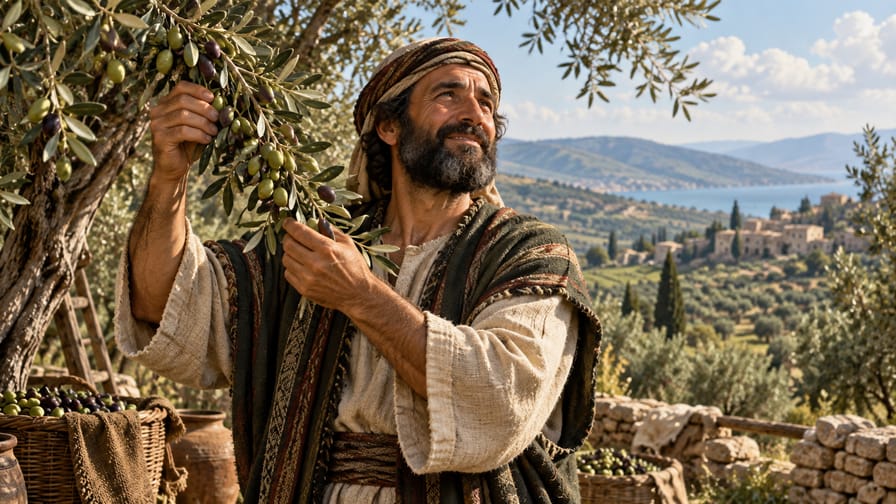
The figure of Asher, one of Jacob's twelve sons and patriarch of one of the tribes of Israel, offers a rich tapestry for biblical and theological analysis. His name and the history of his tribe, though sometimes less prominent than others, reveal important truths about divine providence, God's faithfulness, and the complexities of human experience within the context of the covenant.
This analysis seeks to explore the onomastic meaning of Asher, his historical context, the characteristics of his tribe in the biblical narrative, his theological significance, and his relevance for evangelical Protestant theology, underscoring the authority of Scripture and a Christ-centered perspective.
1. Etymology and meaning of the name
The name Asher (in Hebrew: אָשֵׁר, ’Asher) is a Hebrew term that carries a deeply positive and auspicious meaning. It derives from the Hebrew verbal root ’ashar (אָשַׁר), which means "to be happy," "to be blessed," or "to prosper."
Consequently, the name Asher can be translated as "Happy," "Blessed," or "Fortunate." The origin of the name is explicitly narrated in Genesis 30:13, when Zilpah, Leah's servant, gave birth to her second son for Jacob.
Leah exclaimed: "’Osher li, ki ishshruni banot" (אָשֶׁר לִי, כִּי אִשְּׁרוּנִי בָּנוֹת), which means "For my happiness! For the women will call me blessed." The name Asher was then given to the boy to commemorate this declaration of perceived happiness and blessing.
There are no other prominent biblical characters who share the same name, which makes the identity of Asher and his tribe uniquely associated with this meaning of blessing and prosperity. The symbolism of the name prefigures the prophetic blessings that would be pronounced upon the tribe.
From a theological standpoint, the name Asher itself is a declaration of God's goodness and provision, even amidst the family tensions of the patriarchal period. It points to the conviction that life and posterity are divine gifts, generating joy and recognition of God's blessing.
2. Historical context and biblical narrative
2.1 Family origin and genealogy
Asher is Jacob's eighth son and the second son he had with Zilpah, Leah's servant. His story begins in the patriarchal period, approximately between 1800 and 1700 BC, a time of the formation of the twelve tribes of Israel, as recorded in the book of Genesis.
His ancestry, through Zilpah, positions him among Jacob's sons born of maidservants, along with Dan, Naphtali, and Gad. This distinction, however, did not diminish his status as one of the patriarchs of Israel, as confirmed in the genealogical lists and tribal blessings.
The genealogy of Asher is detailed in Genesis 46:17 and Numbers 26:44-47. He had four sons – Imnah, Ishvah, Ishvi, and Beriah – and one daughter, Serah. Serah is notable for being the only granddaughter of Jacob mentioned by name in the list of those who went down to Egypt, standing out in a predominantly male context.
The mention of Serah in Genesis 46:17 and again in Numbers 26:46 (where her descendants are listed) suggests a particular importance, perhaps as a bearer of traditions or as a crucial genealogical link, though the Scriptures do not detail her role.
2.2 Key events and biblical passages
The life of Asher, the individual, is sparsely detailed after his birth. His importance lies primarily in his descendants, the tribe of Asher, which plays a role in the history of Israel from the Exodus to the Second Temple period and, notably, in the New Testament.
Key passages that mention him directly or prophetically include Genesis 30:12-13 (birth), Genesis 35:26 (list of Jacob's sons), Genesis 46:17 (descent into Egypt), and the blessings of Jacob and Moses.
Jacob's blessing on Asher in Genesis 49:20 is prophetic: "Asher’s food will be rich he will provide delicacies fit for a king." This prophecy points to the prosperity and agricultural wealth that would characterize the territory of the tribe of Asher.
Moses' blessing in Deuteronomy 33:24-25 reiterates and expands this promise: "May Asher be blessed above other sons may he be favored by his brothers, and may he dip his foot in oil. May your bars be iron and bronze, and as your days, so may your strength be."
This blessing highlights the fertility of Asher's land (oil), his acceptance among the tribes, and the security of his borders, suggesting a life of peace and material prosperity.
2.3 Geography and tribal settlement
After the conquest of Canaan under Joshua, the tribe of Asher received its territory in the northwest region of the promised land, as described in Joshua 19:24-31. This area was known for its fertility, especially for olive production, which perfectly aligns with Moses' blessing about the "foot dipped in oil."
Asher's territory extended along the Phoenician coast, from Mount Carmel in the south to the vicinity of Sidon in the north, and inland to the border with Naphtali and Zebulun. It included important cities such as Acco, Tyre, and Sidon, although the tribe of Asher was not able to completely dislodge the Canaanite inhabitants of these cities, as recorded in Judges 1:31-32.
This failure to complete the conquest had significant implications for the tribe's religious and cultural purity, leading to a coexistence with pagan peoples that often challenged Israel's faith and identity.
3. Character and role in the biblical narrative
3.1 Analysis of individual and tribal character
Regarding Asher, the individual, the Bible offers few details about his personal character. He is, first and foremost, a link in the patriarchal chain, whose main function is to give rise to a tribe. The Scriptures do not record acts of great faith, notable failures, or significant speeches attributed to him.
However, the character of the tribe of Asher, which bears his name, is more discernible through the biblical narratives. The tribe is frequently associated with material prosperity and a tranquil life, as indicated by the blessings of Jacob and Moses.
Asher's land was rich in resources, especially olive oil, which gave it an economic advantage. This wealth, however, seems to have contributed to a certain passivity or lack of zeal in military and spiritual matters crucial to the nation of Israel.
3.2 Virtues, failures, and vocation
A notable failure of the tribe of Asher is its inability to completely drive out the Canaanite inhabitants from its territory, as reported in Judges 1:31-32. Important cities such as Acco, Sidon, and Ahlab remained under Canaanite control, which contradicted the divine command to purify the land.
This failure is a recurring theme in the book of Judges and is a theological reminder of the importance of complete obedience to God. Coexistence with pagan peoples frequently led to idolatry and cultural assimilation, weakening Israel's faith.
During the time of the Judges, when Deborah summoned the tribes for battle against Sisera, Asher is criticized in Judges 5:17 for "remaining by the seacoast and staying in its coves," that is, for not fully participating in the struggle for Israel's liberation. This suggests a preference for security and comfort over national and religious duty.
Asher's vocation, therefore, seems to have been that of a prosperous tribe, perhaps more focused on its own economic interests than on prominent military leadership or participation. Its contribution to the national life of Israel is less documented in terms of great deeds, but its presence and wealth are undeniable.
3.3 Character development and significant actions
Although the tribe of Asher is not depicted as a dominant force in biblical history, there are mentions that indicate moments of faithfulness. In 2 Chronicles 30:11, during King Hezekiah's reform, some individuals from Asher, Manasseh, and Zebulun are mentioned for humbling themselves and coming to Jerusalem to celebrate the Passover.
This is an important glimpse, showing that despite the general tendencies of the tribe, there was always a remnant faithful to God. This passage demonstrates that God's grace reached individuals from all tribes, even those with a history of disobedience.
The presence of Anna, the prophetess, in the New Testament, who was from the tribe of Asher (Luke 2:36), is a notable testament that faith and devotion persisted in the tribe until the coming of the Messiah, despite centuries of challenges and dispersion.
4. Theological significance and typology
4.1 Role in redemptive history and progressive revelation
The tribe of Asher, with its name meaning "blessed" or "happy," plays a role in the redemptive history of Israel by demonstrating God's faithfulness in fulfilling His promises of prosperity, even in the face of human failures. The blessings of Jacob and Moses upon Asher are prophetic declarations of divine provision for His people.
Asher's material prosperity, particularly its wealth in olive oil, is a reflection of God's goodness toward His people, as promised in the covenant. However, the tribe's history also serves as a vivid reminder of the consequences of partial obedience and the failure to fully trust God for the complete conquest of the promised land.
God's progressive revelation through Asher's history illustrates that divine blessing is not merely material but is intrinsically linked to covenant faithfulness. Asher's presence in eschatological lists, such as in Revelation 7:6, points to the tribe's ultimate and spiritual inclusion in God's redemptive plan, transcending its historical limitations.
4.2 Prefiguration and Christocentric typology
Although Asher, the individual, is not a direct typological figure of Christ, the prophetic blessings associated with his tribe can be interpreted from a Christocentric perspective in evangelical theology. Asher's wealth and abundance ("rich food," "royal delicacies," "foot in oil") prefigure the fullness of spiritual blessings found in Christ.
Christ is the true "bread of life" (John 6:35) and the source of all "royal delicacies" and spiritual blessings (Ephesians 1:3). Olive oil, frequently a symbol of the Holy Spirit and anointing, points to Jesus' messianic anointing and to the fullness of the Spirit that He grants to believers.
The security and strength promised to Asher ("bars of iron and bronze," "as your days, so shall your strength be") find their supreme fulfillment in Christ, who offers true security and spiritual strength to all who believe in Him (Philippians 4:13).
The story of Anna, the prophetess from the tribe of Asher (Luke 2:36-38), is a crucial link. She represents the faithful remnant of Israel who eagerly awaited messianic redemption. Her joy upon seeing the child Jesus ("spoke about him to all who were looking forward to the redemption of Jerusalem") encapsulates the meaning of the name Asher – happiness and blessing – realized in the coming of the Messiah.
4.3 Connection with central theological themes
The narrative of Asher and his tribe connects with central theological themes such as God's sovereignty in provision, human responsibility in obedience, and divine grace in redemption. The promised prosperity and the failure to fully conquer the land demonstrate the tension between God's promise and human fallibility.
The inclusion of Asher in the lists of the twelve tribes, even with their shortcomings, underscores God's faithfulness to His covenant with Jacob and His intention to redeem all Israel. The tribe of Asher, therefore, serves as a reminder of God's prevenient grace and persevering grace.
The figure of Anna, from the tribe of Asher, in the New Testament, is a powerful illustration of faith and hope amidst the messianic expectation. Her devotion and testimony connect the ancient promise of blessing with its fulfillment in Christ, reinforcing the continuity of God's plan of salvation through the generations and tribes of Israel.
5. Biblical-theological legacy and canonical references
5.1 Mentions in other biblical books and theological influence
The tribe of Asher is consistently mentioned in tribal lists and censuses throughout the Old Testament, from Genesis to Chronicles. In Numbers 1:13 and 2:27, Pagiel son of Ocran is the leader of the tribe during the census in the wilderness. His position in the camp was to the north, with Dan and Naphtali.
In Numbers 26:44-47, the second census in the wilderness lists the clans of Asher and their numbers, showing their growth. In Joshua 13:24-31 and 19:24-31, the description of their territorial inheritance is detailed, confirming the fulfillment of Jacob's and Moses' blessings concerning the land's fertility.
Despite its limited participation in important military events, such as the war against Sisera (Judges 5:17), the tribe of Asher maintained its identity and place within the nation of Israel. Its mention in 2 Chronicles 30:11, where some of its members humbled themselves to celebrate Hezekiah's Passover, demonstrates that faith in God persisted among them, even after centuries of syncretism and challenges.
The theological influence of Asher lies in its representation of material blessing and God's provision, and, at the same time, in the lesson about the need for obedience and faithfulness. Reformed and evangelical theology emphasizes that divine blessings come with responsibilities, and failure to fulfill them can have consequences, but God's grace always provides a path to repentance and restoration.
5.2 Presence in interpretive tradition and evangelical theology
The presence of Anna, the prophetess, in the Gospel of Luke (Luke 2:36-38), is the most significant mention of Asher in the New Testament. She is described as "of the tribe of Asher," an elderly woman who served God with fastings and prayers in the temple and who recognized Jesus as the Messiah.
This reference is crucial for evangelical theology, as it demonstrates the continuity of God's promise and the messianic expectation among the tribes of Israel, even those that were dispersed or had less glorious histories in the Old Testament. Anna represents the faithfulness of the remnant of Israel who awaited redemption.
The inclusion of Asher in the list of the twelve tribes in Revelation 7:6, which are sealed before the final judgment, is another canonical reference of great weight. This eschatological mention confirms that tribal identity, though transformed, has a place in God's final plan for salvation and new creation.
Evangelical commentators like John Calvin (in his "Institutes" and commentaries) and Matthew Henry (in his "Complete Commentary on the Whole Bible") often address the blessings upon Asher as divine promises of prosperity and the tribe's role in the history of Israel. They emphasize the importance of interpreting these promises both materially and spiritually, pointing to the greater blessings in Christ.
Conservative evangelical theology sees in Asher an example of the complexity of the biblical narrative: generous divine blessings, persistent human failures, and God's redemptive grace which, ultimately, includes all who trust in Him in the history of salvation, culminating in the figure of Christ.
The story of Asher, therefore, is not merely a historical record, but a perennial theological lesson on God's sovereignty, human responsibility, and the unwavering hope that is fully realized in Jesus Christ, the true bearer of all blessing and happiness.