


Ananias
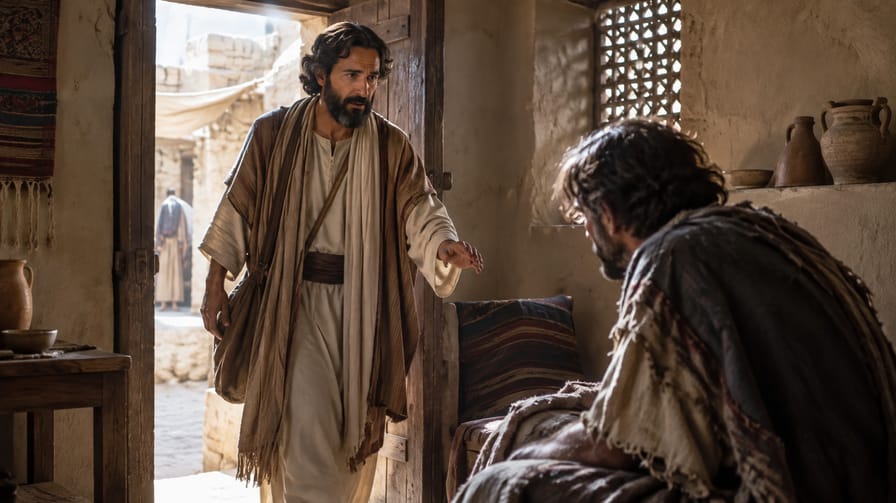
The figure of Hananiah (in Hebrew, Ḥănanyāh, חֲנַנְיָה), meaning "Yahweh has been gracious" or "Yahweh has shown favor," is one of the most intriguing and theologically charged in the Old Testament, especially in the book of Jeremiah. Although the name Hananiah is relatively common in the Scriptures, designating at least a dozen individuals, the deepest and most theologically impactful analysis falls on the prophet from Gibeon who opposed Jeremiah, as recorded in Jeremiah 28. His story serves as a powerful case study on the nature of true and false prophecy, the authority of the Word of God, and the consequences of disobedience and presumption.
The narrative of Hananiah, the false prophet, is crucial for understanding the tension between the divine message and human expectations, a recurring theme in prophetic theology. From an evangelical Protestant perspective, which values the inerrancy and sufficiency of Scripture, the story of Hananiah offers timeless lessons on spiritual discernment, faithfulness to divine revelation, and the seriousness of proclaiming "thus says the Lord" without due divine commission. This entry will explore the onomastic meaning, historical context, character, narrative role, and theological relevance of Hananiah, the prophet from Gibeon, based on rigorous exegesis and a Christocentric hermeneutic.
1. Etymology and meaning of the name
The name Hananiah derives from the Hebrew Ḥănanyāh (חֲנַנְיָה), a combination of two Hebrew roots. The first part, ḥanan (חָנַן), means "to be gracious," "to show favor," or "to have compassion." It is frequently used to describe the grace and mercy of God towards humanity, as in Exodus 33:19 and Psalms 86:17.
The second part of the name is the abbreviated form of the Tetragrammaton YHWH (יְהוָה), the covenant name of God, often transliterated as "Yah" or "Ya." Thus, Hananiah means "Yahweh has been gracious" or "Yahweh has shown favor." This is a theophoric name, common in Hebrew culture, which expresses a declaration of faith or gratitude for divine goodness.
The irony of the name of Hananiah, the false prophet, is notable, for he opposed the message of the true prophet Jeremiah, who proclaimed God's judgment upon Judah, despite the divine grace that had been repeatedly extended. Although his name declares Yahweh's grace, his actions and his message contradicted the revealed will of the gracious God.
There are several variations of the name in biblical languages. In the Greek Septuagint, for example, the name is transliterated as Ananias (Ἀνανίας), which is the form we find in the New Testament for other characters. However, the original Hebrew clearly distinguishes Hananiah from Ananias, the former being Ḥănanyāh and the latter Ḥănanyah, although the distinction may be subtle in some transliterations.
Besides the Hananiah of Jeremiah 28, the Bible mentions other individuals with the same name. In the Old Testament, we find a Hananiah, one of the chiefs of the people who sealed the covenant with Nehemiah (Nehemiah 10:23), and another who was the governor of the citadel of Jerusalem, also in Nehemiah's time (Nehemiah 7:2). There is also Hananiah, the grandfather of one of the princes of Judah (Jeremiah 36:12), and one of Daniel's three young companions, known as Shadrach (Daniel 1:6-7).
In the New Testament, although the Greek transliteration Ananias is more common, it is crucial to note that it refers to distinct figures, such as Ananias, the husband of Sapphira (Acts 5:1-11), and Ananias, the disciple from Damascus who baptized Saul (Acts 9:10-19), and the high priest Ananias (Acts 23:2). The prevalence of the name highlights the importance of the concept of "Yahweh's grace" in Israelite culture, even if not all bearers of the name lived up to its meaning.
The theological significance of the name Hananiah, in the context of the false prophet, is profoundly ironic. His name proclaims the grace of God, but he became an instrument of deception, promising a "grace" (swift liberation from exile) that did not come from God and which, in fact, conflicted with God's true grace, manifested through discipline and judgment for future restoration. The contrast between the meaning of his name and his actions underscores the seriousness of false prophecy and the distortion of divine truth.
2. Historical context and biblical narrative
2.1. Historical period and context
The story of Hananiah, the false prophet, is set in the most turbulent period of Judah's history, at the end of the 7th and beginning of the 6th century B.C. More specifically, the events recorded in Jeremiah 28 occur in the fourth year of the reign of Zedekiah, king of Judah (Jeremiah 28:1), which corresponds approximately to 594/593 B.C. This was a time of great political and religious instability, with Judah squeezed between regional powers, especially the Neo-Babylonian Empire.
At that time, King Nebuchadnezzar of Babylon had already taken captive part of Jerusalem's elite, including King Jehoiakim, the princes, and the craftsmen, in the first great exile in 597 B.C. (2 Kings 24:10-16). Zedekiah, Jehoiakim's uncle, was placed on the throne as a Babylonian vassal king. The nation lived under the shadow of the Babylonian threat, and there was a strong current of nationalistic and optimistic thought that refused to accept the harsh reality of foreign domination and prolonged exile.
The religious context was equally complex. Many prophets, priests, and leaders of the people preached a message of imminent peace and prosperity, contradicting Jeremiah's warnings about the need to submit to the Babylonian yoke as divine judgment (Jeremiah 27:1-11). This "positive" message was popular, as it relieved the people's anxiety and reinforced their hopes for swift liberation, even though it was contrary to the word of Yahweh.
2.2. Genealogy and family origin
The Scriptures provide little information about Hananiah's genealogy, identifying him only as "Hananiah, son of Azzur, from Gibeon" (Jeremiah 28:1). Gibeon was a Levitical city in the tribe of Benjamin, located a few kilometers northwest of Jerusalem. Although it is not known whether he was a Levite or belonged to a priestly family, the fact that he was from Gibeon and called himself a prophet suggests that he was part of the prophetic body or a group that identified as such.
The lack of specific genealogical details, unlike other prophets such as Jeremiah (son of Hilkiah, of the priests who were in Anathoth, Jeremiah 1:1), may indicate that Hananiah did not have a recognized prophetic lineage or that his authority was not based on his ancestry, but on his self-proclamation and the popularity of his message.
2.3. Key life events and biblical passages
The main narrative involving Hananiah is recorded in Jeremiah 28. The confrontation takes place in the Temple in Jerusalem, in the presence of priests and all the people (Jeremiah 28:1). Jeremiah was wearing a wooden yoke on his neck, symbolizing the servitude of Judah and neighboring nations to Babylon, as commanded by God (Jeremiah 27:2-7).
Hananiah then stood up and, in the presence of everyone, publicly contradicted Jeremiah's message. He prophesied that within two years, Yahweh would break the yoke of the king of Babylon and bring back the Temple articles and King Jehoiakim with all the exiles (Jeremiah 28:2-4). As a symbolic act, Hananiah took the yoke from Jeremiah's neck and broke it, declaring: "Thus says the Lord: Even so I will break the yoke of Nebuchadnezzar, king of Babylon, from the neck of all nations within two years" (Jeremiah 28:10-11).
Jeremiah's initial response was cautious, expressing the desire that Hananiah's prophecy of peace would come true, but reminding that the proof of a true prophet is the fulfillment of his word (Jeremiah 28:6-9). However, a short time later, the word of the Lord came to Jeremiah, who confronted Hananiah again.
Jeremiah delivered God's word to Hananiah, declaring that instead of a wooden yoke, there would be an iron yoke, symbolizing the even heavier servitude imposed by Babylon (Jeremiah 28:13-14). Furthermore, Jeremiah prophesied God's personal judgment upon Hananiah for having uttered false prophecies in the name of Yahweh: "Therefore thus says the Lord: Behold, I will cast you off the face of the earth this year you shall die, because you have spoken rebellion against the Lord" (Jeremiah 28:16).
The narrative concludes with the exact fulfillment of Jeremiah's prophecy: "So the prophet Hananiah died that same year, in the seventh month" (Jeremiah 28:17). This dramatic event serves to vindicate Jeremiah's authority as a true prophet of Yahweh and to expose Hananiah's falsehood.
2.4. Relationships with other biblical characters
Hananiah's most prominent relationship is with the prophet Jeremiah. They represent two opposing poles in Judah's prophetic arena: Jeremiah, the prophet of harsh truth and divine judgment, and Hananiah, the prophet of false hope and popular message. This confrontation is not merely between two men, but between two messages and two sources of prophetic authority.
Hananiah also relates indirectly to King Zedekiah and the people of Judah, who were the recipients of his optimistic prophecies. His message, although false, was appealing to a nation desperate for good news and swift liberation from the Babylonian yoke. He represented the voice of those who refused to accept God's sovereignty over history and the judgment that was falling upon them.
3. Character and role in the biblical narrative
3.1. Analysis of character and moral failings
Hananiah's character, as revealed in Jeremiah 28, is marked by presumptuous audacity and a profound lack of spiritual discernment. His primary failing lies in his readiness to speak in the name of Yahweh without having received a genuine word from the Lord. He is described as one who "spoke rebellion against the Lord" (Jeremiah 28:16), a serious accusation implying insubordination to divine authority and truth.
Hananiah's actions demonstrate a reliance on his own perception or popular desires, rather than a dependence on divine revelation. He does not hesitate to publicly contradict Jeremiah, who was recognized, though unpopular, as a prophet of God. His attitude reflects an arrogance that leads him to manipulate prophetic symbols, such as the yoke he breaks, to endorse his own false message.
Evangelical theology emphasizes that false prophecy is a serious sin because it distorts God's image and deceives the people, leading them into false security. Hananiah exemplifies the warning in Deuteronomy 18:20: "But the prophet who presumes to speak a word in my name that I have not commanded him to speak, or who speaks in the name of other gods, that prophet shall die." His death is, therefore, a direct fulfillment of Mosaic law and a vindication of divine justice.
3.2. Vocation and specific function
Hananiah presents himself as a prophet, assuming a vocation that, in Israel, was of utmost importance and required the strictest fidelity to Yahweh. True prophets were God's spokesmen, tasked with communicating His will, warnings, and promises to the people. Their function was to mediate divine revelation and call the nation to repentance and obedience.
However, Hananiah usurped this function, acting without divine commission. He was not sent by God, but self-proclaimed, motivated perhaps by a desire for popularity, by nationalistic beliefs, or by a mistaken understanding of God's will. His function, therefore, was not that of a true prophet, but that of a false prophet, one who "steals" words from others (Jeremiah 23:30) or speaks from his own heart (Jeremiah 23:16).
3.3. Role played and significant actions
Hananiah's main role in the biblical narrative is to serve as a direct counterpoint to Jeremiah, illustrating the crucial distinction between true and false prophecy. His significant actions include the public prophecy of peace and return from exile within two years (Jeremiah 28:2-4) and the symbolic act of breaking the wooden yoke from Jeremiah's neck (Jeremiah 28:10-11).
These actions were a direct challenge to Jeremiah's authority and Yahweh's message. By doing so, Hananiah not only deceived the people but also encouraged rebellion against the divine will, which required temporary submission to Babylon as an act of judgment and purification. His role is, therefore, that of an agent of deception and disobedience, whose actions had direct and fatal consequences for himself.
Hananiah's death is a crucial element in the narrative, serving as the final and irrefutable proof of the falsity of his prophecy and the veracity of Jeremiah's word. It is a vivid reminder of the seriousness with which God treats those who falsely claim to speak in His name (Deuteronomy 18:21-22). His development as a character is tragic: from a self-proclaimed prophet to a man who faces divine judgment for his presumption.
4. Theological significance and typology
4.1. Role in redemptive history and progressive revelation
Hananiah's story is fundamental to understanding redemptive history by illustrating the persistent tension between divine truth and human deception. He represents the voice that distorts God's revelation, offering a "more palatable" version of the truth, but which ultimately hinders true restoration and redemption. His narrative emphasizes the need for a clear and unquestionable revelation from God to guide His people.
In progressive revelation, the episode of Hananiah reinforces the importance of prophetic discernment, a theme that extends to the New Testament with warnings against false prophets and false teachers (Matthew 7:15-20 2 Peter 2:1-3). The story establishes a standard for testing the authenticity of the prophetic word: the fulfillment of prophecy and conformity with God's prior revelation (Deuteronomy 18:21-22).
4.2. Prefiguration or Christocentric typology
Hananiah is not a positive typological figure of Christ. On the contrary, he serves as an antitype or a negative contrast. While Hananiah uttered a message of false peace and hope, Jesus Christ is the true Prophet (Acts 3:22-23 John 6:14) who brings true peace (John 14:27 Ephesians 2:14) and eternal hope based on God's unwavering truth. Christ is the incarnate Word of God (John 1:1, 14), and His message is always true and effective.
The contrast between Hananiah's death, as divine judgment for his falsehood, and Christ's death, as a redemptive sacrifice for truth and life, is striking. Hananiah represents those who oppose God's truth and seek to mislead the people, while Christ is the Way, the Truth, and the Life (John 14:6). Hananiah's story indirectly points to the need for the Messiah as the final and infallible Prophet, whose word is absolute and whose redemptive work is the only source of true liberation.
4.3. Connection with central theological themes
Hananiah's story is deeply connected to several central theological themes. First, the theme of biblical authority: the confrontation between Jeremiah and Hananiah is a testimony to the unquestionable authority of the Word of God. The truth of Jeremiah's prophecy is confirmed by time and by divine judgment upon Hananiah, demonstrating that God's word does not return empty (Isaiah 55:11).
Second, the sovereignty of God: Hananiah attempted to nullify God's sovereign plan for the exile and discipline of Judah. God's response, through Jeremiah, reaffirms His total sovereignty over nations and human history, including the use of empires like Babylon for His purposes (Jeremiah 27:6). Hananiah's message was a rebellion against this sovereignty.
Third, divine judgment: Hananiah's death is a clear example of God's judgment on false prophecy and disobedience. It demonstrates the seriousness with which God treats those who speak in His name without His authority, and the certainty that He will vindicate His true messengers. It is a warning against religious presumption and spiritual manipulation.
Fourth, the grace of God: Ironically, Hananiah's name means "Yahweh has been gracious." However, God's true grace, manifested through judgment and exile, aimed at the final restoration of His people (Jeremiah 29:10-14), while the "grace" promised by Hananiah was an illusion that hindered the repentance necessary to experience God's true grace and mercy.
4.4. Doctrine and teachings associated with the character
The doctrine of prophecy, both true and false, is the most prominent teaching associated with Hananiah. He serves as the classic example of a false prophet in the Old Testament, whose characteristics are: speaking from one's own heart (Jeremiah 23:16), stealing words from others (Jeremiah 23:30), not being sent by God (Jeremiah 23:21), and uttering messages that do not come true (Deuteronomy 18:22). Hananiah's story reinforces the need to test the spirits (1 John 4:1) and to compare any supposed "word of God" with canonical revelation.
Another teaching is the importance of faithfulness to truth, even when it is unpopular. Jeremiah is the model of faithfulness, while Hananiah is the model of conformity to human expectations. The narrative instructs believers to value the truth of God's Word above any promise of comfort or prosperity that is not aligned with divine revelation.
5. Biblical-theological legacy and canonical references
5.1. Mentions in other biblical books and influence on theology
The figure of Hananiah, the false prophet, though specifically detailed only in Jeremiah 28, has a theological impact that resonates throughout the biblical canon. His story is a paradigm for warnings against false prophets and teachers, which are repeated in both the Old and New Testaments. In the Old Testament, the distinction between true and false prophets is a recurring theme, with Hananiah being a vivid example of the consequences of crossing that line.
In the New Testament, Jesus warns His disciples about false prophets who come in sheep's clothing (Matthew 7:15-20). The apostles Peter and John also warn about the arrival of false teachers who will introduce destructive heresies (2 Peter 2:1-3 1 John 4:1). Hananiah's story provides a historical precedent and a concrete example of the seriousness of these warnings, solidifying biblical theology on prophetic discernment.
Hananiah's influence on biblical theology lies mainly in his contribution to the doctrine of prophecy. He illustrates the need for external proof for the authenticity of prophecy (its fulfillment) and the need for prophecy to be in harmony with God's prior revelation. His story helps shape the understanding of prophetic authority and the responsibility of those who speak in God's name.
5.2. Presence in Jewish and Christian interpretive tradition
In the Jewish interpretive tradition, the story of Hananiah is frequently cited as a classic example of a false prophet, serving as a warning against those who seek to lead the people of Israel astray from the Torah and the true word of God. The rabbis use the case to emphasize the importance of adhering to the law and established prophets, and to distrust anyone who promises a deliverance or a different path than what has been revealed by God.
In the Christian tradition, from the Church Fathers to the Reformation and contemporary evangelical theology, Hananiah is consistently interpreted as the archetype of the false prophet. His story is used to substantiate the importance of the authority of Scripture, the need for careful exegesis, and vigilance against teachings that deviate from biblical truth. Evangelical commentators such as J. A. Thompson and R. K. Harrison frequently highlight the gravity of Hananiah's offense and the justice of divine judgment.
Reformed theology, in particular, underlines the sufficiency and inerrancy of Scripture, and Hananiah's story reinforces these principles. The written Word of God, as revealed through the true prophets and, ultimately, in Christ, is the only infallible source of truth. Any message that contradicts this Word, such as Hananiah's, must be rejected as false and dangerous.
5.3. Importance for understanding the canon
The narrative of Hananiah is vital for understanding the biblical canon for several reasons. First, it validates the authority of the canonical prophets, like Jeremiah, demonstrating that their words were truly divine and were fulfilled. Hananiah's death is a divine seal on the authenticity of Jeremiah's message, which is an integral part of the Old Testament canon.
Second, the story establishes an internal criterion for canonicity and inspiration. By showing the test of prophecy (its fulfillment), the Bible provides a mechanism to distinguish divinely inspired word from human speech. This reinforces the belief that the books included in the canon are those that were recognized as the true Word of God, as opposed to any "prophecy" or "writing" that failed this test.
Finally, the story of Hananiah reinforces the theological unity of the canon, which consistently warns against deception and exalts God's truth. From Deuteronomy to Revelation, the need to discern truth from falsehood is a central theme, and Hananiah serves as a vivid reminder of the seriousness of this task for God's people in all ages.