


Shinar
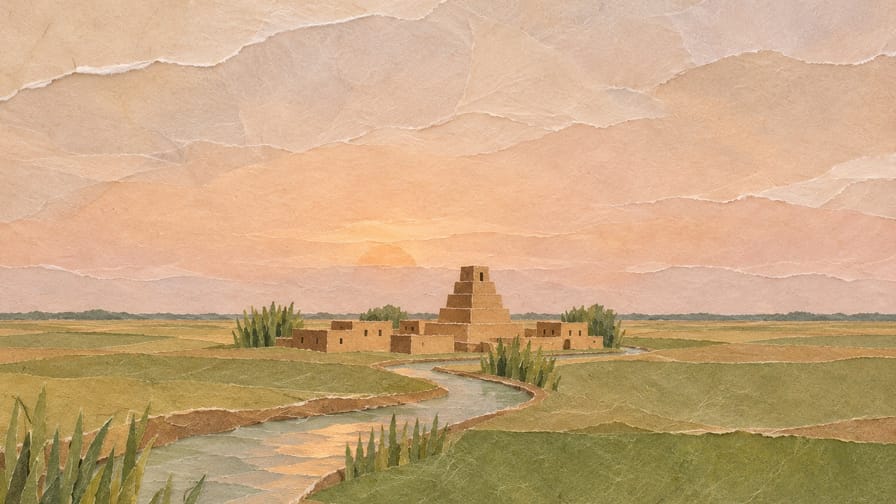
Shinar is the biblical name for the plain of southern Mesopotamia, between the Tigris and Euphrates, often linked to ancient Sumer. There Nimrod's kingdom began with Babel, Erech, Accad and Calneh (Genesis 10:10), and there people settled to build a city and a tower to make a name for themselves (Genesis 11:2-4).
God confused their language and scattered them, so the place became the seed of Babylon (Genesis 11:9), a lasting picture in Scripture of human pride set against God.
1. Etymology and Meaning of the Name
1.1 Original Name and Linguistic Derivation
The name Shinar, in Hebrew Šinʿar (שִׁנְעָר), appears for the first time in Genesis 10:10 and Genesis 11:2. The exact etymology of the term is uncertain and has been a subject of debate among scholars. Some suggest a Sumerian or Akkadian origin, the predominant languages in ancient Mesopotamia, where the region of Shinar was located.
One proposed explanation connects Šinʿar to the Sumerian Sumer or the Akkadian Šumeru, which referred to the region of Sumer, in southern Mesopotamia. This connection is plausible given the geographical and historical context of the biblical narratives. The phonetic transition from Sumer to Šinʿar would not be uncommon among Semitic languages.
Others propose that the name may derive from roots meaning "land of the two rivers" or "land of the plain." Although less likely etymologically, this interpretation reflects the geographical reality of Mesopotamia, situated between the Tigris and Euphrates rivers. The etymological uncertainty, however, does not diminish the importance of the place in the biblical narrative.
1.2 Literal Meaning and Possible Interpretations
Although the literal meaning of Šinʿar is not immediately obvious like other biblical names, its identification with Sumer gives it cultural and civilizational significance. Sumer was the cradle of urban civilization, cuneiform writing, and complex social and religious structures. The name, therefore, evokes the idea of an advanced and self-confident civilization.
The association of Shinar with the "land of Nimrod" in Genesis 10:10, where he established the cities of Babel, Erech, Accad, and Calneh, suggests a connotation of human power and ambition. The name, in this context, can symbolize the center of post-diluvian civilization that sought self-sufficiency and self-exaltation, in contrast to dependence on God.
Theologically, the name Shinar, even without a clear etymological meaning, becomes a signifier. It points to the place where humanity, united by one language and purpose, chose to build a monument to its own glory. Thus, the name Shinar becomes synonymous with a center of human rebellion and pride.
1.3 Variations and Related Names
There are no significant variations of the name Shinar within the Hebrew canonical text. However, its identification with Sumer and, subsequently, with Babylon, is crucial. The region of Shinar is the initial setting for what would become the powerful Babylon, which plays a prominent and often negative role in biblical prophecies. Isaiah 11:11 and Zechariah 5:11, for example, use Shinar as a term that overlaps with or relates to Babylon.
The name Babel (בָּבֶל), associated with the tower and the main city of the region, has a more direct meaning: "confusion," linked to the Hebrew verb balal (בָּלַל), "to confuse." This is an etymological interpretation popularized by the biblical narrative in Genesis 11:9. This association reinforces the theological message of divine intervention against human pride.
The connection between Shinar, Babel, and Babylon establishes a continuous line of theological meaning, where the region represents an archetype of opposition to God. From the earliest times, in Shinar, to the eschatological Babylon of Revelation, the biblical narrative uses these names to symbolize the city of man in contrast to the city of God.
2. Geographical Location and Physical Characteristics
2.1 Geography and Topography of the Region
The region of Shinar is consistently identified in the Bible as a plain, specifically the "plain of Shinar" (Genesis 11:2). This description corresponds to the vast and fertile alluvial plain of southern Mesopotamia, between the Tigris and Euphrates rivers. This area is characterized by its predominantly flat topography and its fertile land.
The absence of stones and the abundance of clay and bitumen in the region, as mentioned in Genesis 11:3, are precise geological characteristics. Construction with mud bricks and bitumen mortar was the standard building technique in Mesopotamia, due to the scarcity of rock and the availability of clay and natural oil deposits. This biblical detail demonstrates accurate knowledge of the local geography.
Mesopotamia, whose name means "land between rivers" (from Greek mesos, "middle," and potamos, "river"), was a "fertile crescent" that allowed for the development of agriculture and, consequently, the first urban civilizations. The richness of the soil, irrigated by the annual river floods, provided abundant harvests, sustaining large populations and the emergence of complex city-states.
2.2 Climate and Natural Characteristics
The climate of the Shinar region is typically arid to semi-arid, with hot, dry summers and mild winters. Life in Mesopotamia fundamentally depended on the Tigris and Euphrates rivers, which provided water for irrigation and transportation. Without artificial irrigation, large-scale agriculture would be impossible for most of the year.
The plain was originally composed of swamps, steppes, and cultivable lands near the rivers. Natural vegetation was sparse, but irrigated areas were incredibly productive, allowing for the cultivation of cereals like wheat and barley. Dependence on the rivers profoundly shaped the culture and economy of Mesopotamian civilizations.
Natural resources, in addition to water and fertile land, included clay deposits for pottery and bricks, and bitumen for construction and waterproofing. The lack of quality timber and metals required these raw materials to be imported, which stimulated trade and interaction with neighboring regions. These natural characteristics directly influenced the technological and architectural choices of the inhabitants of Shinar.
2.3 Proximity to Other Cities and Archaeological Data
Genesis 10:10 lists Babel, Erech, Accad and Calneh in Shinar as the beginning of Nimrod’s kingdom. It does not say that he personally founded or built all four cities: “And the beginning of his kingdom was Babel, and Erech, and Accad, and Calneh, in the land of Shinar.”
Babylon, in particular, became a powerful city of the ancient world, with its famous Tower of Babel (ziggurat) and its Hanging Gardens. Excavations in Uruk revealed one of the first and largest cities in the world, with evidence of monumental writing and architecture. Sumer, as a whole, is an archaeological treasure that corroborates many aspects of the biblical account of civilization in Shinar.
Mesopotamian archaeology, with its discoveries of ziggurats (stepped temple towers), cylinder seals, cuneiform tablets, and urban artifacts, offers a rich backdrop for the narrative of Shinar. It confirms the development of a sophisticated civilization in the region during the proto-dynastic and early dynastic periods, corresponding to biblical post-diluvian times.
3. History and Biblical Context
3.1 Period of Occupation and Political Context
The biblical history of Shinar begins in the post-diluvian period, shortly after the Great Flood, when humanity settled in the fertile plain of Mesopotamia (Genesis 11:2). This period marks the reoccupation of the earth and the beginning of the formation of nations. Genesis 10 describes the genealogy of Noah's sons, and Shinar is mentioned as part of the kingdom of Nimrod, grandson of Ham.
Nimrod is described as a "mighty hunter before the Lord" and the founder of the first city-states in the region of Shinar, including Babel, Erech, Accad, and Calneh (Genesis 10:9-10). This suggests an initial political context of power centralization and urbanization. Shinar, therefore, represents the birthplace of the first complex political and social structures after the Flood.
The narrative of Shinar in the early chapters of Genesis establishes a pattern of human development that, although marked by great civilizational progress, is also characterized by a persistent inclination towards self-sufficiency and rebellion against divine authority. The formation of kingdoms and cities in Shinar symbolizes the emergence of secular power in opposition to theocratic rule.
3.2 Key Biblical Events
The most significant event associated with Shinar is the construction of the Tower of Babel (Genesis 11:1-9). Humanity, then with one language and one purpose, decided to build a city and a tower "whose top may reach unto heaven," with the goal of "let us make a name for ourselves, lest we be scattered abroad upon the face of the whole earth." This act was a clear affront to God's command to "fill the earth" (Genesis 9:1).
The divine response to this rebellion was the confusion of languages and the dispersion of peoples (Genesis 11:7-8). This event is fundamental to understanding the linguistic and ethnic diversity of humanity. It is a testament to God's sovereignty over human plans and His ability to thwart man's arrogance.
Subsequently, Shinar is mentioned in Genesis 14:1, 9, in the context of the war of the kings. Amraphel, king of Shinar, is one of the four kings who attacked Sodom and Gomorrah and captured Lot. This event shows Shinar as a regional military power. The defeat of these kings by Abraham demonstrates divine protection over his chosen people, even when it was still in its formative stages.
3.3 Historical Development and Later Mentions
Although direct mentions of Shinar decrease after Genesis, the region continues to be a point of theological and geographical reference through its association with Babylon. The prophecies of Isaiah and Zechariah use Shinar to refer to Babylon, especially in the context of exile and restoration. Isaiah 11:11 speaks of the return of the remnant of Israel from various nations, including "from Shinar," referring to Mesopotamia.
Zechariah 5:11 describes a vision in which a woman, representing wickedness, is carried away to the "land of Shinar" to build a house for her. This passage is often interpreted as an eschatological reference to Babylon as the center of evil and anti-God power. The continuity of the symbolism of Shinar/Babylon throughout the biblical canon is notable.
The history of Shinar, therefore, is not limited to the initial events in Genesis but extends through its identification with Babylon, becoming an enduring symbol of human opposition to God and divine judgment. The region serves as a link between biblical prehistory and subsequent events in the history of Israel and in eschatological prophecies.
4. Theological Significance and Redemptive Events
4.1 Role in Redemptive History and Progressive Revelation
Shinar plays a crucial role in redemptive history as the setting of a recorded instance of post-diluvian human rebellion. The narrative of the Tower of Babel in Genesis 11 is not merely a historical account, but a profound theological revelation about the sinful nature of man and the sovereignty of God. It sets the stage for the need for redemption.
The attempt to build a tower that reached the heavens and "to make a name for ourselves" reveals the essence of sin: pride, self-sufficiency, and the rejection of divine authority (Genesis 11:4). In Shinar, united humanity sought glory for itself, instead of glorifying God. This is an early manifestation of the "glory of man" that opposes the "glory of God," a central theme of Scripture.
The divine intervention in Shinar, confusing languages and dispersing peoples, is an act of judgment, but also of mercy. By thwarting human arrogance, God prevented humanity from falling into an even deeper abyss of sin and idolatry. This event prepares the ground for the call of Abraham and the beginning of the plan of redemption through an elect nation (Genesis 12:1-3).
4.2 Theological Symbolism and Prophecies
Shinar and, by extension, Babel/Babylon, become a powerful theological symbol of opposition to God and of a corrupt world system. It represents the city of man, built on ambition and idolatry, in contrast to the city of God, Jerusalem. This dichotomy is a recurring theme in biblical theology, culminating in the "Babylon the Great" of Revelation (Revelation 17-18).
The confusion of languages in Shinar is often typologically contrasted with the event of Pentecost in the New Testament (Acts 2:1-11). At Babel, God dispersed humanity through linguistic diversity as a judgment. At Pentecost, God united humanity in Christ, allowing people of different languages to hear the Gospel in their own tongue, symbolizing the reversal of the curse of Babel and the formation of the universal Church.
The mention of Shinar in later prophecies, such as in Zechariah 5:11, where wickedness is carried away to the "land of Shinar" to establish its throne, reinforces its eschatological symbolism. Shinar/Babylon is portrayed as the epicenter of evil and rebellion against God, which will finally be judged and destroyed by Christ at His second coming. This symbolism is crucial for understanding the spiritual battle and God's final triumph.
4.3 Relevance for Faith Today
Shinar is a vivid reminder of the doctrine of total depravity of man and the need for divine intervention. The story of Babel illustrates that, even after the flood, man's sinful nature remains unchanged, leading him to seek self-exaltation. This underscores the need for God's grace and Christ's redemptive work for salvation.
Furthermore, Shinar highlights God's sovereignty over human history. Even in the face of rebellion, God acts to fulfill His purposes, controlling and directing events for the advancement of His redemptive plan. The dispersion of peoples, though a judgment, also led to the fulfillment of the command to "fill the earth" and prepared the way for the call of Abraham and the development of the people of Israel.
The typology between Babel and Pentecost is a powerful preaching point, illustrating the unifying work of the Holy Spirit that reverses the effects of sin and division. Where Shinar brought division and confusion, Pentecost brought unity and understanding in Christ. The Church, composed of people of all tongues and nations, is God's answer to the rebellion of Shinar, demonstrating the power of the Gospel to unite what sin divided.
5. Biblical-Theological Legacy and Canonical References
5.1 Mentions of the Place in Different Biblical Books
References to Shinar are found in three Old Testament books, each contributing to an understanding of its importance. The most detailed mentions are in Genesis, in chapters 10 and 11, which narrate the establishment of Nimrod's kingdom and the construction of the Tower of Babel. Genesis 10:10 lists Shinar as the land of the first cities of Nimrod's kingdom, while Genesis 11:2 identifies it as the plain where the tower was built.
Another mention occurs in Genesis 14:1, 9, where Amraphel is identified as the "king of Shinar" who participates in a coalition of kings against Sodom and Gomorrah. This reference establishes Shinar as a relevant political and military entity in patriarchal times. It shows the region's influence on events that affected the father of faith, Abraham.
Subsequently, Shinar is mentioned in prophetic contexts. Isaiah 11:11 refers to Shinar as one of the places from which the remnant of Israel will be gathered in the last days. This passage uses Shinar as a poetic or geographical synonym for Babylon or Mesopotamia in general, indicating the dispersion of God's people among various nations.
Finally, Zechariah 5:11 describes an eschatological vision where wickedness is carried away to the "land of Shinar" to build a house for it. This passage depicts Shinar as an archetype of evil and opposition to God at the end of times. The consistency of the symbolism throughout the canon is notable.
5.2 Frequency and Contexts of References
Although direct mentions of Shinar are few (eight occurrences of the Hebrew name), its importance is disproportionate to its frequency. The narratives in Genesis are foundational for understanding the history of humanity, the origin of languages, and the dispersion of peoples. The mention in Genesis 14 solidifies its existence as a contemporary kingdom of Abraham.
The prophetic references in Isaiah and Zechariah demonstrate that the name Shinar continued to have theological resonance centuries after the events of Genesis. It functions as a metonymy for Babylon and, by extension, for any worldly power that opposes God. The progression of Shinar's meaning from a geographical location to a theological symbol is an example of progressive revelation.
The context of these references ranges from biblical prehistory (Genesis 10-11), through patriarchal times (Genesis 14), to prophecies about exile and restoration (Isaiah 11) and eschatological visions (Zechariah 5). This scope shows the enduring relevance of Shinar in biblical narrative and theology.
5.3 Shinar and the Doctrine of the Fall
Shinar is fundamental to the doctrine of the fall and human depravity. The story of Babel in Shinar serves as a primary example of human rebellion against divine sovereignty and the pursuit of a glory independent of God. It is a testament to the need for God's sovereign grace for the salvation and restoration of humanity.
The confusion of languages is seen not only as a judgment but also as a providential act of God to curb evil and force humanity to disperse, fulfilling the original command to "fill the earth." The subsequent call of Abraham, immediately after the events of Shinar, is understood as the beginning of God's response to universal rebellion, establishing a people through whom blessing would come to all nations.
The typology between Babel and Pentecost is a central theme in understanding the work of the Holy Spirit in undoing the curse of sin. Where Shinar brought division and confusion, Pentecost brought unity and understanding in Christ.
The relevance of Shinar for understanding biblical geography is that it establishes Mesopotamia as the cradle of post-diluvian civilization and the stage for crucial events that shaped biblical history and theology. It establishes a geographical and theological connection with later Babylon, which continues to be a prophetic symbol until the book of Revelation.