


Zephaniah
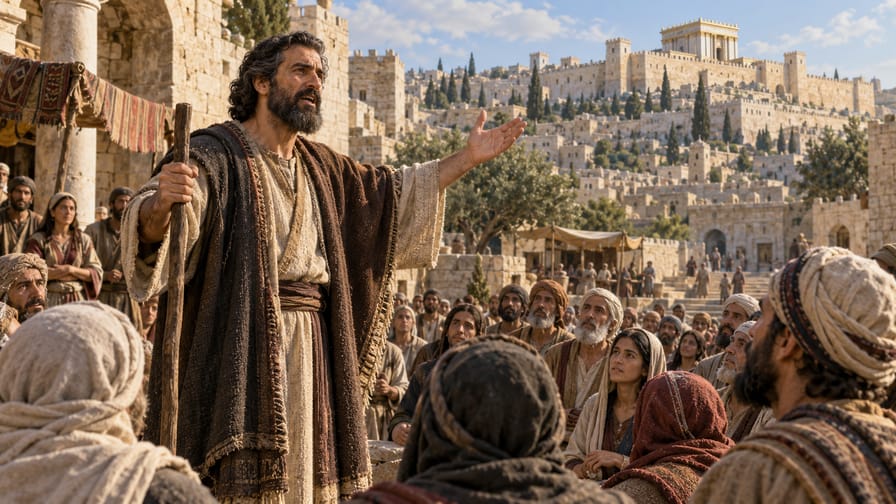
The figure of **Zephaniah**, one of the twelve minor prophets of the Old Testament, stands out for his poignant message of divine judgment and restorative hope, delivered during a critical period in Judah's history. His prophecy, concise yet powerful, offers profound insight into the nature of God, human sin, and the redemptive plan. This analysis seeks to explore his identity, context, and theological significance from a Protestant evangelical perspective, suitable for a biblical-theological dictionary.
1. Etymology and Meaning of the Name
The name **Zephaniah** comes from the Hebrew *Tsefanyah* (צְפַנְיָה), an abbreviated form of *Tsefanyáhu*. This name is composed of two parts: the verbal root *tsafan* (צָפַן), which means "to hide," "to guard," or "to protect," and the suffix *Yah* (יָהּ), which is an abbreviation of the divine name Yahweh (YHWH).
Literally, *Tsefanyah* can be translated as "Yahweh has hidden," "Yahweh has protected," or "Yahweh has guarded." This meaning is particularly relevant in the context of **Zephaniah**'s prophetic message, which announces a day of universal judgment but also a promise of protection and salvation for a faithful remnant. The name, therefore, prefigures both the judgment that would come and the grace that would be offered.
The idea of God "hiding" or "protecting" is a recurring theme in the Scriptures, often associated with salvation and safe refuge amidst calamity. In *Psalm 27:5*, for example, the psalmist declares: *"For in the day of trouble he will keep me safe in his dwelling he will hide me in the shelter of his tabernacle and set me high upon a rock."* This concept resonates with **Zephaniah**'s message, which calls the humble of the land to seek the Lord, that they may perhaps be sheltered on the day of the Lord's anger (Zephaniah 2:3).
Although **Zephaniah** is the most known prophet with this name, the Bible mentions other individuals who bore it. In *1 Chronicles 6:36* (in the Hebrew numbering, 6:21), there is a Levite named *Tsefanyah*. Another **Zephaniah** is mentioned as a priest in *Jeremiah 21:1*, *29:25-29*, and *52:24*, a messenger between King Zedekiah and the prophet Jeremiah, and later taken captive to Babylon.
Furthermore, a man named **Zephaniah** is listed among those who returned from the Babylonian exile in *Zechariah 6:10, 14*. The existence of other individuals with the same name in different periods demonstrates its popularity and the positive meaning it carried in Hebrew culture, reinforcing the idea of divine protection.
The theological significance of **Zephaniah**'s name for the prophet is multifaceted. It not only reflects God's sovereignty in protecting His people but also serves as a reminder of human responsibility in seeking that protection. The prophet, whose very name evokes divine security, is paradoxically the messenger of one of the most severe oracles of judgment in the Old Testament.
This duality—judgment and refuge—is central to **Zephaniah**'s theology and to the understanding of God's justice and mercy. The Lord hides and protects those who seek Him, but reveals His wrath against ungodliness. The prophet's name, thus, is not a mere identifier but a theological summary of his mission and the divine message.
2. Historical Context and Biblical Narrative
2.1 Historical Period and Setting
The book of **Zephaniah** begins with a clear statement about the period of his prophecy: *"The word of the Lord that came to Zephaniah son of Cushi, son of Gedaliah, son of Amariah, son of Hezekiah, in the days of Josiah son of Amon, king of Judah"* (Zephaniah 1:1). This places his prophetic activity during the reign of King Josiah (c. 640-609 BC).
Josiah ascended to the throne of Judah at only eight years old. The initial years of his reign were marked by the profound apostasy that had taken root during the long reigns of his grandfather Manasseh (55 years) and his father Amon (2 years). Manasseh had promoted idolatry on an unprecedented scale, introducing pagan cults, child sacrifices, and star worship in Jerusalem (2 Kings 21:1-9 2 Chronicles 33:1-9).
**Zephaniah**'s context is, therefore, one of severe moral and spiritual decline, where the nation of Judah had completely abandoned the covenant with the Lord. Despite the religious reform initiated by Josiah around 622 BC (2 Kings 22-23 2 Chronicles 34-35), **Zephaniah**'s words seem to have been uttered before or in the early stages of this reform, when idolatry and injustice were still widespread.
Politically, Judah was at an inflection point. The Assyrian Empire, which had dominated the region for centuries, was in terminal decline. Babylon was rising as the new world power, and Egypt was trying to reassert its influence. This geopolitical instability created a power vacuum that would eventually lead to the destruction of Jerusalem and the exile. **Zephaniah**'s prophecy reflects the imminence of a devastating judgment, possibly in the form of a Babylonian invasion or references to peoples from the north.
2.2 Genealogy and Family Origin
**Zephaniah**'s genealogy is notable for being one of the most extensive among the minor prophets, tracing back four generations: *"son of Cushi, son of Gedaliah, son of Amariah, son of Hezekiah"*** (Zephaniah 1:1). The reference to Hezekiah is particularly significant. Although there is no explicit statement in the text, many evangelical commentators, such as Keil and Delitzsch, interpret this as an indication that **Zephaniah** was a descendant of King Hezekiah of Judah.
If this interpretation is correct, **Zephaniah** would have been of royal lineage, which would lend additional authority to his message. Being a member of the royal house, even if distant from the throne, would have given him access to and a unique perspective on the corruption in the court and among the elite of Jerusalem, which he openly criticizes (Zephaniah 1:8).
2.3 Main Events and Geography
The book of **Zephaniah** does not narrate detailed biographical events of the prophet but rather his divine messages. His prophecies are centered on Jerusalem and Judah but expand to cover neighboring nations and even a universal judgment. He prophesies against Philistia (Zephaniah 2:4-7), Moab and Ammon (Zephaniah 2:8-11), Ethiopia (Zephaniah 2:12), and Assyria, with Nineveh as its center (Zephaniah 2:13-15).
**Zephaniah**'s main "action" is the proclamation of the word of the Lord, which he delivers with boldness and clarity. His central message is the "Day of the Lord" (Yom Adonai), a day of imminent wrath and destruction for Judah due to its idolatry, injustice, and apostasy (Zephaniah 1:2-18). He describes this day with vivid images of darkness, anguish, and devastation.
However, amidst the severe judgment, **Zephaniah** also announces a future of restoration and salvation for a faithful remnant, both from Judah and from the nations (Zephaniah 3:9-20). He foretells the return of the exiles, the removal of iniquity, and the joy of the Lord's presence in their midst. This duality of judgment and grace is a striking characteristic of his book.
Geographically, Jerusalem is the main focus of his denunciation and the promise of restoration. The "gates" and "squares" of Jerusalem are mentioned (Zephaniah 1:10-11), indicating that the prophecy was directed directly at the urban life and the social and religious practices of the capital.
2.4 Relationships with Other Biblical Characters
**Zephaniah**'s most explicit relationship is with King Josiah. It is probable that **Zephaniah** was one of the prophets who influenced or supported Josiah's reform, which sought to eradicate idolatry and restore the worship of the Lord. Other contemporary prophets include Jeremiah and Habakkuk, who also prophesied during Josiah's reign or shortly thereafter.
Jeremiah, in particular, shares many of **Zephaniah**'s concerns about idolatry and the imminence of Babylonian judgment. Both prophets confront the superficiality of Josiah's reform, realizing that the people's heart had not been fully transformed, and that apostasy was too deep to be reversed by external measures alone (cf. Jeremiah 3:10).
**Zephaniah**'s prophecy also connects indirectly with earlier prophets, such as Isaiah and Joel, who also spoke extensively about the "Day of the Lord." **Zephaniah** expands and deepens this theme, applying it more immediately and universally to his own time.
3. Character and Role in the Biblical Narrative
3.1 Analysis of Character and Spiritual Qualities
Although the book of **Zephaniah** does not offer biographical details, the prophet's character emerges clearly through his message. He reveals himself as a courageous and uncompromising messenger of divine truth. His willingness to confront widespread idolatry, religious corruption, and social injustice in Judah (Zephaniah 1:4-6 3:1-4) demonstrates a deep faithfulness to the Lord and a zeal for His holiness.
**Zephaniah**'s message is marked by a passion for God's justice. He does not hesitate to describe divine judgment with graphic and severe terms, which indicates his conviction in the seriousness of sin and the righteousness of God. This firmness, however, is tempered by an evident compassion as he exhorts the people to seek the Lord and humility (Zephaniah 2:3), offering a door to hope.
His royal descent, if the interpretation regarding Hezekiah is correct, may have given him a position of authority, but his focus is on God's message, not on his own standing. He is a spokesperson for the Lord, not a politician. The absence of any self-exaltation in his book underlines his humility and dedication to his prophetic calling.
3.2 Vocation and Specific Function
**Zephaniah**'s primary role is that of a prophet, a spokesperson for God. His vocation was to proclaim the word of the Lord to a stubborn people, warning them of imminent judgment and calling them to repentance. He served as a "watchman" (cf. Ezekiel 3:17), warning of the approaching spiritual and physical danger.
His prophetic function covers three main areas:
- Denunciation of Sin: He exposes the idolatry, violence, fraud, arrogance, and religious indifference that permeated all layers of Jewish society, from royalty to common people (Zephaniah 1:4-6, 8-9, 12 3:1-4).
- Proclamation of Judgment: **Zephaniah** details the "Day of the Lord" as an event of universal devastation, affecting not only Judah but also the pagan nations (Zephaniah 1:14-18 2:4-15). This judgment is presented as God's just retribution for sin.
- Announcement of Restoration: Amidst the darkness of judgment, he offers rays of hope, promising the purification of a remnant, the return of the exiles, and the restoration of the worship of the Lord (Zephaniah 3:9-20).
He not only predicts future events but interprets contemporary events through the lens of divine sovereignty and the covenant. His prophecy serves as a reminder that God is actively involved in human history, bringing both judgment and salvation.
3.3 Significant Actions and Key Decisions
**Zephaniah**'s most significant action was his obedience in uttering the word of God, even when unpopular and severe. In an environment where idolatry was institutionalized and the religion of the Lord was corrupted, speaking God's truth required immense courage. He did not remain silent in the face of his nation's sin.
His decision to confront Jerusalem's elite (Zephaniah 1:8) and religious leaders (Zephaniah 3:3-4) demonstrates an unwavering conviction in divine authority over all spheres of life. The depth and breadth of his denunciation suggest that he was not intimidated by the power or popularity of sinners.
**Zephaniah**'s character development is not traced in terms of a personal narrative, but rather in the progression of his message. He begins with imminent judgment, expands it to universal judgment, and culminates with the hope of restoration. This structure reflects the fullness of God's character – His holiness in judging sin and His faithfulness in saving a remnant.
4. Theological Significance and Typology
4.1 Role in Redemptive History and Progressive Revelation
**Zephaniah** plays a crucial role in redemptive history by deepening the understanding of the "Day of the Lord" (Yom Adonai), a central eschatological theme in progressive revelation. He reveals that this day is not just a distant future event but an imminent reality that impacts present life, demanding repentance and seeking the Lord. His prophecy serves as a vital link between the oracles of judgment from earlier prophets (such as Amos and Isaiah) and the promises of restoration from later prophets (such as Zechariah).
He emphasizes the universal sovereignty of the Lord, showing that divine judgment extends to all nations, not just Israel. This universality prepares the ground for the inclusion of the Gentiles in God's plan of salvation, a theme that becomes fully evident in the New Testament (Zephaniah 2:11 3:9-10). **Zephaniah**'s message, therefore, contributes to the progression of revelation about the global nature of God's kingdom.
4.2 Prefiguration or Christocentric Typology
Reformed evangelical theology sees in the book of **Zephaniah** several prefigurations and themes that point to Christ and His redemptive work. **Zephaniah**'s "Day of the Lord," a day of wrath and darkness, finds its ultimate fulfillment in the eschatological judgment that will be executed by Christ at His second coming (cf. Revelation 6:12-17). Christ is the Judge who will bring just retribution to the impenitent.
However, the "Day of the Lord" also involves the salvation of a remnant. This remnant, purified and restored, prefigures the Church, the people of God gathered in Christ. The promise that "the Lord is in your midst" (Zephaniah 3:15) points to the incarnation of Jesus, Immanuel, and His continuous presence with His Church through the Holy Spirit.
The exhortation for the humble to seek the Lord and righteousness (Zephaniah 2:3) resonates with Jesus' call to the "meek and humble in heart" (Matthew 11:29). The humbling and purification of the remnant (Zephaniah 3:12-13) typify the work of sanctification that Christ performs in His followers, transforming them into a holy and blameless people.
4.3 Connection with Central Theological Themes
The book of **Zephaniah** is deeply connected to several central theological themes of evangelical faith:
- Sovereignty of God: The Lord is portrayed as the Lord of history, whose plan of judgment and salvation will infallibly be fulfilled. He rules over all nations and over the destinies of men (Zephaniah 1:2-3 2:11 3:8).
- Holiness of God and Judgment of Sin: God's wrath against idolatry, injustice, and arrogance is a testimony to His holiness. Judgment is a necessary manifestation of His righteous character (Zephaniah 1:7-18).
- Grace and Mercy: Despite the severe judgment, God's grace is evident in the promise of a remnant and future restoration. God does not utterly destroy, but preserves a people for Himself (Zephaniah 3:12-20).
- Repentance and Faith: The exhortation to seek the Lord and humility (Zephaniah 2:3) underscores the necessity of repentance and faith as preconditions for salvation and divine protection.
- Universal Mission: The prophecy that the nations will call upon the name of the Lord and serve Him (Zephaniah 3:9) anticipates the Great Commission and the expansion of the gospel to all peoples, a central theme in evangelical missiology.
4.4 Doctrine and Associated Teachings
The doctrine of final judgment and eternal reward is strongly established in **Zephaniah**. He teaches that sin has divine consequences and that God is just in His retribution. At the same time, he teaches the doctrine of the perseverance of the saints, through the promise that a remnant will be saved and enjoy God's presence and favor.
**Zephaniah**'s prophecy reinforces the belief in the redemption and restoration of Israel, but not exclusively. The purification of the lips of the nations (Zephaniah 3:9) so that all may call upon the name of the Lord is a fundamental teaching about the universality of the redemption offered by God, a pillar of evangelical theology.
5. Biblical-Theological Legacy and Canonical References
5.1 Mentions of the Character in Other Biblical Books
The prophet **Zephaniah**, as the author of the book bearing his name, is not explicitly mentioned in other biblical books outside of his own introduction (Zephaniah 1:1). However, his book is an integral part of the Old Testament canon, classified among the Twelve Minor Prophets. While there are no direct quotations of **Zephaniah** in the New Testament, the themes and concepts he addresses are widely developed.
The themes of the "Day of the Lord," universal judgment, the salvation of the remnant, and messianic restoration are echoes of his prophecy that resonate throughout Scripture. For example, the description of the "Day of the Lord" in Zephaniah 1:14-16 with its elements of darkness, anguish, and destruction, finds parallels in the eschatological descriptions of Jesus (Matthew 24) and the apostles (2 Peter 3:10-12 Revelation 6:12-17).
5.2 Literary Contributions and Influence on Biblical Theology
**Zephaniah**'s main literary contribution is his prophetic book, composed of three chapters. Despite its brevity, it is a work of profound theological density and poetic richness. He uses vivid language and impactful imagery to describe divine wrath and the glory of restoration. His rhetoric is powerful and incisive, characteristic of the great prophets of Israel.
His influence on biblical theology is significant, especially in the area of eschatology. He solidifies the doctrine of the "Day of the Lord" as an event of final and universal judgment, but also of purification and restoration for God's people. The universality of judgment and salvation that he announces (Zephaniah 3:9-10) is an important precursor to Pauline theology concerning the inclusion of the Gentiles in the family of faith (cf. Romans 9-11).
**Zephaniah**'s emphasis on humiliation and seeking the Lord as the path to salvation (Zephaniah 2:3 3:12) resonates with Jesus' teaching on the blessedness of the humble and those who hunger and thirst for righteousness (Matthew 5:3, 6). He contributes to the understanding of God's character as both just and merciful, who punishes sin but offers redemption.
5.3 Presence in Jewish and Christian Interpretive Tradition
In Jewish tradition, the book of **Zephaniah** is valued for its message of judgment and hope, especially the promise of Israel's restoration. The rabbis see him as a prophetic voice that reaffirms God's covenant with His people, even amidst discipline. His promises of a glorious future for Zion (Zephaniah 3:14-20) are often quoted in messianic contexts.
In Christian tradition, **Zephaniah** is interpreted in light of the New Testament, with his "Day of the Lord" being seen as a prefiguration of the final judgment and the second coming of Christ. The Church Fathers and reformers, such as John Calvin, recognized the importance of **Zephaniah** for understanding divine justice and saving grace. Calvin, in his commentaries, highlights the severity of God's wrath against sin and the necessity of genuine repentance.
5.4 Treatment of the Character in Reformed and Evangelical Theology
Reformed and evangelical theology values **Zephaniah** for his clear exposition of God's sovereignty, human depravity, and the necessity of divine grace. The doctrine of judgment is central, reminding us that God is holy and will not tolerate sin. At the same time, the promise of a remnant and the restoration of Zion are interpreted as evidence of God's faithfulness to His covenant and His redemptive plan.
**Zephaniah**'s message about the universality of the gospel is particularly appreciated in evangelical theology, which emphasizes the global mission of the Church. The vision of purified nations calling upon the name of the Lord (Zephaniah 3:9) inspires missionary work and the hope of a kingdom of God that encompasses all peoples.
The prophet serves as a reminder that true religion involves not only correct worship but also social justice and humility before God. His criticism of corrupt leaders and those who turned away from the Lord resonates with evangelical principles of integrity and obedience to God's Word in all spheres of life.
5.5 Importance of the Character for Understanding the Canon
**Zephaniah** is vital for understanding the biblical canon because he encapsulates and synthesizes many of the great prophetic themes of the Old Testament, preparing the ground for the New Testament. He demonstrates the consistency of God's character throughout redemptive history – a God who is both a righteous judge and a faithful savior.
His prophecy fills a historical gap, offering a glimpse into Judah's condition before Josiah's reform and the impending Babylonian destruction. He reaffirms that disobedience to the covenant results in judgment, but that God's mercy always provides a path to restoration through a remnant. Thus, **Zephaniah** is an essential voice in the prophetic orchestra that points to the consummation of God's plan in Christ Jesus.