


Jibsam
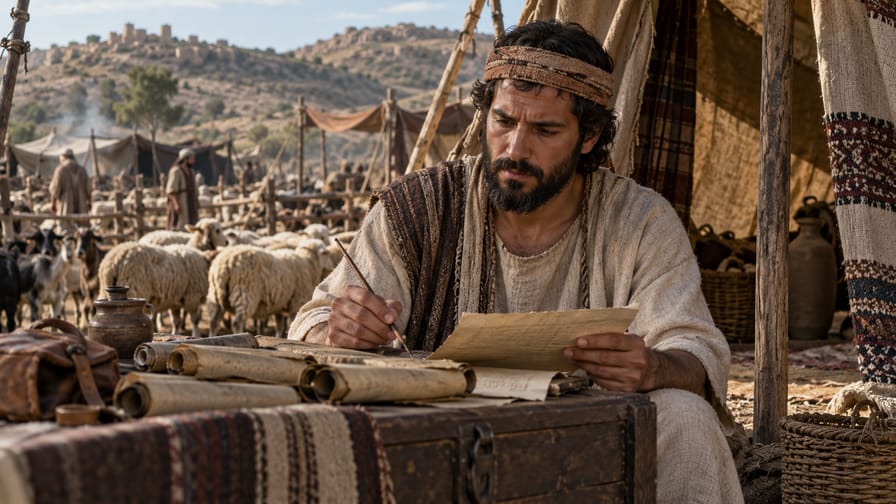
The figure of Jibsam, though briefly mentioned in the Scriptures, offers a rich opportunity for a deepened biblical and theological analysis, especially from an evangelical Protestant perspective. His inclusion in the Old Testament genealogies, even without narrative details, underscores crucial principles of divine sovereignty, covenantal faithfulness, and the progression of salvation history. This study aims to explore his onomastic significance, historical context, theological relevance, and legacy, demonstrating how even the most obscure characters contribute to the tapestry of divine revelation.
The conservative evangelical perspective values the inerrancy and authority of the Bible, seeking meaning in every inspired word. Thus, Jibsam’s presence in the canon is not accidental but purposeful, serving a greater divine design. Through careful exegesis and a Christocentric typological approach, we can extract valuable lessons that resonate with contemporary Christian faith and practice, connecting his brief mention to the broader panorama of redemption.
This analysis is structured into five main sections, addressing the etymology of the name, the historical context, the implicit character and role, the theological significance, and the legacy. The intention is to provide a comprehensive understanding of Jibsam, not merely as a name in a list, but as an integral part of the divine plan that culminates in Jesus Christ.
1. Etymology and meaning of the name
The name Jibsam (Hebrew: יִבְשָׂם, Yibsam) is found only once in the Hebrew Scriptures, in the book of 1 Chronicles 7:2. Its etymology derives from the Hebrew root בָּשָׂם (basam), which means "perfume," "balm," or "aromatic spice." Consequently, the name Jibsam is generally interpreted as "fragrant," "perfumed," or "odoriferous."
This root is frequently associated with substances pleasing to the sense of smell, used for anointing, incense, and offerings. In the biblical context, a pleasant aroma often symbolizes divine acceptance and the purity of an offering or person. For example, the temple incense was a "pleasing aroma to the Lord," as per Exodus 30:7-8.
The meaning "fragrant" for Jibsam, though not directly explored in a narrative context, carries inherent theological symbolism. In Semitic culture, perfume was associated with wealth, status, and, spiritually, with God's presence and approval. A name with such a meaning could indicate an expectation or desire that the individual's life would be pleasing to God and to men.
There are no known variations of the name Jibsam in biblical languages, nor other biblical characters with the same name, which makes it unique in its mention. This uniqueness, paradoxically, invites deeper reflection on the purpose of its inclusion, even with the absence of additional biographical details.
Theologically, the name "fragrant" can be a prefiguration or an echo of the concept of a life that pleases God, like the sacrificial offerings that were a "pleasing aroma" (Leviticus 1:9, 13, 17). In the New Testament, this idea is expanded to the life of Christ, who offered himself "as a fragrant offering and sacrifice to God" (Ephesians 5:2), and to believers, who are the "fragrance of Christ" (2 Corinthians 2:15).
2. Historical context and biblical narrative
Jibsam's mention occurs in the book of 1 Chronicles 7:2, within the extensive genealogies that open the book. He is listed as one of the sons of Tola, who in turn was the son of Issachar, the ninth son of Jacob and Leah (Genesis 35:23). This genealogy firmly establishes Jibsam in the lineage of the tribe of Issachar, one of the twelve tribes of Israel.
The precise historical period of the genealogies in Chronicles is complex. While the lists trace back to the patriarchs, the book of Chronicles was compiled or finalized in the post-exilic period, likely between 450 and 400 BC. The Chronicler's objective was to reaffirm Israel's identity after the Babylonian exile, connecting the remnant with their historical roots and with the divine promises made to their ancestors.
The political, social, and religious context at the time of Chronicles' compilation was one of reconstruction and restoration. The nation sought to reassert its tribal boundaries, land rights, and, crucially, its priestly and royal lineage. Genealogies were vital for proving the legitimacy and continuity of the community of Israel, especially concerning the temple and the Davidic succession.
The tribe of Issachar, to which Jibsam belongs, settled in the fertile plain of Jezreel and the hills of Lower Galilee (Joshua 19:17-23). It was known for its discernment and understanding of the times, as evidenced in 1 Chronicles 12:32, where it is said that the sons of Issachar had "understanding of the times, to know what Israel ought to do."
The key passage mentioning Jibsam is 1 Chronicles 7:1-2: "The sons of Issachar were Tola, Puah, Jashub, and Shimron, four. The sons of Tola were Uzzi, Rephaiah, Jeriel, Jahmai, Jibsam, Samuel, and Asher all these were chiefs of their fathers' houses, of Tola, mighty men of valor in their generations. Their number in the days of David was twenty-two thousand six hundred."
This mention places him among the "mighty men of valor" (גִּבֹּרֵי חַיִל, gibborê ḥayil) of the tribe of Issachar, suggesting that he and his brothers were prominent figures in their respective generations. While the reference to "in the days of David" might indicate the period of their activity, it is more likely to refer to the census or record from which the Chronicler obtained these numbers, connecting the genealogy to a period of strength and organization in Israel.
3. Character and role in the biblical narrative
The Bible offers no narrative details about Jibsam's life, actions, or character. He is mentioned exclusively in a genealogical list in 1 Chronicles 7:2. This absence of direct narrative makes a traditional analysis of his character, virtues, or flaws impossible. Nevertheless, his mere inclusion in the Scriptures, however brief, is significant and allows for important theological inferences.
His designation as one of the "chiefs of their fathers' houses" and part of the "mighty men of valor" (gibborê ḥayil) of the tribe of Issachar (1 Chronicles 7:2) suggests that Jibsam was not an insignificant figure in his own era and tribal context. The term gibborê ḥayil often denotes individuals of military strength, wealth, influence, or distinction. Therefore, he was likely a respected and influential leader in his family and community.
Jibsam's primary role in the biblical narrative is, therefore, that of a genealogical link. He represents the continuity of Issachar's lineage, one of the twelve tribes of Israel. The meticulousness of the genealogies in the book of Chronicles was crucial for the post-exilic people, as it established their identity, their land rights, and their uninterrupted connection with God's covenant with Abraham and the founding of the nation.
Although we cannot identify a specific vocation or function for Jibsam beyond his position as a family head, his recorded existence is a testament to divine providence. He was part of the human chain through which God was preserving the chosen people, preparing the way for the coming of the Messiah. Every name, however obscure, is a pillar in salvation history.
The lack of character development for Jibsam reinforces the idea that God uses both the prominent and the discreet to fulfill His purposes. His inclusion in the Bible teaches that every life has value and purpose in the divine plan, even if it is not celebrated with great deeds. He is a reminder of God's faithfulness in maintaining His covenant through generations, some of which remain anonymous to us.
His life, though not detailed, contributed to the formation and maintenance of the tribe of Issachar, which would later provide men of wisdom and understanding for the kingdom of Israel (1 Chronicles 12:32). Thus, Jibsam is part of the foundation upon which Israel's identity and future were built.
4. Theological significance and typology
Jibsam's theological significance, though not explicit in a narrative, can be inferred from his inclusion in the canon and the meaning of his name. His presence in the genealogies of Chronicles is a testament to God's faithfulness in preserving His people and His promises through generations, even in times of obscurity and exile. Every name on that list is a link in the chain of redemptive history.
Jibsam's inclusion points to the importance of lineage and covenantal continuity. God chose to work through a specific people, and the maintenance of their genealogies was vital for the fulfillment of the messianic promise. Even if Jibsam is not a direct ancestor of David or Jesus, he is part of the "people of the covenant" from whom the Messiah would come (Romans 9:4-5).
The meaning of the name, "fragrant" or "perfumed," offers a rich opportunity for Christocentric typology. In the Old Testament, fragrance was associated with acceptable offerings to God (Genesis 8:21 Leviticus 1:9). Christ is the final and perfect fulfillment of this typology, for He offered Himself "as a fragrant offering and sacrifice to God" (Ephesians 5:2), a sacrifice that removes sin and fully pleases God.
Furthermore, the New Testament extends this metaphor to believers. In 2 Corinthians 2:14-16, Paul describes Christians as the "fragrance of Christ" to God, exuding the life and knowledge of Christ. Jibsam's life, though not described, can be seen as a reminder that all who belong to God's people are called to live in such a way that their lives are a "pleasing aroma" to the Lord, through faith and obedience.
Jibsam's mention also reinforces the doctrine of divine sovereignty and providence. God does not lose sight of any of His children, not even those whose stories are not detailed. Each individual is part of His greater plan, and His faithfulness extends to all generations. He orchestrates events and lives to fulfill His redemptive purposes, culminating in the coming of Jesus Christ.
Although there are no direct quotations or references to Jibsam in the New Testament, the principle of genealogies leading to Christ is fundamental (Matthew 1:1-17 Luke 3:23-38). Jibsam's inclusion in the genealogies of Chronicles, which aimed to solidify Israel's identity and hope, points to the meticulousness with which God prepared the stage for the incarnation of the Messiah.
5. Biblical-theological legacy and canonical references
Jibsam's legacy in biblical theology is subtle but significant, especially when viewed through the lens of Reformed and evangelical theology. His sole mention in 1 Chronicles 7:2 does not grant him a prominent narrative role, but his inclusion in the canon underscores the importance of every detail of God-breathed Scripture (2 Timothy 3:16).
Jibsam's contribution does not lie in literary authorship or great deeds, but in his existence as part of the lineage of God's people. He exemplifies how divine providence operates through ordinary individuals to achieve His purposes. For evangelical theology, this reinforces the doctrine of God's sovereignty over history and the life of every person.
Jibsam's presence in the genealogies of Chronicles is vital for understanding the book's purpose. Chronicles was written to encourage the Jewish people repatriated from exile, reminding them of their heritage, their connection to the Davidic covenant, and God's faithfulness. Every name, including Jibsam's, serves to bridge the gap between the glorious past and the challenging present, ensuring the continuity of Israel's identity.
In Jewish and Christian interpretive tradition, figures as obscure as Jibsam rarely receive individual attention. However, Reformed theology, with its emphasis on the totality of Scripture (sola Scriptura), seeks meaning in every verse. Jibsam's inclusion, therefore, is seen as divinely intended, serving to illustrate the extent of God's faithfulness and the importance of genealogy in preparing for the coming of Christ.
Evangelical commentators, when addressing the genealogies of Chronicles, often highlight the function of these lists in demonstrating the preservation of the messianic lineage and the tribal organization of Israel. Matthew Henry, for example, in his commentaries, emphasizes that these lists show God's order and providence in maintaining the families and tribes of Israel, so that the Messiah could come in His own tribe and family.
Jibsam's legacy, therefore, is not about who he was individually, but about what his existence and record represent: God's faithfulness, the importance of the covenant community, and the progression of redemptive history. He is a silent reminder that God uses all His servants, visible or not, to fulfill His eternal purpose of salvation in Jesus Christ, the "good perfume" par excellence.