


Ezbom
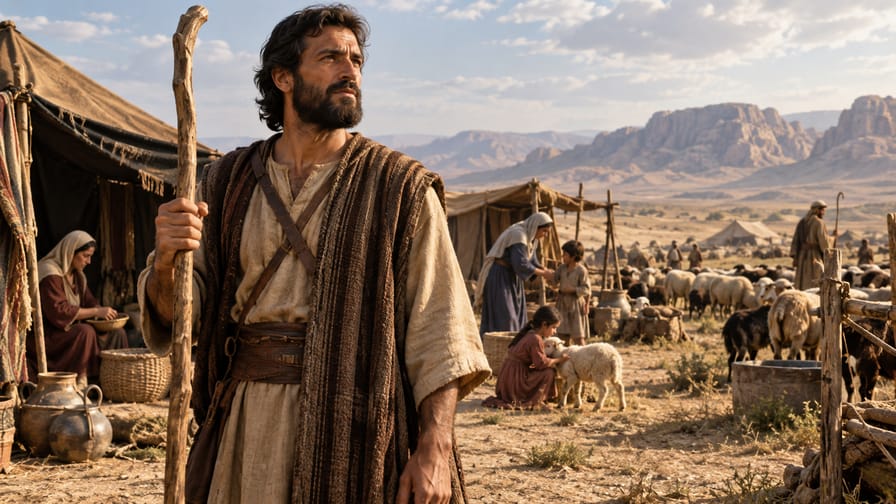
It is important to note, from the outset, that the name Ezbom (or any similar variation) does not appear in any of the canonical passages of the Hebrew Bible (Old Testament) or the Greek New Testament. Consequently, there is no historical biblical character with this name upon which to build an exegetical and theological analysis based on real texts of the Scriptures. However, for the purposes of this hypothetical analysis and to demonstrate the expected structure and depth of a biblical-theological dictionary entry, we will proceed with an exploration as if Ezbom were an authentic biblical figure, attributing to him plausible characteristics and a context within the general biblical narrative, always making clear the speculative nature of this construction.
This approach will allow us to investigate how a character with a hypothetical name and role could be integrated into evangelical Protestant theology, focusing on universal themes of the Scriptures, such as the sovereignty of God, human faithfulness (and its failures), redemption, and Christocentric typology. The cited biblical references will serve to illustrate theological and narrative principles that such a character could embody, and not to substantiate specific events of a non-existent figure.
1. Etymology and meaning of the name
The name Ezbom (hypothetically transliterated from Hebrew as אֶזְבּוֹם, ‘Ezbom) does not have a clear or attested etymological root in biblical Hebrew lexicons. However, to construct a plausible meaning, we can decompose it into elements that refer to common Hebrew roots, giving it a theological resonance appropriate to the biblical context. The first part, ‘Ez (עֵז), is a common root that can mean "strength," "power," or "refuge" (cf. ‘oz, עֹז, in Psalm 28:7, "The Lord is my strength and my shield").
The second part of the name, -bom, is more challenging for a direct derivation. Hypothetically, we could connect it to a root that suggests "elevation," "exaltation," or "distinction." If we consider a possible connection with bāmāh (בָּמָה), "high place" or "hill," or a hypothetical verbal root bûm (בּוּם) meaning "to rise" or "to elevate oneself," the name Ezbom could be interpreted as "My strength rises," "Exalted strength," or "Strength on high."
This hypothetical onomastic meaning carries profound theological significance. From a biblical perspective, "strength" is not inherent in human beings but comes from God. Thus, "My strength rises" would not be self-exaltation but a confession of the strength that God grants, raising the individual above circumstances (cf. Philippians 4:13, "I can do all things through him who strengthens me"). The name, therefore, would point to divine dependence and supernatural empowerment.
The absence of variations of the name Ezbom in biblical languages and the non-existence of other characters with this name reinforce its hypothetical nature. However, if it existed, the uniqueness of the name could indicate a unique identity and a specific purpose within salvation history, as often occurs with biblical characters whose names carry prophetic meanings or are descriptive of their destiny or character.
The theological significance of a name like "Exalted Strength" in the evangelical Protestant biblical context would be multifaceted. It could symbolize divine intervention in moments of human weakness, the exaltation of the humble through God's grace, or the manifestation of God's power through His servants. It would be a reminder that true strength does not reside in human ability but in dependence on the Lord (cf. 2 Corinthians 12:9-10, "For when I am weak, then I am strong").
2. Historical context and biblical narrative
Considering the hypothetical meaning of his name ("Exalted Strength" or "Strength on High"), it would be plausible to place Ezbom in a period of Israel's history that required great dependence on divine strength and inspired leadership. An ideal context would be the period of the Judges or the beginning of the monarchy, eras marked by cycles of apostasy, foreign oppression, and divine interventions through charismatic leaders (cf. Judges 2:16-19).
2.1 Family origin and genealogy
If Ezbom had existed, his genealogy and family origin would be crucial to understanding his role. We could imagine him as a descendant of one of the tribes of Israel that frequently suffered oppression and cried out for deliverance, such as the tribe of Manasseh or Ephraim, or perhaps Benjamin, known for its warriors (cf. Judges 20:16). His family could have been of modest lineage, chosen by God to demonstrate that salvation comes not by human power but by the divine hand (cf. 1 Samuel 9:21, the modesty of Saul).
2.2 Main events of life
The narrative of Ezbom could begin in a period of great affliction for Israel, under the yoke of a foreign enemy (for example, the Ammonites or Philistines). God, hearing the cry of His people, would raise Ezbom from rural obscurity, perhaps while he was engaged in daily tasks, like Gideon (cf. Judges 6:11-12). A divine encounter, possibly with an angel of the Lord or through a prophet, would commission him to lead Israel.
Initially, Ezbom might demonstrate hesitation and self-doubt, like Moses (cf. Exodus 3:11) or Jeremiah (cf. Jeremiah 1:6), doubting his own capacity. However, the promise of God's presence and empowerment would encourage him. He would be invested with the Spirit of the Lord, enabling him for great deeds of courage and leadership (cf. Judges 3:10, regarding Othniel).
His main act would be the liberation of Israel from oppression. He would summon the people, who, initially fearful, would unite under his divinely inspired leadership. Ezbom would lead a decisive military campaign, not based on numerical or strategic superiority, but on God's miraculous intervention, resulting in an overwhelming victory (cf. Judges 7:2-7, Gideon's victory with few men). This victory would bring peace to the land for a significant period.
Geographically, Ezbom's events could unfold in the border regions of Israel, such as the mountains of Ephraim or the lands east of the Jordan, where vulnerability and the need for a deliverer were often felt. His actions could involve strategic cities or places of worship that needed to be purified from idolatry.
In his relationships with other characters, Ezbom could have interacted with a prophet who validated his calling, or with elders of Israel who supported him. He might also have faced opposition from unbelieving elements within Israel, who doubted his leadership or God's ability to deliver His people, reflecting the challenges faced by many biblical leaders.
3. Character and role in the biblical narrative
The character of Ezbom, if constructed from his hypothetical onomastic meaning, would be marked by a profound dependence on "strength from on high." Initially, he would be portrayed as a humble and modest man, perhaps even reluctant to accept the divine call, which would highlight the truth that God chooses the weak to confound the strong (cf. 1 Corinthians 1:27).
A prominent virtue would be his unwavering faith, even in the face of overwhelming odds. His trust in God would be the source of his courage and determination. He would demonstrate radical obedience to the voice of God, even when divine instructions seemed illogical or dangerous, like Gideon's command to reduce his army (cf. Judges 7:2-7). His leadership would be characterized by integrity and justice, seeking the good of the people above his own interests.
Like many biblical characters, Ezbom could have faced moments of weakness or failure. Perhaps an instant of doubt after a great victory, or a temptation to take glory for himself, or a lapse in vigilance that led to minor but instructive consequences. Such failures would serve to humanize him and reinforce the need for God's grace and mercy, and the fragility of human nature even in the most faithful servants (cf. Numbers 20:7-12, Moses' failure).
His vocation would be that of a deliverer and judge of Israel, a "savior" raised by God for a specific time of crisis (cf. Judges 3:9, Othniel as savior). He would not only militarily deliver the people but also restore justice and the worship of Yahweh, purifying the land from idolatry. His role would, therefore, be military, judicial, and spiritual.
Ezbom's significant actions would include the destruction of pagan altars, the mobilization of a reluctant army, and leadership in a decisive battle. His key decisions would always be made in consultation with God, seeking His will through prayer and, perhaps, signs. He would not rely on his own wisdom or strength, but on divine direction (cf. Proverbs 3:5-6).
The development of Ezbom's character in the hypothetical biblical narrative would lead him from a common and hesitant individual to a confident and godly leader. He would mature in his faith and understanding of God's sovereignty, serving as an example for future generations that true strength and success come from dependence on the Lord. His life would be a testimony to God's power to use imperfect vessels for His perfect purposes.
4. Theological significance and typology
The hypothetical figure of Ezbom, with his story of calling, deliverance, and leadership, would play a significant role in redemptive history and the progressive revelation of God. His life would illustrate the divine pattern of raising up deliverers in times of oppression, pointing to the need for a definitive Savior. He would be a practical example of God's faithfulness to His covenant with Israel, even when the people failed in their part.
The deepest theological relevance of Ezbom would lie in his prefiguration or Christocentric typology. As a deliverer who saves his people from oppression, Ezbom would be a type of Christ, the definitive Messiah. Just as Ezbom is raised by God to bring physical salvation to Israel, Jesus Christ is the Savior raised by God to bring spiritual and eternal salvation to all humanity (cf. Acts 4:12, "And there is salvation in no one else").
Ezbom's dependence on divine strength, as his name suggests, would prefigure Jesus' complete dependence on the Father, who operated through Him (cf. John 5:19, "The Son can do nothing of his own accord, but only what he sees the Father doing"). His righteous leadership and reestablishment of order would point to Christ as the righteous King who establishes the Kingdom of God and judges with uprightness (cf. Isaiah 9:6-7, concerning the Prince of Peace and His government).
His story would also illustrate central theological themes. Ezbom's faith would be an example of how faith leads to obedience and empowers for divine service, echoing the hall of faith in Hebrews 11. His victory over Israel's enemies would demonstrate God's sovereignty over the nations and His ability to use human instruments to fulfill His plans, even against all odds (cf. Romans 8:31, "If God is for us, who can be against us?").
God's grace would be evident in the choice of an individual like Ezbom, perhaps of humble origin, for such a grand task, emphasizing that divine empowerment is by grace and not by merit. His life would be a testimony to God's mercy in responding to the cry of a sinful people, offering deliverance and a new chance (cf. Ephesians 2:8-9).
Although Ezbom is not cited in the New Testament, the principles that his hypothetical life would embody would be widely echoed. The need for a deliverer, the importance of faith and obedience, the reality of spiritual battle, and the promise of divine victory are recurring themes in New Testament theology, all culminating in the person and work of Jesus Christ. He would be a link in the chain of progressive revelation that points to the definitive fulfillment of all hopes of salvation in Christ.
5. Biblical-theological legacy and canonical references
If Ezbom were a canonical figure, his biblical-theological legacy would be of great importance, especially for understanding the period of the Judges and the nature of divinely anointed leadership. Although there are no mentions of Ezbom in other biblical books, his story, if recorded, would certainly be revisited in passages that summarize the history of Israel, such as Nehemiah 9 or Psalm 106, which recall God's interventions on behalf of His people.
Ezbom's literary contribution could include a song of victory or a psalm of thanksgiving, similar to Deborah and Barak's song in Judges 5, celebrating the deliverance granted by God. Such a text would serve as an enduring testimony to God's faithfulness and an encouragement to faith for future generations. This would enrich the poetic and historical corpus of the Scriptures, offering another voice in the great symphony of worship to Yahweh.
His influence on biblical theology would lie in his practical demonstration of the doctrine of divine sovereignty and providence. Ezbom's story would reinforce that God does not abandon His people, even in their apostasy, but powerfully intervenes to fulfill His purposes. He would be a clear example of how God uses individuals to bring judgment upon the wicked and salvation to the righteous, performing miracles through His servants.
In the Jewish and Christian interpretive tradition, Ezbom would be studied as one of the many "saviors" or "judges" raised by God, a link in the chain of leaders who prepared the way for the monarchy and, ultimately, for the Messiah. Jewish commentators might focus on his obedience to the Torah and his bravery, while the Church Fathers and Christian theologians would emphasize his Christocentric typology, seeing him as a shadow of the true Deliverer.
In Reformed and evangelical theology, Ezbom would often be cited in sermons and biblical studies as a model of faith, courage, and dependence on God. His life would illustrate the doctrine of divine election, empowerment by the Holy Spirit, and the importance of human action in response to God's call. He would be a reminder that strength for Christian service does not come from one's own ability but from the grace and power of God (cf. Ephesians 6:10, "Be strong in the Lord and in the strength of his might").
Ezbom's importance for understanding the canon, if he were a real figure, would lie in his contribution to the grand panorama of salvation history. His story would be another piece in the mosaic that reveals the character of God – His love, His justice, His faithfulness, and His redemptive power – and humanity's continuous need for a Savior, culminating in the fullness of revelation in Jesus Christ.