


Alvan
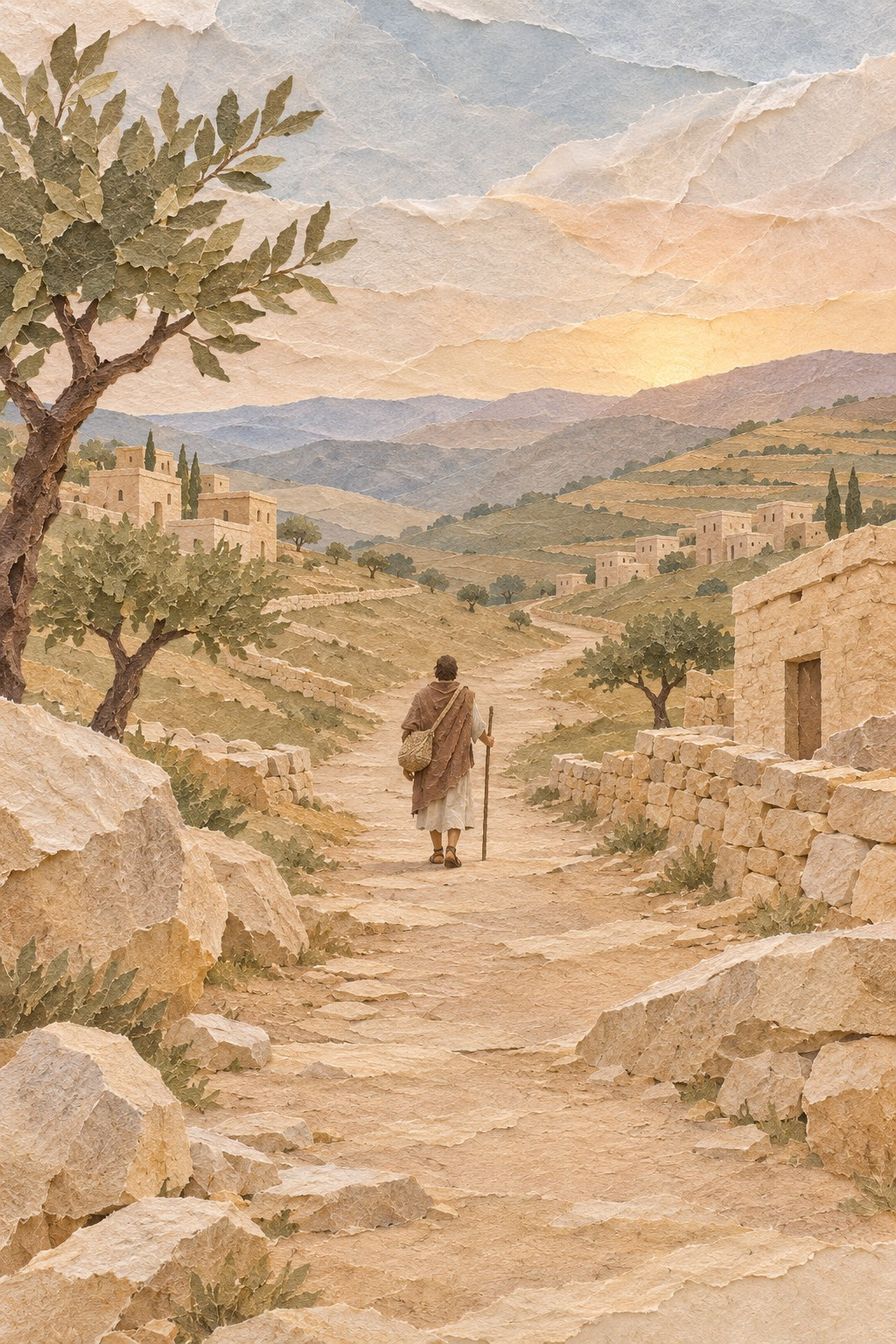
Alvan was a Horite, son of Shobal and grandson of Seir (Genesis 36:20,23). He also appears as Alian in the parallel genealogy of 1 Chronicles 1:40. He should not be confused with Alvah, the Edomite chief listed in Genesis 36:40.
Scripture records nothing about his life, but his place in the genealogy of Genesis 36 shows that God governs the history of every people, not only Israel (Acts 17:26).
1. Etymology and Meaning of the Name
The name Alvan in Genesis 36:23 corresponds to Alian in 1 Chronicles 1:40. The parallel lists identify the same son of Shobal; Alvah in Genesis 36:40 belongs to a different list of Edomite chiefs.
Strong’s concordance associates ʿAlwān with the Hebrew root עָלָה, “to go up,” and gives the sense “lofty.” This is a lexical explanation, not a description of Alvan’s rank or character supplied by the biblical narrative.
The genealogies do not explain why Alvan received his name. An interpretation of the name cannot establish his moral character or show that he held a position of authority.
The theological significance of names in the biblical context is widely recognized. Names often reflected a person's character, circumstances of their birth, or even a prophecy about their future. Although the Bible does not provide details about Alvan's life that could confirm any of these etymologies, the mere existence of his name in a divine genealogy is significant.
There are no other biblical characters with the exact name of Alvan. His uniqueness in the biblical narrative, therefore, makes him a specific focal point within the Horite genealogy. The absence of an explicit meaning attributed to the name by the biblical narrator invites us to consider the purpose of his inclusion, regardless of the exact linguistic connotation.
The precision of the biblical record is paramount. The name Alvan serves as a reminder of the diversity of characters and destinies in human history, all under the sovereignty of God. The inclusion of such names, even without further details, reinforces the historicity and meticulousness of God's Word.
2. Historical Context and Biblical Narrative
Alvan is mentioned in Genesis 36, a chapter dedicated to the generations of Esau and the original inhabitants of Seir, the Horites. This chapter is crucial for understanding the formation of the nation of Edom and its relations with neighboring peoples, providing a historical background for subsequent events in the history of Israel.
Genesis 36 places Alvan in the genealogy of Seir’s family, but gives no dates for his life. The chapter brings together genealogies and a list of Edomite kings (Genesis 36:31-39); its position before Jacob’s journey to Egypt does not establish that all the people listed lived before that journey.
The political, social, and religious context of the time was characterized by tribal groups and clans inhabiting specific regions, often in conflict or interchange. The Horites were the original inhabitants of the mountainous region of Seir, which would later become known as Edom. They are described as an established people, with chiefs (ʾallûfîm) who exercised authority over their clans, according to Genesis 36:20-30.
Alvan is identified as one of the sons of Shobal (Šôbāl, שׁוֹבָל), who in turn was a son of Seir the Horite (Genesis 36:20). Seir is considered the eponymous progenitor of the Horites who inhabited the land before the Edomites. Thus, Alvan belonged to the second generation of Seir’s descendants listed in the genealogy, being a grandson of Seir and brother of Manahath, Ebal, Shepho, and Onam (Genesis 36:23).
The primary biblical passage where Alvan appears is Genesis 36:23, which simply states: And the children of Shobal were these; Alvan, and Manahath, and Ebal, Shepho, and Onam. Shobal is called a Horite chief in Genesis 36:29. His son Alvan is named in the family list, but Scripture does not give Alvan that title or describe a leadership role for him.
The geography related to Alvan is the region of Seir, a mountainous area southeast of the Dead Sea, extending to the Gulf of Aqaba. This territory, later known as Edom, was characterized by deep valleys and steep mountains, offering refuge and resources for tribal communities. The Horites were the original occupants of this land before the arrival of Esau's descendants (Deuteronomy 2:12, 2:22).
Alvan belonged to the family of Shobal among the Horites of Seir (Genesis 36:20,23). Deuteronomy 2:12,22 describes the descendants of Esau dispossessing the Horites and settling in their place. It does not describe Alvan’s personal involvement in those events or date them within his lifetime.
3. Character and Role in the Biblical Narrative
The Bible, in its conciseness, does not offer explicit details about Alvan's character, virtues, flaws, or specific actions. His mention is purely genealogical, inserted into a list of names that compose the tribal structure of the Horites. This absence of direct information prevents us from drawing a psychological or moral profile of Alvan based on the Scriptures.
Shobal is called a Horite chief in Genesis 36:29.
Alvan's specific vocation or function is not detailed. He is not described as a prophet, priest, king, or warrior in particular. His primary role in the biblical narrative is that of a genealogical link, contributing to the completeness of the historical and tribal record of the Horites. His existence, as part of the lineage of Seir the Horite, serves to complete the demographic panorama of the land of Seir before the full rise of Edom.
Alvan's significant actions and key decisions are not recorded. Unlike more prominent figures, such as Abraham, Moses, or David, there are no narratives that describe his choices, his faith, or his failures. He is a name on the list, which does not diminish his importance for the precision of God's Word.
The development of Alvan's character throughout the narrative is nonexistent, as the genealogical lists do not narrate his actions. His inclusion, however, is a testament to the comprehensiveness of divine revelation, which is not restricted to the great heroes of faith or the protagonists of Israel's history, but also encompasses neighboring peoples and their social structures.
Despite the lack of biographical details, the mere presence of Alvan in the Scriptures reinforces the belief in biblical inspiration and inerrancy. Every name, no matter how obscure, is part of the record that God deemed essential for the understanding of His redemptive plan and the history of humanity. The absence of a character description for Alvan does not make him any less real or less part of divinely inspired history.
4. Theological Significance and Typology
The figure of Alvan, though marginal in the biblical narrative, has an indirect place in the account of redemptive history. His inclusion in Genesis 36 serves broader theological purposes that transcend his individuality.
There is no direct Christocentric prefiguration or typology associated with Alvan. He is not a type of Christ, nor do his actions prefigure events of the Messiah's life or ministry. However, the context in which he is mentioned—the genealogy of the Horites and Edomites—points to God's universal sovereignty over all nations, not just over Israel.
The inclusion of genealogies of non-Israelite peoples demonstrates that God is the Lord of all history and of all peoples. He establishes and overthrows nations, and His redemptive plan, though focused on Israel and, subsequently, on Christ, encompasses all humanity. Alvan is part of this demonstration of divine providence that governs all peoples and their lineages (Acts 17:26).
Scripture records no covenant or promise addressed personally to Alvan. The surrounding history concerns the rise of Edom: in Genesis 25:23, God tells Rebekah that two nations are in her womb; in Genesis 27:39-40, Isaac speaks to Esau about his future and his relationship with his brother. These passages concern Jacob, Esau, and their descendants, not a promise given to Alvan.
There are no citations or references to Alvan in the New Testament. His theological relevance lies, therefore, in his contribution to the understanding of Old Testament history and God's plans for the nations. The existence of the Horites, their social structure, and their displacement by the descendants of Esau (Deuteronomy 2:12,22) illustrate the dynamic of biblical history, where God operates among different peoples and cultures.
The connection with central theological themes is indirect, but present. The inclusion of Alvan reinforces the doctrine of divine sovereignty, which extends to all families of the earth. He also contributes to the historical precision of the Bible, since every detail of the Scriptures is divinely inspired and inerrant (2 Timothy 3:16-17).
Although Alvan is not a protagonist, his inclusion highlights the importance of genealogies for progressive revelation. They establish the foundation for the history of Israel and, ultimately, for the coming of the Messiah, who would be a descendant of Abraham, Isaac, and Jacob. The presence of names like Alvan's in the biblical record underscores God's attention to the details of human history, which culminates in Christ.
5. Biblical-Theological Legacy and Canonical References
Alvan is recorded in the Horite genealogies of Genesis 36:23 and 1 Chronicles 1:40. Scripture attributes no literary works to him and provides no account of his personal deeds.
Despite the brevity of the genealogical records, Alvan's inclusion has a subtle but important influence on biblical theology, especially in understanding the nature of Scripture itself. It reinforces the view that the Bible is a meticulous and historically accurate record, which does not overlook details, even those that seem minor at first glance. The presence of his name validates the comprehensiveness and depth of biblical genealogical records.
In Jewish and Christian interpretive tradition, Alvan is not a character who has generated a significant body of specific commentaries or midrashim about his life or character. However, the genealogy of Genesis 36 as a whole is studied to understand the relations between Israel and Edom, and God's sovereignty over the nations. Alvan is a piece in this larger puzzle.
There are no known references to Alvan in intertestamental literature or in significant extrabiblical texts. The biblical information about him is found in the parallel genealogies of Genesis and 1 Chronicles. This emphasizes the importance of every word of Scripture, for even an isolated name is part of divine revelation.
The inclusion of names like Alvan is frequently cited as evidence of the Bible's inerrancy and authority. The meticulousness of genealogical records demonstrates that the Word of God is reliable in all its details, whether they are grand narratives or lists of names. Every fragment contributes to the veracity of the Word of God.
Alvan's importance for understanding the canon lies in his contribution to the completeness of the historical record. He is part of the foundation that sets the stage for the history of Israel, its neighbors, and, ultimately, the history of redemption. Even the less prominent characters serve to illustrate the magnitude of God's plan, which encompasses all creation and all human history.
In summary, although Alvan is not a central figure, his presence in Genesis 36:23 is a reminder of the comprehensiveness and precision of God's Word. He is a silent testimony to divine sovereignty over nations and God's faithfulness in recording the history of all peoples, which culminates in the revelation of Jesus Christ, the Lord of all history.