


Uriah
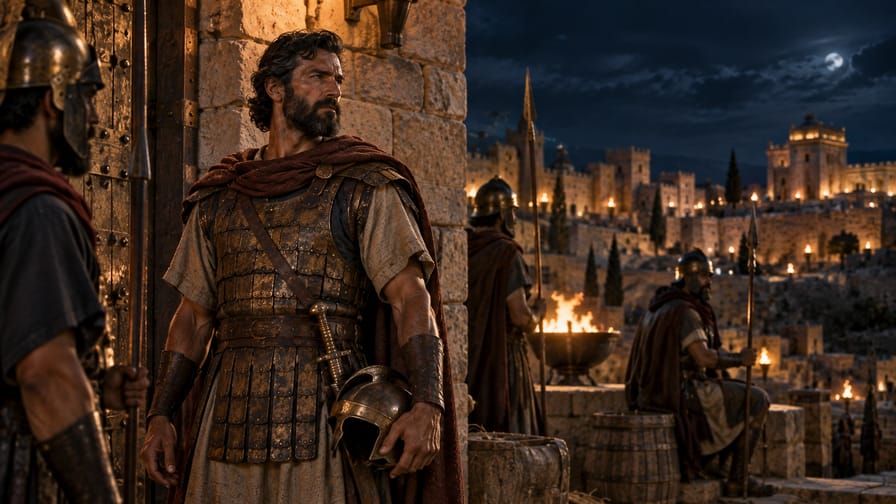
The figure of Uriah, the Hittite, emerges in the pages of Scripture as a character of profound integrity and faithfulness, whose tragic story is intrinsically linked to one of the darkest episodes in the life of King David. His narrative, though brief, is rich in theological and moral significance, serving as a case study on loyalty, justice, sin, and the complex interactions of divine sovereignty with human responsibility. The Evangelical Protestant perspective emphasizes biblical authority to extract lessons about the character of God, the nature of sin, and redemption, even in contexts of great human failure.
The story of Uriah is an eloquent testimony to righteousness in the face of adversity and injustice, contrasting sharply with the moral fall of one of Israel's greatest kings. He represents an ideal of service and devotion, which, paradoxically, led him to a premeditated and unjust end. His life and death offer crucial insights for understanding themes such as God's justice, the consequences of sin, and the inclusion of Gentiles in the divine plan, fundamental elements for Reformed biblical theology.
1. Etymology and meaning of the name
1.1 Original name and linguistic derivation
The name Uriah, in Hebrew, is 'Uriyah (אוּרִיָּה). It is a theophoric name, common in Semitic culture, which incorporates the name of God (Yahweh) or one of His attributes. The structure of the name combines 'ur (אוּר), which means "light" or "fire", with Yah (יָהּ), an abbreviated form of the tetragrammaton YHWH (Yahweh).
Therefore, the literal meaning of Uriah is "My fire is Yahweh" or "Yahweh is my light". This meaning is deeply ironic and poetic, considering the character's destiny. He was a light of integrity amidst the darkness of David's sin, and his life was consumed like a fire, though not by Yahweh, but by human wickedness.
1.2 Theological significance of the name in the biblical context
The etymology of the name Uriah resonates with the nature of his character. He was a man who lived in the light of Yahweh's principles, demonstrating loyalty and moral purity that contrasted with the actions of his king. His name, "Yahweh is my light", can be interpreted as a declaration of his faith and dependence on God, even though he was a Hittite by origin.
In a broader context, Uriah's name, meaning "Yahweh is my light", can be seen as an anticipation of the truth that God's light exposes darkness. David's sin against Uriah was brought to light by the rebuke of the prophet Nathan (2 Samuel 12:7-12), revealing the omniscience and justice of Yahweh, who is the true light that illuminates all darkness (Psalm 36:9).
1.3 Other biblical characters with the same name
Although Uriah the Hittite is the most prominent, there are other individuals in Scripture with the same name. A priest named Uriah is mentioned in 2 Kings 16:10-16, who cooperated with King Ahaz in introducing idolatrous practices into the temple in Jerusalem, building a pagan altar according to the model of Damascus.
Another Uriah, son of Shemaiah of Kiriath-Jearim, was a prophet who prophesied against Jerusalem and the land of Judah during the reign of Jehoiakim, and was later executed by the king (Jeremiah 26:20-23). The existence of these other Uriahs demonstrates the popularity of the name, but also the diversity of lives and destinies associated with it, from faithfulness to apostasy and martyrdom.
2. Historical context and biblical narrative
2.1 Historical period and context
The story of Uriah unfolds during the zenith of David's reign, around the 10th century BC (approximately 1000-970 BC). This was a period of great expansion and consolidation for the kingdom of Israel, with David establishing Jerusalem as his capital and expanding its borders through successful military campaigns. The context is one of war against the Ammonites, with David's army besieging Rabbah (2 Samuel 11:1).
Socially and politically, Israel was becoming a regional power, but internally, David's royal court began to show signs of complexity and intrigue, which would culminate in family and political tragedies. Religiously, although David was a pious king and the bearer of the Davidic covenant, his moral failure with Bathsheba and Uriah exposed human fragility and the need for divine grace.
2.2 Genealogy and family origin
Uriah is explicitly identified as "the Hittite" (2 Samuel 11:3). The Hittites were a non-Israelite people who inhabited Canaan before the Israelite conquest (Genesis 23:10 Exodus 3:8). His presence among "David's mighty men" (2 Samuel 23:39) is notable and demonstrates David's inclusive policy, which integrated warriors of different origins into his elite forces.
The inclusion of Uriah among David's thirty mighty men (2 Samuel 23:8-39) underscores his military excellence and his loyalty to Israel, despite his Gentile ancestry. He had embraced the faith and the nation of Israel, becoming a faithful servant of the king and of Yahweh. His Gentile origin also acquires later theological significance, as will be discussed.
2.3 Key life events and biblical passages
The life of Uriah is primarily narrated in 2 Samuel 11, with later references in 2 Samuel 12 and 2 Samuel 23:39, in addition to his mention in the genealogy of Jesus in Matthew 1:6. His story begins with David observing Bathsheba, Uriah's wife, bathing from his palace rooftop (2 Samuel 11:2).
While Uriah was on the front line of the battle against Ammon, David committed adultery with Bathsheba, who became pregnant (2 Samuel 11:4-5). To cover up his sin, David summoned Uriah from the battle, hoping he would go home and spend the night with his wife, thus attributing the child's paternity to Uriah (2 Samuel 11:6-8).
However, Uriah, demonstrating unwavering integrity and exemplary military discipline, refused to go home, declaring: "The ark and Israel and Judah are dwelling in tents, and my lord Joab and the servants of my lord are camping in the open field. Shall I then go to my house to eat and to drink and to lie with my wife? As surely as you live and as your soul lives, I will not do such a thing!" (2 Samuel 11:11). This refusal frustrated David's plans.
Desperate, David sent Uriah back to the battle with a sealed letter for Joab, the army commander, instructing him to place Uriah in the most dangerous frontline and then withdraw, ensuring his death (2 Samuel 11:14-15). Joab obeyed, and Uriah died heroically in battle, an innocent victim of his king's sin and conspiracy (2 Samuel 11:16-17, 24).
2.4 Relationships with other important biblical characters
Uriah's relationship with David is central to his story, marked by unilateral loyalty and fatal betrayal. He was one of "David's mighty men," an elite warrior, and his loyalty to David was unquestionable. His relationship with Bathsheba, his wife, is tragic, as she became the instrument of David's sin and, after Uriah's death, the king's wife.
With Joab, the army commander, Uriah had a relationship of military subordination. Joab, in turn, carried out David's nefarious orders, becoming an accomplice to murder. The prophet Nathan is another crucial character who, though not interacting directly with Uriah in life, played a vital role in exposing the injustice committed against him, confronting David and proclaiming divine judgment (2 Samuel 12:1-15).
3. Character and role in the biblical narrative
3.1 Character analysis as revealed in the Scriptures
Uriah's character is one of the most commendable in all of Scripture, especially in contrast to David's profound failure. He is portrayed as a man of extraordinary integrity, loyalty, and discipline. His refusal to go home while his comrades-in-arms were in danger (2 Samuel 11:11) reveals a sense of duty and solidarity rarely seen.
His military discipline and dedication to the cause of Israel were so strong that he refused to enjoy personal comforts while the ark of the covenant, symbol of God's presence, and the army were in campaign conditions. This demonstrates a purity of heart and a conscience that surpassed the desire for individual pleasure, a striking contrast to David's indulgence.
3.2 Evidenced virtues and spiritual qualities
The Scriptures highlight several virtues in Uriah. Loyalty is prominent: loyalty to his king, to his army, and, implicitly, to the principles of Israel's holy war. His moral integrity is unquestionable he did not allow himself to be corrupted by David's attempts to induce him to sin.
His discipline and self-control are exemplary, choosing to sleep at the palace gate with the king's servants instead of going home. Humility can also be inferred, as he did not seek privileges or special treatment, but identified with the hardships of common soldiers. Uriah's faith, though not explicitly detailed, is suggested by his dedication to the ark of the covenant and to the cause of Yahweh, even as a Gentile.
3.3 Role played and significant actions
Uriah's role in the biblical narrative is multifaceted. He is, first, a loyal and valiant soldier, one of David's thirty heroes. His presence among these distinguished warriors attests to his skill and courage in combat (2 Samuel 23:39). Second, he becomes a symbol of righteousness and innocence.
His actions, particularly his refusal to go home, serve as a direct moral contrast to David's sin. He acts as a mirror that reflects the ugliness of David's transgression, making it impossible for the king to hide his guilt. Uriah's key decision not to violate the customs of war, even under the king's insistence, sealed his fate and exposed the depth of David's deceit.
3.4 Character development throughout the narrative
The narrative does not offer extensive character development for Uriah, as his appearance is brief and focused on his role as a catalyst for the revelation of David's sin. However, his consistency in maintaining his principles, even under royal pressure, reveals a personality already formed and firmly rooted in values of honor and duty. He does not waver in his conduct, remaining faithful unto death.
His death, though tragic, solidifies his legacy as a martyr of integrity and justice. The lack of "development" in the sense of character change, in fact, reinforces his image as a man unshakeable in his convictions, a pillar of righteousness who resisted corruption, even if it cost him his life.
4. Theological significance and typology
4.1 Role in redemptive history and progressive revelation
The story of Uriah, the Hittite, plays a significant role in Israel's redemptive history and in the progressive revelation of God. It demonstrates Yahweh's impartiality regarding justice, applying the same moral standard to all, regardless of their ethnic origin or social position. The inclusion of a Gentile like Uriah among the faithful and righteous of Israel points to the universality of God's plan of salvation (Romans 10:12-13).
Uriah's narrative also illustrates the gravity of sin and its devastating consequences, even in the life of a man "after God's own heart" like David (1 Samuel 13:14). David's sin against Uriah brought judgment upon his house, affecting generations and demonstrating that sin is not merely a transgression against the law, but a direct attack against innocent people and, ultimately, against God himself (2 Samuel 12:10-12 Psalm 51:4).
4.2 Prefiguration or Christocentric typology
While not a direct type in the sense of an office (king, prophet, priest), Uriah can be seen as a figure of innocent suffering that prefigures aspects of Christ's passion. He was a righteous and loyal man, unjustly killed because of the sin of another, the king. His life was sacrificed to cover up David's transgression.
Christ, the true Messiah, was perfectly innocent, but was delivered to death at the hands of men, to atone for the sins of many (Isaiah 53:5-6 1 Peter 2:24). Uriah's death, though not atoning, resonates with the theme of the righteous suffering because of the wicked, a distant echo of the supreme injustice that would fall upon the Lamb of God. The inclusion of Uriah in the genealogy of Jesus (Matthew 1:6) also underscores God's ability to redeem and use even the greatest human tragedies for His divine purposes, pointing to grace.
4.3 Connection to central theological themes
The story of Uriah is rich in central theological themes. It emphasizes the holiness of God and the gravity of sin, demonstrating that God does not tolerate evil, even in His chosen servants. The judgment pronounced by Nathan on David (2 Samuel 12:7-12) is a powerful demonstration of divine justice and human responsibility.
The episode also illustrates the sovereignty of God, who, even amidst human sin, continues to guide His redemptive purposes. The inclusion of Bathsheba, "the wife of Uriah," in the genealogy of Jesus (Matthew 1:6) is a testimony to divine grace that operates through stories of failure and redemption, culminating in the incarnation of Christ. The faithfulness of Uriah, a Gentile, also underscores the universality of faith and God's ability to call people from all nations to Himself (Galatians 3:28).
4.4 Doctrine and teachings associated with the character
The figure of Uriah reinforces the doctrine of God's impartiality in His judgment and His demand for righteousness from all, regardless of status. He teaches about the insidious nature of sin, which, once started, leads to a series of increasingly grave and destructive decisions (adultery, deceit, murder).
Furthermore, Uriah's story underscores the importance of personal integrity and loyalty as essential Christian virtues. His example serves as a reminder that true honor lies in living according to God's principles, even when it requires personal sacrifice. Evangelical theology draws lessons about trust in divine providence, even when earthly justice fails, knowing that God sees and judges all things (Hebrews 4:13).
5. Biblical-theological legacy and canonical references
5.1 Mentions of the character in other biblical books
In addition to 2 Samuel 11-12, Uriah is mentioned in the list of "David's mighty men" in 2 Samuel 23:39 and 1 Chronicles 11:41, confirming his status as an elite warrior. These lists serve not only as historical records but also to honor those who served David faithfully, making the betrayal against Uriah even more heinous.
His most significant mention outside the context of 2 Samuel, and of great theological weight for the Christian perspective, is in the genealogy of Jesus Christ in the Gospel of Matthew. Matthew 1:6 states: "Jesse begot King David, and King David begot Solomon by the wife of Uriah." This reference is crucial for understanding God's grace and sovereignty.
5.2 Influence on biblical theology
The story of Uriah has a lasting influence on biblical theology, especially in understanding David's sin and its ramifications. It serves as a point of reference for the doctrine of sin and its consequences, demonstrating that even the most pious are susceptible to falling and that sin has real and painful costs.
His inclusion in the genealogy of Jesus in Matthew is a testimony to the redemptive grace of God that works through sinful and broken circumstances. The mention of Bathsheba as "the wife of Uriah" instead of simply "Bathsheba" (Matthew 1:6) keeps alive the memory of the injustice suffered by Uriah, but also highlights God's ability to bring redemption and purpose from situations of great sin and scandal, integrating the story of a faithful Gentile into the stream of Israel's salvation history.
5.3 Presence in Jewish and Christian interpretive tradition
In Jewish tradition, Uriah is often remembered as an example of righteousness and loyalty, and his death as an indelible stain on David's reign. Rabbis discuss the gravity of David's sin, using Uriah as the epitome of the innocent sacrificed by royal whim. The story is used to teach about the responsibility of leaders and the consequences of the abuse of power.
In Christian tradition, especially in Reformed and Evangelical theology, Uriah is seen as a symbol of oppressed justice and sacrificed virtue. His story is frequently cited in sermons and commentaries on the nature of sin, repentance, and grace. The inclusion of his wife in the genealogy of Jesus is a focal point for discussions about the inclusion of Gentiles and the way God weaves His salvation history through all human circumstances, however imperfect they may be (Romans 8:28).
5.4 Importance of the character for understanding the canon
The figure of Uriah is crucial for understanding the biblical canon because it underscores the brutal honesty of the Scriptures. The Bible does not hide the flaws of its heroes, but openly exposes them, demonstrating the universal need for a Savior. The story of Uriah serves as a reminder that no human being, not even a king "after God's own heart," is perfect or free from sin.
Furthermore, the inclusion of Uriah (indirectly, through his wife) in the genealogy of Jesus in Matthew is fundamental to the theology of the incarnation and redemption. It shows that the lineage of the Messiah is not unstained by human failures, but it is precisely through a history of sin, repentance, and grace that God's plan unfolds, culminating in Christ, the perfect Redeemer. The story of Uriah, therefore, is not just a tragic account, but a vital piece in the great mosaic of salvation history, revealing the justice, sovereignty, and unwavering grace of God.