


Hophni
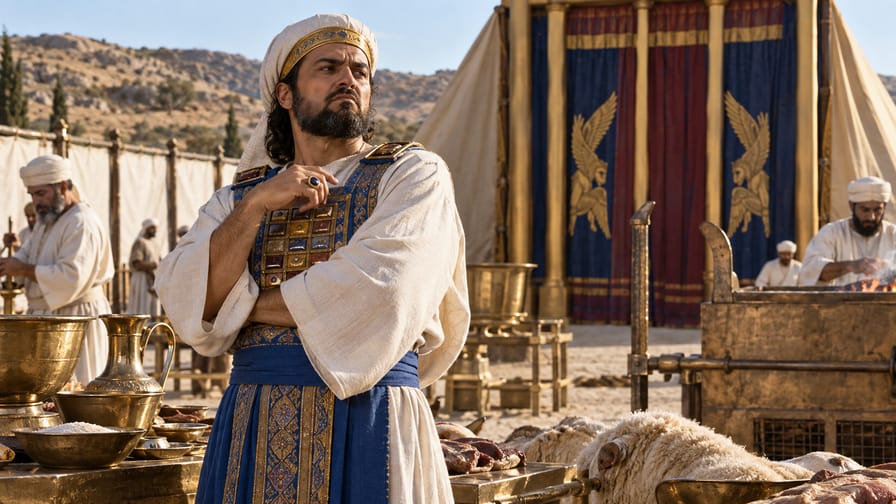
The figure of Hofni, one of the sons of the high priest Eli, emerges in the pages of the Old Testament as a striking example of moral and spiritual failure within the religious leadership of Israel. His story, intrinsically linked to that of his brother Phinehas, is narrated primarily in the Book of 1 Samuel, serving as a dark premonition of the transition from the era of the judges to the monarchy, and of the need for profound spiritual reform in the nation. The analysis of Hofni, from an evangelical Protestant perspective, underscores crucial themes such as the holiness of God, the consequences of sin in leadership, and the typology that points to the necessity of a superior priesthood.
His life and death are a vivid testament to the seriousness with which God treats disobedience and the desecration of the sacred, especially by those who should be models of righteousness. The biblical narrative does not spare details of his transgressions, providing a solid basis for theological reflection on ministerial responsibility and divine judgment. This in-depth study will seek to uncover the various layers of meaning associated with Hofni, from the etymology of his name to his theological legacy in the canon, always with a keen eye on the authority of Scripture and the centrality of Christ.
The story of Hofni is a perennial warning about the dangers of spiritual complacency and corruption, even in positions of great privilege and religious responsibility. His trajectory serves as a dark counterpoint to the faithfulness that God demands from His servants, and sets the stage for the rise of more righteous and godly figures, such as Samuel and David. Understanding Hofni is, therefore, essential for fully grasping the dynamics of divine sovereignty and human responsibility in the history of redemption, as revealed in the Scriptures.
1. Etymology and Meaning of the Name
The name Hofni (Hebrew: חָפְנִי, Ḥofnī) is of uncertain etymology, which has generated various proposals among scholars of the Hebrew language. One of the suggested derivations is from a root meaning "my hand" or "my fist," which could imply strength, control, or even aggression. This interpretation gains relevance when we consider Hofni's character, which manifested in the forceful taking of offerings and the disregard for priestly rites.
Another etymological possibility points to the meaning of "fighter" or "soldier," which, again, could have an ironic or symbolic resonance with his eventual death in battle against the Philistines, along with his brother Phinehas (1 Samuel 4:11). Some scholars, however, propose that the name might be related to a term for "tadpole" or "frog larva," perhaps suggesting a connotation of insignificance or immaturity. This latter interpretation, though less common, could metaphorically describe Hofni's spiritual immaturity and lack of discernment.
The absence of etymological clarity prevents a definitive assertion about the literal meaning of the name. Nevertheless, the biblical context in which Hofni appears is so vivid and condemning that, regardless of the exact linguistic origin, the name has become synonymous with priestly corruption and impiety. There are no other biblical characters with the name Hofni, making him unique and distinctly associated with his tragic story in Eli's household.
From a theological standpoint, the etymological uncertainty of the name Hofni does not diminish its significance. Instead, the biblical narrative focuses intensely on his actions and character, allowing the very story of his life to define the name. The way Hofni and Phinehas dishonored God and the priesthood is what gives the name its theological weight, regardless of a predefined etymological meaning. The name, in this sense, is filled by the history of disobedience and divine judgment.
2. Historical Context and Biblical Narrative
The story of Hofni is embedded in the period of the Judges, an era of great political, social, and religious instability in Israel, which preceded the establishment of the monarchy. This period, generally dated between the 12th and 11th centuries B.C., is characterized by the absence of a king in Israel, where "everyone did what was right in his own eyes" (Judges 21:25). In this scenario of anarchy and moral decline, the central sanctuary in Shiloh (Shiloh) played a vital role, housing the Ark of the Covenant and being the center of worship to Yahweh (Yahweh).
2.1 Family Origin and Genealogy
Hofni was the son of Eli, the high priest and judge of Israel, and brother of Phinehas. Eli's family belonged to the priestly lineage of Aaron, specifically through Ithamar, one of Aaron's sons (1 Chronicles 24:3). As sons of the high priest, Hofni and Phinehas were destined to serve as priests in the tabernacle, a position of immense honor and spiritual responsibility. Their genealogy placed them at the heart of Israel's religious life.
The biblical narrative does not detail Hofni's mother, but emphasizes his relationship with Eli, whose role as father and religious leader is central to the unfolding tragedy. Eli's failure to discipline his sons is a recurrent and crucial theme for understanding the judgment that fell upon his household. Despite their privileged lineage, Hofni and Phinehas gravely deviated from the divine standards for the priesthood.
2.2 Key Life Events and Biblical Passages
The biblical passages that recount the lives of Hofni and Phinehas are found primarily in 1 Samuel 2:12-4:22. The narrative begins by describing their heinous sins: they were "sons of Belial" and "did not know the Lord" (1 Samuel 2:12), a Hebrew expression denoting wickedness and irreverence. Their transgressions were numerous and grave, compromising the integrity of worship and the faith of the people.
Firstly, they disregarded the sacrificial rites prescribed by the Mosaic Law. Instead of waiting for the fat to be burned to the Lord, as required by the law (Leviticus 3:16), they demanded the best part of the meat for themselves even before it was offered, using three-pronged forks to take whatever pleased them from the pot (1 Samuel 2:13-14). If anyone refused to hand over the meat ahead of time, they would take it by force (1 Samuel 2:16).
This practice was not merely a ritual violation, but a direct profanation of the worship of God, for "the sin of these young men was very great before the Lord, for they despised the offering of the Lord" (1 Samuel 2:17). The greed and arrogance of Hofni and Phinehas transformed the sacred into the profane, causing scandal among the people and dishonoring the name of Yahweh.
Furthermore, their transgressions included sexual immorality. They "lay with the women who served at the entrance to the tent of meeting" (1 Samuel 2:22), transforming the place of worship into a den of debauchery. This abuse of priestly power and position was a direct affront to the holiness of God and the morality of the community of Israel. The actions of Hofni and Phinehas were an outrage on all levels.
Although Eli rebuked his sons, his words were ineffective, and they "would not listen to the voice of their father" (1 Samuel 2:25). Eli's inaction in severely punishing his sons is pointed out as a grave failure, for he "honored his sons more than me" (1 Samuel 2:29), as declared by a man of God who came to prophesy against Eli's household. This divine judgment promised the end of Eli's priesthood and the death of his two sons on the same day (1 Samuel 2:34).
The prophecy was dramatically fulfilled when Israel went to war against the Philistines. Hofni and Phinehas brought the Ark of the Covenant to the battlefield, believing that its presence would guarantee victory (1 Samuel 4:3-4). However, the battle resulted in an overwhelming defeat for Israel, with the death of thirty thousand soldiers and the capture of the Ark of the Covenant. Hofni and Phinehas were killed on the same day, according to the word of the Lord (1 Samuel 4:10-11).
The news of the death of his sons and the capture of the Ark was fatal for Eli, who fell from his chair and died (1 Samuel 4:17-18). Phinehas's wife, upon learning of the tragedy, went into premature labor and gave birth to a son, whom she named Ichabod, meaning "the glory has departed from Israel," lamenting the loss of the Ark and the death of her father-in-law and husband (1 Samuel 4:19-22). The central geography of these events is Shiloh, the location of the tabernacle, which was desolated after these occurrences (Psalm 78:60).
3. Character and Role in the Biblical Narrative
The character of Hofni, along with that of his brother Phinehas, is portrayed uniformly negatively in Scripture. They are described as wicked and corrupt men, who showed no reverence for God nor respect for the holiness of their priestly office. The Bible qualifies them as "sons of Belial" (1 Samuel 2:12), an expression that denotes extreme wickedness, worthlessness, and perversion. This description is fundamental to understanding the depth of their depravity.
Their moral and spiritual failures were many and grave. Firstly, they were greedy and selfish, prioritizing their own desires and appetites over the laws of God. They disregarded the sacrifices, which were the heart of worship and atonement in the Old Testament, taking the best portions for themselves before they were offered to the Lord (1 Samuel 2:13-16). This attitude was not merely a ritual transgression, but a direct contempt for God's holiness and His provision for the atonement of the people's sins.
Secondly, they were sexually immoral, lying with the women who served at the entrance of the tabernacle (1 Samuel 2:22). This conduct was an abomination, transforming the sacred place of encounter with God into a place of promiscuity. Sexual immorality, especially in the context of the priesthood, was a grave violation of divine law and a scandal for all of Israel. Holiness was a fundamental requirement for priests (Leviticus 21:1-9).
Furthermore, Hofni and Phinehas were disobedient and insolent. They ignored the admonitions of their father, Eli, showing a complete lack of submission and reverence (1 Samuel 2:25). This persistence in sin, even in the face of rebuke, revealed a hardened heart and a deliberate rejection of God's will. Their rebellion was a sign that they "did not know the Lord" in the sense of an intimate and respectful relationship.
Hofni's role in the biblical narrative is, therefore, that of an anti-example. He and his brother represent the corruption of the Levitical priesthood at the end of the period of the Judges. Their actions not only dishonored God but also undermined the faith of the people and the authority of the priestly institution. They were priests by lineage, but not by character or faithful service. The narrative uses them to illustrate the moral and religious decay that afflicted Israel and the urgency for change.
The "death on the same day" of Hofni and Phinehas, as prophesied (1 Samuel 2:34), marks the climax of their story and the fulfillment of divine judgment. Their actions and tragic fate serve as a powerful reminder that religious position does not offer immunity to God's judgment and that persistent disobedience has severe consequences. They demonstrate no positive character development, but a progression in sin to the point of irreversible judgment.
4. Theological Significance and Typology
The theological significance of the figure of Hofni is vast and multifaceted, serving as a powerful testimony to God's holiness and the grave consequences of sin in spiritual leadership. In redemptive history, Hofni and Phinehas represent the failure and corruption of the Levitical priesthood, which, though divinely instituted, was composed of flawed and sinful men. Their story underscores the progressive revelation of the need for a perfect priesthood and a new covenant.
There is no positive Christocentric typology in Hofni on the contrary, he serves as an antitype. His actions contrast sharply with the pure and spotless priesthood of Jesus Christ. While Hofni disregarded the offerings and took them for himself out of greed (1 Samuel 2:13-17), Christ offered Himself as the perfect and definitive sacrifice, once for all (Hebrews 7:27 9:26). The corruption of Hofni and Phinehas highlights the imperfection and ineffectiveness of the Levitical priesthood in its ability to truly mediate God's holiness and remove sin, pointing to the need for a Priest according to the order of Melchizedek, superior and eternal (Hebrews 7:11-19).
The story of Hofni connects directly with central theological themes such as the holiness of God, divine judgment, and the responsibility of leadership. God's wrath against the desecration of the sacred is evident in His condemnation of Eli's household (1 Samuel 2:29-30). The narrative emphasizes that God is holy and demands holiness from His servants, especially from those who represent Him before the people and minister in His name (Leviticus 10:3). Hofni's disobedience and immorality could not be tolerated by a just God.
The judgment upon Hofni and Phinehas serves as a severe warning about the consequences of unconfessed sin and unbelief. They "would not listen to the voice of their father, for the Lord intended to put them to death" (1 Samuel 2:25), which demonstrates God's sovereignty in judgment. This passage does not imply that God forced their sins, but that, due to their persistence in wickedness, they were given over to their own ways, culminating in the divine judgment that had already been determined. Their death in battle was not an accident, but the fulfillment of the prophetic word.
The story of Hofni also illustrates the doctrine of vicarious and corporate responsibility. Although judgment fell directly upon Hofni and Phinehas, it also affected Eli and his entire household, because of Eli's failure to exercise his authority and discipline his sons (1 Samuel 3:13). This highlights the importance of faithful leadership and the ramifications that infidelity can have on an entire community.
In the New Testament, although Hofni is not cited by name, the principles of priestly holiness and the need for a superior priesthood find their fulfillment in Christ. The Epistle to the Hebrews, for example, contrasts the imperfection of the Levitical priests with the perfection of Jesus, the "high priest, holy, blameless, unstained, separated from sinners, and exalted above the heavens" (Hebrews 7:26). The priesthood of Hofni and Phinehas is a clear example of what was not sufficient to reconcile man with God.
Therefore, the figure of Hofni and his tragic story reinforce the evangelical theology of Christ's impeccability and the sufficiency of His sacrifice. It highlights the gravity of sin, the justice of God, and the profound need for a Savior and High Priest who could truly mediate the new covenant, something that human priests, no matter how much they tried, could never achieve in their own imperfect strength and holiness.
5. Biblical-Theological Legacy and Canonical References
Hofni's legacy in biblical theology is predominantly negative, serving as a solemn warning about the dangers of spiritual corruption and failure in religious leadership. His mentions are almost exclusively confined to the Book of 1 Samuel, where his story is detailed as part of the transition from the era of the Judges to the Israelite monarchy. Although he did not contribute literary works, his life is a "text" in itself, laden with theological implications.
Hofni's story is fundamental for understanding the theology of the priesthood in the Old Testament. It demonstrates that the possession of a sacred office does not confer automatic holiness or immunity from divine judgment. On the contrary, the unfaithfulness of those in positions of authority brings with it an even greater responsibility and a more severe judgment (James 3:1). The profanation of worship by Hofni and Phinehas led to the disgrace and ruin of Eli's household, and temporarily to the loss of the Ark of the Covenant, the symbol of God's presence among Israel.
In Jewish interpretive tradition, Hofni and Phinehas are often cited as examples of wicked priests. The rabbis, in their commentaries on the Book of Samuel, often contrast them with the piety of Samuel, who grew up before the Lord while Eli's sons sank into iniquity (1 Samuel 2:26). This dichotomy highlights the importance of personal character and obedience to God, even within an established religious structure.
In Reformed and evangelical theology, the story of Hofni is frequently used to emphasize the authority of God's Word and the seriousness of sin, especially among those who serve in the church. Commentators like John Calvin and Matthew Henry highlight God's inflexible justice and the principle that God cannot be mocked. Eli's failure to discipline his sons is seen as a grave negligence, which resulted in judgment for his entire household, serving as a model for the importance of ecclesiastical and family discipline.
Hofni's importance for understanding the canon lies in how his story prepares the ground for later theological developments. The corruption of the Levitical priesthood that he personifies underscores the need for reform and, ultimately, for a new priesthood. This narrative serves as a foreshadowing of the promise of a faithful priest whom God would raise up (1 Samuel 2:35), which was fulfilled in Samuel and, finally, fully and perfectly, in Jesus Christ, the eternal and immaculate high priest (Hebrews 5:5-10 7:26-28).
Thus, the figure of Hofni, though obscure and infamous, is crucial for biblical theology. He exemplifies the depth of human depravity, even in positions of great privilege, and the non-negotiable holiness of God that demands purity and obedience. His story is a perennial reminder that true worship and service to God must come from a transformed and obedient heart, and not merely from a rite or a lineage, always pointing to the need for the perfect Priest and Sacrifice who is Jesus Christ.