


Bebai
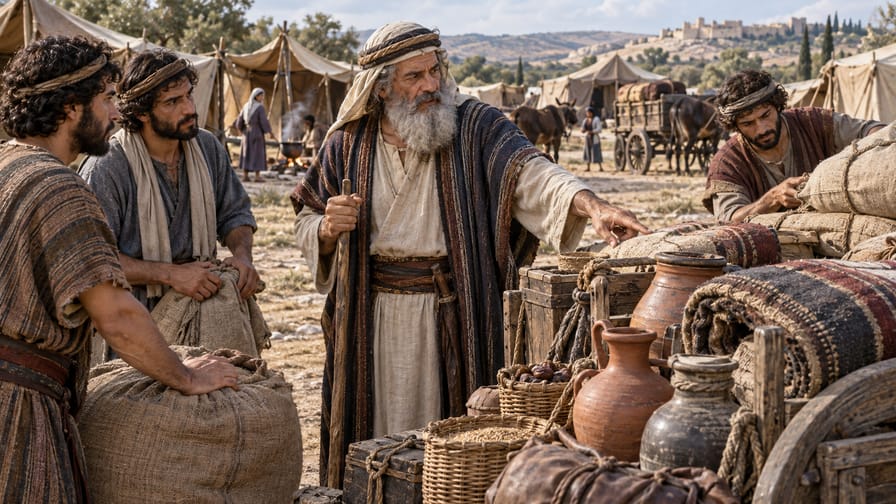
The biblical figure of Bebai, though not one of the most prominent characters in the Scriptures, plays a significant role in the context of the restoration of Israel after the Babylonian exile. His mention in books like Ezra and Nehemiah places him among those who were fundamental to the rebuilding of the Jewish community in Jerusalem and Judah.
The analysis of Bebai offers a window into understanding God's faithfulness to His covenant and the importance of His people's obedience, even in times of difficulty and reconstruction. From a Protestant evangelical perspective, the inclusion of names like Bebai in genealogical lists and lists of returnees underscores divine providence and the meticulousness of salvation history.
This study seeks to explore the etymology of the name, the historical context in which Bebai appears, his character and role, the theological significance of his presence, and his legacy within the biblical canon. Although biographical details are scarce, the relevance of Bebai lies in his representation of a family and a group of individuals who contributed to the fulfillment of the divine promises of restoration.
1. Etymology and Meaning of the Name
The name Bebai, transliterated from Hebrew as Bebai (בֵּבַי), is found in some passages of the Old Testament. Its etymological root and linguistic derivation are subject to some discussion among scholars, but it is generally accepted as a proper name, possibly of foreign origin or with a meaning that reflects the post-exilic context.
Some lexicographers and commentators suggest that Bebai might be an abbreviated form or a variant of a Babylonian or Persian name, given the cultural influence during the period of the exile. However, the most common interpretation, based on similar Hebrew roots or Semitic cognates, points to meanings such as "my father" or "father" (related to ’ab, 'father').
The uncertainty regarding the exact etymology does not diminish the name's importance, but rather highlights the linguistic complexity of the era. Nevertheless, if the meaning is "father" or "my father," this may symbolize Bebai's family leadership, who headed a significant household or clan upon the return from exile, as recorded in Ezra 2:11 and Nehemiah 7:16.
There are no other biblical characters explicitly named Bebai who are not related to the group of returnees from exile. However, it is important to note that the name appears in different contexts within the post-exilic period, referring to a family head and, possibly, one of his descendants or a clan leader who sealed the covenant.
The theological significance of the name, though not directly explicit, can be inferred from the role played by those who bore the name. As family heads who returned from exile, they represent the continuity of Israel's lineage and God's faithfulness in preserving His people, ensuring their identity and heritage amidst adversity.
The maintenance of family names and their careful documentation in the lists of return demonstrate concern for identity and lineage, essential for the restoration of Israel. This is crucial for understanding God's faithfulness to His covenant with Abraham, which promised a great nation, and for the preservation of the Davidic lineage that would culminate in Christ.
2. Historical Context and Biblical Narrative
The figure of Bebai is situated within the historical context of the return from the Babylonian exile, a crucial period in Israel's history, extending approximately from 538 BC to 444 BC. This period is detailed in the books of Ezra and Nehemiah, which recount the efforts to restore the Jewish community, the Temple, and the walls of Jerusalem.
The political context was dominated by the Persian Empire, which, under Cyrus, allowed the return of the Jewish exiles to their homeland, as prophesied by Jeremiah (Jeremiah 29:10) and Isaiah (Isaiah 44:28 45:13). Socially and religiously, the Jewish community was in a process of redefining its identity, seeking to purify its faith and practices in conformity with the Law of Moses.
Bebai is mentioned as a family head whose descendants returned from exile. In Ezra 2:11, Bebai's family is recorded as having "six hundred and twenty-three" members who returned with Zerubbabel in the first wave of repatriates. This list is repeated in Nehemiah 7:16, with a slight variation in the number, indicating "six hundred and twenty-eight" members.
The presence of such a numerous clan under Bebai's leadership demonstrates the importance and influence of his family in the restoration process. These genealogical lists were not mere records they served to legitimize citizenship, land ownership, and, in some cases, the right to the priesthood, thus being of utmost importance for the new community.
In addition to the initial return, another individual or descendant of Bebai's family is mentioned in Ezra 8:11. In this verse, Zechariah, son of Bebai, is one of the leaders who return with Ezra in the second wave, bringing with him "twenty men." This suggests the continuity of Bebai's family's leadership in different phases of the restoration.
Later, in Nehemiah 10:15 (verse 16 in the Hebrew Bible), a Bebai is listed among the heads of the people who sealed the solemn covenant of faithfulness to God, committing themselves to walk in His Law and to keep His commandments. This event occurred after Ezra's reading of the Law and the people's confession of sins, marking a moment of deep spiritual renewal (Nehemiah 9:38).
The geography related to Bebai and his family is primarily Jerusalem and the surrounding areas of Judah, where the exiles returned. His relationship with other biblical characters is indirect, through his inclusion in the lists of Zerubbabel and Ezra, and his participation with Nehemiah in the renewal of the covenant, placing him in contact with the main leaders of the post-exilic era.
3. Character and Role in the Biblical Narrative
The biblical narrative does not offer explicit details about Bebai's personal character, as he is mentioned primarily in genealogical and leadership lists. However, it is possible to infer aspects of his character and the role he played from the context and the actions attributed to his household and the individual who sealed the covenant.
As the head of a numerous family who returned from exile, Bebai demonstrated an essential virtue: the willingness to abandon the relative security and prosperity in Babylon to return to a devastated land and face the challenges of rebuilding. This decision required faith, courage, and a deep commitment to Israel's heritage and God's promises (Ezra 1:3-4).
Bebai's leadership over such a large clan implies organizational skills and influence. He was a "head of a household" (rosh beit 'av), a role that required wisdom to manage his family and the ability to mobilize people for the difficult task of re-establishing the Jewish community. His presence in the lists reflects his status and vital contribution.
The participation of a Bebai, possibly the same individual or a direct descendant, in the sealing of the covenant in Nehemiah 10:15, reveals a significant spiritual commitment. By sealing the covenant, he and the other leaders publicly committed to obey God's Law, not to intermarry with foreigners, to observe the Sabbath, and to support the Temple and the priests (Nehemiah 10:29-39).
This action demonstrates profound piety and a desire for spiritual and moral renewal for the nation. The Bebai who sealed the covenant acted as a representative of his family and the people, taking collective responsibility for faithfulness to God. This underscores the importance of spiritual leadership and example in times of national restoration.
Bebai's role, therefore, was not that of a prophet, priest, or king in the traditional sense, but that of a family and community leader. His function was fundamental to the social and religious structure of the post-exilic community, ensuring the continuity of lineages, the organization of the return, and adherence to the principles of the divine covenant.
Although the Bible does not record specific failures or sins of Bebai, his inclusion among the leaders who committed to the covenant in Nehemiah 10 suggests that he was aligned with the reform and purification movement led by Ezra and Nehemiah. His life, though sparsely detailed, serves as a testimony of obedience and commitment to God and His community.
4. Theological Significance and Typology
The figure of Bebai, though secondary, holds a relevant theological significance within redemptive history, especially in the context of the progressive revelation of God's faithfulness. His presence in the lists of return and in the renewal of the covenant illustrates central themes of Protestant evangelical theology, such as divine sovereignty, election, restoration, and the importance of covenant obedience.
The story of Bebai and his family is a testimony to God's faithfulness to His promises to restore Israel after the exile, as prophesied by Jeremiah (Jeremiah 29:10-14) and Isaiah (Isaiah 43:5-7). Bebai's willingness to return to Jerusalem demonstrates a response of faith to the divine calling, an act of obedience that contributed to the fulfillment of God's plan.
Bebai's family, as part of the remnant that returned, typifies God's perseverance and grace in preserving a people for Himself. This "faithful remnant" is a recurring theme in the Scriptures, underscoring that, even amidst judgment and dispersion, God always maintains a group that will continue His work and through whom His promises will be fulfilled (Romans 11:5).
Bebai's participation in the renewal of the covenant in Nehemiah 10 is theologically significant. It represents the reaffirmation of the people's commitment to God's Law and the pursuit of holiness. This act prefigures the new covenant in Christ, where God's Law is written on the hearts of believers by the Holy Spirit, enabling a deeper and more transformative obedience (Jeremiah 31:31-34 Hebrews 8:8-12).
While Bebai is not a direct typological figure of Christ in the messianic sense, his leadership and commitment point to the need for faithful leaders among God's people, who guide the community in obedience and worship. Christ is the Chief Shepherd and the true Leader who perfectly fulfills the covenant and gathers His people from all nations (John 10:11 Ephesians 1:10).
Reformed and evangelical theology emphasizes God's sovereignty in history, using even lesser-known figures like Bebai to illustrate His redemptive purposes. The inclusion of his name in the canonical lists is not accidental, but serves to show God's providential hand in every detail of His people's restoration, preparing the way for the coming of the Messiah.
Thus, Bebai and his family are examples of faith and obedience, whose return and commitment were essential for the continuity of the messianic lineage and for the rebuilding of the worship center in Jerusalem. They demonstrate that God's salvation is manifested through the action of faithful individuals who respond to His call with dedication and courage.
5. Biblical-Theological Legacy and Canonical References
Bebai's legacy, though not marked by great deeds or direct teachings, is fundamental to understanding divine providence and the faithfulness of God's people in the post-exilic period. His mentions in Ezra and Nehemiah are the only explicit canonical references to this name, but his inclusion in these important lists confers upon him a lasting relevance.
In Ezra 2:11 and Nehemiah 7:16, Bebai's family is listed among those who returned with Zerubbabel, contributing to the demographic and social restoration of Judah. The precision of these lists, which detail the number of members in each family, underscores the importance of identity and lineage for the Jewish community of the time, especially concerning priestly purity and land inheritance.
The mention of Zechariah, son of Bebai, in Ezra 8:11, indicates the continuity of Bebai's family's leadership and commitment, participating in the second wave of returnees with Ezra. This shows that the family not only returned but remained active and influential in the nation's efforts of reconstruction and spiritual renewal.
The highlight of Bebai's legacy is his participation in the sealing of the covenant in Nehemiah 10:15. This collective act of commitment to God's Law solidified the religious identity of the post-exilic community and laid the foundation for the Judaism that would develop in the following centuries. Bebai's presence among the leaders who sealed the covenant is a testimony to his authority and spiritual earnestness.
In Reformed and evangelical theology, figures like Bebai are valued for their contribution to salvation history, even if they are not biblical "stars." They demonstrate that God uses ordinary people, in roles of community leadership, to fulfill His redemptive purposes. Faithfulness in seemingly lesser functions is as crucial as in great ministries.
The inclusion of Bebai in the Scriptures reinforces the doctrine of the full and verbal inspiration of the Bible, where every detail, including genealogical lists, has a divine purpose. For evangelical commentators, these records are not mere historical data, but integral parts of the narrative of God's providence, which meticulously prepares the stage for the coming of Christ.
Therefore, Bebai's biblical-theological legacy lies in his representation of the faithfulness of the remnant, the importance of family and community leadership in the restoration of Israel, and commitment to God's covenant. He is an example of how individuals, even without great narrative prominence, are vital pieces in the mosaic of salvation history, culminating in Jesus Christ.