


Seth
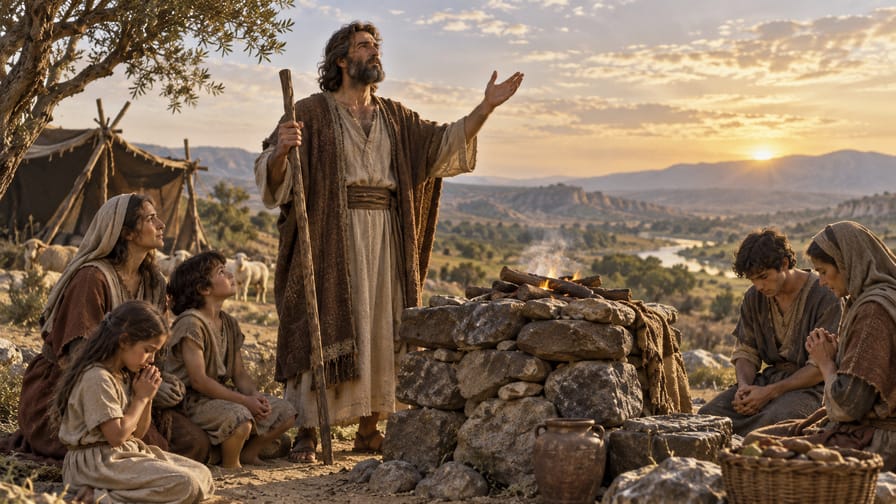
The figure of Seth, the third son of Adam and Eve, emerges in the initial narratives of the book of Genesis as a character of profound theological significance, especially from the evangelical Protestant perspective. His story, though concise in the Scriptures, is a fundamental pillar for understanding the history of redemption and divine providence after the Fall. He represents the continuity of the godly lineage and the partial fulfillment of the messianic promise made in Genesis 3:15, serving as a vital link in the genealogy that would culminate in Jesus Christ.
The analysis of Seth, therefore, transcends mere genealogical mention, revealing crucial aspects of God's sovereignty, the persistence of His grace, and the establishment of a faithful remnant. This article will explore the etymology of his name, his historical context, his role in the biblical narrative, his theological significance, and his legacy, all from an exegetical and Reformed doctrinal perspective.
1. Etymology and meaning of the name
The name Seth derives from the Hebrew Sheth (שֵׁת), which is directly explained in the biblical text. In Genesis 4:25, Eve declares: "God has granted me another offspring in place of Abel, for Cain killed him." The Hebrew word for "granted" or "appointed" is shath (שָׁת), which shares the same consonantal root with Sheth (שֵׁת).
The primary etymological root of Sheth is shith (שִׁית), which means "to place," "to put," "to appoint," or "to designate." Thus, the name Seth carries the literal meaning of "Appointed," "Designated," or "Substitute." This meaning is crucial for understanding his role in biblical history.
Eve's choice of name is not arbitrary, but reflects a deep theological perception and an expression of hope. Seth is explicitly presented as a substitute for Abel, who was murdered by Cain. He is the divinely "appointed" descendant in place of what was lost, restoring the lineage of Adam and Eve.
This concept of "substitute" or "compensation" is fundamental. After the tragedy of the first fratricide, which seemed to threaten the continuity of humanity and the promise of an "offspring" who would crush the serpent's head (Genesis 3:15), the arrival of Seth signals God's providence and faithfulness. He is not merely an additional son, but a son "appointed" by God with a specific purpose.
There are no other prominent biblical characters with the same name. The uniqueness of the name and its etymological explanation in Genesis 4:25 highlight Seth's particular importance in the initial narrative of redemption. His existence is a theological declaration that God's plan would not be thwarted by human wickedness.
From a theological point of view, Seth's name points to God's sovereign grace. Even amidst sin and death, God intervenes to preserve His lineage and His purpose. He is proof that God will always have a remnant, a "substitute" to continue His work on earth, ensuring the arrival of the Messiah.
2. Historical context and biblical narrative
2.1. Period and genealogy
Seth emerges in the biblical narrative during the antediluvian period, a time marked by the expansion of humanity, but also by the increase of impiety, culminating in the judgment of the Flood. He is born after the Fall of Adam and Eve and the murder of Abel by Cain, events that profoundly shaped the moral and spiritual context of his era.
His life is recorded in Genesis 4:25-26 and Genesis 5:3-8. According to the chronology of Genesis, Seth is born when Adam was 130 years old (Genesis 5:3). He is the third son of Adam and Eve to be named, although the text suggests that they had other sons and daughters (Genesis 5:4).
Seth's genealogy is of utmost importance. He is the father of Enosh, who was born when Seth was 105 years old (Genesis 5:6). From Enosh, the lineage continues through Cainan, Mahalalel, Jared, Enoch, Methuselah, Lamech, and Noah (Genesis 5:9-29). This is the messianic lineage, the "seed of the woman" promised in Genesis 3:15.
The New Testament recognizes Seth's importance by including him in the genealogy of Jesus Christ, as recorded in Luke 3:38, which traces Jesus' ancestry back to Adam, through Seth. Likewise, 1 Chronicles 1:1 also lists him as the second of Adam's sons in the genealogy of Israel, reinforcing his position as progenitor of the elect lineage.
2.2. Main events and relationships
The biblical narrative does not detail many events of Seth's life beyond his birth, fatherhood, and longevity. He lived 912 years (Genesis 5:8), a common age for the antediluvian patriarchs, indicating the fullness of life in that era.
The most significant event associated with his era, and which is often directly linked to Seth or his son Enosh, is the declaration in Genesis 4:26: "To Seth also a son was born, and he called his name Enosh. At that time people began to call upon the name of the Lord." This verse is crucial for understanding the development of worship and faith in antiquity.
The phrase "to call upon the name of the Lord" (Hebrew: laqrô’ bəshem YHWH, לִקְרֹא בְשֵׁם יְהוָה) denotes a public and collective act of worship and recognition of God. While some commentators suggest that the phrase refers to the generation of Enosh, many evangelical theologians interpret it as the beginning of organized worship or a public and corporate invocation of God's name, in contrast to the growing impiety of Cain's lineage.
This practice of "calling upon the name of the Lord" differentiates Seth's lineage from Cain's lineage, which was characterized by the building of cities, the invention of arts, and a life focused on earthly achievements, but devoid of an explicit relationship with God (Genesis 4:17-24). Seth's lineage, on the other hand, is the lineage of faith and worship.
In terms of geography, the biblical text does not specify a place of residence for Seth. We assume that he lived in the vicinity of Eden, where Adam and Eve settled after their expulsion. The initial narratives of Genesis focus more on lineages and theology than on precise geographical details for figures like Seth.
3. Character and role in the biblical narrative
3.1. Implicit character and virtues
The Bible does not offer explicit descriptions of Seth's character, as it does with later figures like Abraham or David. However, his role in the narrative and the way he is introduced and remembered suggest implicit virtues. He is the son "appointed" by God, which already bestows upon him an aura of divine purpose and righteousness.
The main virtue associated with Seth is that of being the progenitor of the "godly seed." His lineage is contrasted with Cain's, which is marked by violence and impiety. The existence of Seth and his descendants is a testament to God's grace in preserving a remnant that honored and called upon the name of the Lord.
Although there are no records of specific heroic acts or acts of faith attributed to Seth individually, his mere existence and the continuity of his lineage are acts of obedience and faith in God's plan. He represents hope and the continuity of faith in a world that was rapidly corrupting itself.
3.2. Role in the history of redemption
Seth's role in the biblical narrative is predominantly genealogical and foundational. He is the indispensable link in the chain of redemption, ensuring that the promise of the "seed of the woman" (Genesis 3:15) could proceed. Without Seth, the lineage that would lead to Noah, Abraham, David, and ultimately to Jesus Christ would have been interrupted after Abel's murder.
He establishes the distinction between the "two seeds" or "two lineages" that permeate all of Scripture: the seed of the woman (the children of God, the godly lineage) and the seed of the serpent (the children of men, the ungodly lineage). Seth's lineage is the one that preserves the worship of God and the expectation of the Redeemer.
The mention that "at that time people began to call upon the name of the Lord" (Genesis 4:26) is a significant landmark. It suggests that the worship of God became more public and organized, perhaps in opposition to the growing paganism and violence of Cain's descendants. Seth, through his son Enosh, is associated with this resurgence of corporate piety.
His calling, though not explicit as prophet or priest, is to be a patriarch whose main purpose was to perpetuate the holy lineage. He is not a character who develops throughout the narrative, but rather a key figure whose existence and descendants are the focal points of his biblical relevance.
Seth's most significant actions are his birth, which Eve recognizes as a divine act of substitution, and his fatherhood, which ensures the continuity of the messianic lineage. His decisions, though not recorded in detail, must have been those of a man who lived in righteousness, transmitting faith in God to his descendants, as the context suggests.
4. Theological significance and typology
4.1. Role in redemptive history and Christocentric typology
Seth's theological significance lies primarily in his role in God's redemptive history. He is a crucial link in the progressive revelation of the plan of salvation. His existence after the Fall and Abel's fratricide demonstrates God's sovereignty and grace in preserving humanity and, more specifically, the messianic lineage.
Seth is part of the lineage of the "seed of the woman" (Genesis 3:15), to whom it was promised that he would crush the serpent's head. He is not the final fulfillment of the promise, but an indispensable step towards it. His inclusion in the genealogies of Genesis 5, 1 Chronicles 1, and Luke 3 underscores his importance for the continuity of the divine plan of redemption, which culminates in Jesus Christ.
Although Seth is not a direct type of Christ in the sense of prefiguring specific aspects of His work or character, he can be seen as a genealogical type or an indirect "proto-type." Seth is the divinely appointed "substitute" for Abel, restoring hope and continuity. Christ is the ultimate and perfect substitute, who restores not only a lineage but all fallen humanity through His vicarious death and resurrection (2 Corinthians 5:21).
As a "substitute," Seth points to the principle of substitution that is central to Christian atonement. Seth's life, given by God, is a demonstration of divine providence in providing what was lost, echoing God's ultimate provision in Christ as the perfect sacrifice and the restorer of all things (Romans 5:19).
4.2. Connection with central theological themes
The figure of Seth is intrinsically linked to several central theological themes of the evangelical Protestant faith:
- Sovereign Grace: The coming of Seth is an act of divine grace. Instead of abandoning humanity after the fall and the murder of Abel, God provides a new beginning, demonstrating His faithfulness to His creation and His promises (Romans 5:20-21).
- The Doctrine of the Two Seeds: Seth's lineage is the seed of the woman, who calls upon the name of the Lord, in contrast to the seed of the serpent (Cain's lineage), which is characterized by impiety and violence. This dichotomy establishes a pattern for the biblical history of the church and the world (John 8:44, 1 John 3:12).
- Worship and Piety: The declaration in Genesis 4:26 about the beginning of calling upon the name of the Lord is a landmark in the history of worship. It points to the establishment of a community that publicly recognizes and worships God, a precursor to the visible church (Psalm 95:6-7).
- God's Faithfulness to His Promises: Even in the face of human sin, God remains faithful to His promise of a Redeemer. Seth is a testimony to God's unwavering faithfulness in fulfilling His redemptive purposes throughout history (2 Timothy 2:13).
- The History of Redemption as a Divine Plan: Seth is not an accident, but an essential piece in the puzzle of God's plan to redeem humanity. He demonstrates that redemption is a historical, divinely orchestrated process that unfolds across generations (Ephesians 1:3-10).
Seth's life, though briefly narrated, is rich in theological implications, reaffirming the evangelical belief in divine providence and the continuity of God's plan of salvation.
5. Biblical-theological legacy and canonical references
5.1. Mentions in other biblical books and influence on theology
Seth's mentions in the biblical canon are predominantly genealogical, but his presence in these fundamental records attests to his importance. He is found in:
- Genesis 4:25-26: The record of his birth and the explanation of his name, contextualizing him as Abel's substitute.
- Genesis 5:3-8: Adam's genealogy, where Seth is the first in the lineage leading to Noah, detailing his age and that of his son Enosh.
- 1 Chronicles 1:1: The genealogy of Israel, beginning with Adam, Seth, and Enosh, establishing the historical continuity of the elect nation.
- Luke 3:38: The genealogy of Jesus Christ, which traces back to Adam, through Seth, emphasizing Christ's humanity and His connection to the entire human race from the beginning.
Seth's influence on biblical theology lies in the foundation of crucial concepts such as the doctrine of the "two seeds" or "two lineages." This distinction is vital for understanding the history of salvation, where Seth's godly lineage is separated from Cain's ungodly lineage, a separation that intensifies until the Flood and continues to be a recurring theme in the Scriptures (cf. John 8:44 1 John 3:10-12).
He also contributes to the understanding of the persistence of God's grace and His providence in preserving a faithful remnant, even in times of great apostasy. The existence of Seth's lineage, which "called upon the name of the Lord," is a testimony to the continuous presence of true believers on earth before the Flood.
5.2. Presence in interpretive tradition and Reformed theology
In Jewish and Christian interpretive tradition, Seth is often seen as the progenitor of a more righteous and godly lineage. Josephus, in his Antiquities of the Jews (Book I, Chapter 2), describes Seth's descendants as men who lived virtuous lives and dedicated themselves to the study of celestial bodies, contrasting them with the violence of the Cainites.
The early church fathers, such as Augustine, developed the theology of the "two cities" (City of God and City of Men) from the lineages of Seth and Cain. Seth's lineage represented the Civitas Dei (City of God), which seeks the Lord, while Cain's lineage represented the Civitas Terrena (Earthly City), which seeks its own worldly interests.
In Reformed and evangelical theology, Seth is fundamental to the doctrine of the covenant. He is a link in the chain of the Covenant of Grace, which God established with fallen humanity. His lineage is the bearer of the promise of redemption and the messianic seed. Theologians like John Calvin and Matthew Henry emphasize Seth's role as the channel through which God maintained His church on earth and the promise of Christ.
Seth's importance for understanding the canon lies in his function as a bridge between the tragedy of the Fall and the development of the plan of salvation. He ensures that the biblical narrative does not end in despair with Adam's sin and Abel's murder, but continues with the hope of redemption and the promise of the Messiah, who would finally come through his descendants. Thus, Seth is a vivid reminder of God's unwavering faithfulness and His redemptive purpose.