


Methuselah
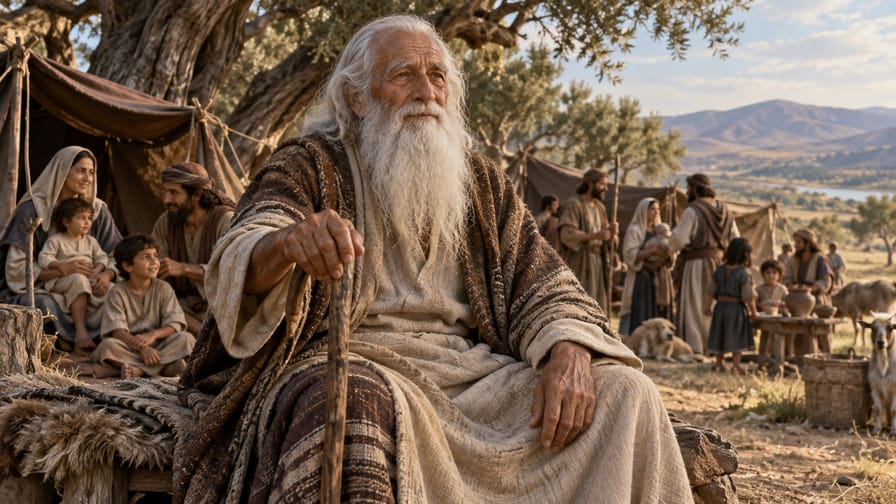
The figure of Methuselah (from the Hebrew Metušelaḥ, מְתוּשֶׁלַח) is one of the most intriguing and, paradoxically, least detailed in the Old Testament. Primarily known for his record longevity, Methuselah plays a fundamental role in the genealogy that connects Adam to Noah, serving as a vital bridge in the history of redemption. His life, although sparsely described in terms of personal actions, carries profound theological significance, especially concerning God's patience and the certainty of judgment.
This study aims to explore the figure of Methuselah from a Protestant evangelical biblical-theological perspective, examining his etymology, the narrative context in which he is embedded, his implicit role in biblical history, and the rich theological implications that his existence and name offer for understanding divine sovereignty, grace, and judgment.
The analysis will seek to extract teachings from the few direct references, but also from the broader context of the Mosaic narrative and progressive revelation, always with a commitment to the authority and inerrancy of the Holy Scriptures.
1. Etymology and meaning of the name
The name Methuselah derives from the Hebrew Metušelaḥ (מְתוּשֶׁלַח). The etymology of this name has been the subject of considerable debate among scholars, but the most widely accepted and theologically relevant interpretation points to a prophetic connection with divine judgment.
The etymological root is generally divided into two parts: mût (מות), meaning "death" or "man" (as in "mortal"), and šālaḥ (שלח), which can mean "to send," "to bring," or "to dispatch." An alternative interpretation for šālaḥ is "spear" or "weapon" (as in šelaḥ), leading to the meaning "man of the spear" or "man of the sword," but this is less common and less theologically significant.
The most widespread interpretation, and one that deeply resonates with the biblical narrative, is "when he dies, it shall be sent" or "his death will bring." This understanding suggests that Methuselah's name was not merely descriptive, but prophetic, pointing to a future event of great magnitude.
The theological significance of this interpretation is immense. If the name truly means "when he dies, it shall be sent," then Methuselah's life, which lasted 969 years (Genesis 5:27), represented a period of prolonged divine grace and patience before the universal Flood.
God, in His sovereignty, would have named this patriarch in a way that prefigured the coming judgment, but also to demonstrate His long-suffering by delaying the event for almost a millennium, as long as Methuselah lived. There are no other notable biblical characters with the same name, which makes him unique in his connotation.
The name Methuselah, therefore, transcends mere personal identification it becomes a living memorial of God's patience towards sinful humanity and, at the same time, a prophetic clock that marked the remaining time until the Flood. This duality of grace and judgment is central to Protestant evangelical theology.
2. Historical context and biblical narrative
Methuselah is situated in the antediluvian period, a dark and sparsely detailed time in the Scriptures, which precedes the universal Flood. Precise dates are difficult to establish with exactitude outside of internal biblical chronology, but Genesis 5 presents a genealogy that spans the first 1,656 years of human history, from creation until the Flood.
He was born in the 687th year of creation, lived until the 1656th year of creation, the same year the Flood began. This means that his life encompassed almost the entire antediluvian period, witnessing humanity's increasing wickedness.
The social and religious context of the era was marked by progressive moral and spiritual corruption. Genesis 6:5 describes that "the Lord saw that the wickedness of man was great in the earth, and that every intention of the thoughts of his heart was only evil continually." Antediluvian society increasingly moved away from God, with the exception of a godly lineage, of which Methuselah was a part.
Methuselah's genealogy is crucial for his identity and role. He was the son of Enoch, the man who "walked with God" and was taken up so that he did not see death (Genesis 5:24). This family connection places Methuselah directly in the line of godliness, the seed of the woman promised in Genesis 3:15.
He became the father of Lamech at 187 years old (Genesis 5:25), and Lamech, in turn, was the father of Noah. Thus, Methuselah was Noah's grandfather, the builder of the ark and the only righteous man of his generation to be saved with his family (Genesis 6:8-9).
The key biblical passages where Methuselah appears are primarily in Genesis 5:21-27, which details his genealogy, age, and fatherhood. He is also mentioned in 1 Chronicles 1:3, in the genealogy from Adam to Noah, and in Luke 3:37, in the genealogy of Jesus Christ. These mentions confirm his historicity and his importance in the messianic lineage.
The geography related to Methuselah is that of the antediluvian world, which is not specifically named in terms of cities or regions, except for the general reference to "the earth." He lived in a period when humanity was expanding, but also corrupting itself, before the geological and demographic reconfiguration caused by the Flood.
His relationships with other biblical characters are primordial. He was the son of Enoch, which suggests that he was raised in a home of faith and communion with God. He was the father of Lamech and the grandfather of Noah, connecting him directly to the family that God chose to preserve humanity and the seed of redemption through the Flood.
3. Character and role in the biblical narrative
The Bible is notably concise about Methuselah's individual character and actions. Unlike his father Enoch, of whom it is said that he "walked with God" (Genesis 5:24), or his grandson Noah, who was "a righteous man, blameless among his contemporaries" (Genesis 6:9), there are no explicit descriptions of virtues, spiritual qualities, sins, or moral failures attributed to Methuselah.
His importance in the narrative does not lie in his personal actions, but in his existence and longevity. He is a vital link in the genealogy of redemption, connecting the lineage of Seth (the promised son after Abel's death) to Noah, the patriarch through whom humanity would be preserved.
Methuselah's primary role, therefore, is to be a guardian of the messianic lineage. He represents the continuity of the divine promise through the generations, an unbroken link between the first patriarchs and the beginning of a new post-diluvian era. His life, in itself, is a testament to God's faithfulness in preserving His seed.
Although the Scriptures do not detail his character, the inclusion of Methuselah in the genealogy of Luke 3:37, which traces the lineage of Jesus Christ, suggests that he was a man of faith, belonging to the community of those who called upon the name of the Lord (Genesis 4:26). The absence of a specific condemnation or judgment on him, unlike others in the same era, may indicate a life that, if not exemplarily godly like Enoch's, was at least not openly wicked like most of his generation.
His extreme longevity (969 years) is, in itself, a significant action. It not only makes him the oldest man in biblical history, but also serves as a symbol of God's long-suffering. Each year of Methuselah's life was one more year of opportunity for humanity's repentance before the promised final judgment, according to the interpretation of his name.
Methuselah's life, therefore, can be seen as a period of suspension of divine judgment, a demonstration of God's mercy that waits until the last possible moment before executing His justice. His development as a character is implicit he represents the persistence of life and hope in a world of moral decline, up to the culminating point of the Flood.
4. Theological significance and typology
The figure of Methuselah plays a crucial role in redemptive history and progressive revelation, especially in Protestant evangelical theology, which values the historical accuracy of biblical narratives. His life is a testimony to divine patience and the certainty of judgment, central themes in biblical theology.
Firstly, Methuselah is an invaluable link in the messianic genealogy. He belongs to the lineage of Seth, the "seed of the woman" (Genesis 3:15), which would culminate in Jesus Christ. His existence ensures the continuity of this lineage through a period of great corruption, before the godly lineage was almost completely eradicated by wickedness.
Methuselah's main theological contribution lies in the prophetic interpretation of his name: "when he dies, it shall be sent" (the Flood). This explicit connection between his death and the coming judgment demonstrates God's sovereignty over history and people's names. Methuselah's longevity, then, is not merely a historical record, but a symbol of divine long-suffering.
God, in His grace, granted a period of 969 years of patience to sinful humanity, delaying the Flood until the year of Methuselah's death. This extended period of grace is an invitation to repentance, echoing the plea of 2 Peter 3:9, where it states that the Lord "is long-suffering toward you, not willing that any should perish, but that all should come to repentance."
Methuselah serves as a prefiguration or type of God's patience before judgment. His life points to divine mercy that precedes the execution of justice. In the New Testament, Jesus draws parallels between the days of Noah and the time of His second coming, a period of sudden judgment after a time of warning and patience (Matthew 24:37-39 Luke 17:26-27).
Methuselah's connection to these central theological themes is undeniable: his life illustrates the faith and obedience implicit in the godly lineage, God's grace manifested in His patience and the inevitable judgment that will come upon wickedness. He is not just a name on a list he is a divine clock, marking the time of grace before retribution.
His mention in the New Testament genealogies, particularly in Luke 3:37, reinforces his importance in salvation history. He is part of Jesus' human lineage, which underscores the incarnation and the true humanity of the Messiah, connecting Him to the earliest history of humanity and the promise of redemption from Eden.
5. Biblical-theological legacy and canonical references
Methuselah's legacy in biblical theology, though subtle, is profound. His canonical mentions are direct and limited, but each of them underscores his importance. He is found in Genesis 5:21-27, which is the primary source of information about his life and longevity. This passage details his parentage, fatherhood, and the duration of his life, culminating in his death in the year of the Flood.
Besides Genesis, Methuselah is listed in 1 Chronicles 1:3, in the genealogy that traces the lineage of Adam. This inclusion in a later historical book reiterates the historicity of the character and the importance of his position in the genealogical line for the nation of Israel.
His most significant New Testament reference is in Luke 3:37, in the genealogy of Jesus Christ. By including him in the Savior's lineage, Luke not only confirms Methuselah's historicity, but also embeds him in the narrative of salvation that culminates in Christ, showing the continuity of God's redemptive plan from the earliest beginnings of humanity.
Methuselah left no direct literary contributions, but his life and name influence biblical theology by reinforcing the doctrine of divine sovereignty over life and death, God's patience, and the certainty of His judgment. He serves as a vivid reminder that God acts in history according to His purposes and timelines.
In Jewish interpretive tradition, especially in midrashim, Methuselah's longevity is frequently discussed in connection with divine patience. He is seen as one of the pillars of the antediluvian generation, whose existence delayed judgment. In Christian tradition, particularly in Reformed and evangelical theology, the interpretation of his name as a premonition of the Flood is widely accepted and emphasized.
Theologians like John Gill and Matthew Henry, in their commentaries, highlight God's providence in allowing Methuselah to live so long, connecting his death directly to the beginning of the Flood. This perspective reinforces the belief in the verbal and plenary inspiration of the Bible, where even names have prophetic and theological significance.
Methuselah's importance for understanding the canon lies in his function as a link. He is not a central figure in terms of actions, but he is fundamental as a connecting point in the history of redemption. His life demonstrates God's meticulousness in preserving the lineage from which the Messiah would come, even amidst the deepest human depravity.
Thus, Methuselah, the longest-living man in biblical history, is more than a chronological curiosity he is a silent testimony to God's grace and justice, a memorial of divine patience that precedes judgment, and a vital link in the genealogy that leads us to our Lord and Savior, Jesus Christ.