


Nehemiah
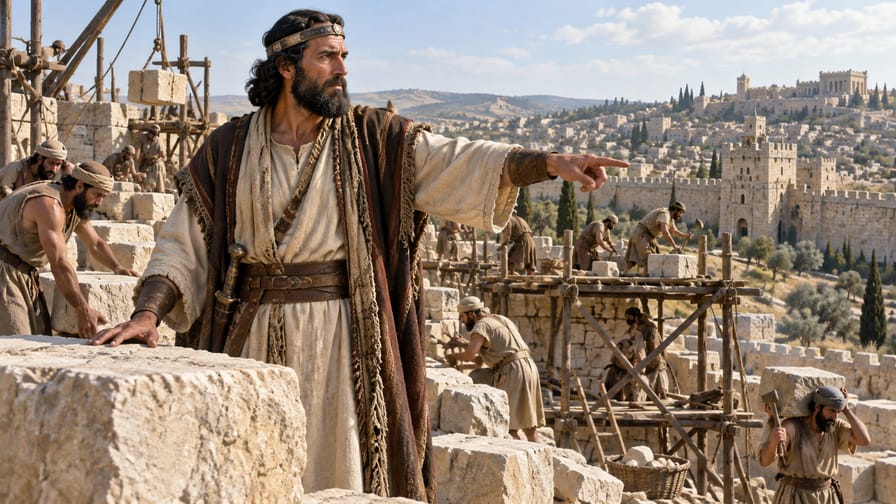
The figure of Nehemiah emerges in the biblical canon as one of the most prominent leaders of the post-exilic period, playing a crucial role in the physical and spiritual restoration of the Jewish community in Jerusalem. His story, told mainly in the book that bears his name, is a vivid testament to divine providence, godly leadership, and perseverance in the face of adversity.
From an evangelical Protestant perspective, Nehemiah is seen not only as a great administrator and builder, but also as a model of faith, prayer, and dedication to the Word of God. His life offers rich lessons on the sovereignty of God, the importance of the covenant community, and the practical application of faith in contexts of challenge and reconstruction.
1. Etymology and meaning of the name
The name Nehemiah, in Hebrew Neḥemyah (נְחֶמְיָה), is composed of two significant parts. The first part, naḥam (נָחַם), means "to comfort," "to console," or "to repent." The second part, Yah (יָהּ), is an abbreviated form of the divine name Yahweh (YHWH).
Thus, the literal and most accepted meaning for Nehemiah is "Yahweh comforts" or "Yahweh consoles." This meaning is deeply symbolic and prophetic for the role he would come to play in the history of Israel. He was, in fact, an instrument of God's comfort for a discouraged people and a city in ruins.
The name reflects the nature of Nehemiah's mission: to bring relief and restoration to Jerusalem and its people, who were in great distress and shame (Nehemiah 1:3). God used Nehemiah to fulfill the promise of comforting His people, demonstrating His faithfulness to the covenant even in times of difficulty.
Although there is a mention of another Nehemiah in Ezra 2:2 and Nehemiah 7:7, who returned with Zerubbabel in an earlier expedition, the central Nehemiah of the book is the cupbearer to King Artaxerxes. There are no significant variations of the name in biblical languages, maintaining its original Hebrew form.
The theological significance of the name lies in the revelation of God's character as the Comforter of His people. The ministry of Nehemiah is a practical manifestation of Yahweh's care, who does not abandon His covenant, but raises up leaders to restore and protect those He has chosen.
2. Historical context and biblical narrative
The story of Nehemiah unfolds in the post-exilic period, specifically during the reign of Artaxerxes I Longimanus, king of Persia (465-424 B.C.). The main narrative covers the years approximately 445 to 433 B.C., with a second period of service after a temporary return to Persia (Nehemiah 13:6).
In this context, the Jews had returned from Babylonian captivity in waves, led by figures such as Zerubbabel and Ezra. The Temple had been rebuilt (c. 516 B.C.), but the city of Jerusalem remained vulnerable, with its walls broken down and gates burned (Nehemiah 1:3), leaving its inhabitants exposed to attacks and shame.
Nehemiah was a Jew who served as cupbearer to King Artaxerxes in Susa, the capital of the Persian Empire (Nehemiah 1:1, 11). Although he was not a priest or a prophet, his position of trust in the royal court was one of great influence. His genealogy is not detailed, but he was the son of Hacaliah (Nehemiah 1:1) and likely belonged to the tribe of Judah, given his concern for Jerusalem.
The narrative begins with Nehemiah receiving desolate news about the condition of Jerusalem, which leads him to deep prayer and fasting (Nehemiah 1:4-11). After four months, he presents his request to King Artaxerxes, who, by divine providence, grants him permission to go to Jerusalem and rebuild the walls, in addition to providing resources and letters of safe conduct (Nehemiah 2:1-8).
Upon arriving in Jerusalem, Nehemiah conducts a secret inspection of the walls at night to assess the magnitude of the task (Nehemiah 2:12-16). He then motivates the people to begin the reconstruction, declaring the good hand of God upon him (Nehemiah 2:17-18). The work is marked by intense opposition from enemies such as Sanballat, Tobiah, and Geshem, who mock, conspire, and threaten the work (Nehemiah 2:19, 4:1-9, 6:1-14).
Despite external opposition and internal problems, such as the exploitation of the poor by the rich (Nehemiah 5:1-13), Nehemiah leads the people with wisdom, courage, and dependence on God. He organizes the defense, arms the workers, and promotes social reforms. In just 52 days, the walls are miraculously completed (Nehemiah 6:15).
After the reconstruction, Nehemiah and Ezra, the priest and scribe, lead the people in a spiritual revival, with the public reading of the Law, confession of sins, and renewal of the covenant with God (Nehemiah 8-10). Later, Nehemiah returns to Persia for a time, but upon returning to Jerusalem, he finds new violations of the covenant and promotes additional reforms, expelling Tobiah from the temple, restoring the support of the Levites, and enforcing the Sabbath (Nehemiah 13:4-31).
3. Character and role in the biblical narrative
Nehemiah's character is multifaceted and exemplary, revealing qualities of unwavering leadership, faith, and dedication. He is presented in the Scriptures as a man of deep prayer, decisive action, and moral integrity, a model of how faith should translate into practical and just works.
3.1. A praying leader dependent on God
One of Nehemiah's most striking characteristics is his life of prayer. From the moment he hears about the condition of Jerusalem (Nehemiah 1:4-11), to his most crucial decisions (Nehemiah 2:4) and confrontations with adversaries (Nehemiah 4:4-5, 6:9), he constantly seeks God. His prayers are marked by confession, supplication, and a deep acknowledgment of divine sovereignty, attributing the success of his mission to God (Nehemiah 2:8).
This dependence on God does not make him passive on the contrary, his prayers are accompanied by strategic planning and vigorous action. He not only prays, but also acts with boldness and wisdom, trusting that God will bless his efforts. He is an example of "praying as if everything depended on God and working as if everything depended on you."
3.2. Vision, courage, and determination
Nehemiah demonstrates a clear vision for the restoration of Jerusalem and extraordinary courage to execute it. He is not intimidated by the mockery of Sanballat and Tobiah (Nehemiah 2:19, 4:1-3), nor by threats of violence and conspiracies to kill him (Nehemiah 4:7-9, 6:1-9). His determination to fulfill the task assigned by God is unwavering.
He leads by example, working side by side with the people and refusing the privileges and remuneration of a governor (Nehemiah 5:14-19). His resilience is a testament to faith and commitment to the work of God, inspiring the people to persevere even amidst great challenges.
3.3. Integrity and social justice
As governor, Nehemiah stands out for his integrity and his commitment to social justice. He openly confronts the exploitation of the poor by the rich, who were charging exorbitant interest and enslaving their Jewish brothers (Nehemiah 5:1-13). His decisive action to correct this injustice demonstrates his deep care for the well-being of the people and his adherence to the principles of the Law of Moses.
He does not seek his own interest, but the well-being of the community, a notable contrast to many leaders of his time. This ethical and moral conduct is a pillar of his leadership and an example for all who hold positions of authority.
3.4. Role in the biblical narrative
Nehemiah's role is multifaceted: he is a skilled administrator, a visionary builder, a social reformer, and a spiritual leader. His calling was neither prophetic nor priestly, but that of a layman with great authority and influence, used by God for a specific purpose. He was sent to rebuild not only physical walls, but also the morale and identity of God's people in Jerusalem.
He not only leads the physical reconstruction of the city but also plays a fundamental role in the spiritual restoration of the community, working together with Ezra to reaffirm the centrality of the Law of God (Nehemiah 8) and renew the covenant (Nehemiah 9-10). His key actions and decisions shaped the future of the post-exilic Jewish community, preparing it for the intertestamental period.
4. Theological significance and typology
The figure of Nehemiah holds a deep theological significance in redemptive history, illustrating God's faithfulness to His covenant and His providence in restoring His people. His narrative is rich in themes central to evangelical Protestant theology, offering principles of leadership, faith, and obedience.
4.1. The sovereignty and providence of God
The story of Nehemiah is an eloquent testimony to the sovereignty of God. Yahweh moves the heart of a pagan king, Artaxerxes, to grant Nehemiah permission, resources, and protection (Nehemiah 2:8). The "good hand of God" is constantly recognized by Nehemiah as the source of his success (Nehemiah 2:8, 6:16). This reinforces the doctrine of divine providence, where God orchestrates events and uses individuals to fulfill His purposes, even in challenging circumstances.
The apparent coincidence of Nehemiah being in the Persian court and being moved by the news from Jerusalem is not seen as chance, but as part of the divine plan for the restoration of Israel, as promised by the prophets (e.g., Jeremiah 29:10-14).
4.2. Importance of prayer and the Word of God
Nehemiah's life underscores the effectiveness of persistent and sincere prayer. His prayers, characterized by confession, praise, and petition, demonstrate a total dependence on God. The evangelical perspective emphasizes that prayer is a means by which believers align themselves with God's will and see His intervention in the world.
Furthermore, the spiritual restoration under the leadership of Nehemiah and Ezra is centered on the rediscovery of and obedience to the Word of God (Nehemiah 8:1-8). The renewal of the covenant and the subsequent reforms are based on the Law of Moses, highlighting the authority and centrality of the Scriptures for the life of the faith community.
4.3. Christocentric typology
Although the New Testament does not directly quote Nehemiah, his figure can be seen as a type of Christ in several aspects, under a careful evangelical interpretation:
- The Restorer and Builder: Nehemiah rebuilt the walls of Jerusalem, restoring the city and the people. Christ is the great Builder of the Church, His body (Matthew 16:18), rebuilding lives and restoring humanity to communion with God.
- The Compassionate Leader and Intercessor: Nehemiah's deep compassion for his people and his intercessory prayers prefigure Christ's compassion for sinners (Matthew 9:36) and His continuous intercession for us as our High Priest (Hebrews 7:25).
- The One Who Faces Opposition: Nehemiah faced intense opposition in fulfilling God's work. Christ also faced relentless opposition during His ministry, culminating in His crucifixion.
- The Self-Sacrificing Servant: Nehemiah refused privileges and served without seeking personal gain (Nehemiah 5:14-19), pointing to the self-denial and supreme sacrifice of Christ, who "did not come to be served, but to serve, and to give his life as a ransom for many" (Mark 10:45).
4.4. Central theological themes
The story of Nehemiah connects to themes such as covenant renewal, the importance of holiness and separation (Nehemiah 13:23-27), social justice, and the need for repentance and obedience. He demonstrates that practical faith involves both the physical reconstruction and the spiritual and moral reform of the community.
His life also illustrates the concept of spiritual warfare, where opposition to God's work is not merely human, but has spiritual roots, requiring vigilance, prayer, and divine dependence to overcome it (Nehemiah 4:9).
5. Biblical-theological legacy and canonical references
Nehemiah's legacy is monumental, not only for the history of Israel, but also for biblical theology and the understanding of the canon. The book of Nehemiah, largely autobiographical, is the primary canonical reference for his life and work, complementing the book of Ezra in the narrative of the return from Babylonian exile.
5.1. Literary and canonical contribution
The book of Nehemiah is a historical and theological work that concludes the narrative of the historical books of the Old Testament, before the intertestamental period. It provides a crucial bridge between the exile and the New Testament era, showing the restoration of the Jewish community in Jerusalem and the reaffirmation of its identity under the Law of Moses.
The authorship of the book is traditionally attributed to Nehemiah, with parts written in the first person ("the words of Nehemiah son of Hacaliah," Nehemiah 1:1). His detailed narrative and personal prayers offer an intimate insight into his faith and challenges.
5.2. Influence on biblical theology
Nehemiah's story reinforces several essential theological themes. It demonstrates God's faithfulness in fulfilling His promises of restoration to Israel (e.g., Deuteronomy 30:1-5), even after the judgment of exile. The rebuilding of the walls of Jerusalem is a symbol of the restoration of the identity and security of the covenant people.
The book also emphasizes the importance of godly and sacrificial leadership, the need for God's Word for true reform, and the continuous struggle against spiritual and moral opposition. Nehemiah, as a God-fearing governor, sets a precedent for the integration of faith into the public and political sphere.
5.3. Interpretive tradition and evangelical theology
In the Jewish tradition, Nehemiah is revered as one of the great leaders who preserved Judaism after the exile. In the Christian tradition, especially in Reformed and evangelical theology, he is often studied as a model of servant leadership, a man of prayer, and an executor of great projects for the glory of God.
Evangelical commentators such as Derek Kidner and John Calvin (who, in his lectures on Daniel, frequently makes references to the period of Ezra and Nehemiah) highlight the practicality of Nehemiah's faith and its relevance for ecclesiastical leadership and Christian life today. His story is an invitation to action, perseverance, and dependence on God amidst the challenges of building the Kingdom.
Nehemiah's legacy, therefore, transcends mere historical narrative. He is a testament to God's continuous work in history, using faithful men and women to restore, build, and preserve His people, preparing the way for the full and final restoration in Christ Jesus.