


Ichabod
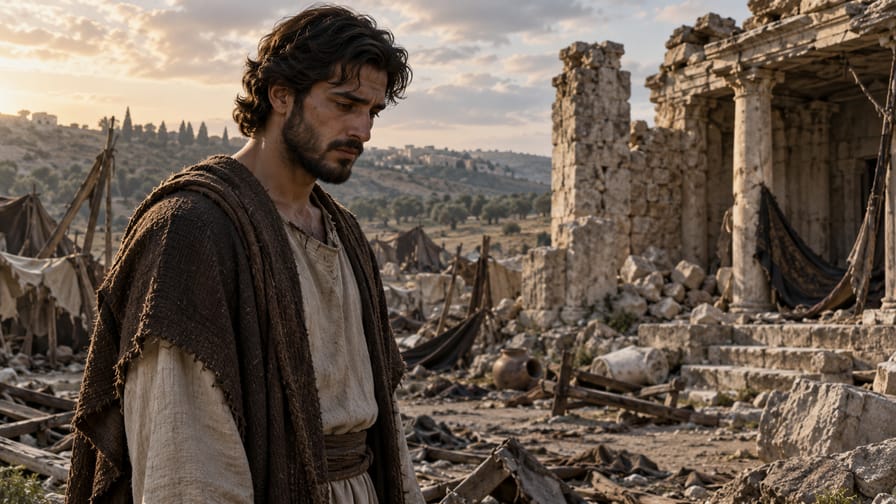
The figure of Icabod, though briefly mentioned in the Scriptures, carries immense theological and symbolic weight, being a landmark in the history of Israel. His existence is a prophetic lament and a testimony to divine judgment upon the nation and its negligent priesthood. Born at a time of profound national and spiritual crisis, his name becomes the epitome of the loss of the glory of God, a central theme for understanding Israel's relationship with its Creator.
This in-depth analysis will explore the etymology and meaning of his name, the historical and narrative context of his birth, his symbolic role in biblical history, his theological and typological implications, and his legacy within the evangelical Protestant tradition. Through an exegetical and theological perspective, we will seek to unravel the lasting relevance of Icabod for the history of redemption and the understanding of divine glory.
1. Etymology and Meaning of the Name
The name Icabod (Hebrew: אִי כָבוֹד, 'Î-kāvôd) is one of the most poignant and prophetic in the entire Hebrew Bible. It is composed of two significant parts. The first, 'î (אִי), is a particle that can mean "where is?" (interrogative) or "there is no," "none" (negative, privative).
The second part, kāvôd (כָבוֹד), is a Hebrew word rich in meaning, translated as "glory," "honor," "reputation," "weight," or "splendor." In the biblical context, kāvôd often refers to the visible manifestation of God's presence, His power, and His majesty, such as the cloud of glory that filled the Tabernacle and the Temple (Exodus 40:34-35 1 Kings 8:10-11).
Thus, the name Icabod can be interpreted as "Where is the glory?" or, more intensely, "No glory." Icabod's mother, in naming him, expressed profound grief and despair over the loss of the glory of God in Israel (1 Samuel 4:21). It is a name that, by itself, is a theological declaration of judgment and desolation.
This name, therefore, is not merely a personal identification but a prophetic symbol of the spiritual state and covenant condition of Israel. It represents the withdrawal of the manifest presence of God, which was the greatest treasure and the very identity of the chosen people. The glory of God, the kāvôd, was what distinguished Israel from other nations (Deuteronomy 4:7-8).
There are no known variations of the name Icabod in the biblical languages, nor are there other biblical characters who share this name, which underscores its uniqueness and the specific purpose of its mention. Its theological significance lies in its ability to encapsulate the tragedy of the loss of the divine presence and the consequences of priestly and national infidelity.
The absence of kāvôd, as lamented in the name Icabod, points to the seriousness of sin and the holiness of God, who does not condone the profanation of His name and His covenant. The name serves as a powerful reminder that God's presence is not automatic, but conditioned upon obedience and reverence.
2. Historical Context and Biblical Narrative
The story of Icabod is situated in the transitional period between the era of the Judges and the establishment of the monarchy in Israel, approximately in the 11th century B.C. This was a time marked by great political, social, and, crucially, spiritual instability. The book of Judges concludes with the phrase "In those days there was no king in Israel everyone did what was right in his own eyes" (Judges 21:25), reflecting the moral and religious anarchy.
The religious context of the time was particularly bleak. The high priest Eli, a descendant of Aaron, was old and his sons, Hophni and Phinehas, were corrupt and irreverent priests. They abused their positions, disrespecting the offerings to Yahweh and committing sexual immorality in the Tabernacle itself (1 Samuel 2:12-17, 22). This conduct profaned the sanctuary and brought contempt upon the worship of God.
God sent a prophet to Eli to announce judgment upon his house, for he honored his sons more than God (1 Samuel 2:27-36). The prophecy included the death of Hophni and Phinehas on the same day and the removal of the priesthood from his lineage, promising to raise up a faithful priest (a reference to Samuel and, ultimately, to Christ).
2.1 Family Origin and Genealogy
Icabod was the son of Phinehas and the grandson of the high priest Eli (1 Samuel 4:19-22). His mother, Phinehas' wife, is the central figure in his narrative, as she is the one who names him. The genealogy, though brief, connects Icabod directly to the corrupt priestly lineage that was about to be disqualified by God.
2.2 Key Life Events and Biblical Passages
The life of Icabod, as narrated in the Bible, is extremely brief and focused on his birth and naming. He is introduced in 1 Samuel 4:19-22. The narrative describes Phinehas' wife, pregnant and about to give birth, receiving the devastating news of Israel's defeat by the Philistines in the battle of Aphek/Ebenezer (1 Samuel 4:1-10).
The news worsened with the information of the death of her father-in-law, Eli, and of her husband, Phinehas, and her brother-in-law Hophni (1 Samuel 4:11-18). The final blow was the news of the capture of the Ark of the Covenant by the Philistines. This last piece of news was what most devastated her, as the Ark symbolized the very presence of God among His people.
Amidst these tragedies, she went into labor and, upon giving birth to a son, before she died, she named him Icabod, declaring: "The glory has departed from Israel!" (1 Samuel 4:21). She reiterated: "The glory has departed from Israel, for the ark of God has been captured" (1 Samuel 4:22). This event occurs in Shiloh, where the Tabernacle and the Ark were located before the battle.
The only other mention of Icabod, though indirect, occurs in 1 Samuel 14:3, where the priest Ahijah is identified as "the son of Ahitub, Ichabod's brother, son of Phinehas, son of Eli." This passage confirms his existence and his lineage, connecting him to the priestly family that continued, albeit in decline, after the events of 1 Samuel 4.
3. Character and Role in the Biblical Narrative
Unlike many biblical characters, Icabod does not demonstrate "character" in the traditional sense of virtues, flaws, or personal actions. He is a child, and his life is merely a backdrop for the prophetic message inherent in his name. His "character" is, therefore, entirely symbolic and representative.
Icabod's role in the biblical narrative is to be a living memorial, a tangible sign of God's judgment and the loss of divine glory in Israel. He does not act, speak, or make decisions he simply exists as the personification of a national tragedy. His very identity is that of absence, of the glory that has departed.
His function is prophetic and didactic. He serves to illustrate the consequences of disobedience and irreverence towards God, especially in the priesthood. The corruption of Eli's sons and Eli's own negligence led to the profanation of the sanctuary and, ultimately, to the withdrawal of God's manifest presence, symbolized by the capture of the Ark.
Icabod's name is a cry of anguish that resonates through the generations, warning of the seriousness of taking God's glory for granted or trivializing it. The absence of His glory meant the loss of divine blessing, protection, and Israel's distinction as the covenant people.
There is no character development for Icabod. His story begins and ends with his birth and naming. However, the event of his birth marks a turning point in Israel's history, paving the way for the rise of Samuel, a faithful priest and prophet, and for the establishment of the monarchy under Saul and David, who would seek to restore the glory of God in Israel.
4. Theological Significance and Typology
The theological significance of Icabod is profound and multifaceted, serving as a landmark in Israel's redemptive history. His name and the circumstances of his birth mark a low point in the progressive revelation of God's presence among His people, highlighting the fragility of the covenant when infidelity and sin prevail.
The loss of the glory of God (kāvôd) with the capture of the Ark of the Covenant was not merely a military disaster, but a divine judgment upon the nation, especially upon Eli's priestly house. This underscores the holiness of God and the seriousness of sin, which demands a divine response. God's presence, though sovereign, does not tolerate the continuous profanation of His name and His worship.
The story of Icabod is permeated by several central theological themes. It emphasizes the holiness of God, who cannot be manipulated or disrespected with impunity. It highlights the consequences of sin, not only for the individual but for the entire community. It reveals the faithfulness of God's covenant, which, even in judgment, prepares the way for restoration through a new leader and a new priesthood (Samuel).
From a typological perspective, the figure of Icabod, or rather, the event of his birth and the meaning of his name, points to the need for a restoration of divine glory that would be fully fulfilled in Jesus Christ. The absence of God's glory in the Tabernacle and the failure of Eli's priesthood prefigure the need for a new and perfect temple and an eternal high priest:
-
The loss of the kāvôd in the Old Testament, symbolized by Icabod, highlights the need for a return and a permanent presence of God's glory. This need is supremely satisfied in the incarnation of Jesus Christ. John 1:14 declares: "And the Word became flesh and dwelt among us, and we have seen his glory, glory as of the only Son from the Father, full of grace and truth." In Christ, the very glory of God was manifested in a personal and definitive way.
-
The failure of the Levitical priesthood, exemplified by Eli's sons, points to the indispensability of a perfect High Priest. The letter to the Hebrews extensively develops the superiority of Christ's priesthood, which is not according to the order of Aaron, but of Melchizedek, an eternal and unchangeable priesthood (Hebrews 7:11-28). Christ, with His perfect sacrifice, restored access to God's presence once and for all.
-
The Ark of the Covenant, which was the throne of God's presence, was captured, symbolizing the temporary withdrawal of glory. In the New Testament, the glory of God is no longer confined to an object or a physical place, but dwells in the Body of Christ, the Church, through the Holy Spirit. Believers are now the "temple of the Holy Spirit" (1 Corinthians 6:19) and "God's building" (1 Corinthians 3:9), where the glory of God resides.
Thus, Icabod, "no glory," serves as a dramatic contrast to the fullness of divine glory that came in Christ. He underscores the seriousness of sin that distances God's presence and the magnificence of salvation that restores that presence in a more intimate and lasting way through Jesus.
The absence of glory in the Old Testament, lamented by Icabod, awaited the prophetic fulfillment of the restoration of God's glory, which culminates in the New Jerusalem, where "the city has no need of sun or moon to shine on it, for the glory of God gives it light, and the Lamb is its lamp" (Revelation 21:23).
5. Biblical-Theological Legacy and Canonical References
Despite his brief appearance, Icabod's legacy in biblical theology is significant. His story is primarily recorded in 1 Samuel 4:19-22, with a genealogical mention in 1 Samuel 14:3. He is not the author of any biblical book, nor are his actions recorded beyond his birth, but the meaning of his name resonates deeply.
The figure of Icabod serves as a powerful reminder of the fragility of God's manifest presence amidst human disobedience and priestly corruption. He highlights the truth that God's glory is not an acquired right, but a privilege conditional upon faithfulness to the covenant. This is a recurring theme in both the Old and New Testaments, where the holiness of God and the need for reverence are constantly emphasized (Leviticus 10:3 1 Peter 1:15-16).
In the Jewish interpretive tradition, the episode of Icabod and the capture of the Ark are seen as a moment of profound national humiliation and a sign of divine judgment. It served to reinforce the importance of priestly purity and the observance of the Law to maintain God's presence in Israel.
In Christian theology, and particularly within the evangelical Protestant and Reformed perspective, Icabod is frequently cited as a vivid example of the devastating consequences of sin and apostasy. Commentators such as Matthew Henry and John Gill emphasize the gravity of the loss of God's presence, which is the greatest of all evils.
For Reformed theology, the story of Icabod reinforces the doctrine of God's sovereignty in judgment and grace. Even when glory seems to have departed, God is acting to purify His people and prepare the way for an even greater restoration. The failure of the Levitical priesthood is seen as a demonstration of the need for a perfect mediator and priest, Jesus Christ.
Icabod's importance for understanding the biblical canon lies in his function as a narrative pivot. His birth marks the end of an era of decline and the transition to a new chapter in Israel's history, which would see the emergence of Samuel, the anointing of kings, and the promise of an eternal kingdom through David, culminating in the Messiah.
He underscores the idea that the glory of God is the center of Israel's faith and, consequently, of the Church. The quest for the restoration of lost glory, prefigured by Icabod, finds its ultimate fulfillment in the glory of Christ and in the eschatological hope of a new creation where God will dwell eternally with His people (Revelation 21:3).
In summary, Icabod, though a minor figure, is a name that speaks volumes. He is a silent testimony to the cost of sin, the holiness of God, and the need for a glory that cannot be lost, a glory that was fully revealed in the person and work of Jesus Christ.