


Elioenai
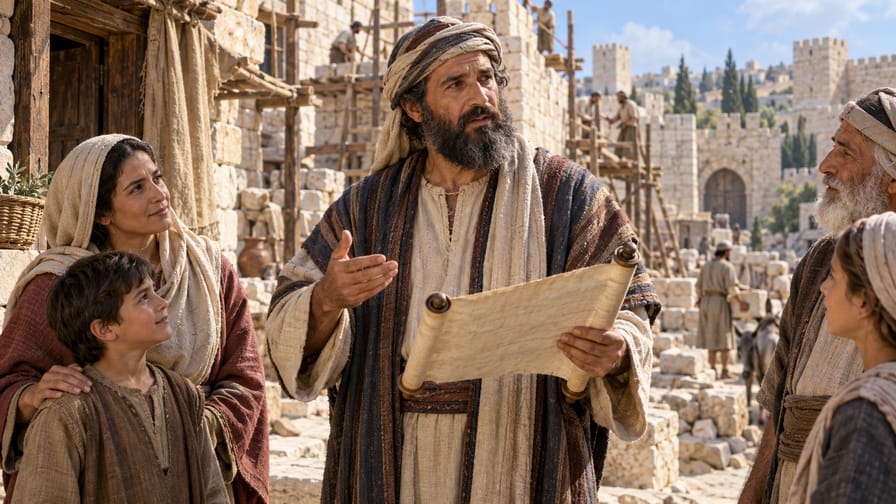
The figure of Elioenai, although not one of the most prominent in Scripture, appears in various contexts of the Old Testament, revealing the meticulousness of the biblical narrative in recording even individuals who, at first glance, seem secondary. The name is attributed to at least five distinct characters, each with their own genealogical and historical location, which requires careful analysis to discern its meaning and theological relevance within the conservative evangelical Protestant perspective.
The presence of multiple individuals with the same name underscores the importance of genealogical and contextual identification in biblical exegesis. The analysis of these Elioenais, though specific and often limited to mere mentions in lists, offers insights into the sovereignty of God in history, faithfulness to the covenant, and the continuity of the messianic line.
This study seeks to explore the onomastic meaning of the name, the historical context of each bearer, the implications of their character or role in the narrative, and their theological relevance for understanding the history of redemption and Christocentric typology. The adopted perspective will be the conservative evangelical Protestant one, which values biblical authority and exegetical precision.
1. Etymology and meaning of the name
The name Elioenai (in Hebrew: אֱלִיהוֹעֵינַי, ’Ělîhô‘ēynay or אֱלִיוֹעֵינַי, ’Ělîyô‘ēynay) is composed of three Hebrew elements. The first is ’Ēl (אֵל), which means "God" or "Lord." The second is hô‘ēn or ‘ên (עֵין), which means "eye" or "eyes." The third is the first-person singular pronominal suffix, î (י), which means "my" or "of me."
Combined, these elements form the literal meaning of the name: "My eyes are on Yahweh" or "To Yahweh are my eyes." This is a theophoric name, a common practice in ancient Israel, where names were formed with reference to God (Yahweh or El), expressing a confession of faith, a prayer, or a declaration about divine nature or action.
The meaning of "My eyes are on Yahweh" is deeply symbolic and theologically rich. It denotes an attitude of dependence, expectation, hope, and trust in God. Someone with this name publicly declares that their vision, their perspective, and their expectation of help are directed exclusively to the Lord, not to human resources or idols.
This expression resonates with biblical passages that emphasize trust in God, such as Psalm 123:2, which says: "Behold, as the eyes of servants look to the hand of their masters, and as the eyes of a maidservant to the hand of her mistress, so our eyes look to the Lord our God, till he has mercy upon us." The name, therefore, carries a message of faith and divine submission.
There are no significant variations of the name in the biblical languages, with ’Ělîhô‘ēynay being the most common form. However, in some translations or contexts, one may find the spelling "Elihoenai," which is an alternative transliteration of the same Hebrew name. The consistency in the root and etymological components is notable.
There are multiple individuals named Elioenai in the Old Testament, which is common in cultures where names with pious meanings were repeated. The main ones are:
- Elioenai, son of Hilkiah, a descendant of David (1 Chronicles 3:23-24).
- Elioenai, a chief of the tribe of Benjamin, residing in Jerusalem (1 Chronicles 8:20).
- Elioenai, a chief of the half-tribe of Manasseh, beyond the Jordan (1 Chronicles 5:24).
- Elioenai, of the family of Pashhur, a priest who married a foreign woman in the time of Ezra (Ezra 10:22).
- Elioenai, of the family of Zattu, a layman who also married a foreign woman in the time of Ezra (Ezra 10:27).
The theological significance of the name lies in its intrinsic declaration of dependence on God. In a world of uncertainties and temptations, the name Elioenai serves as a constant reminder of the need to fix one's eyes on the Lord, seeking His direction, provision, and salvation. It points to the fundamental truth that true security and hope come solely from God.
2. Historical context and biblical narrative
The analysis of the historical and narrative context of each Elioenai is crucial for understanding the relevance of their mentions in Scripture. Although information about most of them is scarce, the broader context of their respective eras and families offers valuable insights.
2.1 Elioenai, descendant of David
This Elioenai is mentioned in 1 Chronicles 3:23-24 as one of the sons of Hilkiah and a descendant of the royal line of David, specifically from the house of Zerubbabel. His existence is situated in the post-exilic period, probably in the 5th or 4th century B.C., after the return of the exiles from Babylon to Jerusalem. This was a period of reconstruction, both physical and spiritual, under the leadership of figures like Ezra and Nehemiah.
The genealogy in 1 Chronicles 3 is of utmost theological importance, as it traces the continuity of the Davidic line after the exile, keeping alive the messianic hope. Zerubbabel was a key leader in the return and reconstruction of the temple (Ezra 3:2, Haggai 1:1). The mention of Elioenai in this list, even without biographical details, confirms the persistence of David's seed, from which the Messiah would come, according to divine promises (2 Samuel 7:12-16).
2.2 Elioenai, from the tribe of Benjamin
Another Elioenai is found in 1 Chronicles 8:20, listed as the son of Shimei and one of the heads of families of the tribe of Benjamin who lived in Jerusalem. This genealogy probably refers to the pre-exilic period or the return from exile, when the tribes were being resettled and families reorganized.
The tribe of Benjamin was strategic, as its land included Jerusalem and the Temple. The mention of Elioenai as a chief indicates a position of leadership and responsibility within his family and community. Although there are no specific narratives about his actions, his inclusion in the genealogy points to his importance within the social and religious structure of his time.
2.3 Elioenai, from the half-tribe of Manasseh
In 1 Chronicles 5:24, an Elioenai is mentioned as one of the heads of families of the half-tribe of Manasseh, who lived beyond the Jordan. This geographical context refers to the eastern tribes, who were the first to be taken into Assyrian captivity (1 Chronicles 5:26), probably in the 8th century B.C.
This list of chiefs highlights the strength and prominence of these families before the exile. The inclusion of Elioenai here, as a "mighty man, men of renown," suggests that he was a figure of respect and influence in his community. His mention serves to document tribal organization and family heritage before the dispersion.
2.4 Elioenai, those who married foreign women
Two men named Elioenai appear in the book of Ezra, both involved in the issue of mixed marriages after the return from Babylonian exile. This period, around the 5th century B.C., was a time of purification and restoration of Israel's identity, according to the terms of the Mosaic Covenant.
- The first is Elioenai, son of Pashhur, a priest (Ezra 10:22). Pashhur was a prominent priestly family (Jeremiah 20:1).
- The second is Elioenai, son of Zattu, a layman (Ezra 10:27). Zattu was also a significant family (Ezra 2:8).
Both Elioenais are listed among those who had taken foreign wives, an act explicitly forbidden by the Law of Moses (Deuteronomy 7:3-4) and one that threatened the religious purity and identity of God's people. They were compelled, along with others, to repudiate their wives and children, in an act of repentance and obedience to the Covenant.
The geography for most of these characters is Jerusalem and Judah, especially for those of the Davidic line and those from Ezra's time. Those from Benjamin were also centered in Jerusalem. The exception is the Elioenai from Manasseh, whose location was "beyond the Jordan," in Transjordan.
3. Character and role in the biblical narrative
The analysis of the character and role of the various Elioenais is largely inferential, given the scarcity of narrative details. However, their inclusion in Scripture, even in lists, is not accidental and reveals important aspects of divine providence and the life of God's people.
3.1 The Elioenai of the Davidic lineage
The Elioenai descendant of David (1 Chronicles 3:23-24) has his character implicitly linked to his lineage. Being part of the "seed of David" was, in itself, a calling and a role. Although we have no accounts of his actions, his existence is a testament to God's faithfulness in preserving the royal line through which the Messiah would come. His virtue, if we can infer, would be to maintain family continuity in a challenging period of post-exilic reconstruction.
His role is passive-active: he is a link in the chain of redemption history, a bearer of the promise. The absence of specific narratives about him may suggest a life of relative obscurity, but his mention is vital for the genealogical accuracy that culminates in Jesus Christ (Matthew 1:1-17, Luke 3:23-38). He represents the continuity of the messianic hope.
3.2 The Elioenais of Benjamin and Manasseh
The Elioenais, chiefs of Benjamin (1 Chronicles 8:20) and Manasseh (1 Chronicles 5:24), are characterized by their leadership position. The text describes them as "valiant men" and "men of renown" (in the case of Manasseh), which suggests qualities of courage, influence, and perhaps wisdom. They played a fundamental role in tribal organization, the administration of justice, and the maintenance of the social and religious order of their respective communities.
Their function was to lead and represent their families and clans. Key decisions in their lives likely involved land management, participation in tribal councils, and the defense of their territories. Although there are no documented moral failures, the mention of their position implies the responsibility to live according to the standards of the Covenant.
3.3 The Elioenais in the time of Ezra
The two Elioenais mentioned in Ezra (Ezra 10:22, 10:27) reveal a more complex aspect of character. Their actions of marrying foreign women represent a failure to obey the Law of God and to preserve the purity of the Covenant people. This sin was not trivial it threatened Israel's identity and its separation from pagan nations, which was essential for its vocation as God's people (Exodus 34:15-16).
The fact that one was a priest (son of Pashhur) and the other a layman (son of Zattu) shows that the problem of mixed marriages affected all strata of society. However, their role in the narrative is, ultimately, one of repentance and obedience. They are listed among those who "gave their hand" (Ezra 10:19), taking an oath to repudiate their wives and purify themselves.
This key decision demonstrates an acknowledgment of error and submission to the authority of Ezra and the Law of God, revealing a capacity for repentance and a restoration of character. Although they failed in an important aspect, their inclusion in the list of the repentant highlights the importance of confession and radical obedience in the life of the Covenant community.
4. Theological significance and typology
The theological relevance of the Elioenais, despite their often secondary role, is multifaceted and fits into the grand narrative of redemptive history. The evangelical Protestant perspective emphasizes that all Scripture is God-breathed and profitable for teaching (2 Timothy 3:16), and even brief mentions have a divine purpose.
4.1 God's faithfulness and the messianic lineage
The Elioenai of the Davidic lineage (1 Chronicles 3:23-24) is a silent testimony to God's unwavering faithfulness to His promises. The maintenance of the Davidic genealogy was crucial for the fulfillment of the messianic promise of a king who would sit eternally on David's throne (2 Samuel 7:12-16). The inclusion of Elioenai, even in a post-exilic period of apparent decline of the monarchy, reinforces divine sovereignty in preserving the seed from which the Messiah, Jesus Christ, would come.
He prefigures the continuity of God's plan, even when historical circumstances seemed unfavorable. His existence points to the truth that God always keeps His covenants, regardless of human failures. The genealogy, including Elioenai, is a golden thread that leads directly to Christ, the true King and Savior, who fulfills all Davidic promises.
4.2 Call to purity and obedience to the Covenant
The Elioenais in the book of Ezra (Ezra 10:22, 10:27) illustrate the importance of Covenant purity and radical obedience to the Law of God. Their sin of marrying foreign women was not merely a matter of social custom, but a direct violation of the Mosaic Covenant, which aimed to protect Israel from idolatry and the cultural and religious assimilation of pagan nations (Deuteronomy 7:3-6).
The action of Ezra and the subsequent confession and repentance of these Elioenais and other Israelites highlight the seriousness of sin and the need for genuine repentance and practical obedience for the restoration of the community. This event underscores the theological theme of the holiness of God's people and the importance of living separated from the world to fulfill its testimonial vocation.
The experience of these Elioenais serves as an example of how the grace of God operates not only in forgiveness but also in the demand for obedience and reform. The confession and repudiation of foreign wives, though painful, were acts of faith and obedience aimed at restoring the covenant with God and the identity of Israel.
4.3 The meaning of the name and the life of faith
The name Elioenai itself – "My eyes are on Yahweh" – carries a deep theological meaning for all believers. It echoes the biblical call to faith, dependence, and hope in God. In a world full of distractions and false promises, the name reminds believers to fix their eyes on the Lord, the source of all true help and salvation (Psalm 121:1-2).
This is a central truth of Reformed and evangelical theology, which emphasizes the sovereignty of God and the necessity of exclusive faith in Christ for salvation and the Christian life. The name inspires a life of prayer and trust, recognizing that divine vision and direction are superior to any human wisdom or effort. It is a perennial reminder of divine providence and the need to live with a perspective eternally focused on God.
5. Biblical-theological legacy and canonical references
The biblical-theological legacy of Elioenai, although not that of a prophet or apostle, lies in the contribution his mention offers to the understanding of the biblical narrative as a whole. The canonical references are direct and limited to the passages already cited in 1 Chronicles and Ezra, with no mentions in other biblical books outside these genealogies and lists.
5.1 Contribution to biblical theology
The presence of Elioenai in genealogies, especially in the Davidic line (1 Chronicles 3), reinforces the historical accuracy and reliability of Scripture. For biblical theology, these lists are not mere genealogical records, but theological documents that demonstrate God's faithfulness in fulfilling His promises and in preparing the way for the coming of the Messiah.
The mention in Ezra contributes to the theology of Covenant holiness and the need for repentance and reform. It vividly illustrates the challenges faced by the post-exilic community in maintaining its identity and purity, and the importance of prophetic and priestly leadership (like Ezra) in calling the people back to obedience to God's commandments.
5.2 Presence in interpretive tradition and evangelical theology
In Jewish and Christian interpretive tradition, Elioenai is not a central character for extensive exegetical or homiletical developments. However, his presence in genealogies has been noted by commentators who underscore the importance of each link in the messianic chain. Theologians like John Calvin, in their commentaries on Chronicles and Ezra, emphasize God's sovereignty in preserving His church and His covenant, even through lesser-known individuals.
In Reformed and evangelical theology, the inclusion of names like Elioenai is often cited to illustrate the meticulous providence of God. Every person, however obscure, has a place in the divine plan. The history of Israel, as documented in Scripture, is the history of God's intervention and preparation for the coming of Christ, and each name contributes to this rich tapestry.
The relevance of the name Elioenai for evangelical theology lies in its message of dependence on God. The meaning of the name is an invitation to faith and trust, central truths of the gospel. It serves as a reminder that, just as Elioenai's eyes were on Yahweh, the eyes of believers should be fixed on Jesus, the author and perfecter of faith (Hebrews 12:2).
5.3 Importance for understanding the canon
The inclusion of Elioenai and other names in lists and genealogies is fundamental for understanding the nature of the biblical canon. These lists demonstrate the historical and factual nature of the biblical narrative, anchoring faith in real events and people. They provide the structure for the history of redemption and the basis for the authority of divine promises and prophecies.
In summary, the various Elioenais, although not prominent figures, contribute to the richness and depth of the biblical narrative. They serve as reminders of God's faithfulness in fulfilling His promises, the importance of holiness and obedience to the Covenant, and the universal call to faith and exclusive dependence on God. Their presence in the canon reaffirms the truth that every detail of Scripture is divinely inspired and has a purpose in God's grand plan for the redemption of humanity through Jesus Christ.