


Maath
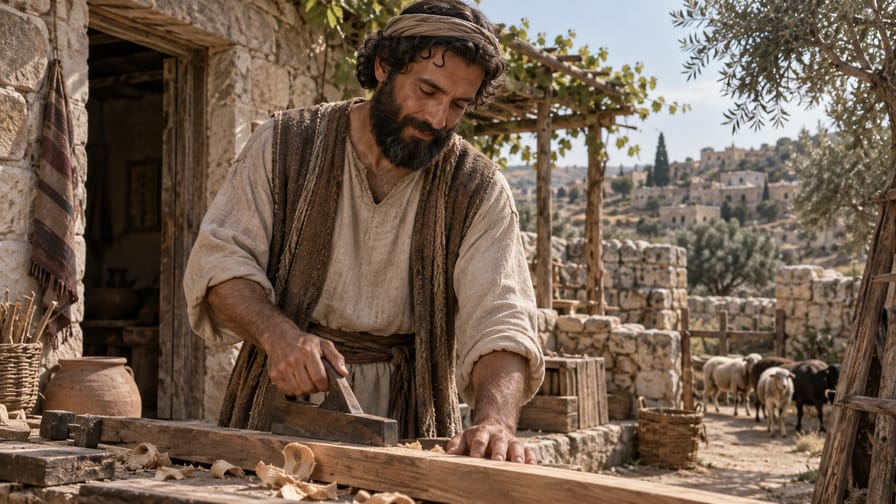
The figure of Maath is one of many that comprise the extensive biblical genealogies, notably the lineage of Jesus Christ recorded in the Gospel of Luke. His mention, though brief, is of paramount importance for understanding divine providence and God's faithfulness in fulfilling His redemptive promises throughout history.
Like many characters in such lists, Maath does not possess a detailed biographical narrative however, his inclusion in the sacred canon underscores the historical nature and divinely orchestrated purpose of the Messiah's genealogy. The analysis of his existence, even if limited to a name, offers profound theological insights into God's sovereignty and Christ's humanity.
This analysis will seek to explore the onomastic meaning of Maath, his genealogical context, and, primarily, his theological relevance from a Protestant evangelical perspective, emphasizing biblical authority and the Christocentric typology that permeate the Scriptures.
Despite the scarcity of direct narrative data, the presence of Maath in one of Jesus' genealogies serves as a vivid reminder of God's meticulous attention to detail in His plan of salvation, incorporating both the prominent and the obscure into the tapestry of redemptive history.
1. Etymology and Meaning of the Name
1.1 Original Name and Linguistic Derivation
The name Maath (in Greek: Μαάθ, transliterated as Maáth) appears exclusively in the genealogy of Jesus Christ as recorded in the Gospel of Luke, in Luke 3:26. Unlike many Old Testament names, which have Hebrew or Aramaic roots, Maáth is a name of Greek or Hellenized origin, which is common in genealogical lists of the intertestamental period and the New Testament, reflecting the cultural influence of Hellenization.
The exact etymology of Maáth is not universally clear among scholars. Some suggest a possible connection with the Hebrew מַתַּת (Mattat), which means "gift" or "present," a shortened form of names like Mattathias. However, the Greek transliteration Μαάθ does not align directly with this Hebrew root in an obvious way, indicating it may be a distinct form or an adaptation.
Another possibility is that it is a variant or corruption of other Greek or Semitic names that are phonetically similar. The nature of the transliteration and the rarity of the name outside this genealogy make its precise etymological root a challenge. Nevertheless, Jewish and Christian tradition often associates names with concepts such as "gift of God" or "faithfulness," which would be consistent with the general theme of genealogies.
1.2 Literal and Symbolic Meaning
Although the literal meaning of Maáth is not as transparent as that of other biblical names, if we consider the possible connection to "gift" or "present," this adds a significant symbolic layer. Each individual in the messianic lineage can be seen as a "gift" from God for the continuation of His redemptive plan, contributing to the coming of the Messiah.
Even if the precise meaning of the name is uncertain, its inclusion in the genealogy of Jesus, which is the genealogy of the Savior, bestows upon it an inherent symbolic significance. It represents the continuity of the promise, God's faithfulness through generations, and the participation of individuals, known or unknown, in the history of salvation.
1.3 Other Characters and Theological Significance of the Name
There are no other prominent biblical characters with the name Maath. The singularity of his mention in Luke 3:26 reinforces that his importance lies exclusively in his position as a link in the genealogical chain that culminates in Jesus Christ.
From a theological point of view, the name of Maath, like that of many others in Luke's genealogy, serves to underscore Jesus' humanity and the historical reality of His incarnation. Each name in the list attests to the divine providence that guided the lineage through centuries, ensuring that the Messiah would be born of the promised seed, according to the Scriptures (Genesis 3:15, Genesis 12:3, 2 Samuel 7:12-16).
The presence of obscure names like Maath also emphasizes that God operates through ordinary and often anonymous people. God's faithfulness does not depend on human prominence or renown, but on His sovereignty and His eternal purpose. He uses everyone, each in their place, to fulfill His will.
2. Historical Context and Biblical Narrative
2.1 Historical Period and Context
Maath is mentioned in Luke 3:26 as the son of Mattathias and the father of Naggai. His position in Luke's genealogy places him several generations before Jesus Christ, after the period of the Babylonian exile and before the more intense Hellenistic era, possibly between 400 BC and 200 BC. This period is often referred to as the intertestamental or late post-exilic period.
The political and social context of Judea at that time was complex. After returning from exile, the Jews lived under the successive rule of foreign empires (Persians, Ptolemaic, and Seleucid Greeks). Economically, life was challenging, and religious identity was central to the cultural and national survival of the Jewish people.
Religiously, this was a period of Temple reconstruction, development of the synagogue as a center of worship and teaching, and the emergence of different sects and interpretations of the Law. Messianic expectation, though varied, remained a living hope among many Jews, awaiting the fulfillment of divine promises.
2.2 Genealogy and Family Origin
The only mention of Maath is found in Luke 3:26, which is part of the genealogy of Jesus Christ that Luke presents. Luke traces Jesus' lineage backward, not from Abraham, like Matthew, but all the way to Adam, emphasizing the universality of salvation in Christ (Luke 3:23-38).
Luke's genealogy is often interpreted as the lineage of Mary, the mother of Jesus, through her father Eli (or Heli, Luke 3:23), while Matthew presents the genealogy of Joseph. Although there are debates about the exact interpretation of the two genealogies, the presence of Maath in Luke firmly places him in Jesus' maternal lineage, reinforcing Christ's connection to humanity.
His ancestry is given as the son of Mattathias and a descendant of Semein, Joseph, Judah, and so on, all the way to David and Abraham, and finally Adam. Each name represents an irreplaceable link in the historical chain that God used to bring the Savior into the world.
2.3 Key Biblical Passages and Geography
The only biblical passage where Maath is mentioned is Luke 3:26: "the son of Mattathias, the son of Maath, the son of Naggai, the son of Esli, the son of Nahum, the son of Amos, the son of Mattathias." This reference is purely genealogical, without any narrative or geographical details.
Considering the general context of the genealogy, it is probable that Maath lived in the region of Judea, the homeland of the Jewish people. However, there is no specific information about his hometown, profession, or any other geographical details that could enrich his story. His life, like that of many other ancestors of Jesus, remains in the shadows of history, known only for its connection to the messianic lineage.
The lack of details about Maath and similar characters in biblical genealogies does not diminish their importance. On the contrary, it reminds us that God's sovereignty is manifested not only through great leaders and events but also through the quiet and seemingly ordinary lives of individuals who, by His providence, became part of the divine plan.
3. Character and Role in the Biblical Narrative
3.1 Analysis of Character and Spiritual Qualities
Due to the absence of any narrative about Maath, it is impossible to make a direct analysis of his character, virtues, flaws, or specific actions. The Scriptures provide no details about his life, his decisions, or his personal faith. He is, to all intents and purposes, a silent character in the biblical tapestry, whose existence is known only by his progeny.
Nevertheless, the fact that he is part of Jesus' genealogy, a lineage that God preserved and guided with divine purpose, implicitly suggests that he, like the other ancestors, played his part in the continuity of life. Although we cannot attribute specific virtues to him, his inclusion attests to God's faithfulness in maintaining the Messiah's lineage through generations, even those whose lives are not recorded in detail.
The Protestant evangelical perspective emphasizes that God's election to use individuals in His redemptive history is not necessarily based on the prominence or moral perfection of the individual, but on divine sovereignty. Thus, Maath, like any other link, was divinely preserved to fulfill the promise.
3.2 Vocation and Specific Function
The vocation or specific function of Maath in the biblical narrative is purely genealogical. His only "role" is to be an ancestor of Jesus Christ, a link in the long chain of descendants that culminated in the birth of the Savior. He was the father of Naggai and the son of Mattathias, ensuring the continuity of the messianic lineage through his generation.
This function, though it does not involve heroic deeds or prophecies, is of fundamental importance. Without the continuity of such lineages, God's promises concerning the descendant of David and Abraham could not have been fulfilled. The existence of Maath validates the historical precision of Christ's incarnation.
Reformed theology often highlights the doctrine of divine providence, which affirms that God sovereignly guides all events and lives to fulfill His purposes. The life of Maath, even in its obscurity, is a testament to this providence, a link in God's eternal plan for the redemption of humanity.
3.3 Character Development and Relevance
There is no character development for Maath in the Bible, as he is not a narrative character. His relevance, therefore, does not lie in his actions or words, but in his mere existence and his position in Luke's genealogy. He is a vivid reminder of Jesus' historicity and God's faithfulness to His genealogical promises.
His inclusion also serves to humanize Christ's lineage, showing that it consisted not only of prominent figures like Abraham and David, but also of common and unknown people. This resonates with the truth that God uses the humble and the lowly to accomplish His great purposes (1 Corinthians 1:27-29).
The presence of Maath in Luke's genealogy, which extends to Adam, emphasizes that salvation in Christ is for all humanity, not just for the Jews. He is a link in the line that connects Jesus to the entire human race, underscoring Christ's universal role as the second Adam (Romanos 5:12-21).
4. Theological Significance and Typology
4.1 Role in Redemptive History and Progressive Revelation
The theological significance of Maath resides primarily in his contribution to redemptive history as a link in the messianic lineage of Jesus Christ. Although he does not have an active or revelatory role himself, his existence is a testimony to God's faithfulness in preserving the promised seed through generations (Genesis 22:18).
His inclusion in Luke's genealogy demonstrates the progressive revelation of God's plan for salvation. Each name, including that of Maath, is a piece in the puzzle that is completed with the coming and work of Jesus. The precision of the genealogy underscores the historicity of the Messiah and the veracity of divine promises.
The evangelical perspective emphasizes that God, in His sovereignty, orchestrated every detail of human history to culminate in the incarnation of His Son. Maath is, therefore, a symbol of divine providence that works through seemingly insignificant lives to achieve an eternal and grand purpose.
4.2 Prefiguration and Christocentric Typology
Maath, as an individual, does not offer a direct Christocentric typology in the sense of prefiguring Christ in his actions or character. However, his very existence as a link in the genealogy has an indirect and fundamental typological importance.
He represents the continuity of the promise of the seed that was to come, a promise made to Abraham (Genesis 12:3) and to David (2 Samuel 7:12-16). The existence of each ancestor, including Maath, points to God's faithfulness in maintaining the lineage from which the Messiah would come, fulfilling the prophecies of the Old Testament.
The genealogy as a whole points to Jesus' humanity, His connection to the history of Israel and humanity, and His legitimacy as the promised Messiah. The presence of Maath reinforces the theology of the incarnation, showing that Jesus was not a mythical being, but a real and historical descendant of Adam and David.
4.3 Connection with Central Theological Themes
The figure of Maath, though obscure, connects to various central theological themes of the Protestant evangelical faith. Firstly, it underscores the sovereignty of God over human history and destiny. God not only created the world but also sustains and governs it, directing every event and every life to His purposes.
Secondly, the presence of Maath in the genealogy highlights the faithfulness of God to His covenants and promises. Through centuries and countless generations, God kept His word that the Messiah would come from a specific lineage. Each name is a silent testimony to unshakeable divine faithfulness (Deuteronomy 7:9).
Finally, Maath contributes to the doctrine of the humanity of Christ. For Jesus to be the perfect sacrifice and the high priest who identifies with our weaknesses, He needed to be fully human (Hebrews 2:17-18). His genealogy, which includes ancestors like Maath, attests to this real and historical humanity.
5. Biblical-Theological Legacy and Canonical References
5.1 Mentions of the Character in Other Biblical Books
Maath is mentioned exclusively in the Gospel of Luke, in Luke 3:26. There are no other references to him in any other book of the biblical canon, whether in the Old or New Testament. He is not the author of any book, nor is he cited by prophets, apostles, or other biblical writers.
This singularity of mention underscores that his importance does not lie in his actions or teachings, but in his structural and theological function within Jesus' genealogy. His absence of additional mentions is common for many names in genealogical lists, where the main focus is the continuity of the lineage and not individual biography.
5.2 Influence on Biblical Theology and Interpretive Tradition
The influence of Maath on biblical theology is not direct, but it is an integral part of the importance of Jesus' genealogies. His presence, like that of other obscure ancestors, reinforces the doctrine of the historicity of Christ. Christian faith is not based on myths, but on real events and real people who lived in specific time and space.
In Christian interpretive tradition, especially Protestant evangelical, the inclusion of names like Maath in genealogies is seen as evidence of God's meticulous providence. Commentators like John Calvin and Matthew Henry, though not dwelling on Maath specifically, emphasize that each name in the genealogy is a testament to God's faithfulness in preserving the messianic seed.
The presence of Maath in Luke, which traces the lineage to Adam, is also crucial for understanding the universal nature of salvation. Jesus is not only the Messiah for the Jews, but the Savior for all humanity, connecting Himself to the human race through His ancestry back to the first man (Romans 5:12-21).
5.3 Treatment in Reformed and Evangelical Theology
In Reformed and evangelical theology, the figure of Maath, though without biographical details, is valued for his contribution to the authenticity and accuracy of the Scriptures. The inclusion of seemingly insignificant names demonstrates the integrity of God's Word and divine attention to details that confirm the messianic promises.
Evangelical theologians frequently use genealogies to defend biblical inspiration and inerrancy, showing how the Scriptures provide historical data that confirm Jesus' identity as the Christ. Maath, in this context, is one of many silent "testimonies" to biblical truth.
His existence underscores the doctrine of God's sovereign election. God chose and preserved a specific lineage through which the Messiah would come, and each individual in that line, including Maath, was part of this divinely ordained plan. This reinforces the idea that God uses ordinary and often unknown people to accomplish His great purposes (Ephesians 1:4-5).
5.4 Importance of the Character for Understanding the Canon
The importance of Maath for understanding the biblical canon lies in his role of validating the historicity and continuity of the divine plan. He is a reminder that the canon is not a collection of isolated stories, but a cohesive and interconnected narrative that culminates in Christ.
The presence of Maath in the genealogies helps contextualize Jesus' coming within the long history of God's people, demonstrating that the New Testament is the fulfillment of Old Testament promises and prophecies. He is a link that connects the ages, showing the unity of divine revelation.
In summary, although Maath is a name that passes almost unnoticed in a hurried reading of the Scriptures, his inclusion in the Gospel of Luke is a powerful testimony to God's faithfulness, Jesus' humanity, and the historical accuracy of God's Word. He represents all the anonymous ancestors who, by divine providence, contributed to the coming of the Savior of the world.