


Haniel
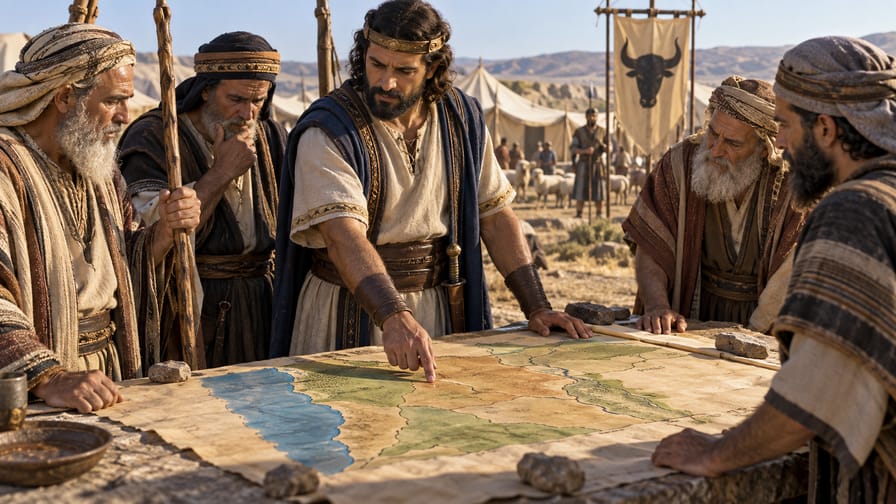
The biblical figure of Haniel, though mentioned concisely in the Scriptures, carries in his name and genealogical context a theological richness that resonates deeply with the principles of evangelical Protestant theology. This entry aims to explore the etymology, the limited historical context, the theological significance, and the legacy of this figure from an exegetical and Christocentric perspective, suitable for a biblical-theological dictionary.
Even characters of ephemeral appearance in biblical genealogies, such as Haniel, carry a significance that transcends their brief mention. They serve as reminders of God's faithfulness in preserving His people and His lineage, and of the importance of each individual in the Lord's great redemptive design. The analysis of Haniel invites us to meditate on divine grace, a central theme of his name.
1. Etymology and meaning of the name
1.1 Original Hebrew name and linguistic derivation
The name Haniel (חֲנִיאֵל) is of Hebrew origin and is composed of two significant parts. The first part, ḥēn (חֵן), means "grace" or "favor." This root is widely used in the Old Testament to describe God's undeserved goodness toward humanity.
The second part of the name is ’ēl (אֵל), which is an abbreviated and common form for "God" or "Lord." This combination is frequent in Hebrew theophoric names, which incorporate a divine attribute or a relationship with God, manifesting a theological truth intrinsic to the individual or his family.
1.2 Literal and symbolic meaning of the name
Combining the two parts, the literal meaning of Haniel is "grace of God" or "God is my grace." This meaning resonates deeply with evangelical theology, which emphasizes the doctrine of sola gratia, that is, salvation by grace alone, through faith in Christ Jesus, and not by works (Ephesians 2:8-9).
Symbolically, the name Haniel points to the essence of the divine character: a God who is intrinsically gracious and merciful. The mere existence of such a name among the people of Israel served as a perennial testimony to God's goodness and favor, which manifested in the lives of individuals and in the history of the nation.
1.3 Variations of the name and other biblical characters
Although Haniel is the most common transliteration of חֲנִיאֵל, variations may occur in different translations. It is crucial, however, to distinguish Haniel (חֲנִיאֵל) from Hanniel (חַנִּיאֵל), who appears in Numbers 34:23. Although both names share the same etymological root of "grace" and the same "God" termination, the slight difference in vocalization and Hebrew spelling indicates that they are distinct names, albeit with very similar meanings.
The Haniel who is the main focus of this analysis is mentioned in 1 Chronicles 7:39, as a chief of the tribe of Asher, son of Ulla. The Hanniel of Numbers 34:23 was a leader of the tribe of Manasseh, son of Ephod, and was one of the men appointed by Moses to divide the land of Canaan. The existence of such similar names underscores the prevalence of the theme of divine grace in Israelite onomastics.
1.4 Theological significance of the name in the biblical context
The theological significance of the name Haniel is immense, even for a character with such a brief mention. It serves as a reminder that God's grace is not merely a divine attribute, but an active force in human history and individual life. Grace is the foundation of God's covenant with Israel and, subsequently, with the Church (Genesis 6:8 Exodus 33:12-17).
In the evangelical Protestant context, the name Haniel resonates with the understanding that all salvation and spiritual blessing come from the sovereign grace of God. No one can boast before the Lord, for everything is an undeserved gift. Thus, Haniel, in his name, testifies to the eternal truth that "God resists the proud but gives grace to the humble" (James 4:6).
2. Historical context and biblical narrative
2.1 Historical period and family context
The Haniel of 1 Chronicles 7:39 is presented in the genealogy of the tribe of Asher. The genealogies in Chronicles are often complex and cover a long period, from the patriarchs to the return from the Babylonian exile. The tribe of Asher, descended from one of Jacob's sons, settled in the northern coastal region of Canaan, a fertile and strategic area.
The mention of Haniel as "son of Ulla" and "chief" suggests that he lived in a post-conquest period of Canaan, probably during the era of the Judges or the beginning of the monarchy, when the tribes were consolidating in their respective lands. Although there is no precise dating for Haniel's life, his inclusion in a genealogy of clan chiefs points to his relevance within the tribal structure of Asher.
2.2 Genealogy and family origin
The genealogy presented in 1 Chronicles 7:30-40 details the descendants of Asher, one of Jacob's twelve sons. Asher had sons such as Imnah, Ishvah, Ishvi, and Beriah, and a daughter, Serah. Haniel is listed as a son of Ulla, who in turn is one of the "sons of Beriah," who is one of the sons of Asher (1 Chronicles 7:36-39).
This genealogical chain, though extensive, is crucial for understanding the tribal identity and continuity of the people of Israel. It demonstrates God's faithfulness in preserving families and clans, even those not directly in the messianic lineage of Judah. Each name, including Haniel, is a link in the history of God's chosen people.
2.3 Key biblical passages
The only biblical passage that directly mentions Haniel, son of Ulla, is 1 Chronicles 7:39: "The sons of Ulla: Arah, Haniel, and Rizia. All these were sons of Asher, heads of ancestral houses, chosen men, mighty warriors, and chiefs of the princes. And the number of those enrolled for military service, for war, was twenty-six thousand men."
This brief mention, although it provides no narrative details about his life, positions him as a prominent individual within his tribe. He is categorized along with other "heads of ancestral houses," "chosen men, mighty warriors," which implies a position of leadership and influence in his time and community.
2.4 Geography and relationships with other characters
The tribe of Asher inhabited a strategic and fertile region on the northwestern coast of Canaan, bounded on the north by Phoenicia, on the south by Carmel, and on the east by Zebulun and Naphtali (Joshua 19:24-31). This location, though rich in resources, also exposed them to cultural and religious influences from neighboring peoples, such as the Phoenicians.
In the context of the genealogies, Haniel is related to his brothers Arah and Rizia, and to his father Ulla. His position as "chief" suggests that he interacted with other tribal leaders and likely participated in important decisions for the tribe of Asher. Although there are no records of his interactions with more prominent characters in biblical history, he was an integral part of the social and military structure of Israel.
3. Character and role in the biblical narrative
3.1 Analysis of character as revealed in the Scriptures
Due to the extreme brevity of his mention, the Bible offers no narrative details about Haniel's personal character. There are no records of his words, actions, or individual decisions. His characterization is inferred purely from the genealogical context in which he is placed.
Being listed among the "heads of ancestral houses, chosen men, mighty warriors" (1 Chronicles 7:39) suggests that Haniel possessed qualities of leadership, courage, and strength. Such attributes were essential for the maintenance of tribal order, the defense of territory, and participation in military campaigns, according to the context of the time.
3.2 Inferred virtues and spiritual qualities
Although not explicitly stated, Haniel's inclusion in a biblical genealogy, which often emphasizes lineage and faithfulness to the covenant, allows certain virtues to be inferred. Leadership in Israel, ideally, was linked to piety and the fear of God (Deuteronomy 17:18-20 1 Samuel 12:24).
Although we cannot assert Haniel's spirituality with certainty, his position as "chief" within a tribe of Israel implies a responsibility to guide the people in the ways of the Lord. The very meaning of his name, "grace of God," may have been a testament to his parents' faith in divine providence and God's goodness toward their family.
3.3 Vocation and specific function
Haniel's vocation is clearly defined as that of a "head of ancestral houses" and a "prince" within the tribe of Asher (1 Chronicles 7:39). This means he had authority over a clan or a significant part of his tribe, being responsible for its administration, defense, and representation.
His function likely included dispute resolution, war organization, and the maintenance of tribal traditions and laws. The mention that the men of Asher were "mighty warriors" and that their number for war was twenty-six thousand men, highlights the importance of the leadership of individuals like Haniel in the military and social organization of the tribe.
3.4 The role of "minor" characters in the biblical narrative
Haniel's role in the biblical narrative, though not central, is significant in its own discretion. He represents the countless individuals who, though not protagonists, are an integral part of God's people and His redemptive history. His existence and position are a testament to God's attention to every link in the human chain He weaves.
The inclusion of Haniel in Chronicles, a book that aims to connect Israel's past with the post-exilic present, reaffirms the identity and continuity of God's people. He, like many others, contributes to the tapestry of Israel's history, which culminates in the coming of the Messiah.
4. Theological significance and typology
4.1 Role in redemptive history and progressive revelation
Haniel's inclusion in the genealogy of Asher, though it does not place him directly in the messianic lineage of Judah, inserts him into the redemptive history of Israel. The nation of Israel, composed of all its tribes, was the vehicle through which God would reveal His will and bring the Messiah into the world (Romans 9:4-5).
The mere existence of individuals like Haniel demonstrates God's faithfulness in preserving His people and His promise, even in less documented generations. The history of each tribe and clan contributes to the progressive revelation of God's plan for humanity's salvation, which unfolds from Genesis to Revelation.
4.2 Connection with central theological themes
Haniel's name, "grace of God," is a gateway to deepening one of the most central themes of biblical theology: divine grace. Grace is fundamental to understanding the nature of God, who reveals Himself as a God of love, mercy, and undeserved favor (Exodus 34:6-7 Psalms 103:8).
From the evangelical Protestant perspective, grace is the basis of salvation. It is not by human merit, but by God's grace that we are saved through faith in Jesus Christ (Ephesians 2:8-9). The name Haniel, therefore, serves as an onomastic reminder of the source of all our hope and salvation, which is the grace of God.
4.3 Related covenants and promises
Although Haniel is not directly associated with a specific covenant or promise, his existence as part of the tribe of Asher indirectly connects him to God's great covenants with Israel. He is part of the people who were called by God through the Abrahamic Covenant (Genesis 12:1-3) and the Mosaic Covenant (Exodus 19-24).
God's promise to make Abraham a great nation and to bless all the families of the earth through him finds its progressive fulfillment in the existence and multiplication of the twelve tribes, including Asher and his descendants like Haniel. His life, though obscure, was embedded in God's greater purpose.
4.4 Christocentric typology and fulfillment in Christ
The figure of Haniel, by itself, does not present a direct Christocentric typology in the sense of foreshadowing specific events or aspects of Christ's life. However, his name, "grace of God," points to Jesus Christ himself as the ultimate personification of divine grace.
In Jesus, God's grace was fully revealed and manifested (John 1:14, 17). He is the embodiment of God's undeserved favor toward sinful humanity. Thus, while Haniel bears the name of grace, Christ is grace itself in action, the fulfillment of all God's promises for salvation, becoming the mediator of the New Covenant founded on grace (Hebrews 8:6).
5. Biblical-theological legacy and canonical references
5.1 Mentions in other biblical books and influence on theology
Apart from 1 Chronicles 7:39, there are no other explicit mentions of Haniel (son of Ulla) elsewhere in the biblical canon. His direct influence on biblical theology, therefore, does not stem from his recorded actions or teachings, but rather from the significance of his name and the context in which he is presented.
The inclusion of his name in a genealogy, even a brief one, is a testament to the meticulousness of the Scriptures and the importance God attaches to the history of His people. This reinforces the doctrine of divine providence, which governs even the seemingly minor details of history.
5.2 Presence in Jewish and Christian interpretive tradition
Due to his brief mention, Haniel is not a prominent figure in Jewish or Christian interpretive tradition. He is rarely the focus of rabbinic commentaries or Christian sermons. However, the meaning of his name, "grace of God," is a theme universally explored in both traditions.
Christian tradition, especially evangelical Protestantism, frequently emphasizes grace as the foundation of faith and salvation. Haniel, therefore, serves as an onomastic starting point for meditations on the grace of God, which permeates all biblical revelation, from creation to redemption.
5.3 Treatment of the character in Reformed and evangelical theology
In Reformed and evangelical theology, the emphasis on God's sovereignty and grace is paramount. The name Haniel, meaning "grace of God," finds a deep echo in these traditions. It serves to illustrate how God's grace is evident in all aspects of Israel's history, from the choice of the patriarchs to the preservation of the tribes.
Reformed theology, with its doctrine of the "five points of Calvinism," highlights Irresistible Grace and the Sovereign Grace of God. The name Haniel, even without a narrative, becomes a symbol of the truth that the existence and prosperity of God's people depend entirely on His undeserved favor, and not on human merits (Titus 3:5).
5.4 Importance for understanding the canon
The existence of characters like Haniel in the genealogies of Chronicles is vital for understanding the biblical canon in its totality. The genealogies in Chronicles had the purpose of reaffirming Israel's identity after the Babylonian exile, connecting them to their roots and divine promises. They demonstrate the continuity of God's plan through the generations.
Haniel's inclusion in the canon underscores the idea that God cares for every individual within His covenant. Even the "heads of ancestral houses" of less prominent tribes, like Asher, are important for the complete tapestry of salvation history. They are part of the great cloud of witnesses that points to God's faithfulness and, ultimately, to Christ (Hebrews 12:1-2).
In summary, the figure of Haniel, though without an extensive narrative, is theologically rich. His name, "grace of God," is a perennial reminder of God's nature and the foundation of salvation. His inclusion in the genealogies of the Old Testament attests to divine providence and the continuity of the covenant people, setting the stage for the coming of grace personified in Jesus Christ.